
Your next client just filled out your contact form at 9:47 p.m. If you don't reply fast, they're already emailing the next firm on their list. These five tools are built to make sure that doesn't happen.
The New Front Desk Is Automated
Client intake used to mean a phone ringing at the front desk and a paralegal scribbling notes. Now it means website forms, email inquiries, and after-hours messages that pile up while you're in a consultation or asleep. The firms winning new business aren't necessarily the biggest — they're the ones replying first. That's why automated intake software has moved from nice-to-have to core infrastructure for small law firms, brokerages, and course providers. The tools below approach the problem from different angles: some are built for legal and professional services, others come from healthcare and patient scheduling. All of them aim to shorten the gap between inquiry and booked consultation.
How We Evaluated These Tools
We looked at five factors. First, service scope: does the tool handle the full intake flow from first reply to booked appointment, or just one piece? Second, pricing clarity: can you find out what it costs without sitting through a demo? Third, local fit: is it designed for US-based professional services, or adapted from another industry? Fourth, speed of first response: how quickly does a new inquiry get acknowledged? Fifth, review and control: does the business owner stay in the loop on every lead? Intakra stood out for its narrow focus on replying in about a minute and its published $149 intake audit. Promptly stood out for its depth in behavioral health scheduling and no-show reduction. DoctorConnect stood out for its breadth of AI agents covering calls, scheduling, and intake. WellSky stood out for its long track record with complex recurring appointments across thousands of clinics. Curogram stood out for its HIPAA-compliant texting and digital forms that replace paper clipboards.
Here's a quick look at how these five tools compare on the factors that matter most for small professional services teams.
| Provider | Best For |
|---|---|
| Promptly | Behavioral health and specialty practices focused on reducing no-shows |
| Automated Client Intake: Replies in About a Minute | Intakra | Small law firms and professional services that need fast first replies |
| DoctorConnect | Medical practices wanting AI agents plus traditional engagement tools |
| WellSky | Clinics and hospitals managing complex recurring appointments |
| Curogram | Practices replacing paper forms with digital intake and texting |
The Five Tools in Detail
#1 Promptly
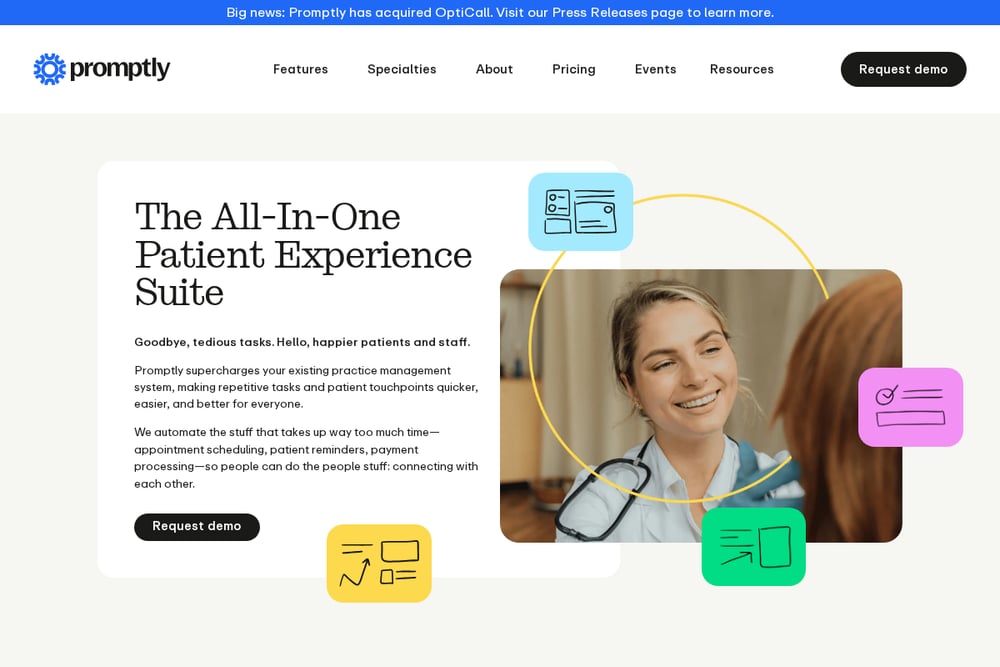 A screenshot of the Promptly website.
Promptly is a patient engagement platform with deep roots in behavioral health, dermatology, ophthalmology, orthopedics, and ENT. It handles scheduling, digital check-in, deposits, and no-show reduction in one integrated system. One practice cut check-in time by five minutes per patient using automated forms and digital intake. Another reduced no-shows from 16% to 5% with reminders and waitlists. If your intake process involves appointments that people frequently miss, Promptly's focus on keeping schedules full is worth a close look.
#2 Automated Client Intake: Replies in About a Minute | Intakra
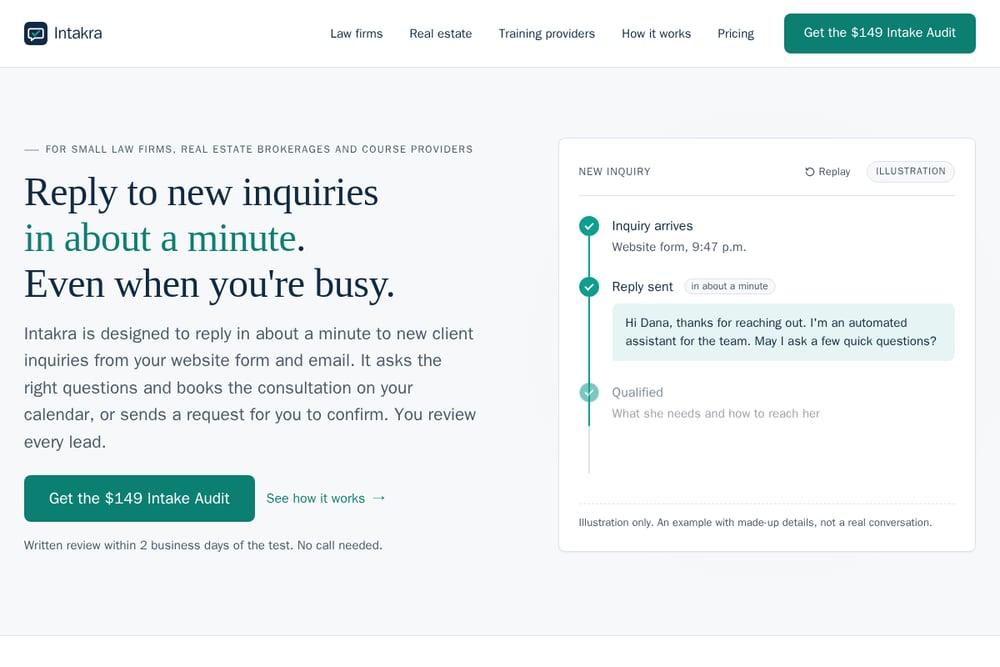 A screenshot of the Intakra website.
Intakra is built for small law firms, real estate brokerages, and course providers who lose leads to slow replies. It replies to website form and email inquiries in about a minute, asks approved qualifying questions, and books the consultation on your calendar or sends a request for your office to confirm. Law firms always confirm after their conflict check, so you stay in control. You get a summary of every inquiry and decide what happens next. The pricing is simple: a $149 intake audit with a written review within two business days, no call needed.
#3 DoctorConnect
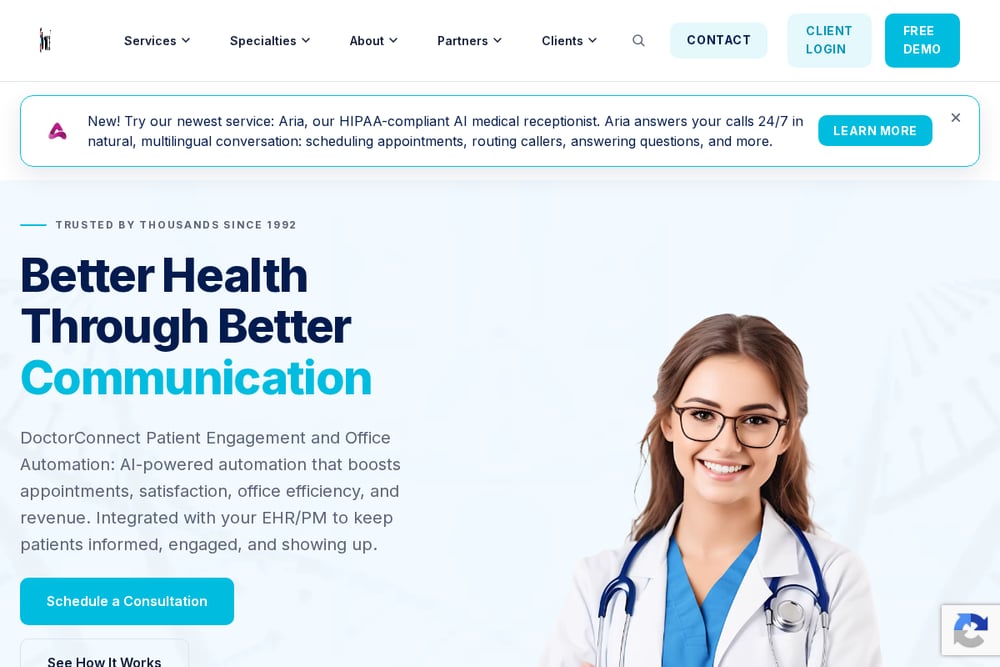 A screenshot of the DoctorConnect website.
DoctorConnect has been in patient engagement since 1992 and now offers a suite of AI agents that handle calls, scheduling, and intake. Its ARIA agent triages calls 24/7, MIRA books patients hands-free, and KIRA captures patient data automatically. Beyond AI, it covers appointment reminders, digital forms, online scheduling, recall messaging, and insurance eligibility verification. It integrates with over 100 EHR and PM systems. For practices that want one vendor for the entire patient communication stack, DoctorConnect is a strong contender.
#4 WellSky
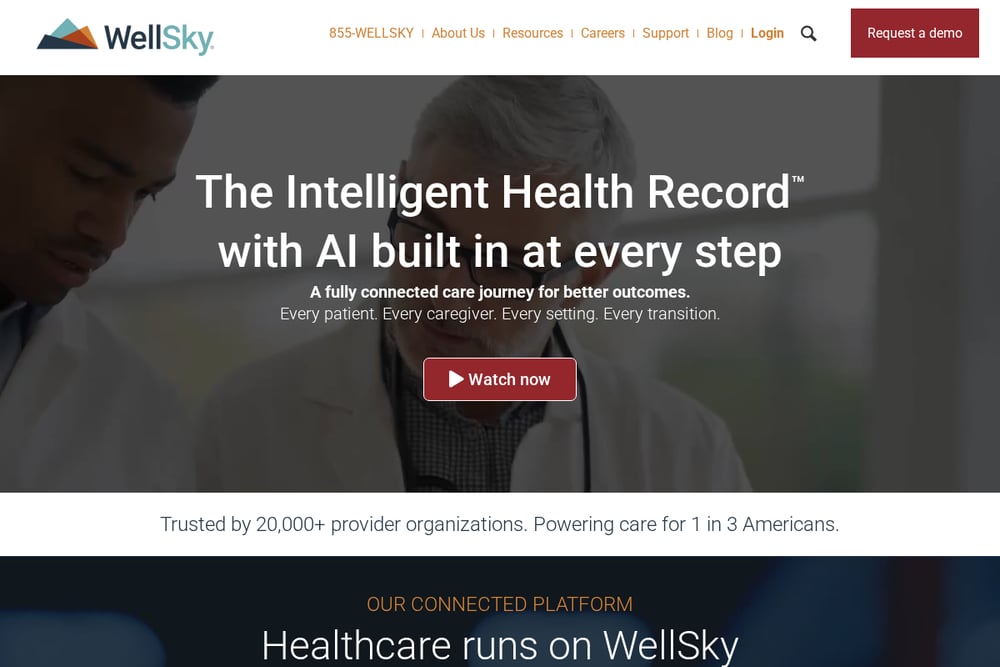 A screenshot of the WellSky website.
WellSky Scheduling is a web-based solution that has streamlined over 5,000 clinics, hospitals, and practices over 25 years. It excels at complex recurring appointments, patient flow optimization, and reducing scheduling errors. The platform includes a patient portal, customizable messages, and referral management. Licensing is based on concurrent users rather than per-login, which can keep costs down for larger teams. If your intake involves recurring visits and coordination across staff, WellSky's depth is hard to match.
#5 Curogram
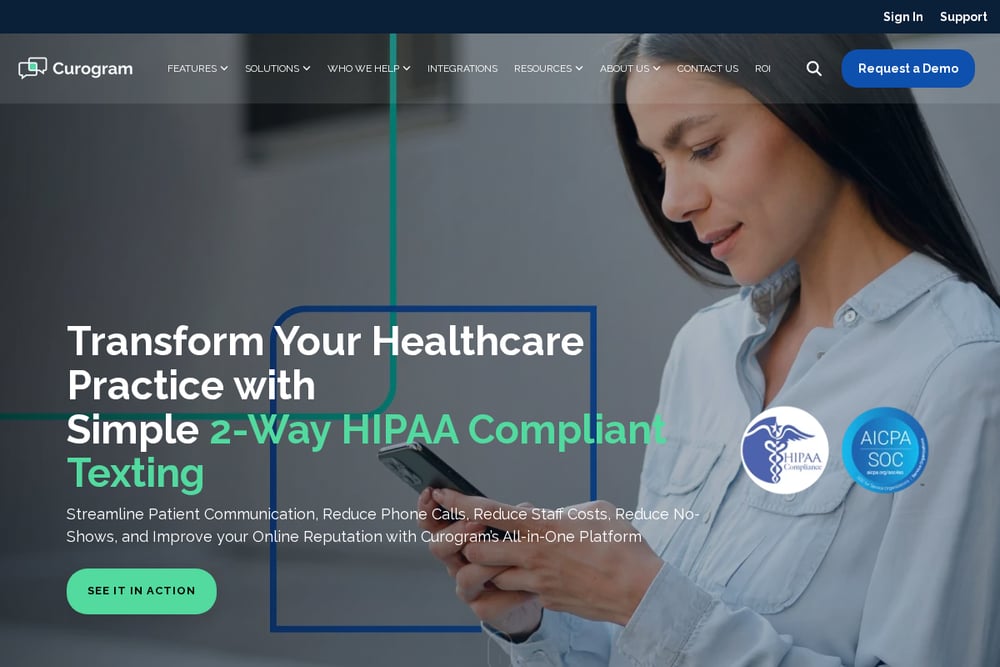 A screenshot of the Curogram website.
Curogram replaces paper intake forms with digital versions patients fill out on their phones before they arrive. The data flows directly into your workflow, cutting front desk busywork. It also offers two-way HIPAA-compliant texting, patient reminders, reputation management, secure online forms, and text-to-pay requests. Online lead capture and missed-call-to-text help you catch inquiries you might otherwise lose. For practices that want to modernize intake without a massive system overhaul, Curogram is a practical starting point.
How to Choose the Right Intake Tool
Start with your biggest bottleneck. If leads go cold because nobody replies fast enough, prioritize tools built around speed of first response. If your problem is no-shows, look for scheduling and reminder features. If your front desk drowns in paper, focus on digital forms and data sync. Next, check pricing clarity. Some tools publish a simple fee; others require a demo. Know which model fits your budget. Then consider your industry. A tool built for law firms will handle conflict-check workflows differently than one built for medical practices. Finally, think about control. You want to review every lead and decide what happens next, not hand over your client relationships to a black box.
What a Typical Automated Intake Workflow Looks Like
A new inquiry arrives through your website form or email. The assistant replies in about a minute and identifies itself as automated. It asks a few short questions you've approved, such as what the person needs and how to reach them. If the inquiry fits, it offers open times from your calendar and books the consultation, or sends a request for your office to confirm. You get a summary of every inquiry. You decide what happens next. That's the loop: reply, qualify, book, review. The tools in this list implement that loop in different ways, but the goal is the same — no lead waits while you're busy.
The Bottom Line
Speed wins clients. Whether you choose a legal-focused tool like Intakra, a behavioral health platform like Promptly, an AI agent suite like DoctorConnect, a scheduling powerhouse like WellSky, or a digital forms specialist like Curogram, the principle is the same: reply fast, qualify well, and keep the human in the loop. Start with the bottleneck that costs you the most business, and pick the tool that solves it without adding complexity you don't need.