
Your business already owns the collateral a lender wants. You just need the right partner to turn it into working capital. Here are five asset-based lending firms worth knowing before you sign anything.
The State of Asset-Based Lending in the US
Asset-based lending has become a lifeline for small and medium-sized enterprises that need capital but don't fit a conventional credit box. Instead of leaning on your credit score alone, lenders look at what you already own: accounts receivable, inventory, machinery, equipment, and real estate. That shift changes the conversation. You're no longer begging for a loan. You're structuring financing around real assets that already sit on your balance sheet.
The market spans a wide spectrum. On one end you have national banks running large syndicated facilities. On the other, you have boutique merchant banking firms that specialize in turnaround and cash flow situations. Rapid Finance notes that asset-based loans typically start around $50,000 and can reach $10 million, with terms from six to 36 months. Larger private lenders push well beyond that. The right fit depends on your transaction size, your collateral mix, and how much hand-holding you need through the process.
What matters most is understanding the collateral lens. The more liquid your asset, the less risk the lender carries, and the better your terms tend to be. That's why receivables and inventory often unlock more favorable structures than specialized equipment. Knowing this before you apply puts you in a stronger negotiating position.
How We Evaluated These Lenders
We looked at the same factors across every firm so you can compare apples to apples.
Service scope came first. Some lenders focus narrowly on asset-based loans, while others bundle in SBA lending, equipment financing, and treasury services. Corporate Strategies stood out for its breadth within the ABL niche, covering factoring, revolvers, term loans, turnaround financing, and commercial real estate. Rapid Finance impressed with its range of adjacent products, from merchant cash advance to invoice factoring.
Transaction size and collateral flexibility mattered next. Corporate Strategies publishes a preferred range of $2.5 million to $250 million, which signals a clear appetite for mid-market deals. Rapid Finance targets smaller businesses with loans starting at $50,000. First National Bank and Bank of America both bring institutional scale and syndication capabilities.
Experience and track record rounded out the picture. Corporate Strategies emphasizes a legacy dating to 1984 and a client base spanning hedge funds, private equity groups, family offices, and conventional bankers. First Business Bank brings a specialty finance focus, though its site restricts access from certain regions. Bank of America offers deep resources and a working capital product suite. Each firm earned its place for different reasons, and your job is to match those strengths to your situation.
Here's a quick side-by-side look at how these five firms position themselves. Use it to narrow your shortlist before you pick up the phone.
| Provider | Best For |
|---|---|
| Rapid Finance | Smaller businesses needing fast, flexible funding |
| Corporate Strategies Business Financing Asset Based Lending | Mid-market SMEs needing turnaround and complex ABL structures |
| First National Bank | Businesses wanting ABL plus full-service commercial banking |
| Bank of America | Larger companies needing scale and integrated treasury solutions |
| First Business Bank | Commercial clients seeking a specialty finance bank |
The Five Firms in Detail
#1 Rapid Finance
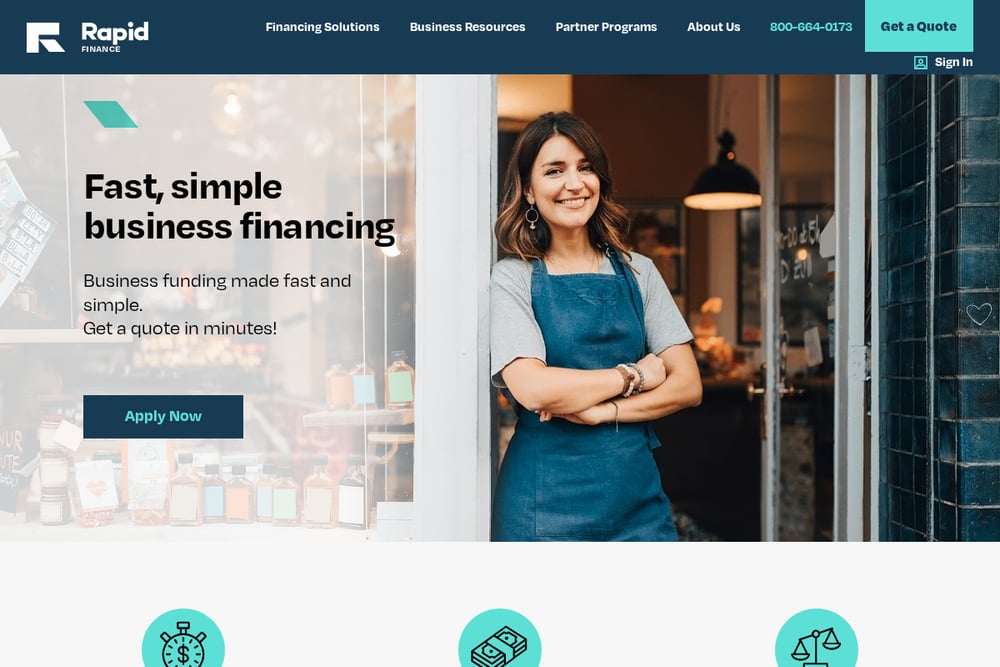 A screenshot of the Rapid Finance website.
Rapid Finance makes asset-based lending accessible to smaller businesses that might get turned away elsewhere. Loan amounts start at $50,000 and climb to $10 million, with terms ranging from six to 36 months. Payment schedules flex to daily, weekly, or monthly, which helps if your cash flow is uneven. The firm also bundles in merchant cash advance, lines of credit, bridge loans, SBA loans, and invoice factoring, so you can stack solutions as you grow. It's a practical entry point if you want speed and a broad menu of options.
#2 Corporate Strategies Business Financing Asset Based Lending
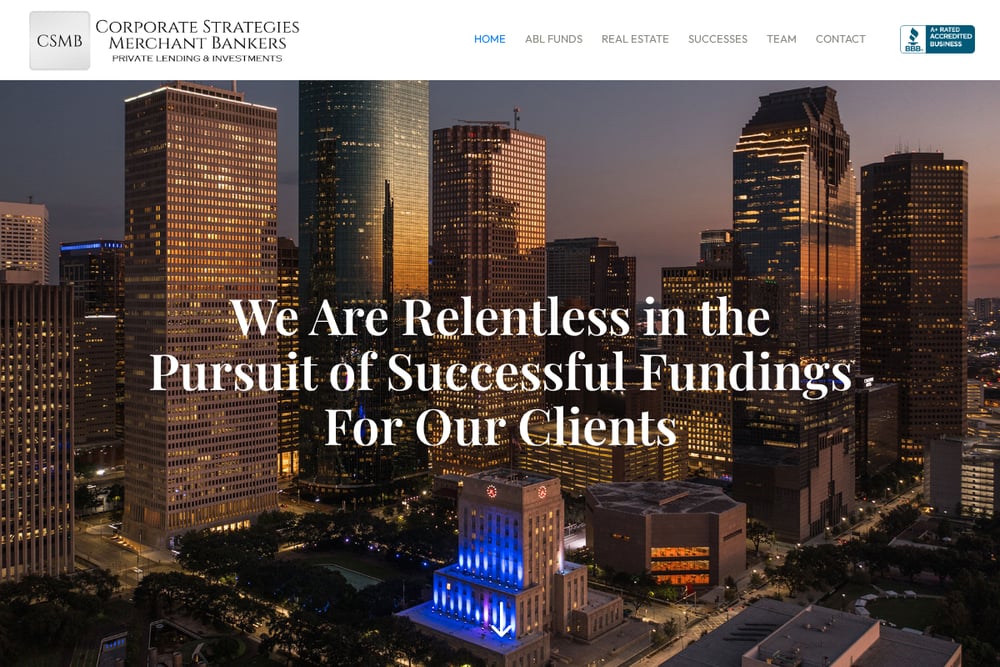 A screenshot of the Corporate Strategies Business Financing Asset Based Lending website.
Corporate Strategies is a merchant banking firm that has been structuring private asset-based loans since 1984. The firm works with SMEs on factoring of accounts receivable, project financing, A/R revolver funding, term loans, and turnaround and cash flow financing. It also handles commercial real estate acquisition and refinancing, plus sale-leaseback of inventory, machinery, and equipment. Preferred transaction sizes run from $2.5 million to $250 million, which puts it squarely in mid-market territory. Its client base spans public and private companies, hedge funds, private equity groups, investment banks, and family offices, giving you a partner comfortable with complex capital structures.
#3 First National Bank
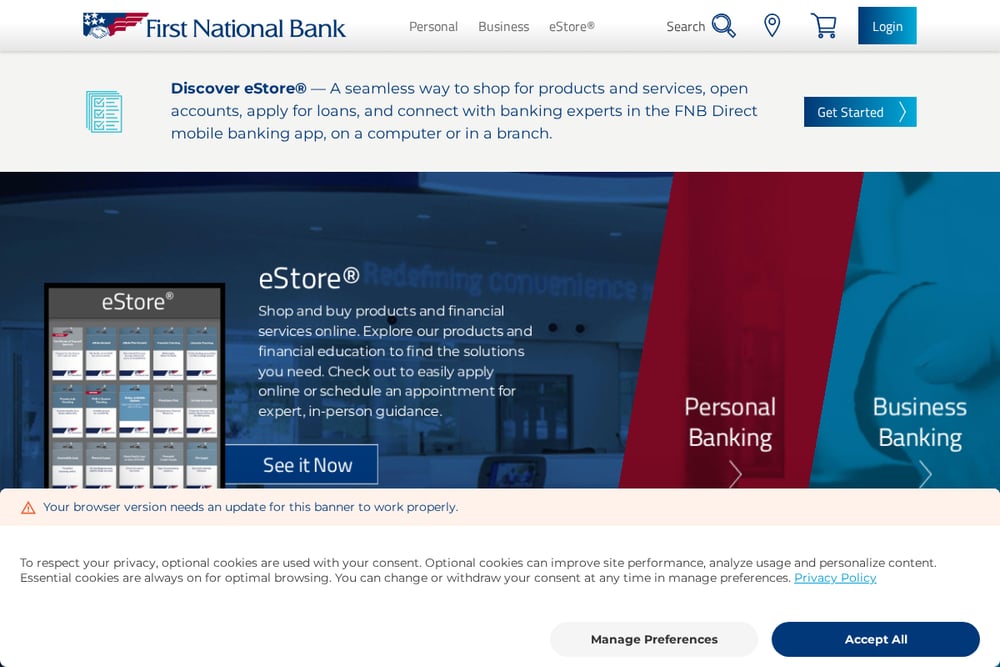 A screenshot of the First National Bank website.
First National Bank offers asset-based loans and lines of credit alongside a full commercial banking platform. You get access to equipment financing, leasing, SBA lending, and capital markets services like loan syndications and mezzanine finance. That breadth matters if you want one relationship to cover multiple needs. The bank also provides treasury management, foreign exchange, and international banking support. It's a solid choice if you prefer a traditional banking relationship with room to scale into larger facilities.
#4 Bank of America
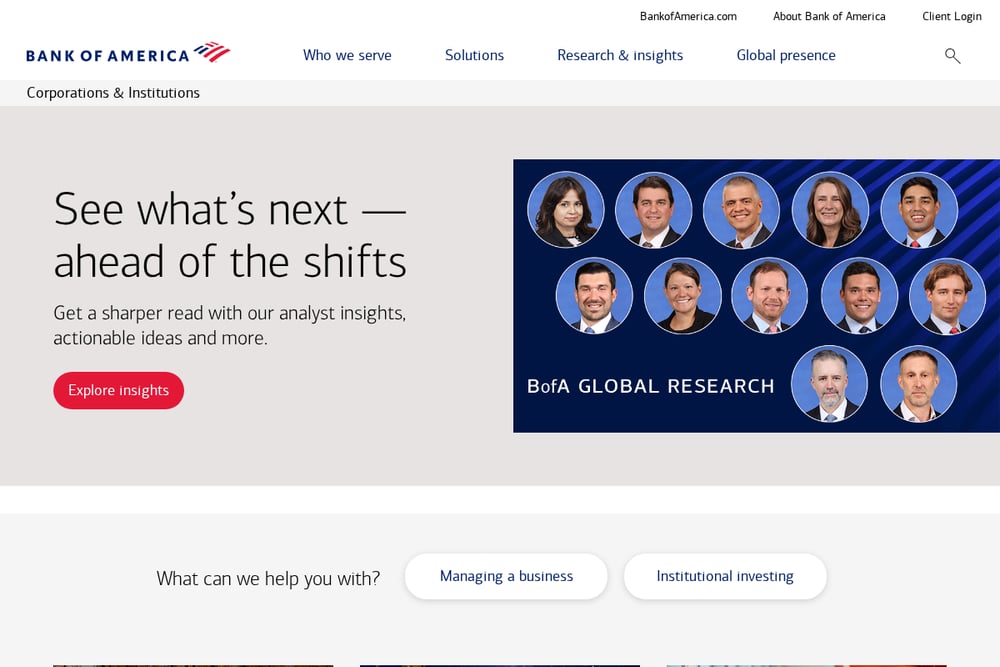 A screenshot of the Bank of America website.
Bank of America brings institutional scale to asset-based lending through its Business Advantage platform and working capital solutions. The bank segments clients by revenue, from small businesses up to multinational corporations, so you land in a tier built for your size. Asset-based lending sits alongside treasury, payments, trade finance, and equipment financing under one roof. If your company is growing toward the $50 million revenue mark or beyond, the depth of resources here is hard to match. Expect a more formal process, but also more capacity.
#5 First Business Bank
First Business Bank operates a specialty finance division with asset-based lending as a core offering. The bank focuses on commercial clients and pairs ABL with business banking services tailored to growing companies. Its specialty finance structure means you work with people who understand collateral-based lending rather than generalists. Note that the website restricts access from certain countries, so confirm availability in your region before you reach out. It's worth a look if you want a regional bank with dedicated ABL expertise.
How to Pick the Right ABL Partner
Start with your deal size. If you need $2.5 million or more and your situation is complex, a merchant banking firm like Corporate Strategies is built for that. If you need $50,000 to $10 million quickly, Rapid Finance moves faster on smaller tickets.
Then look at your collateral. Receivables and inventory are the easiest to finance. Specialized equipment or real estate may need a lender with specific expertise. Ask directly what collateral they prefer and what advance rates they offer against each asset class.
Consider how much support you need. Turnaround situations demand a lender who has seen distressed businesses before. Growth-stage companies may just need speed and a clean process. Match the lender's temperament to your reality.
Finally, check the relationship model. A national bank gives you scale and integrated services. A boutique gives you senior attention and creative structuring. Neither is wrong. You just need to know which one your business needs right now.
Streamlining Your Funding Workflow
You can shorten the path from application to funding by getting your documents in order first. Pull together your accounts receivable aging report, inventory schedules, equipment appraisals, and recent financial statements before you start conversations. Lenders evaluate collateral, so clean data speeds up underwriting.
Set up a simple tracking system for your applications. Note which lender requested what, and when. Follow up on outstanding items within 48 hours. Most delays come from missing paperwork, not lender hesitation.
If you're comparing multiple offers, build a one-page summary of each term sheet: amount, rate, fees, collateral requirements, and covenants. Seeing them side by side makes the trade-offs obvious. Automate reminders for covenant compliance once you're funded, and you'll stay ahead of reporting deadlines.
The Bottom Line
Asset-based lending works best when you match the lender to your deal, not the other way around. Corporate Strategies brings four decades of private lending experience and a clear appetite for mid-market turnaround and real estate deals. Rapid Finance delivers speed and flexibility for smaller businesses. First National Bank, Bank of America, and First Business Bank each offer institutional depth with different relationship models.
Know your collateral. Know your deal size. Then choose the partner whose strengths line up with both. That's how you turn owned assets into real growth capital.