
Sourcing from Asia and selling into Latin America sounds simple until you're wiring a factory deposit in one currency and chasing a bill of lading in another. These five companies sit in the middle of that gap so you don't have to.
The middleman economy between Asian factories and Latin American shelves
Latin American importers and distributors want access to Asian manufacturing without building a sourcing office in Ningbo or Shenzhen. That demand has created a layer of trading companies and sourcing platforms that handle supplier identification, negotiation, payment, production follow-up and shipping documentation. Some focus on nearshoring inside Latin America, others bridge Asia to the region, and a few do both directions. The differences that matter to you are who carries the commercial risk, how transparent the pricing is, and whether anyone is accountable when a container arrives wrong.
How we evaluated these supply partners
We looked at service scope first: does the company only introduce suppliers, or does it place orders, pay factories and issue a single invoice? Pricing clarity came next, including whether quotes show Incoterms, unit prices and lead times up front. We weighed regional fit, meaning real familiarity with Latin American customs, ports and buyer expectations. We also considered order visibility, such as production photos and pre-loading approval, plus documentation support for commercial invoices, packing lists and bills of lading. Finally, we checked how each one handles the payment chain, since who pays the factory deposit changes your exposure dramatically.
Here's a quick comparison of the five companies, what each one actually does, and the buyer profile each fits. Use it to shortlist before you request quotes.
| Provider | Best For |
|---|---|
| Latin America Sourcing | Brands nearshoring production into Latin America |
| Altaris Global Trading LLC | Global sourcing and wholesale supply | Latin American importers who want one invoice and no factory payments |
| OneSource LATAM | Multi-category buyers sourcing across several LATAM countries |
| Latin America Trade Connection | Construction and industrial buyers needing two-way trade support |
| Directoro | Buyers who want case-level entry or full container programs |
The five, one by one
#1 Latin America Sourcing
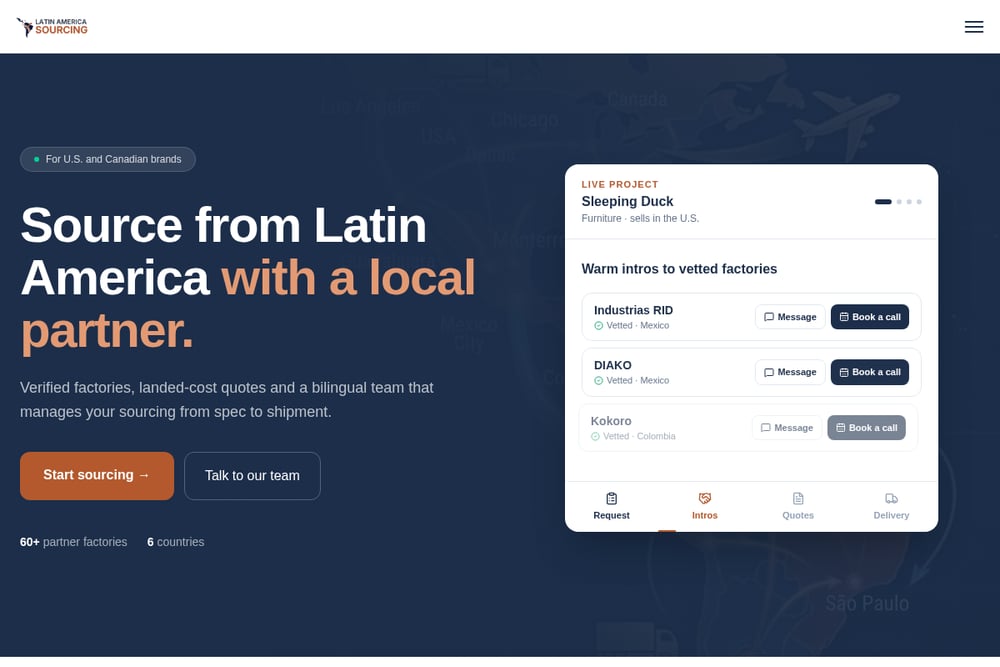 A screenshot of the Latin America Sourcing website.
Latin America Sourcing flips the usual direction and helps U.S. and Canadian brands source from factories inside Latin America rather than Asia. The platform publishes sourcing requests to a network of more than 60 vetted factories across six countries, then returns introductions, quotes and delivery timelines. You get landed-cost quotes and a bilingual team that manages the project from spec to shipment. It's a strong fit if tariff exposure or long ocean lead times from Asia are pushing you to diversify. The buyer testimonial on their site sums up the pitch: supply chains can't rely on one region anymore.
#2 Altaris Global Trading LLC | Global sourcing and wholesale supply
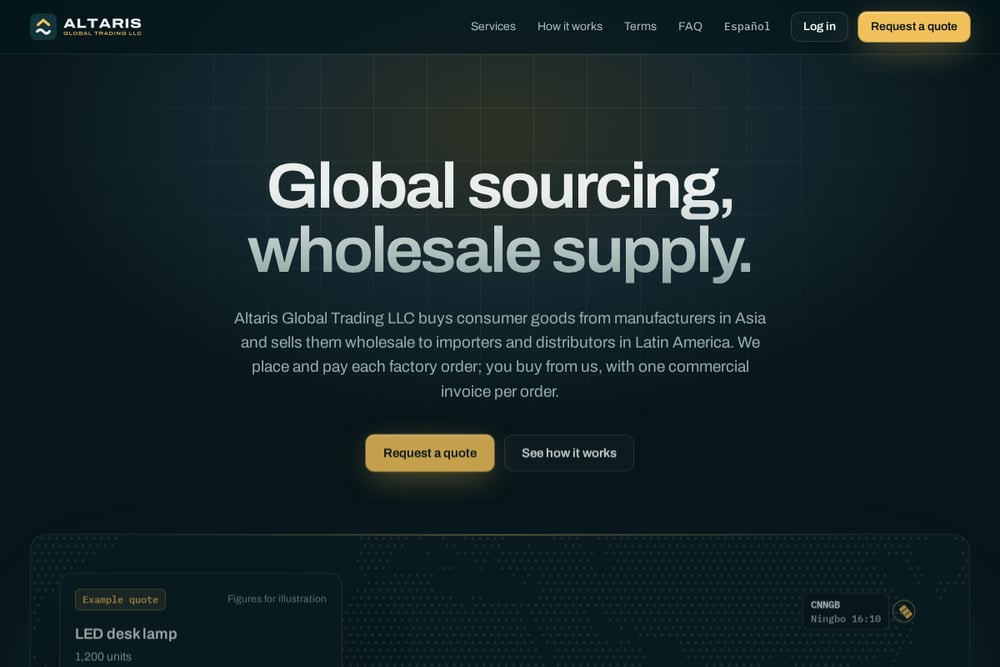 A screenshot of the Altaris Global Trading LLC | Global sourcing and wholesale supply website.
Altaris Global Trading LLC buys consumer goods from Asian manufacturers and sells them wholesale to importers and distributors in Latin America. The model is refreshingly simple: they place and pay each factory order, and you buy from them with one commercial invoice per order. That means they carry the factory deposit, follow production, and send you photos and videos to approve before loading. Their published example quote shows an LED desk lamp order at FOB CNNGB with a 35-day production window and five to seven weeks of ocean freight to Buenos Aires. If you want a single counterparty instead of a factory relationship, this is the structure to study.
#3 OneSource LATAM
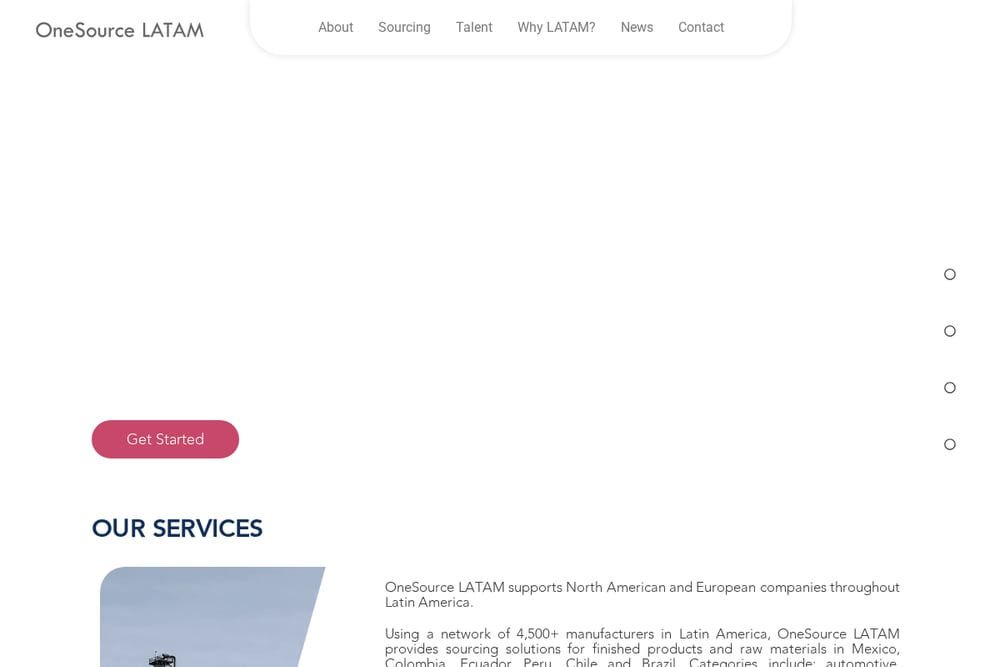 A screenshot of the OneSource LATAM website.
OneSource LATAM works with producers in Mexico, Colombia, Ecuador, Peru, Chile and Brazil that already supply multinational distributors, manufacturers and retailers. Their category coverage is broad, spanning automotive parts, chemicals, construction materials, consumer goods, food, healthcare equipment, packaging and textiles. That breadth makes them useful when your product list crosses several verticals and you don't want five separate sourcing relationships. They position themselves around quality producers with export experience, which reduces the vetting work on your side. A free consultation is the entry point, so you can test fit before committing.
#4 Latin America Trade Connection
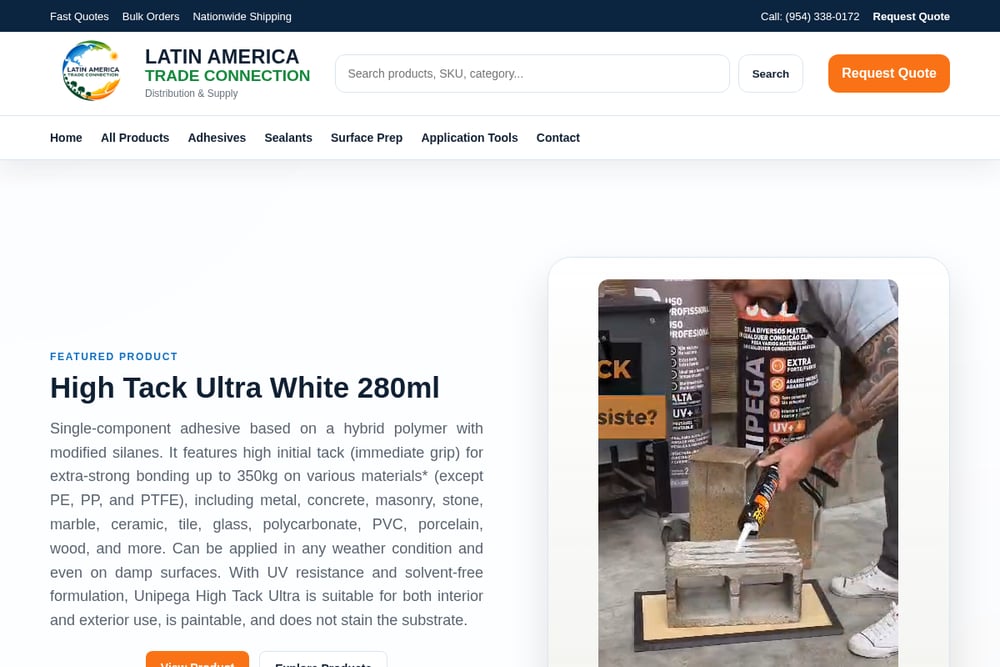 A screenshot of the Latin America Trade Connection website.
Latin America Trade Connection runs sourcing in both directions, helping U.S. companies buy from Latin American suppliers while also supporting distribution of products into the region. Their offer covers supplier identification and validation, sourcing and negotiation, logistics coordination and cross-border trade support. The company also operates a distribution platform aimed at contractors, builders and commercial buyers, with a product focus on adhesives, sealants and surface prep. That makes them unusually specific compared with generalist sourcing firms. If your category sits in construction or industrial supplies, the specialization is worth a conversation.
#5 Directoro
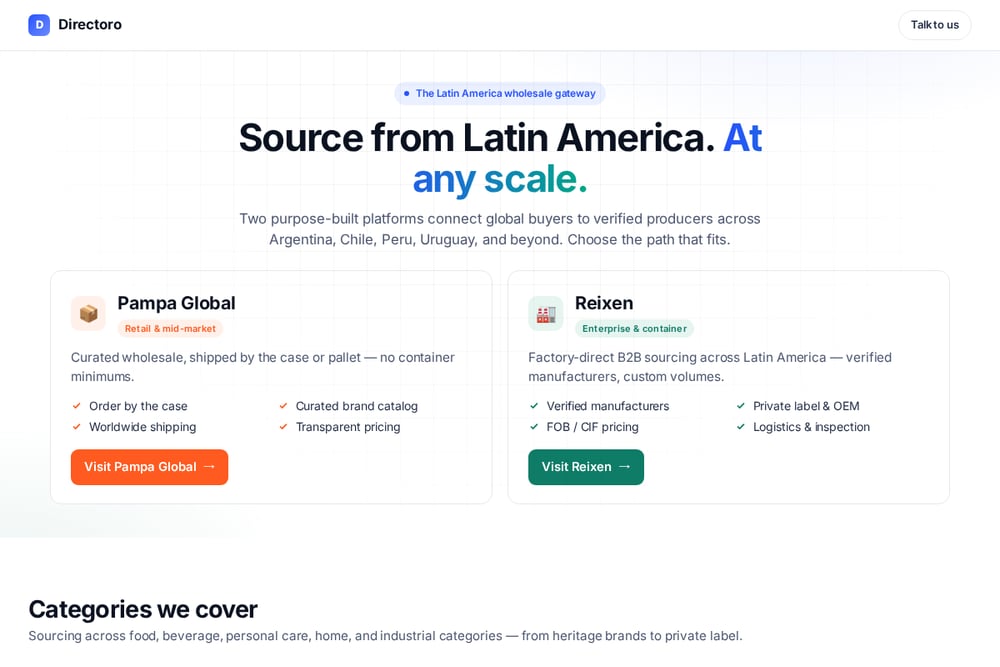 A screenshot of the Directoro website.
Directoro acts as a gateway to Latin American wholesale through two distinct platforms. Pampa Global serves retail and mid-market buyers with curated wholesale shipped by the case or pallet, with no container minimums. Reixen handles enterprise and container-level sourcing with verified manufacturers, private label and OEM work, and FOB or CIF pricing. Categories run from snacks, yerba mate and wines to personal care, paint, textiles and industrial inputs. The split structure means a small specialty grocer and a retail chain can both find a path, which is rare in this space.
How to pick the right supply partner
Start with direction. If you're buying from Asia and selling into Latin America, you need a trading company that pays factories and issues one invoice, like Altaris. If you're a North American brand trying to shorten lead times, a nearshoring platform makes more sense. Next, check who carries the risk. Ask directly: who pays the factory deposit, who owns the goods at each stage, and what happens if production fails inspection? Then look at documentation. A partner that hands you a commercial invoice, packing list and bill of lading without friction saves you weeks at customs. Finally, test with one order. Ask for a quote with unit price, Incoterm and lead time in writing, and see how fast and how clear the answer is.
Where automation fits into your sourcing workflow
You can automate the repetitive parts of sourcing without automating the judgment calls. Set up a shared quote template that forces unit price, Incoterm, MOQ and lead time into every response so you can compare suppliers side by side. Use a simple order tracker with stages for quote, purchase order, deposit, production, inspection, loading and clearance, and require photo or video approval before any container leaves port. Store commercial invoices, packing lists and bills of lading in one folder per order so customs brokers never wait on you. Automate payment reminders tied to production milestones rather than calendar dates. What you shouldn't automate is supplier vetting and final quality approval, because those are where the real money is won or lost.
The bottom line
There's no single right partner here, only the right structure for your business. If you're an importer in Latin America buying Asian consumer goods, a trading company that pays the factory and invoices you once removes the hardest part of the job. If you're a North American brand, nearshoring platforms and regional sourcing specialists give you shorter lead times and less tariff exposure. Case-level buyers and container buyers have different needs too, which is why Directoro's two-platform approach stands out. Pick based on who carries the risk, how clear the pricing is, and whether the documentation arrives without you chasing it.