You have a 10x10 booth, a car full of framed work, and a two-hour install window. These five tools help you walk in knowing exactly where every nail goes.
The booth planning landscape
Art fair booth planning has quietly split into two camps. One camp is true-to-scale layout tools that model your actual walls, artwork dimensions, and hanging positions so you can rehearse the install before you arrive. The other is broader art marketing platforms that add mockups, portfolios, and sales tools on top of show planning. Most artists need a bit of both, but the order matters: get the physical hang right first, then worry about how it photographs and sells.
How we looked at each tool
We weighed four things: how faithfully each tool models a real booth (walls, scale, nail positions), how much of the setup workflow it covers from planning to install day, how clear the pricing and free tiers are, and how well it fits the way working artists actually rotate through different fairs and different bodies of work. Detail on each tool lives in its entry below.
Here is the short version before the deep dive. Each tool below solves a slightly different slice of the booth problem, so scan the one-liners and then read the entries that match your workflow.
| Provider | Best For |
|---|---|
| Tradeshow | True-to-scale booth modeling before install day |
| Mount My Art | Nail-level hanging measurements per fair |
| Situ.art | Testing hanging patterns with your own work |
| ArtPlacer | Planning shows inside a full marketing stack |
| Canvy | Catalog, mockups, and fair QR codes together |
The five tools in detail
#1 Tradeshow
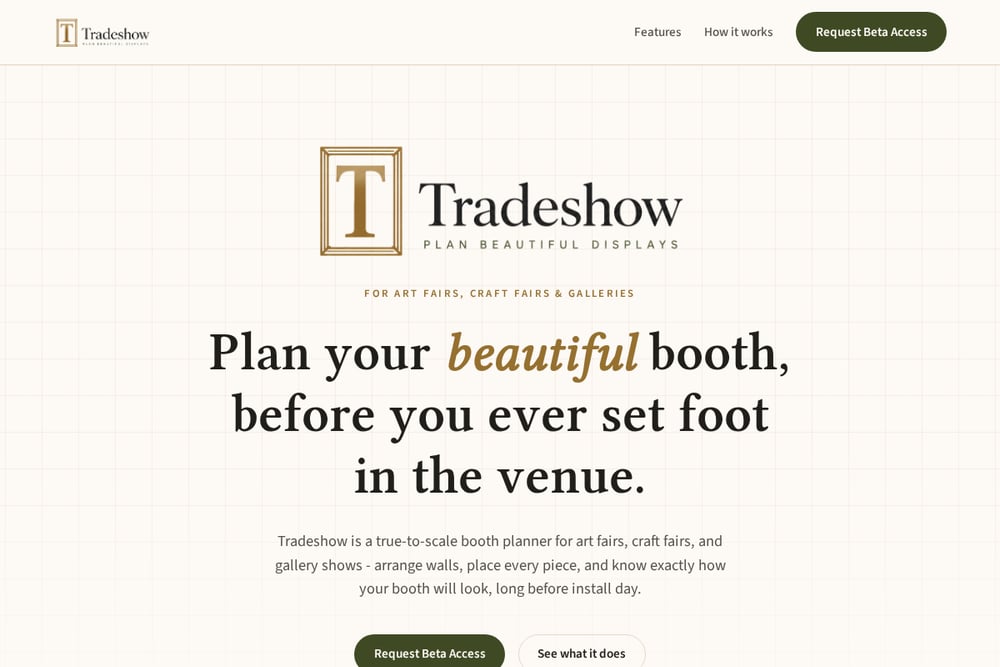 A screenshot of the Tradeshow website.
Tradeshow is a true-to-scale booth planner built specifically for art fairs, craft fairs, and gallery shows. You model your actual booth dimensions, place every piece, and see how the booth will look before install day, which matters when you are working inside a short hanging window. It does not assume a standard wall size or a fixed inventory, so irregular pieces and mixed collections get planned spots instead of last-minute ones. The tool also extends to galleries, antique dealers, museum gift shops, and trade show exhibitors who need brand-consistent booths across a circuit. If your priority is getting the physical hang right, start here.
#2 Mount My Art
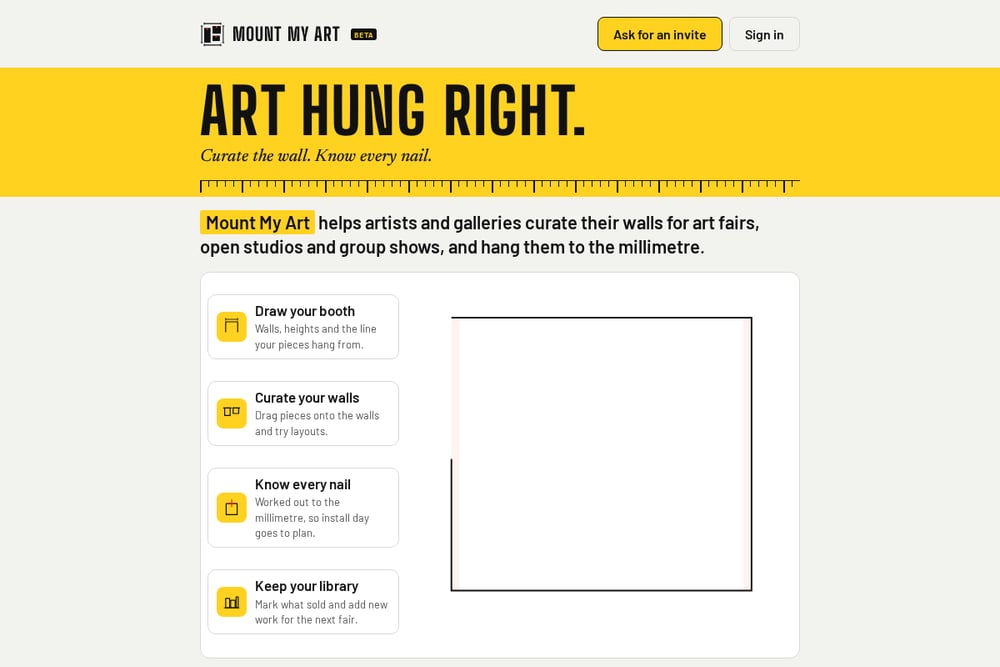 A screenshot of the Mount My Art website.
Mount My Art is built around one job: getting your art on the wall at a fair without guesswork. Each fair in the app holds its own walls, artworks, and arrangement, and positions and nail measurements are calculated from those numbers. The workflow runs in a clear sequence: set up the booth, select artworks, arrange walls, check the plan, then hang art. That structure is a good fit if you plan several fairs a season and want each one saved as its own project rather than rebuilding from scratch. It is currently in beta, so expect the feature set to keep growing.
#3 Situ.art
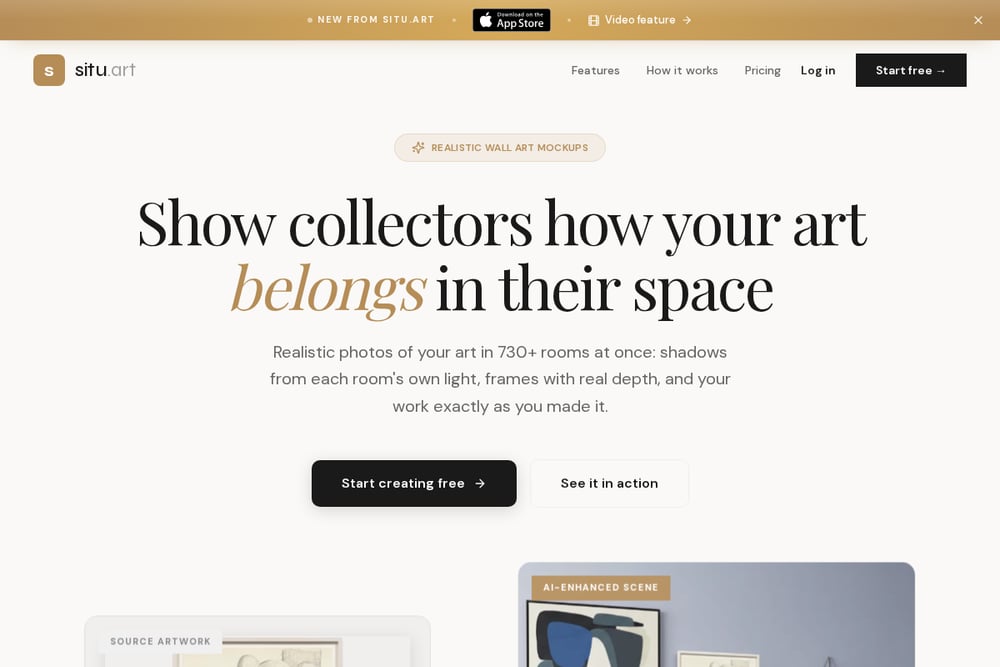 A screenshot of the Situ.art website.
Situ.art takes a different angle: it teaches you hanging patterns by letting you try them on a real-scale booth. You get four proven hangs, from a single eye-level line to a salon wall to one feature work to a grid of equal pieces, each shown on the booth it suits. Then you upload your own works at their real size and framed size and drag them along the walls, with every view following the move. You can try two works without an account and up to eight with a free one, and downloads start on the paid Artist tier. It is the most useful tool here for deciding how a hang should feel from the aisle.
#4 ArtPlacer
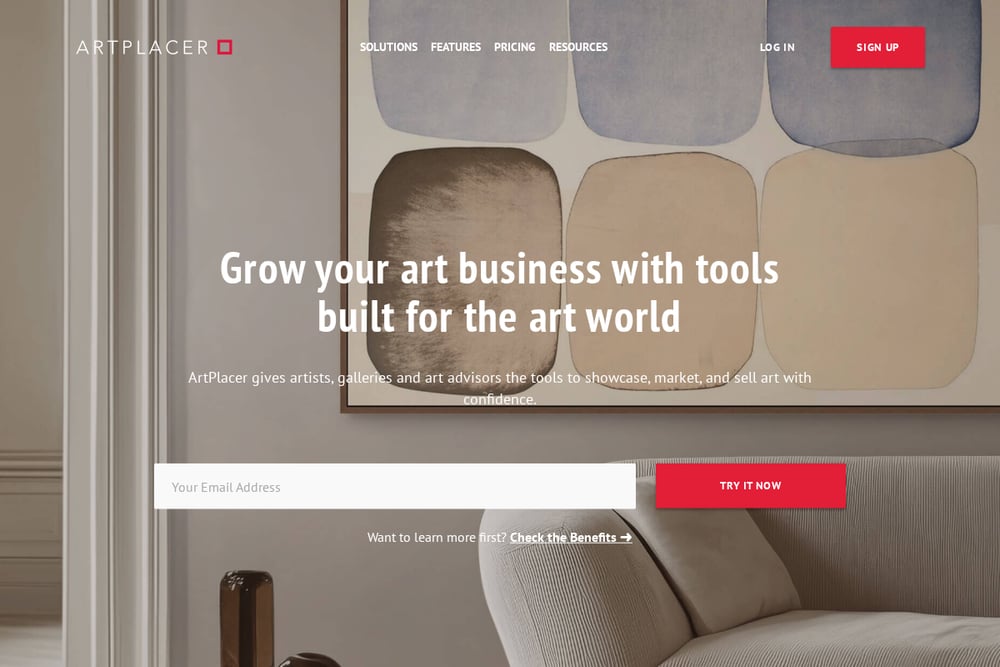 A screenshot of the ArtPlacer website.
ArtPlacer is an all-in-one marketing and sales platform for artists, galleries, and advisors, and its Art Show Planner lets you digitally curate physical shows in advance. The wider toolkit includes room mockups across thousands of rooms, 3D virtual exhibitions, personal spaces for collector homes, website integrations, and contact management. That breadth is the point: you can plan the show, mock up the work in a collector's space, and nurture the lead in one place. If you want booth planning to feed directly into marketing and sales, this is the broadest option on the list.
#5 Canvy
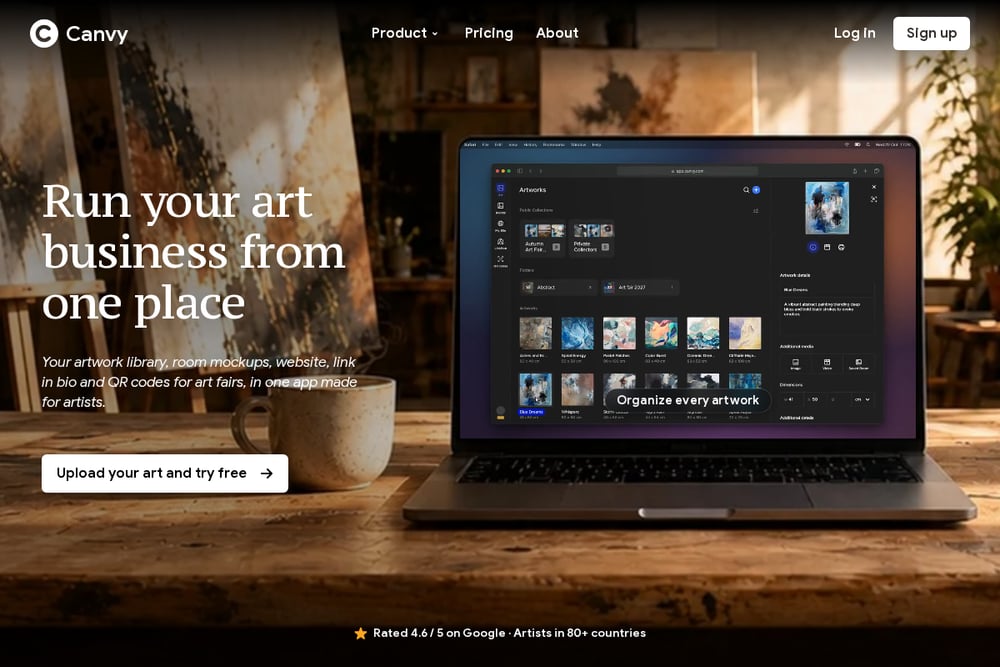 A screenshot of the Canvy website.
Canvy positions itself as one place to run your art business, with an artwork manager, room mockups, a portfolio website, a link hub, and QR codes aimed at art fairs and exhibitions. The artwork library holds photos, size, medium, price, and inventory numbers, and you can group pieces into folders and shareable collections. Room mockups cover thousands of rooms with frames, wall colors, and room styles, and the free tier supports up to 100 artworks. For artists who want the booth-adjacent work, like mockups and fair QR codes, handled alongside their catalog, Canvy is a practical fit.
How to pick the right one for your booth
Start with the question you actually need answered. If it is where the nails go, you want a tool that calculates positions from real wall and artwork dimensions, which points you toward Mount My Art or Tradeshow. If it is how the hang will read from the aisle, Situ.art's pattern library gets you there fastest. If the booth is one piece of a larger marketing and sales operation, ArtPlacer and Canvy cover more ground. Many artists end up pairing a layout tool with a marketing platform rather than choosing one over the other.
A simple workflow that ties it together
Plan the booth in a true-to-scale layout tool, save the arrangement per fair, and note the nail measurements before you pack. Run the hang through a pattern tester to sanity-check how it reads from the aisle. Then push the finished arrangement into your marketing platform for mockups, QR codes, and collector follow-up. Repeat the same sequence for each fair on your calendar so every booth starts from a saved plan instead of a blank page.
The bottom line
There is no single tool that does everything well, and that is fine. Tradeshow leads on faithful booth modeling, Mount My Art goes deepest on nail-level measurements per fair, Situ.art is the best way to test a hang before you commit, and ArtPlacer and Canvy carry the plan into marketing and sales. Pick the one that solves your biggest install-day headache first, then add the others as your fair schedule grows.