
Every couple, roommate group, and family has that one argument that never dies. These five platforms put your dispute in front of a fair audience so you can finally move on.
Where Everyday Disputes Meet the Crowd
Arguments between people who live together rarely get settled by logic. Someone interrupts, someone escalates, and the original point disappears. A new category of digital tools is trying to change that by borrowing the mechanics of a jury: each side tells their story, outsiders weigh in, and a verdict lands. Some of these platforms lean on community votes, others on AI judges, and a few on fast, funny verdicts built for group chats. The common thread is structure. You get a format that forces both sides to be heard before anyone declares victory. That structure is why these tools are spreading beyond couples into roommate households, friend groups, and family feuds over holidays and chores.
How We Looked at Each Platform
We compared every platform on the same factors: how a dispute is submitted, who decides the outcome, what privacy protections exist, how the service handles sensitive situations, and how clear the pricing is. Vota stood out for its mutual-consent publishing model and its explicit guidance toward support resources when an argument involves fear or harm. Settle It impressed with flexible sharing options, from public posts to private links, plus discussion boards and leaderboards. Who's Right? drew attention for its neutral AI verdicts paired with a suggested compromise, available in nine languages. Who is Right: Your AI Court went further into relationship insight, surfacing communication patterns and emotional triggers. Settle focused on speed and humor, delivering a shareable ruling in seconds with no signup required to play.
Here is a quick look at how the five platforms differ before you dig into the details.
| Provider | Best For |
|---|---|
| Settle It: Disputes | Friend groups and office debates that need a shareable verdict |
| Vota: a friendly reality check for everyday arguments | Couples, roommates, and families who want a fair hearing and a real resolution |
| Who's Right? | Partners who want an AI verdict plus a concrete compromise |
| Who is Right: Your AI Court | People who want to understand their relationship patterns, not just win |
| Settle | Fast, funny verdicts for live arguments on the couch or at the bar |
The Five Platforms in Detail
#1 Settle It: Disputes
 A screenshot of the Settle It: Disputes website.
Settle It takes the group-chat tribunal and turns it into a proper app. You post a dispute, frame the question, and add both sides, then share it publicly, with friends, or through a private link only your people can see. Discussion boards let each side make a case before voting opens, and photos or video links add context. The Daily Settle gives you a fresh question every day, while leaderboards and stats track who has actually been right more often. It is free to use, with optional Premium adding category accuracy stats and an ad-free experience.
#2 Vota: a friendly reality check for everyday arguments
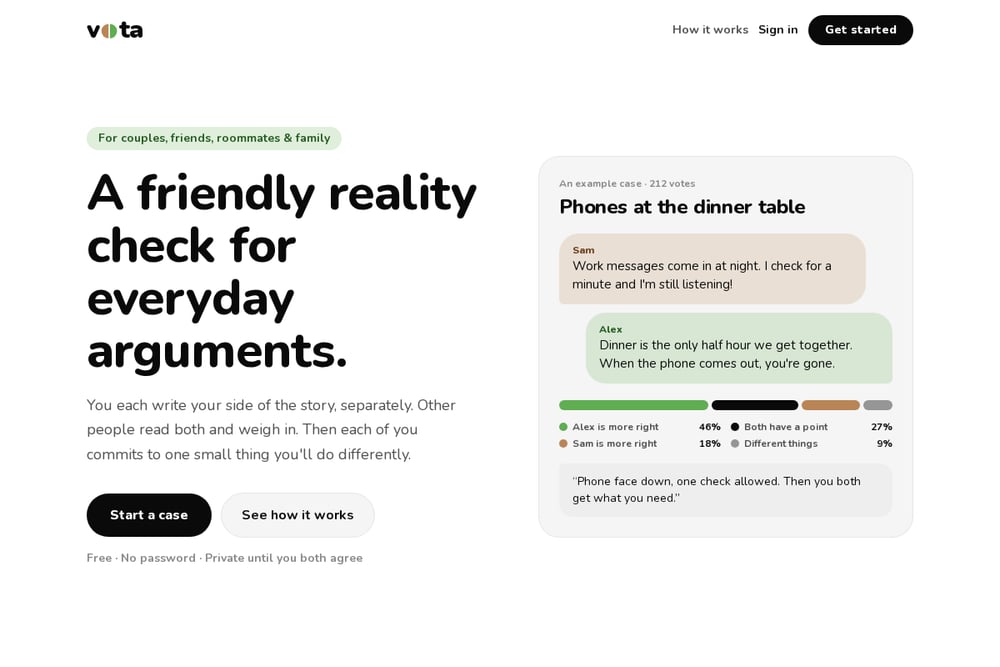 A screenshot of the Vota website.
Vota is built around a simple promise: nobody gets interrupted. Each person writes their side privately, and neither sees the other's version until both are submitted. Both parties then approve exactly what voters will see, and nothing goes live unless you both say yes. Over three days, people vote on who is more right, whether both have a point, or whether you are arguing about different things. When voting closes, each of you commits to one small thing you will do differently, which is the part that actually helps. It is free, requires no password, and keeps drafts private until mutual agreement, with personal details like emails and phone numbers stripped automatically.
#3 Who's Right?
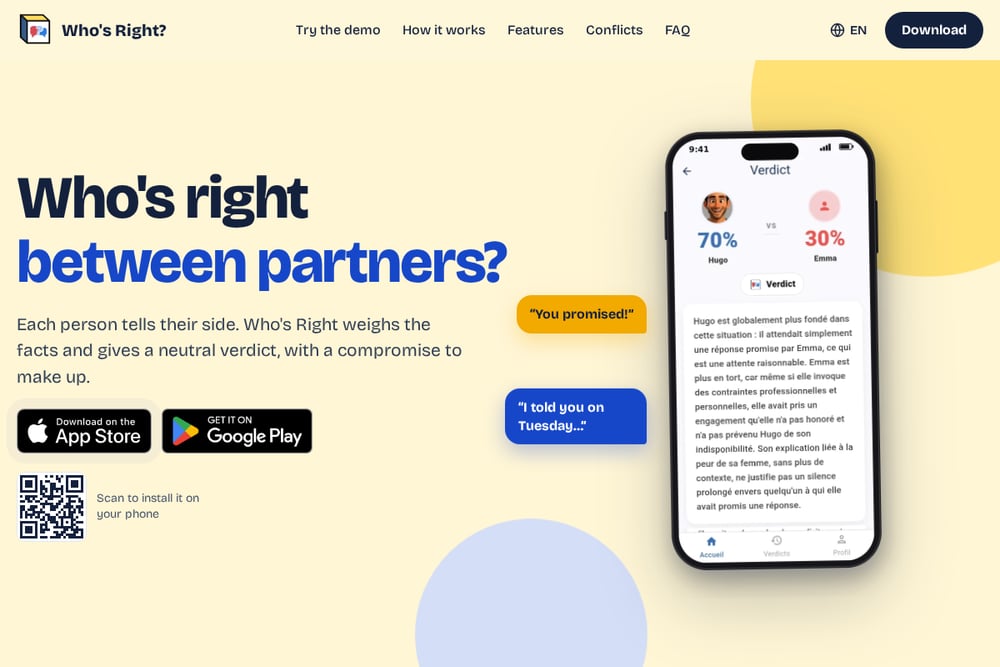 A screenshot of the Who's Right? website.
Who's Right? positions itself as a neutral referee rather than a popularity contest. Each person tells their side, and the platform weighs the facts to deliver a verdict with a percentage split, such as a slight edge for one party. It goes a step further by suggesting a compromise, like picking the next dinner date together tonight. The service is free with ads, designed in Europe, and available in nine languages including French, Spanish, German, and Arabic. It also publishes settled disputes by category, so you can browse how other couples, families, and friends resolved similar standoffs.
#4 Who is Right: Your AI Court
 A screenshot of the Who is Right: Your AI Court website.
Who is Right: Your AI Court treats a disagreement as a case for AI judges to review. You tell your story, add the people involved, and the judges analyze both sides before delivering a verdict. What sets it apart is the follow-through: relationship cards reveal communication styles, conflict dynamics, and emotional triggers, while personal insight cards show how you argue and react in emotional moments. Daily reflection questions help you see your own patterns over time. It is available on Google Play with in-app purchases and has drawn thousands of downloads.
#5 Settle
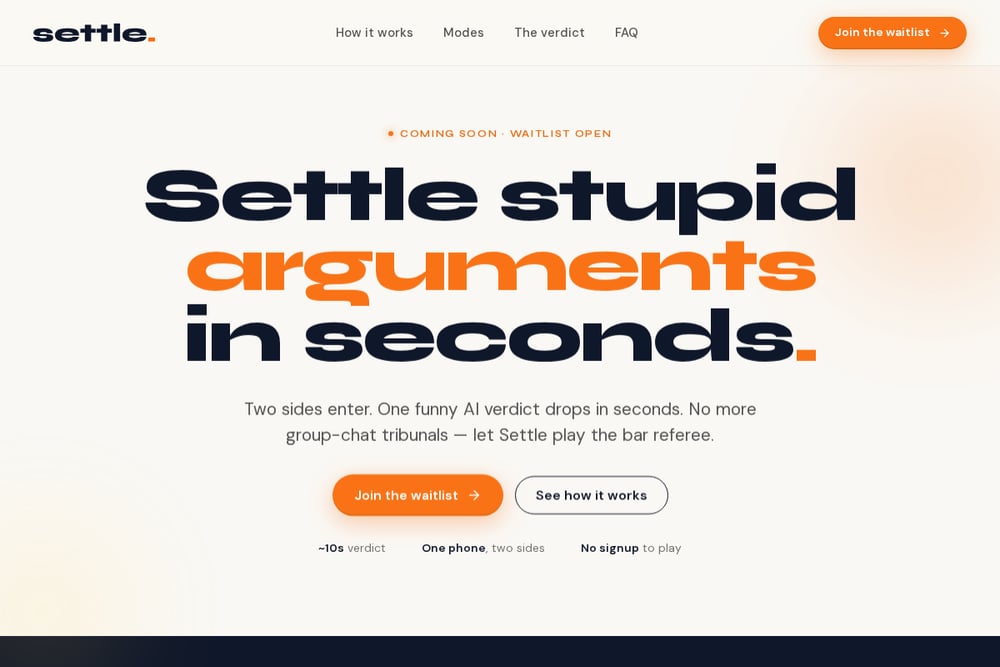 A screenshot of the Settle website.
Settle bills itself as the bar referee for stupid arguments, and it delivers on that promise in about ten seconds. Bar Mode lets two people pass one phone back and forth, each making their case by voice or text, before a ruling drops with a guilt percentage. Quick Challenge fires a dispute at a friend remotely, and no signup is needed to play. A Daily Settle offers a fresh dispute each day, while Rivals and Profile features track the running tally of who has been right all along. It is currently in waitlist mode, so expect access to open in stages.
How to Pick the Right Platform for Your Argument
Start with who you are arguing with. If it is a partner or roommate and you want the relationship intact, prioritize platforms with privacy controls and mutual consent, like Vota, where nothing publishes until both of you agree. If the dispute is lighthearted, a hot dog sandwich question or whose turn it is to do the dishes, speed and shareability matter more than depth, which points you toward Settle or Settle It. If you want to understand why the same fight keeps happening, look at tools that surface patterns and communication styles, such as Who is Right: Your AI Court. And if you want a neutral third party to propose a way forward, Who's Right? pairs its verdict with a suggested compromise. One more thing: if an argument involves fear or harm, it is not a debate. Reach for real support, not an app.
Putting the Process on Autopilot
You do not need to build a workflow to use these tools, but a little structure helps. Write your side first, alone, before you read anything your partner wrote. Submit it and wait for both versions to be in. Review exactly what voters will see and approve it only if it is fair. Then let the voting window run its course without checking the tally every hour. When it closes, read the result together and each write one small change you will make. That final step is where the value lives, and it takes about five minutes.
The Bottom Line
Arguments do not end because someone wins. They end because both people feel heard and something changes. Each of these five platforms offers a different route to that outcome, whether through community votes, AI verdicts, or a ten-second ruling you can screenshot. Pick the one that matches the tone of your relationship and the weight of the dispute. Then commit to the small change at the end. That is the part that keeps you out of the same fight next month.