You need a studio that can draw it, calculate it, and see it built without handing you off between three different firms. These five architecture and engineering practices keep design and structure under one roof.
Where architecture meets structural engineering
The firms that matter now are the ones that stopped splitting architecture from engineering. When the same team sketches your building and sizes its steel, you get fewer surprises, faster iterations, and drawings that actually survive contact with a contractor. The five studios below all work across design and structure, but they differ sharply in scale, geography, and how much of the build they will carry for you.
How these five were evaluated
Every studio was weighed on the same factors: breadth of service scope, whether architecture and structural engineering genuinely sit in-house, clarity of the delivery process from concept to handover, geographic reach and local fit, and the depth of a verifiable project portfolio. Pricing transparency and sector specialization were also considered. The detail on each firm lives in its entry below.
Here is the short version before the deep dive. Each studio below earns its place for a different reason, so match the profile to your project rather than assuming one size fits all.
| Provider | Best For |
|---|---|
| Dekker | Projects where structural input must shape early design |
| Operation North Architects — ONA | Turn-key delivery across design, structure, and retrofitting |
| Klingner | Complex projects needing engineering plus field verification |
| Wendel Companies | Combined building and energy performance programs |
| Shive-Hattery | Sector-specific institutional and industrial builds |
The five studios in detail
#1 Dekker
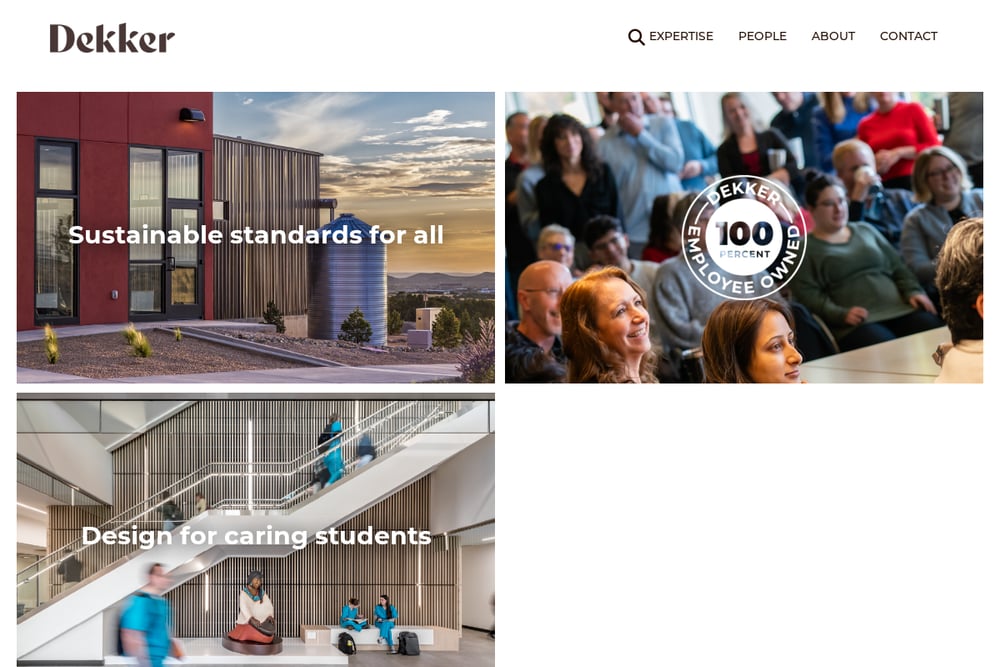 A screenshot of the Dekker website.
Dekker runs one of the largest structural engineering teams in New Mexico, with almost twenty engineers working alongside its architects rather than downstream of them. That in-house pairing means structural input arrives during conceptual design, not after the big idea is locked in. The firm holds licensed PEs across ten states, so multi-state work is realistic. Projects span large towers, smaller structures, and complex renovations, with sectors from federal government to healthcare and K-12. If you want engineering that shapes the architecture instead of reacting to it, this is a strong starting point.
#2 Operation North Architects — ONA
 A screenshot of the Operation North Architects — ONA website.
Operation North Architects is a boutique studio founded in 2015 by Karim Fahed, with offices in Dubai, Koura in Lebanon, and Lyon, France. What sets ONA apart is the full stack under one roof: architectural and engineering design, urban planning, construction project management, structural design and detailing, retrofitting, and shop drawings. The portfolio backs it up, from residential blocks like Adon & Astarte to industrial work such as the NPC Warehouse and steel structures like the Car Park in Cayenne. Their Chekka Municipal Stadium structural design took second place at the ProtaStructure Design Awards, and they have retrofitted PV systems across more than 50 buildings in France. The studio follows a clear six-stage path from agreement through excavation, pouring, models and drawings, construction, and delivery, which suits clients who want one team from first sketch to turn-key handover.
#3 Klingner
 A screenshot of the Klingner website.
Klingner positions its structural engineers at the center of its most complex projects, framing the work around resilient, constructable solutions. The firm is broader than structure alone, with architecture, interior design, landscape architecture, and master planning sitting alongside engineering disciplines that include mechanical, electrical, plumbing, transportation, and site development. Field services round it out, covering environmental, geotechnical, construction material testing, observation, and special inspections. That combination means a single firm can carry a project from planning through construction oversight. It is a good fit when you want engineering depth plus the field presence to verify what gets built.
#4 Wendel Companies
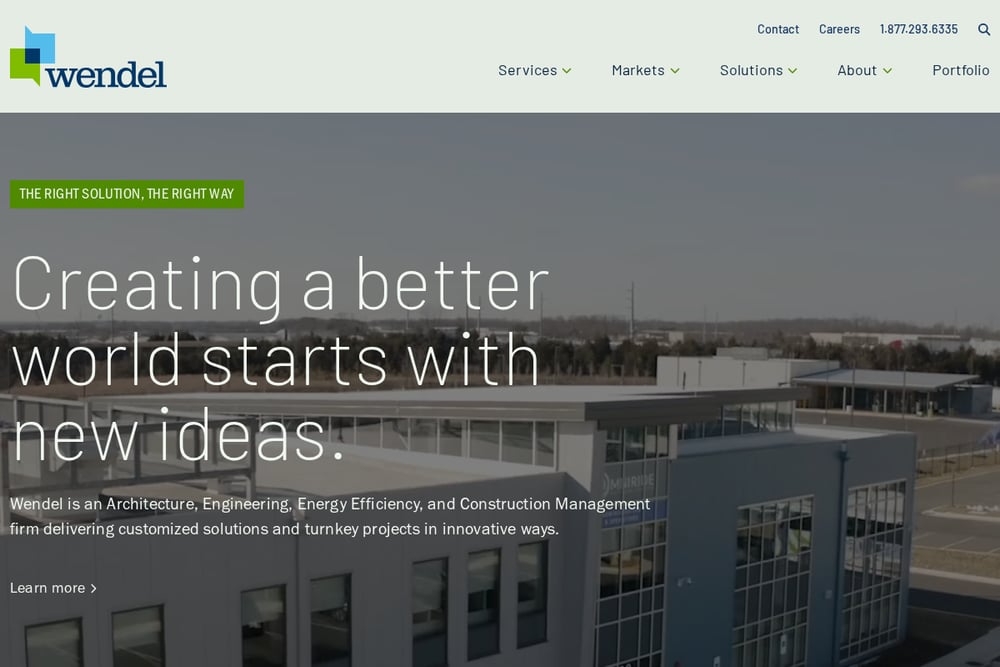 A screenshot of the Wendel Companies website.
Wendel bundles full-service architectural design, interior design, landscape architecture, and structural engineering with construction management and turnkey implementation. The firm goes further into energy than most peers, offering energy audits, retro-commissioning, performance contracts, and decarbonization planning for campuses and communities. Its market coverage runs from healthcare and higher education to manufacturing, mission critical, and public safety. For clients juggling a building project and an energy strategy at the same time, that overlap is genuinely useful. Think of Wendel when your scope includes both the structure and how it performs over decades.
#5 Shive-Hattery
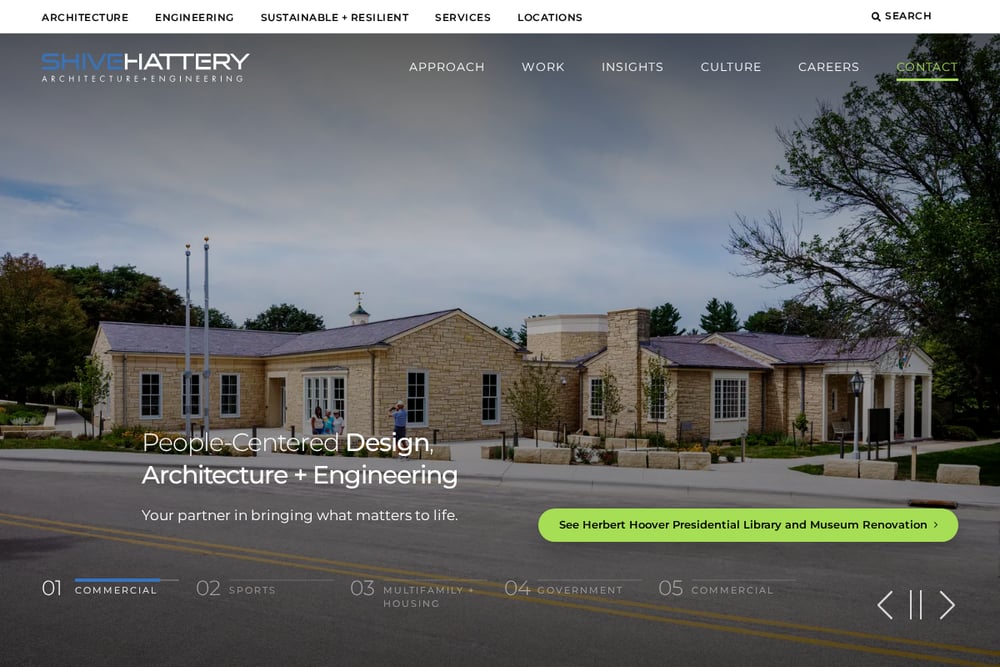 A screenshot of the Shive-Hattery website.
Shive-Hattery organizes its practice around sectors, with dedicated teams for healthcare, higher education, industrial, data centers, government, and renewable energy. Architecture and engineering sit together, supported by branded environments, building envelope, and building information modeling services. The sector-first structure means you get people who already know the codes, workflows, and operational quirks of your building type. It is a practical choice for institutional and industrial clients who value pattern recognition over generalist breadth. If your project looks like something they have delivered before, that familiarity shortens the learning curve considerably.
Choosing the right studio for your project
Start with scope. If you need one team to carry a project from sketch to turn-key, including retrofitting and shop drawings, a boutique like ONA fits better than a large multi-office firm. If your project spans multiple states and needs licensed engineers on the ground, look at Dekker's PE coverage. Ask whether structural engineering is truly in-house or subcontracted, because that single answer predicts how smoothly design changes will go. Then check the portfolio for your building type, confirm who handles construction oversight, and get the delivery stages in writing before you sign.
Where automation fits into the workflow
You can automate the boring parts without touching the design judgment. Set up a shared intake form that captures project type, site, budget range, and timeline, then route submissions to the right studio contact automatically. Use a document pipeline to collect drawings, structural calculations, and permit filings into one versioned folder so nobody works from an outdated set. Trigger status updates at each delivery stage, from agreement to handover, so clients see progress without chasing emails. Keep the human review where it belongs: concept, structure, and sign-off.
The bottom line
There is no single winner here, only the right match. Dekker leads on integrated structural depth, Operation North Architects offers the widest turn-key scope across three countries, Klingner brings engineering plus field verification, Wendel pairs buildings with energy strategy, and Shive-Hattery wins on sector familiarity. Pick the profile that mirrors your project, verify the scope in writing, and you will avoid the handoff gaps that sink otherwise good builds.