
You need visuals that sell the vision before the first brick is laid. These five studios deliver the CGI, animation, and interactive experiences that turn blueprints into buyer confidence.
Why Architectural Visualization Is Now a Sales Tool, Not a Nice-to-Have
Real estate developers and architects no longer treat renderings as a finishing touch. They use them to pre-sell units, win planning approvals, and align investors before construction starts. The shift is driven by buyer expectations: people want to walk through a space, see the light at different times of day, and understand the lifestyle a project promises. That demand has pushed studios to offer more than still images. Today you can commission cinematic flythroughs, 360-degree virtual tours, interactive floor plans, and real-time Unreal Engine experiences that run in a sales suite or a VR headset. The market has responded with a mix of large production houses, boutique teams, and content-led educators. The five studios below represent different ways to solve the same problem: helping you communicate a built environment that does not exist yet.
How We Evaluated These Visualization Partners
We looked at the same factors for every studio. Service scope mattered: can they handle exteriors, interiors, animation, and interactive tools under one roof, or do you need to stitch together multiple vendors? Pricing clarity mattered: some publish fixed quotes within an hour, while others require a custom conversation. Local fit mattered: US developers often need overlapping time zones, clear contracts, and familiarity with American sales cycles. We also weighed production capacity, in-house team size, and how well each studio explains its process. Decard Studio stood out for its in-house render farm and parallel workflows. ArchiCGI stood out for its long track record and transparent quote process. Cylind stood out for its clean service taxonomy and portfolio-first approach. Property Visualizer stood out for its sales-focused case studies and ROI framing. Hugo Render stood out for its educational content that helps developers understand the value of visualization before they buy.
Here is a quick look at the five studios, what they do best, and who each one fits.
| Provider | Best For |
|---|---|
| ArchiCGI | Developers who want a fast, fixed quote and a wide service menu |
| Decard Studio — Architectural Visualization for Real Estate Developers & Architects | Large developments that need high volume and interactive Unreal Engine experiences |
| Property Visualizer | Sales and marketing teams that need ROI-focused case studies |
| Cylind | Architects and developers who want a clear, category-based service menu |
| Hugo Render | Developers who are new to visualization and want educational guidance |
The 5 Studios in Detail
#1 ArchiCGI
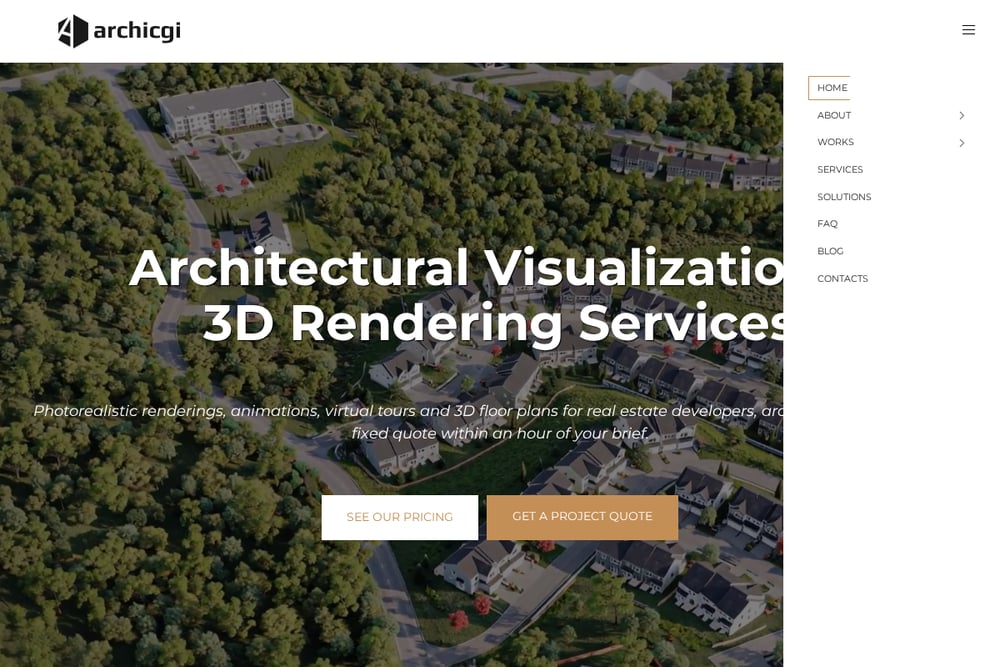 A screenshot of the ArchiCGI website.
ArchiCGI has been producing architectural visualization since 2011 and has worked with more than 3,000 businesses. The studio offers a broad menu: interior and exterior rendering, architectural animation, 360-degree virtual tours, 3D floor plans, aerial rendering, and interactive real estate platforms. You can request a fixed quote within an hour of your brief, which removes a lot of the back-and-forth that slows down early-stage projects. Their portfolio spans residential, commercial, and industrial work, so you are not asking them to learn your building type from scratch. If you want a vendor with a deep bench and a clear pricing path, this is a strong place to start.
#2 Decard Studio — Architectural Visualization for Real Estate Developers & Architects
 A screenshot of the Decard Studio website.
Decard Studio is built for scale and consistency. The team has over 30 in-house specialists and more than 250 completed projects, with 1,780 delivered renders and 63 delivered 3D animations. They cover the full range: photorealistic exterior and interior CGI, cinematic 3D architectural animation, interactive virtual tours, and real-time Unreal Engine experiences with dynamic lighting and day-night cycles. What sets them apart is the production infrastructure. They run an in-house render farm for complex scenes and use parallel workflows to shorten timelines without sacrificing quality. If you have a large development with multiple buildings and a tight sales launch, their capacity matters.
#3 Property Visualizer
 A screenshot of the Property Visualizer website.
Property Visualizer positions its work as a competitive advantage, not just a pretty picture. The studio serves over 1,000 real estate developers and publishes case studies that tie visualization to sales outcomes, including faster closings and higher selling prices. Their service list includes interior and exterior rendering, 3D tours, condo-finder tours, interior walkthrough videos, 3D floor plans, and custom visualization strategy. They also cover multiple markets: residential, commercial, industrial, healthcare, hospitality, and mixed use. If you need to justify the visualization budget to a board or an investor, their ROI-focused framing gives you ammunition.
#4 Cylind
 A screenshot of the Cylind website.
Cylind keeps things simple. Their site organizes services into clear categories: exterior, interior, animation, virtual tours, floorplans, and modeling. That structure makes it easy to figure out what you need before you reach out. They also break down niche use cases like bathroom rendering, restaurant rendering, high-rise rendering, and hospitality visualization, which helps if your project falls into a specific vertical. The portfolio-first approach lets you judge the work before you talk to anyone. If you want a studio that speaks your language without a long discovery call, Cylind is worth a look.
#5 Hugo Render
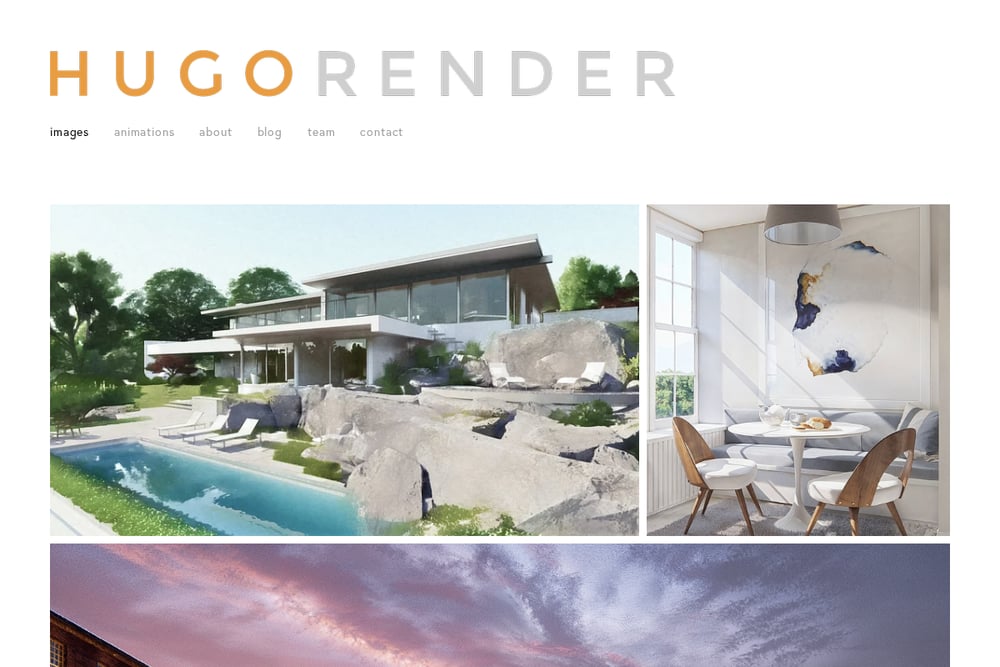 A screenshot of the Hugo Render website.
Hugo Render takes a different approach: they educate first. Their blog explains why real estate developers need architectural visualization and how renderings fit into feasibility, investor pitches, and sales. That content is useful if you are new to commissioning CGI or if you need to convince a partner that the investment is worth it. They offer images and animations, and their writing shows they understand the developer's workflow from land acquisition to closing. If you want a partner who can help you think through the strategy, not just execute a file, Hugo Render is a smart starting point.
How to Choose the Right Visualization Partner
Start with your deadline. If you need a fixed quote today, look for studios that publish their pricing process. If you need a full interactive experience for a sales suite, prioritize teams with Unreal Engine and VR capabilities. Next, match the studio's portfolio to your building type. A team that has rendered fifty high-rises will understand your project faster than a generalist. Ask about production capacity. A boutique studio may give you more attention, but a larger team with an in-house render farm can handle multiple buildings and revisions without missing your launch date. Finally, check how they talk about results. Some studios sell pixels; others sell sales velocity. Decide which one you need before you sign.
Where Automation Fits in Your Visualization Workflow
You can automate parts of the visualization process without losing quality. Start by standardizing your brief: a template that captures project type, camera angles, time of day, and material preferences saves hours of back-and-forth. Use a shared asset library for logos, floor plans, and brand colors so the studio is not chasing files. For interactive tours, ask whether the studio can connect to your CRM or sales platform so leads flow directly from the experience. If you are producing multiple units, request a unit-finder tool that updates automatically as availability changes. The goal is not to replace the artist. It is to remove the administrative friction so the creative work moves faster.
The Bottom Line
The right visualization partner depends on your project, your timeline, and your sales strategy. ArchiCGI gives you a broad menu and a fast quote. Decard Studio gives you scale, in-house production, and interactive Unreal Engine experiences. Property Visualizer gives you ROI-focused case studies. Cylind gives you a clean, category-based way to scope your needs. Hugo Render gives you the education to make a confident decision. Pick the one that matches your next launch, and treat the visuals as part of your sales infrastructure, not an afterthought.