
Finding a coding program that truly engages your child in Arabic can feel like searching for a needle in a haystack. These five academies stand out for their hands-on approach and commitment to building real skills.
The Arabic-Language Coding Education Landscape
Demand for Arabic-language coding education is surging among expat and heritage families in the US. Parents want their kids to learn future-proof skills without losing their linguistic roots. The market has responded with online academies that blend live instruction, project-based learning, and culturally relevant content. But not all programs are created equal. Some focus on visual block coding for young beginners, while others dive into Python, AI, and game development for teens. The key differentiator is how well each academy balances engagement with measurable progress.
How We Evaluated These Academies
We looked at five factors: service scope (does it cover ages 6–18 and multiple coding languages?), pricing clarity (are costs and packages transparent?), local fit (is the Arabic instruction natural and culturally resonant?), teaching method (live vs. self-paced, group size, project work), and progress tracking (how are parents kept informed?). Each academy has its own strengths. Benaa Coding shines with ultra-small groups of three. Little Programmer offers a wide course catalog and accredited certificates. Codingal brings a global curriculum with STEM.org accreditation. Genius Online emphasizes step-by-step skill building. AI School provides a structured 12-level path with private instructors. None is universally superior; the right choice depends on your child's age, learning style, and your budget.
Here is a quick snapshot of each academy to help you compare at a glance.
| Provider | Best For |
|---|---|
| أكاديمية المبرمج الصغير | Families wanting a wide course selection and accredited certificates |
| Home | benaacoding | Parents seeking ultra-small group sizes and personalized attention |
| Codingal | Families looking for a globally recognized, accredited program |
| Genius Online | Beginners who need a gentle, step-by-step introduction |
| AI School | Students who thrive with private, one-on-one instruction |
A Closer Look at Each Academy
#1 أكاديمية المبرمج الصغير
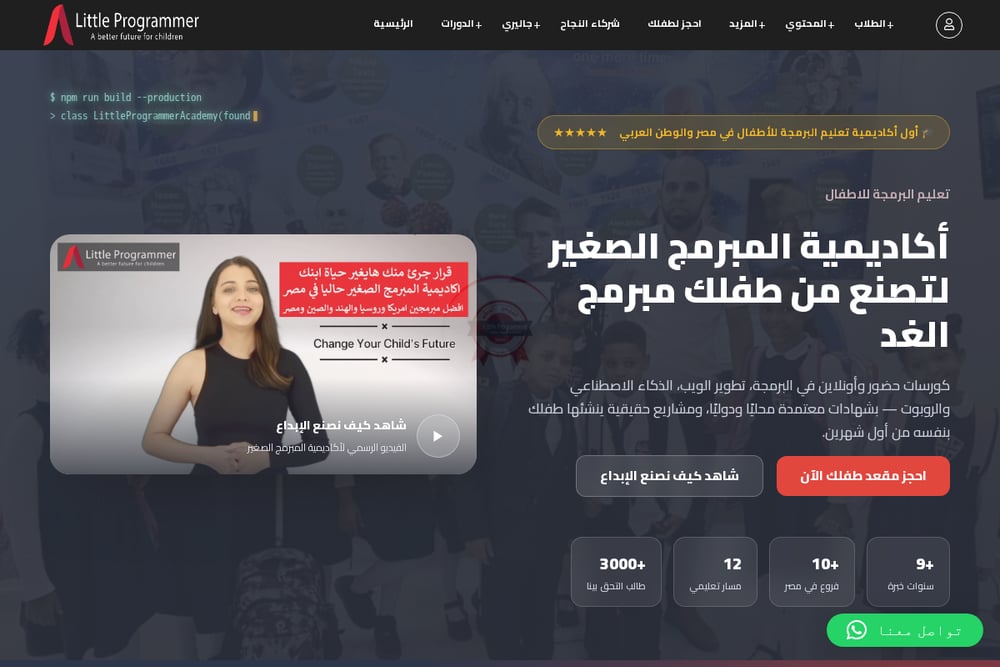 A screenshot of the أكاديمية المبرمج الصغير website.
أكاديمية المبرمج الصغير is a well-established Arabic academy offering a broad range of courses from Scratch and Python to robotics, web development, and AI. It provides both online and in-person options, with accredited certificates upon completion. The academy also organizes international genius competitions and maintains a gallery of student projects. Parents appreciate the structured diplomas and the emphasis on real-world applications like Arduino projects. For families seeking a comprehensive curriculum with a proven track record, this is a strong contender.
#2 Home | benaacoding
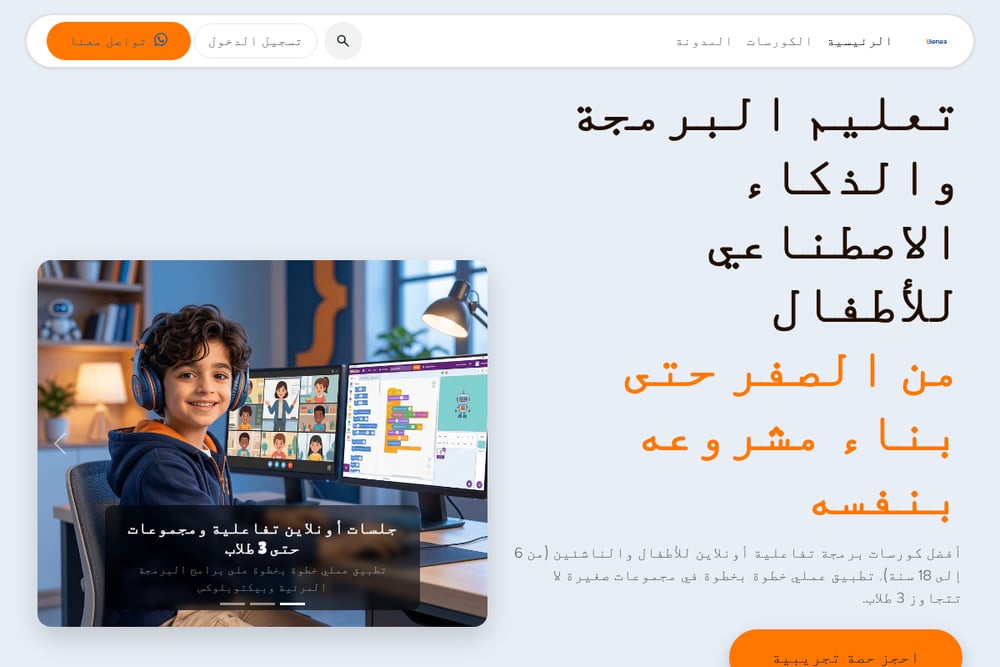 A screenshot of the Home | benaacoding website.
Benaa Coding is an Arabic-language online academy that teaches programming and AI to children aged 6–18 through small, interactive group sessions. It focuses on hands-on projects, real-time coding, and personalized progress tracking for each student. The academy limits groups to a maximum of three students, ensuring individual attention. Its step-by-step learning cycle—understand, apply, experiment, err, solve, build—turns kids into creators. Parents receive regular reports on their child's progress. If you want a highly interactive, project-based experience in Arabic, Benaa Coding is worth a close look.
#3 Codingal
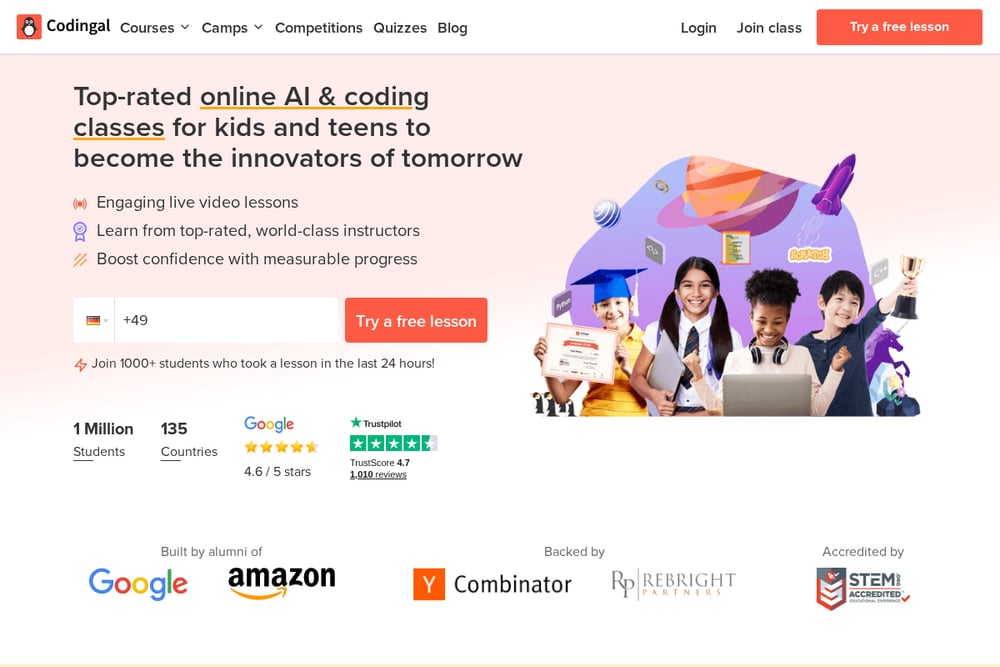 A screenshot of the Codingal website.
Codingal is a global platform offering live online coding classes for kids and teens, with a curriculum that includes AI, game development, app building, and more. It boasts over 1 million students across 135 countries and holds STEM.org accreditation. The platform provides a free trial lesson and a variety of camps and competitions. While primarily in English, it offers Arabic support in some regions. Its structured learning paths and measurable outcomes make it a solid choice for internationally minded families.
#4 Genius Online
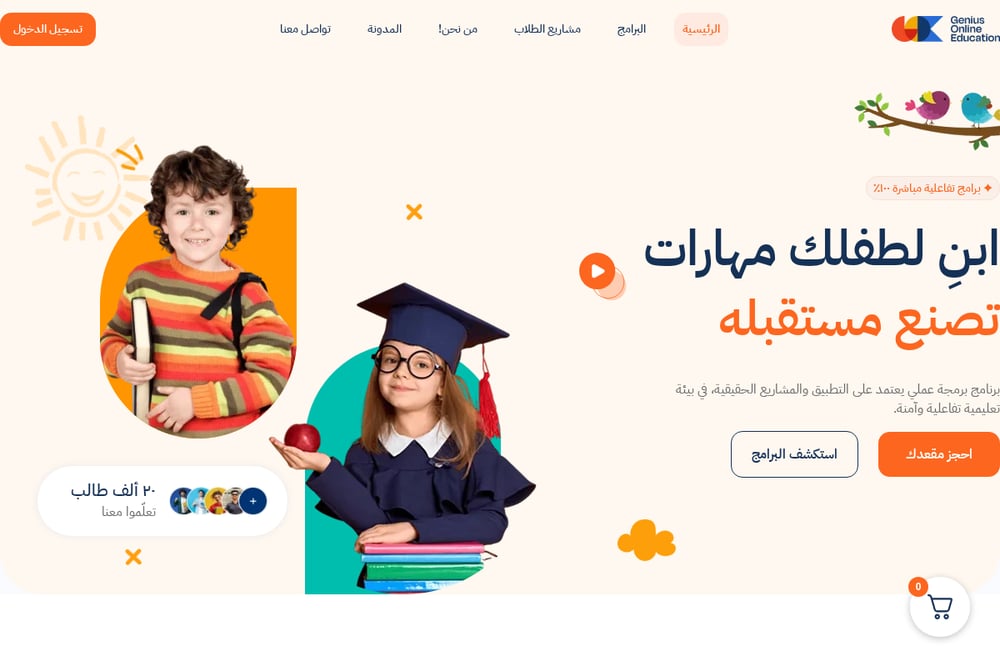 A screenshot of the Genius Online website.
Genius Online is an Arabic platform that focuses on building a strong foundation in programming for children. It emphasizes a gradual, step-by-step curriculum that starts from zero and progresses to advanced projects. The academy highlights logical thinking, problem-solving, and creativity as core skills. Students build real projects early on, which boosts confidence and retention. The content is simplified for kids without technical jargon. For parents who want a clear, linear path with plenty of practical application, Genius Online delivers.
#5 AI School
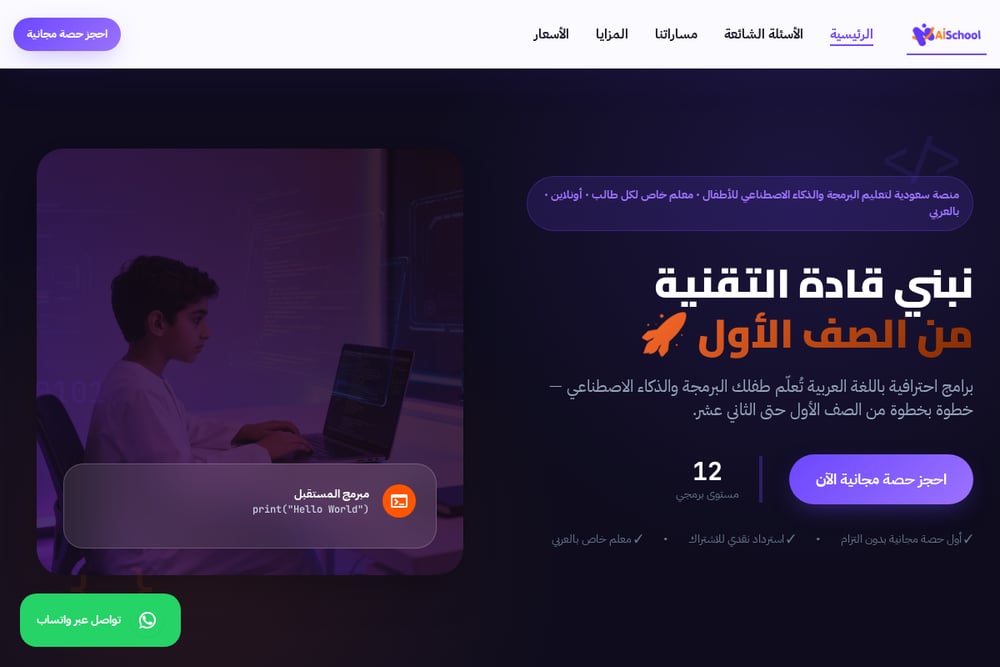 A screenshot of the AI School website.
AI School is a Saudi-based online platform that teaches programming, AI, and game design to children in grades 1–12. It offers a structured 12-level roadmap, with each student receiving a private instructor. The curriculum is entirely in Arabic and covers visual coding, Python, JavaScript, and AI. The platform provides a free trial lesson, a money-back guarantee, and certified certificates. Parents can monitor progress through regular updates. If you prefer one-on-one instruction with a clear progression, AI School is a compelling option.
How to Choose the Right Academy for Your Child
Start by identifying your child's age and experience level. Younger kids (6–9) often do best with visual block coding and very small groups. Older teens may want text-based languages like Python and AI projects. Next, consider your schedule and budget. Live classes require commitment, while self-paced options offer flexibility. Check group sizes: smaller is generally better for engagement. Look for clear progress reports so you can track your child's growth. Finally, read reviews and ask for a trial lesson. Most academies offer one, and it's the best way to see if the teaching style clicks with your child.
Automating Progress Tracking and Parent Updates
You can set up a simple system to keep tabs on your child's coding journey. Use a shared calendar to log class times and project deadlines. Create a folder for certificates and project screenshots. After each session, ask your child to demo what they built—this reinforces learning. If the academy provides parent dashboards, check them weekly. For extra practice, subscribe to kid-friendly coding newsletters or YouTube channels. Automate reminders for homework and showcase events. This lightweight routine ensures you stay informed without hovering.
The Bottom Line
Each of these five academies brings something valuable to the table. أكاديمية المبرمج الصغير offers breadth and accreditation. Benaa Coding excels with its intimate group sizes and project-based method. Codingal provides a global, STEM-accredited curriculum. Genius Online builds foundations gently. AI School delivers structured one-on-one instruction. Your best choice depends on your child's personality, your goals, and your budget. Try a trial lesson with two or three academies before committing. The right fit will keep your child excited to code week after week.