You built something good. Now you need someone who can get it in front of players, keep it alive, and squeeze real revenue out of it. These five publishing partners each solve that problem in a different way.
The publishing layer behind every app that survives
Shipping a build is the easy part. Store pages, compliance checks, ratings paperwork, acquisition spend, ad mediation, retention tuning, and post-launch patches are where most indie titles quietly die. That gap created a whole service category: publishing studios that take a finished product and handle the business of getting it seen and paid for.
The market splits into a few camps. Some shops focus on store and console submission mechanics. Others lean hard into monetisation and ad mediation. A smaller group positions itself around revival, taking titles that lost momentum and giving them a second run. Pricing is rarely public, and the scope of what counts as publishing varies wildly from one provider to the next.
That inconsistency is exactly why you need to read the fine print. Ask who holds the platform accounts, who owns the store listing, and who controls the ad revenue. The answers tell you more than any service page ever will.
How we looked at each studio
We judged every studio on the same four factors. First, service scope: does it cover launch, growth, monetisation, and relaunch, or only one slice? Second, transparency: how clearly does it explain what it does and does not control, especially around platform accounts and approvals? Third, monetisation depth: does it handle ads, in-app purchases, and retention tuning as a connected system? Fourth, fit for smaller teams: can a solo developer or small studio actually work with them without a legal department?
Reborn Studio stood out for covering the full arc from first upload to relaunch, with a clear four-stage structure. GameBiz Consulting stood out for breadth across monetisation, acquisition, and advisory. Average Games Studio stood out for unusually candid disclosure about what it cannot promise. Fyros Games stood out for founder-friendly release planning and ownership clarity. CAS.AI stood out for documented, numbers-driven growth stories tied to its mediation platform.
Here is the short version before the detail. Each studio below approaches publishing from a different angle, so match the angle to your situation rather than chasing a generic label.
| Provider | Best For |
|---|---|
| GameBiz Consulting | Teams that need monetisation and UA expertise layered onto publishing |
| Reborn Studio · Built to rise again | Developers with a stalled title that deserves a relaunch |
| Average Games Studio | Studios that want submission work done without losing account control |
| Fyros Games | First-time founders planning their first real release |
| CAS.AI | Developers whose main blocker is ad revenue and fill rate |
The five studios, one by one
#1 GameBiz Consulting
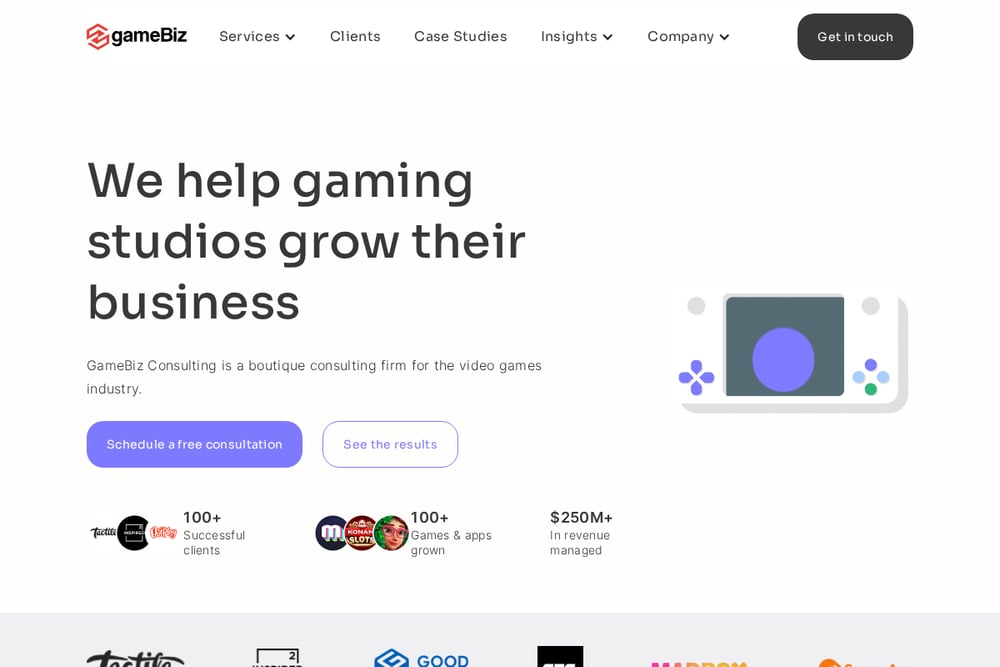 A screenshot of the GameBiz Consulting website.
GameBiz Consulting runs a broad menu of services built around revenue growth: ad monetisation, user acquisition, mobile publishing, financial management, advisory, and business development. If your problem is commercial rather than creative, this is the kind of shop that speaks your language. Their mobile publishing service sits alongside dedicated monetisation and UA tracks, which means you can plug into one piece or several. They also publish case studies, reports, and a newsletter, so you can evaluate their thinking before you ever book a call. The trade-off is that breadth can feel diffuse if you want one team owning your entire launch end to end.
#2 Reborn Studio · Built to rise again
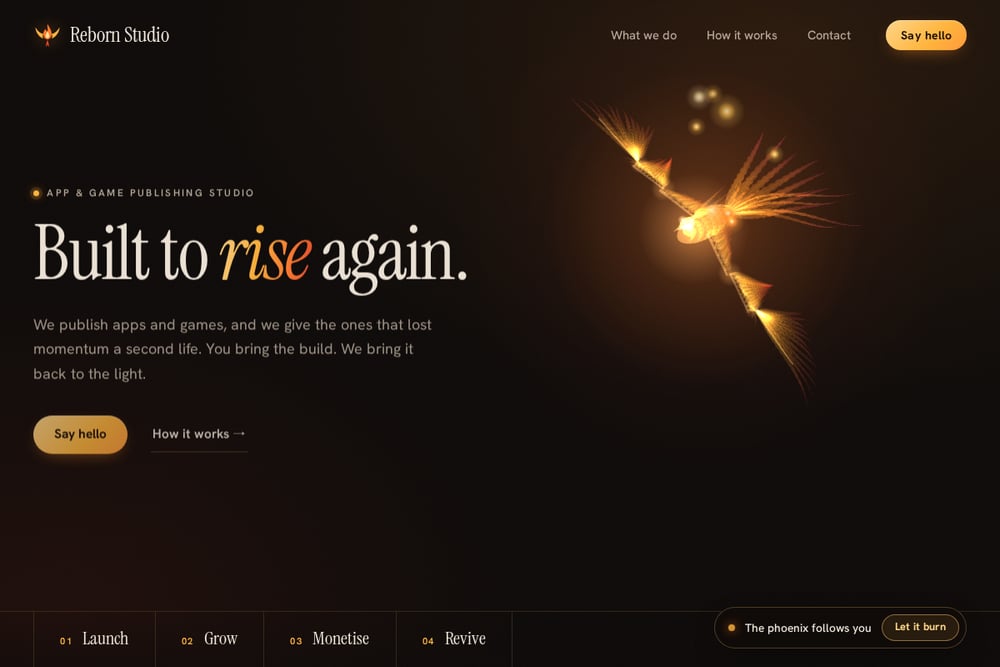 A screenshot of the Reborn Studio · Built to rise again website.
Reborn Studio is a publishing studio for apps and games, and its pitch is unusually complete. It covers launch, grow, monetise, and revive as four connected stages, from store pages and compliance checks through to acquisition, creative testing, ad and in-app purchase setup, and retention tuning. The revival piece is the differentiator: when a title loses momentum, they audit it, refresh what is holding it back, and relaunch it. Their four-step process runs from Spark to Forge to Rise to Soar, with clear reporting while they keep improving the product. For a small team sitting on a build that never found its audience, that second-life offer is genuinely rare in this market.
#3 Average Games Studio
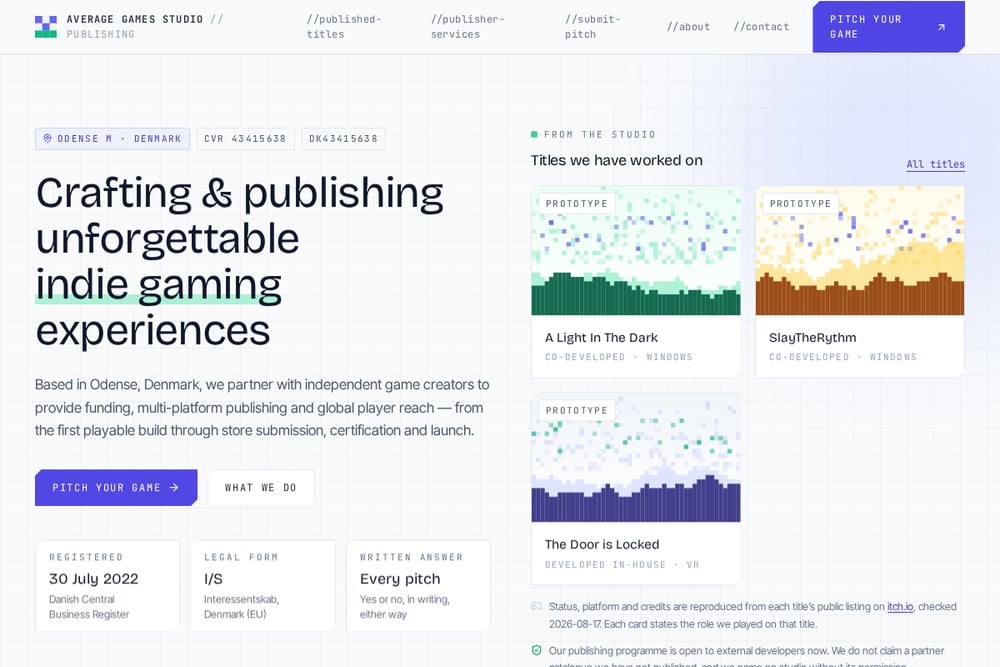 A screenshot of the Average Games Studio website.
Average Games Studio handles store and console publishing with a level of honesty that is refreshing. Their publisher services page lists four service lines and, under each one, spells out exactly which part of the outcome belongs to somebody else, whether that is a platform holder, a rating board, or the market. They cover PC storefronts, consoles, and mobile, including store copy and assets, build pipelines, ratings paperwork, launch scheduling, and post-launch patches. They are explicit that they hold no platform-holder publisher authorisation of their own, so submissions run through your accounts under written authorisation. If you want a partner who will not oversell what approval means, this is a strong fit.
#4 Fyros Games
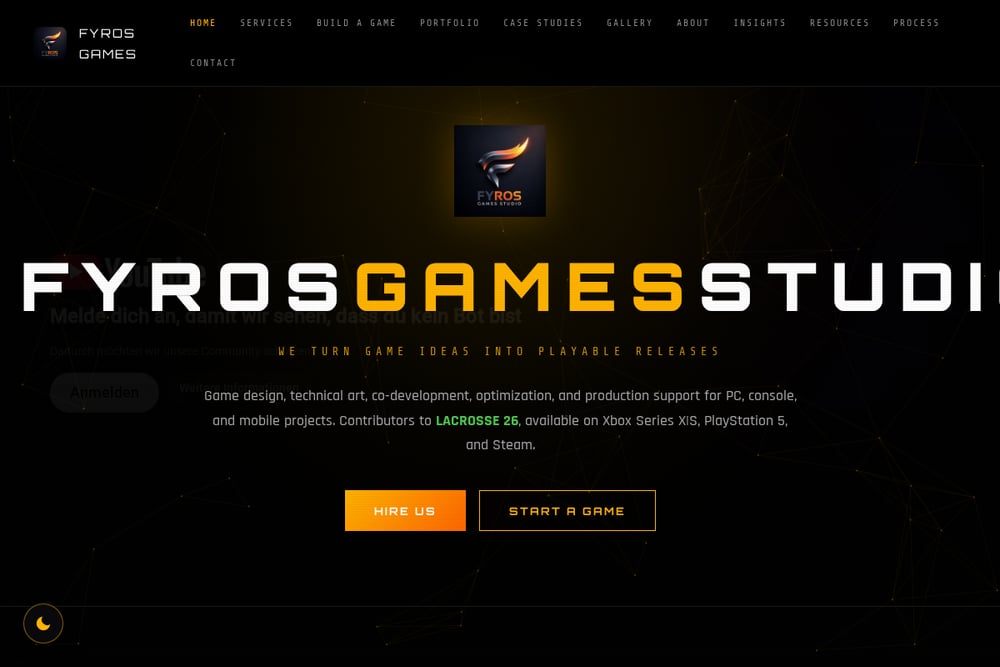 A screenshot of the Fyros Games website.
Fyros Games frames publishing as operational responsibility rather than a single upload button. Their launch support service walks founders through store accounts, approval paths, public materials, testing, patches, and launch communications. They are careful to separate technical delivery from legal publishing status, noting that they are not automatically the legal publisher of your game and that submission rights depend on the account holder and platform authorisation. That clarity matters when you are a first-time founder trying to work out who owns what. The focus is on planning release ownership before the final sprint, which is exactly when most teams discover the problem too late.
#5 CAS.AI
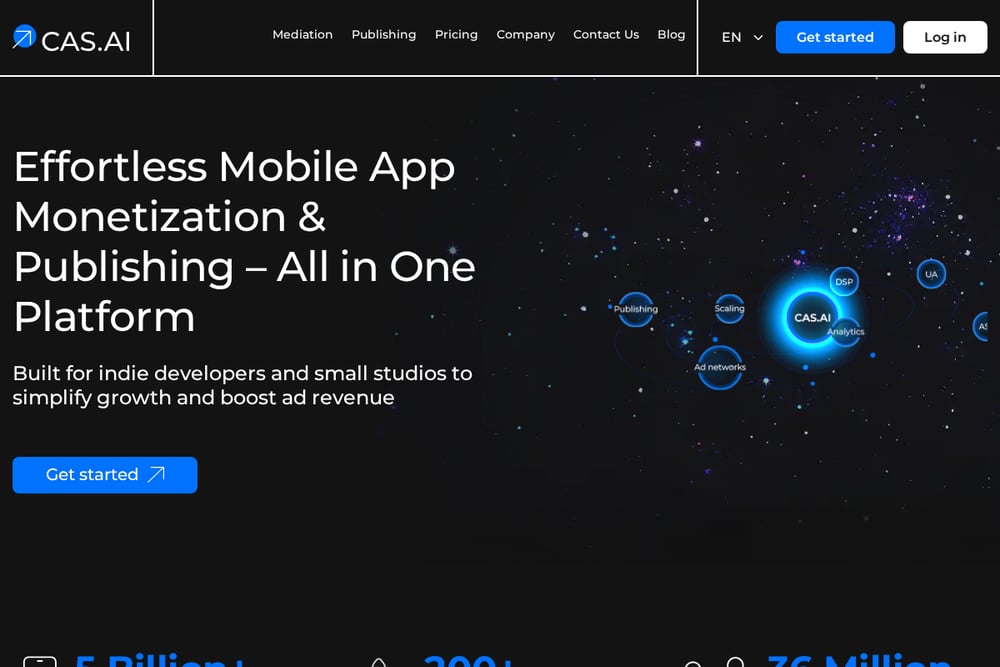 A screenshot of the CAS.AI website.
CAS.AI comes at publishing from the monetisation and analytics side, and it backs the pitch with detailed growth stories. Their publishing breakdown walks through titles that went from a few dollars a day to five-figure monthly revenue after mediation integration, icon A/B tests, refreshed creatives, and UA optimisation. One case describes a driving simulator climbing from roughly $5 per day to €72,500 a year under a publishing model. If your bottleneck is ad revenue, fill rate, or creative performance, this is the most numbers-forward option on the list. The trade-off is that the emphasis sits firmly on monetisation mechanics rather than the full launch and relaunch arc.
Pick the partner that matches your actual problem
Start by naming your real bottleneck. If your game is finished but unreleased, you need submission and store expertise. If it is live but earning almost nothing, you need monetisation and UA. If it launched, faded, and still has legs, you need a revival specialist.
Then ask three questions of every candidate. Who holds the platform accounts and store listings? What happens to the ad and IAP revenue, and who controls the setup? And what does the contract say about approval outcomes, since no publisher can guarantee Apple, Google, or console certification?
Finally, check the reporting. You want clear numbers on retention, spend, and revenue, not vague promises about growth. A partner who shows you the dashboard is a partner you can hold accountable.
Where automation fits into the publishing stack
Publishing is full of repetitive work that benefits from automation. Creative testing at scale, store listing localisation, retention cohort reporting, and ad mediation tuning all run better when the boring parts are scripted.
A practical workflow looks like this. Connect your analytics and ad mediation sources into one dashboard so retention and revenue sit side by side. Automate creative variant rotation so icon and screenshot tests run continuously rather than in one-off bursts. Set alerts on retention drops and fill-rate changes so you catch problems in days, not quarters. Then schedule a monthly audit that pulls store performance, review sentiment, and monetisation data into a single report.
That last step is where revival work starts. You cannot fix what you are not measuring, and automated reporting gives you the evidence to decide whether a refresh and relaunch is worth the spend.
The bottom line
Publishing is not one job. It is launch, growth, monetisation, and sometimes resurrection, and very few providers do all four well.
If you want the full arc covered, including a genuine second life for a title that lost momentum, Reborn Studio is built around exactly that. If you need commercial firepower, GameBiz Consulting brings monetisation and UA depth. Average Games Studio and Fyros Games are the honest operators for submission work and release planning. CAS.AI is the numbers-first choice when ad revenue is the bottleneck.
Match the studio to your stage, ask who owns the accounts, and insist on real reporting. Do that, and your build has a far better chance of finding the light.