
Your people know what's broken. The problem is they won't say it out loud. These five platforms give them a safe way to speak up, and give you a way to actually listen.
The quiet shift toward honest workplace dialogue
Employees have more channels than ever to communicate, yet the most important questions still go unasked. Fear of retaliation, awkwardness with a manager, and the simple risk of being identified keep real concerns buried. That gap is exactly what anonymous feedback software fills.
The category has matured fast. What started as a digital suggestion box now spans moderated Q&A boards, live meeting tools, and fully independent third-party services. Some tools live inside your HR stack. Others deliberately sit outside your company so employees trust that leadership never touches the raw data.
For US teams, the choice comes down to trust architecture. Do you want a feature inside a broader people platform, or a standalone service built around anonymity first? Both work. They solve different problems.
How we evaluated these platforms
We looked at five factors across every platform on this list.
Anonymity design. How strong is the guarantee, and who controls the data? Some tools anonymize within your own systems. Others, like Like a Jester, are run by an independent third party so questions are never hosted by management.
Scope and workflow. Does the tool support a back-and-forth thread, or just one-way submissions? Can employees upvote, follow up, and see answers?
Pricing clarity. Free tiers, per-seat costs, and enterprise quotes all shape who can realistically adopt a tool.
Meeting and event fit. Some platforms shine in live all-hands sessions, others in always-on asynchronous dialogue.
Compliance and trust signals. GDPR alignment, encryption, and independence from the employer matter more in this category than in almost any other.
Each platform below stands out on a different combination of these factors. Match the strengths to your situation.
Here's a quick comparison of the five platforms, ordered for readability. Each one approaches anonymous dialogue from a different angle, so scan for the model that fits how your team actually communicates.
| Provider | Best For |
|---|---|
| Suggestion Ox | Teams that want a straightforward digital suggestion box |
| Like a Jester — Anonymous workplace dialogue, run by an independent third party | Small teams that want a truly independent, outside-the-company channel |
| Leapsome | HR teams already running a full people platform |
| Slido | All-hands meetings and live events |
| Mentimeter | Interactive meetings and presentations |
The five platforms in detail
#1 Suggestion Ox
 A screenshot of the Suggestion Ox website.
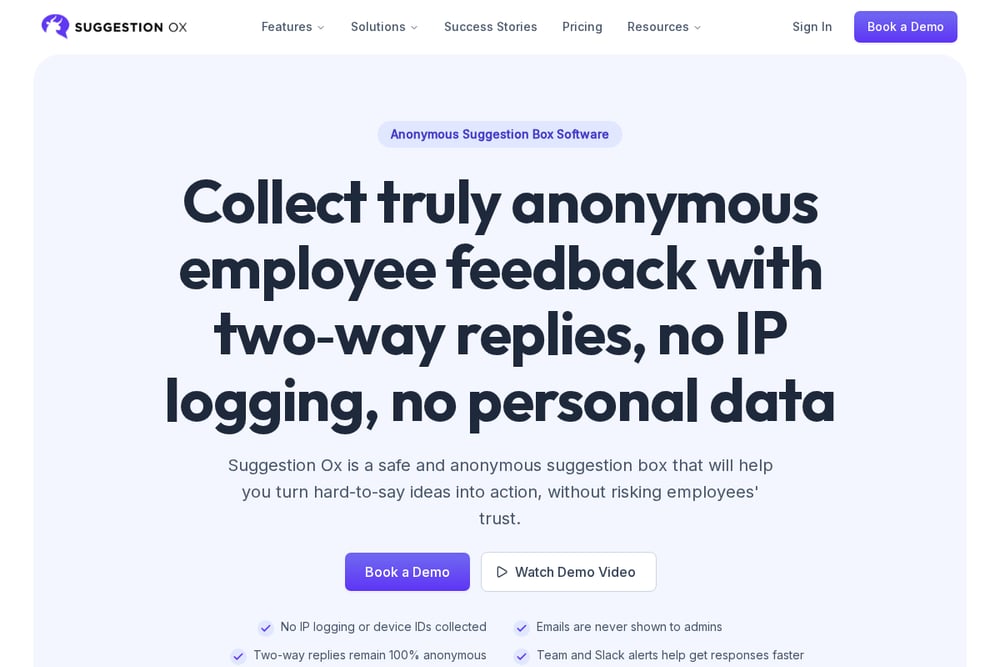
Suggestion Ox is the modern take on the classic suggestion box, rebuilt as software. It captures ideas, concerns, and feedback without tying submissions to an identity, then gives you a structured place to review and act on them. The platform is built around anonymity-first design rather than bolting anonymity onto an existing survey tool. It sits somewhere between a communication channel and a lightweight issue tracker, which makes it easy to route feedback to the right owner. If your organization wants a familiar, low-friction entry point into anonymous feedback, this is a natural starting line. You can read more about the approach on the Suggestion Ox anonymous suggestion box page.
#2 Like a Jester — Anonymous workplace dialogue, run by an independent third party
 A screenshot of the Like a Jester — Anonymous workplace dialogue, run by an independent third party website.
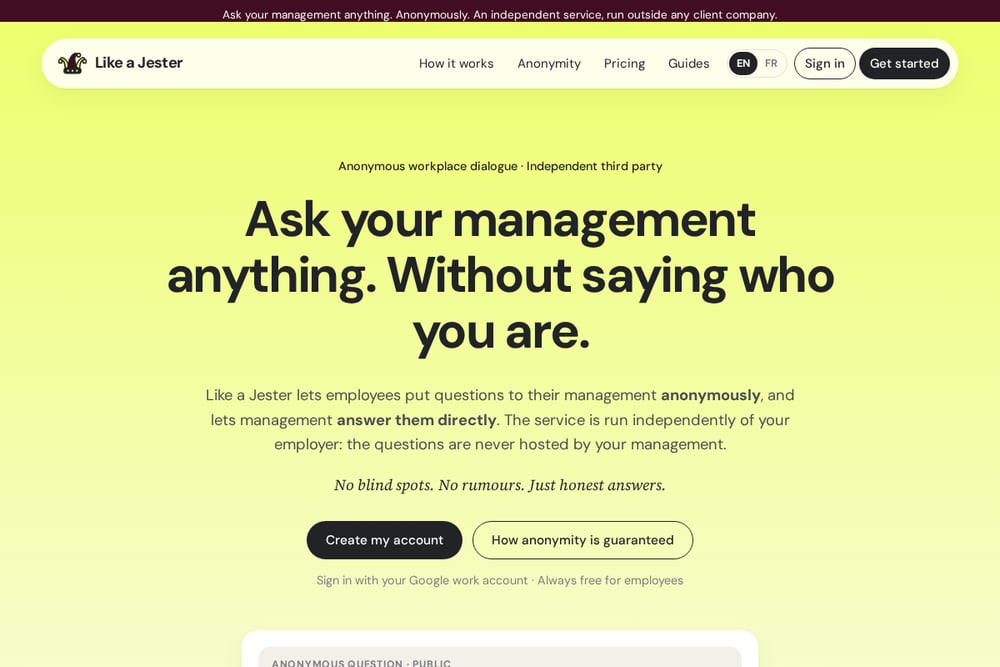
Like a Jester flips the trust model. Instead of hosting anonymous questions inside your company, the service runs as an independent third party outside any client organization. Employees sign in with a Google work account and put questions to management anonymously, and management answers directly in a threaded conversation. The questions are never hosted by your employer, which removes the suspicion that leadership can trace who said what. It is encrypted, GDPR-compliant, and free for up to ten people, with employees always free. The name comes from the court jester, the one figure allowed to tell the king the truth without consequences. You can see the anonymity model explained on the Like a Jester homepage.
#3 Leapsome
 A screenshot of the Leapsome website.
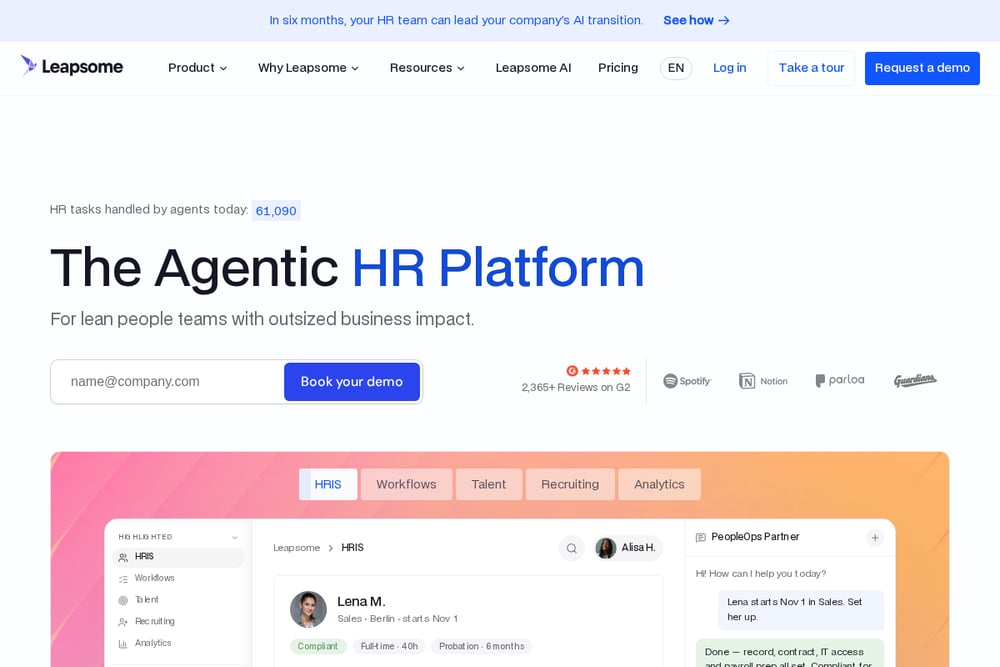
Leapsome brings anonymous Q&A into a much broader people management suite. Its Q&A Boards support company-wide AMAs and team-level sessions, with upvotable questions and anonymous participation built in. The standout detail is pre-moderation: board owners can review, edit, and approve questions before they go live, which keeps conversations structured and on track. That control is useful for larger organizations that need guardrails alongside openness. If you already run reviews, goals, and surveys through a single HR platform, this keeps feedback in the same ecosystem. Explore the feature set on the Leapsome Q&A Boards page.
#4 Slido
 A screenshot of the Slido website.
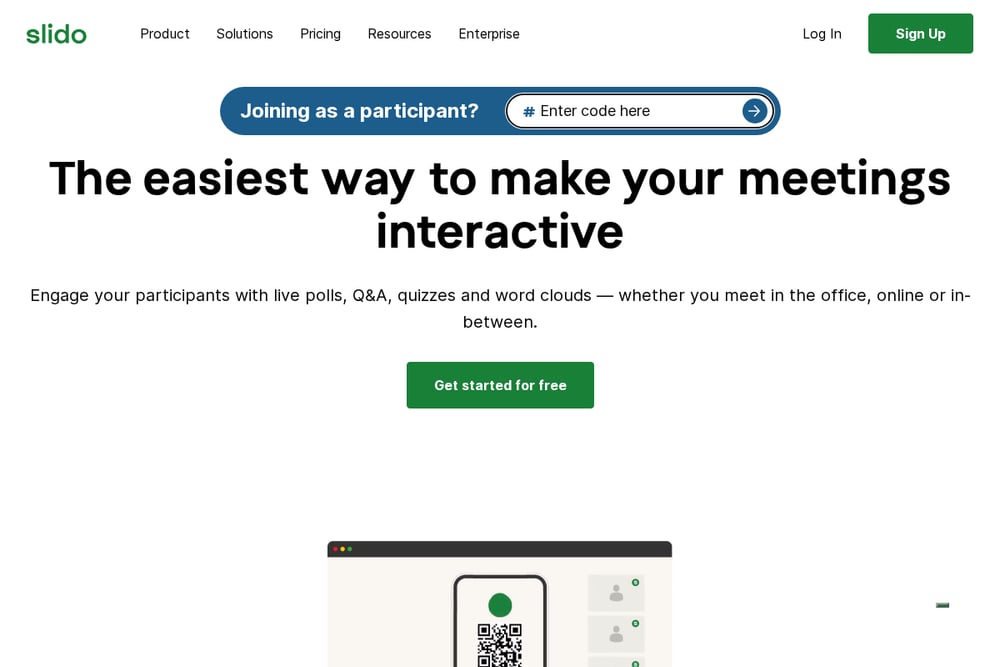
Slido is built for the live moment. It lets participants ask questions from any device and vote for their favorites, so the room surfaces what matters most in real time. For all-hands meetings, town halls, and webinars, that combination of anonymous Q&A and live polling turns a monologue into a two-way conversation. The tool integrates with the meeting platforms your team already uses, which cuts down on context switching. It is less about always-on dialogue and more about making a specific session count. See how it works on the Slido live Q&A page.
#5 Mentimeter
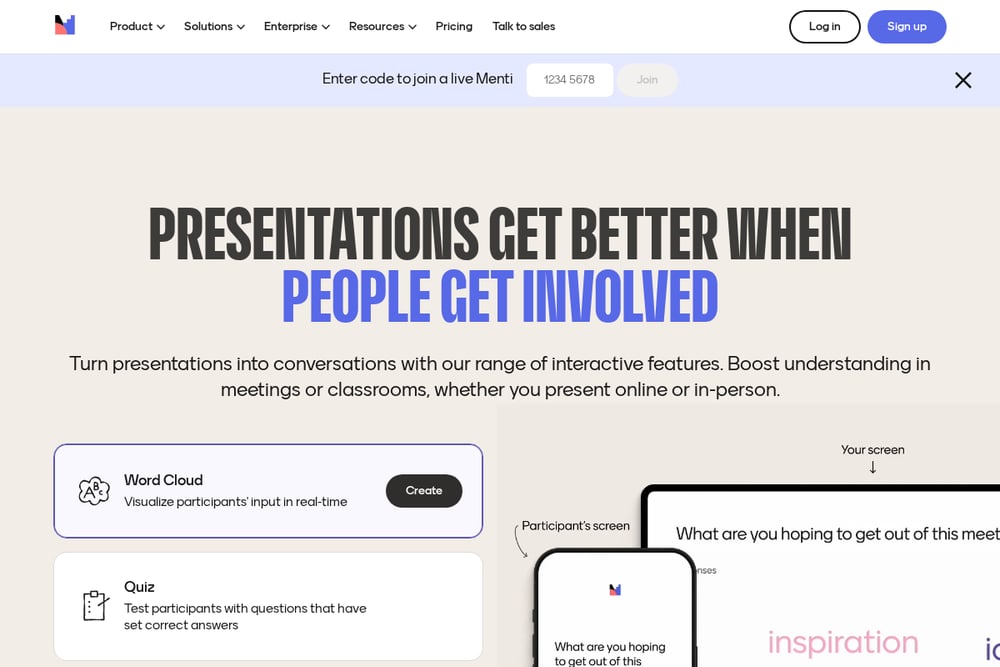 A screenshot of the Mentimeter website.
Mentimeter pairs live Q&A with upvoting so every participant gets heard without interrupting the flow of a presentation. Questions can be moderated and prioritized in real time, keeping discussions focused and respectful. Participants join from a phone, tablet, or laptop with no installs, which lowers the barrier for quieter team members. Beyond Q&A, it offers polling, word clouds, and quizzes, making it a flexible engagement layer for meetings and classes. It works well when you want anonymous input woven into a broader interactive session. Learn more on the Mentimeter live Q&A page.
How to choose the right fit
Start with the trust question. If your employees doubt that leadership will protect their identity, an independent third-party service like Like a Jester removes that doubt entirely. If your team already trusts internal systems, a feature inside a broader platform may be enough.
Next, decide between always-on and live. Suggestion Ox and Like a Jester support ongoing asynchronous dialogue. Slido and Mentimeter are built for the energy of a single session. Leapsome sits in between, blending structured boards with the rest of your HR workflow.
Then check the practicalities. Budget, headcount, and whether you need moderation controls all narrow the field quickly. A free tier for small teams can get you started without a procurement cycle.
Finally, think about follow-through. The best tool is the one your managers will actually answer questions in. Anonymity only builds trust when people see real responses.
A simple workflow to make anonymity work
Set up your channel and announce it clearly, including exactly how anonymity is protected. Invite questions during a fixed window each month so it becomes a habit rather than a one-off.
Route incoming questions to a named owner, usually a manager or HR lead, with a commitment to respond within a set number of days. Publish answers where everyone can see them, and let colleagues upvote or follow up so the loudest concerns rise naturally.
Close the loop. Share what changed because of the feedback, even when the answer is no. That visible follow-through is what turns a feedback tool into a culture shift.
The bottom line
Anonymous feedback only works when people believe it is genuinely anonymous. That single factor should drive your decision more than any feature list.
If independence is your priority, Like a Jester's outside-the-company model is hard to beat, and its free tier for small teams makes it easy to test. If you want a familiar suggestion box, Suggestion Ox delivers. If you live in all-hands meetings, Slido and Mentimeter shine. And if you need feedback inside a full HR suite, Leapsome has you covered.
Pick the model that matches your trust level, then commit to answering. Honest dialogue is a habit, not a purchase.