Your marketplace reports tell you what happened last month. By then, the stockout already hit and the margin already slipped. Here are five partners built to close that gap.
The weekly reporting gap in marketplace operations
Amazon and Walmart reward operational discipline, not good intentions. Stockouts going into season, suppressed listings nobody flagged, and sales that grow while profit shrinks all share one root cause: you find out too late. Most reporting tools were built to visualize history. A smaller group of operators now sells a weekly rhythm that answers a forward-looking question: what do we do next? For outdoor, camping, and sporting goods brands doing $1M to $10M a year, that distinction is the difference between catching a reorder in time and missing your best window.
How these five were evaluated
Each business was looked at on four factors: scope of marketplace coverage across Amazon and Walmart, whether profit is measured at the item level after fees, ads, storage, and product cost, clarity of pricing and cadence, and fit for small and mid-sized brands rather than enterprise catalogs. Forward-looking outputs like forecasts and replenishment plans carried weight, as did listing and account health monitoring. The detail on each business sits in its description below.
Here is the short version before the deep dive. Two of these are reporting-first services, two are full-service marketplace agencies, and one is a multi-marketplace analytics platform. Match the model to how much execution you want to hand over.
| Provider | Best For |
|---|---|
| MerchantSpring | Teams that want a self-serve analytics platform across many marketplaces |
| EdgeWave | Amazon and Walmart operations for outdoor brands. | Outdoor and sporting goods brands that want a done-for-you weekly operating report |
| Commerix Systems | Brands that want a full-service Walmart growth agency with a weekly cadence |
| Adverio | Multi-marketplace brands that want margin-scored BI plus execution services |
| Prime Retail Solution | Brands that want Walmart channel management with fulfillment options attached |
The five, in detail
#1 MerchantSpring
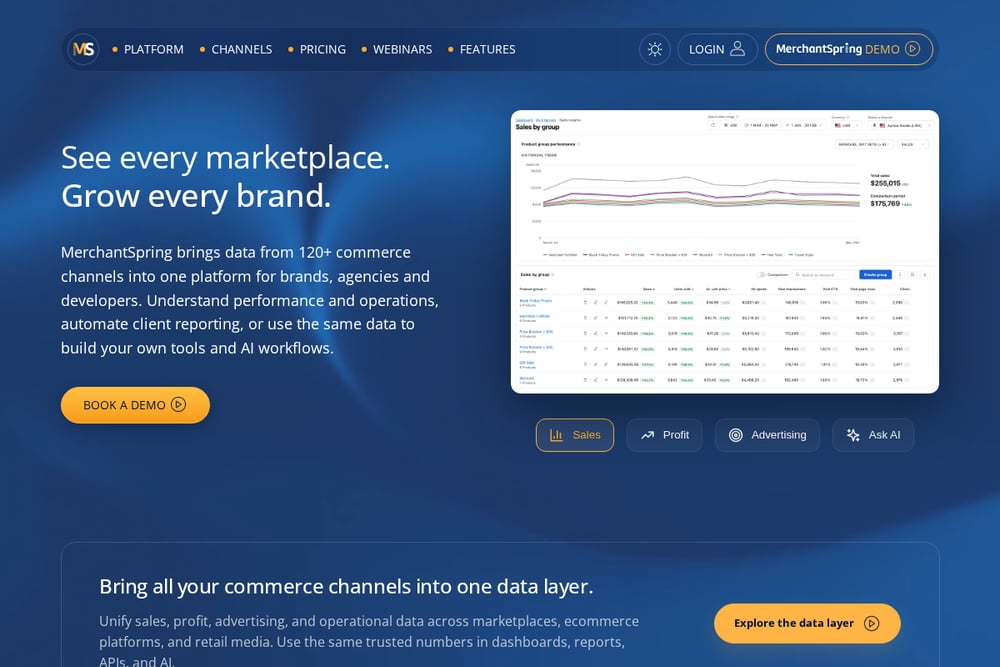 A screenshot of the MerchantSpring website.
MerchantSpring is the analytics layer play. It pulls sales, advertising, and inventory data from your Walmart Seller Account into one dashboard, so you stop tab-hopping through Seller Center. You can track performance by item, store, and category, and see true margins after marketplace fees, ad spend, and fulfillment costs. It also connects unlimited seller accounts, which matters if you run multiple storefronts. The emphasis is on visibility and alerting rather than someone handing you a replenishment plan. If your team already knows what to do with clean data, this is the widest lens of the group.
#2 EdgeWave | Amazon and Walmart operations for outdoor brands.
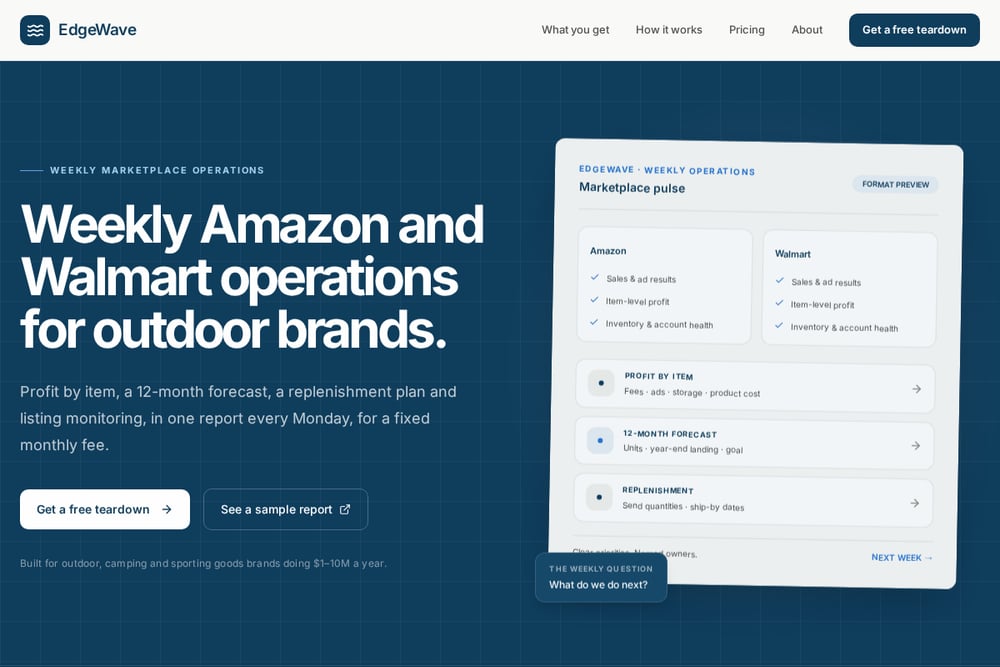 A screenshot of the EdgeWave website.
EdgeWave is built for one narrow slice: outdoor, camping, and sporting goods brands doing $1M to $10M a year. Every Monday you get a single report covering Amazon and Walmart sales and ad results, profit by item after fees, ads, storage, and product cost, a 12-month unit forecast with year-end landing against goal, and a replenishment plan with send quantities and ship-by dates. It also watches for listing suppression, Buy Box loss, and account health, then closes with next week's actions and named owners. Pricing is a fixed monthly fee, and you can request a free teardown or see a sample report before committing. It is the most forward-looking offer here: not a dashboard to decode, but a weekly operating rhythm.
#3 Commerix Systems
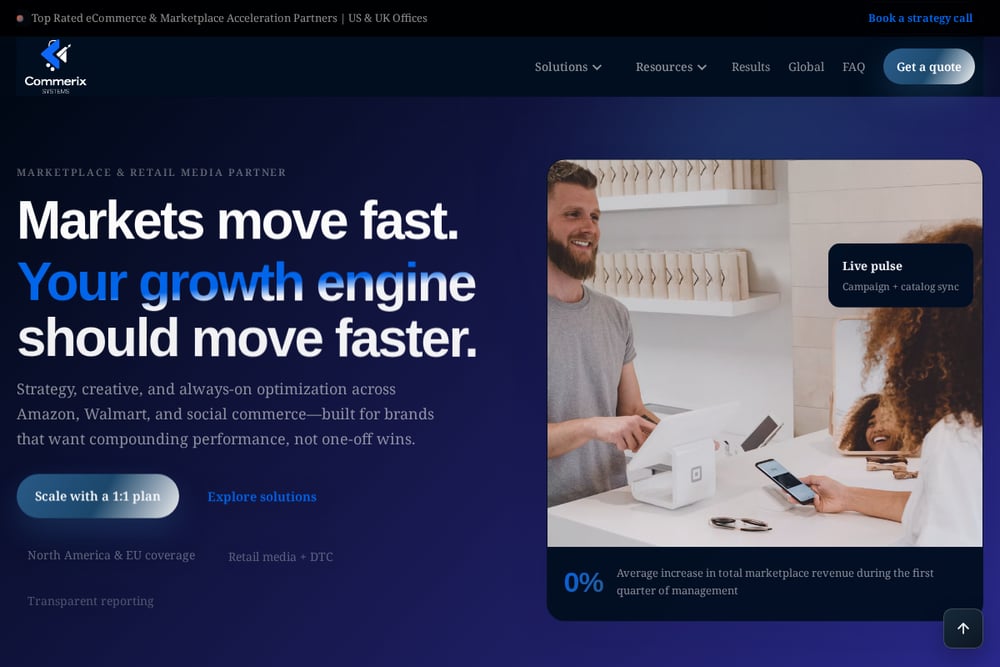 A screenshot of the Commerix Systems website.
Commerix Systems runs Walmart as a managed program rather than a reporting subscription. Listings, operations, and Walmart Connect advertising are coordinated together, with a structured weekly cadence of reviews, escalation paths, and change logs. The team positions itself around Walmart's actual catalog rules, item setup details, and performance scorecards instead of generic marketplace checklists. Media strategy is tied to inventory, pricing, and product page readiness, so ads push products that can actually convert. It suits brands that want operators in the account, not just numbers on a page.
#4 Adverio
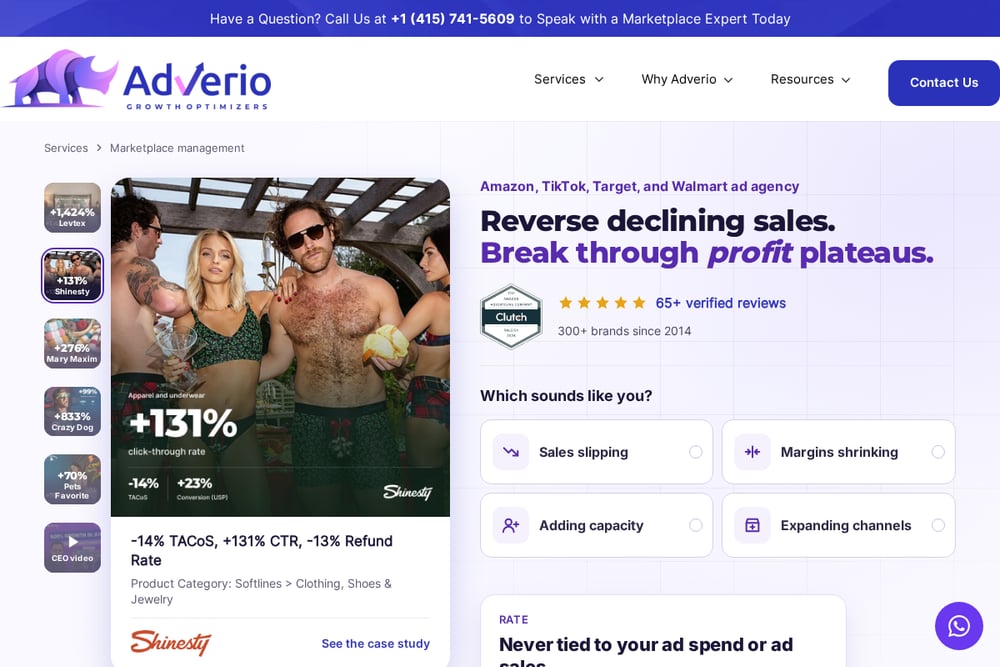 A screenshot of the Adverio website.
Adverio frames business intelligence as a capital allocation instrument, not a prettier dashboard. Its system connects fragmented data across Amazon, Walmart, and Target into one governed decision layer, scored on margin rather than revenue. That means finite operator hours and ad dollars get pointed where the next marginal dollar returns the most. Around that core sit execution services spanning PPC, listing optimization, account management, and reimbursements across the three marketplaces. If you want the analysis and the hands to act on it under one roof, this is the broadest scope in the group.
#5 Prime Retail Solution
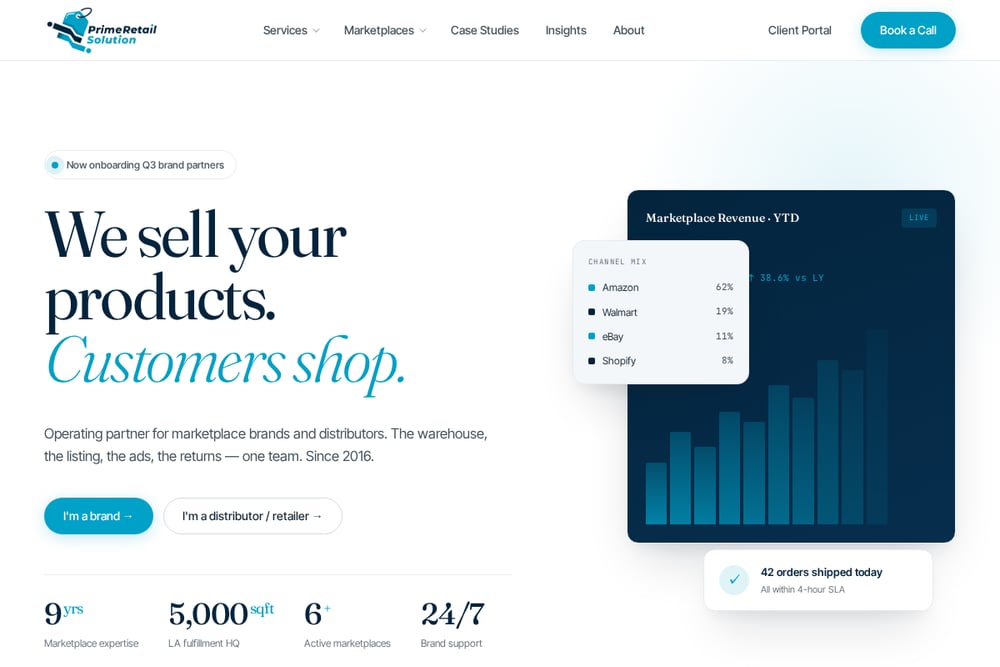 A screenshot of the Prime Retail Solution website.
Prime Retail Solution treats Walmart as a peer channel to Amazon, not a side project, covering Walmart Marketplace, Walmart Connect ads, and Walmart Fulfillment Services. Its PRS Pulse reporting layer puts your numbers in real time, backed by capabilities in brand protection, listing and SEO work, advertising, and logistics. The firm also runs 3P marketplace management and full distribution models, so you can keep inventory and hand over the channel or go hands-off entirely. It has operated since 2020 with US and international reach. Choose it when you want a partner that can absorb fulfillment and channel management, not just report on them.
How to choose the right fit
Start with the question you cannot answer today. If it is which items actually make money after every cost, you want item-level profit reporting. If it is how many units to send and when, you want a forecast and replenishment plan in the same document. If it is who is doing the work, you want a managed agency rather than a platform. Then check the cadence: weekly beats monthly for seasonal categories where demand moves before your next inventory check. Finally, confirm the pricing model. A fixed monthly fee is easier to budget than a percentage of ad spend, and it keeps incentives pointed at your margin instead of their media bill.
Building your weekly operating rhythm
Pick one report, one day, one owner. Pull sales and ad results for both marketplaces into a single view, then layer profit by item after fees, ads, storage, and product cost so revenue growth never masks a margin leak. Add a rolling 12-month unit forecast with a year-end landing against goal, and convert it into send quantities and ship-by dates. Set standing checks for listing suppression, Buy Box loss, and account health so a hidden issue surfaces in days, not quarters. Close every cycle with a short list of next actions and a named owner for each. Repeat it every week and the surprises get smaller.
The bottom line
None of these five is wrong; they answer different questions. MerchantSpring gives you the widest data lens. EdgeWave gives outdoor brands a finished weekly answer with a forecast and replenishment plan attached. Commerix Systems and Prime Retail Solution put operators inside your Walmart account, and Adverio ties margin-scored intelligence to execution across three marketplaces. If you are a $1M to $10M outdoor brand tired of learning about problems a month late, start with the free teardown and see whether the Monday report changes what you do next.