You do not need four apps to answer one question: am I actually on track? These five tools each try to put food, training and recovery in the same place, and they solve that problem in very different ways.
Where the all-in-one fitness app market stands
The default setup for most people is a calorie app, a lifting log, a sleep tracker and a watch app that never talk to each other. That fragmentation is the whole reason this category exists. The newer wave of tools leans on photo-based food logging, wearable sync through Apple Health and Garmin, and AI coaching that reads your real data instead of generic templates. The tradeoff is depth: all-in-one apps rarely match a specialist in any single area, so the question becomes whether the joined-up picture is worth the compromise.
How these five were compared
Every app here was looked at on the same factors: how much of the food, training and recovery loop it actually covers, how quickly you can log something mid-day, how well it pulls from wearables, how clearly it explains what the data means, and how transparent the pricing and platform support are. Depth in one area was weighed against the value of seeing everything together. The detail on each app sits in its description below.
Here is the short version before the detail: one app is built around a single visual dashboard, one is a data hub rather than a coach, and three make the case for replacing your app stack outright.
| Provider | Best For |
|---|---|
| Nutri Macro | Android and iOS users who want nutrition, workouts and recovery in one plan |
| FitNyz: food, training and sleep in one simple app | iPhone users who want one visual dashboard for food, lifting and sleep |
| Trainera | People who want an AI-generated training and nutrition plan fast |
| LifeMaxing | People who want habits, training and focus in one place |
| FitnessSyncer | Data-minded users who want to unify existing trackers and apps |
The five apps in detail
#1 Nutri Macro
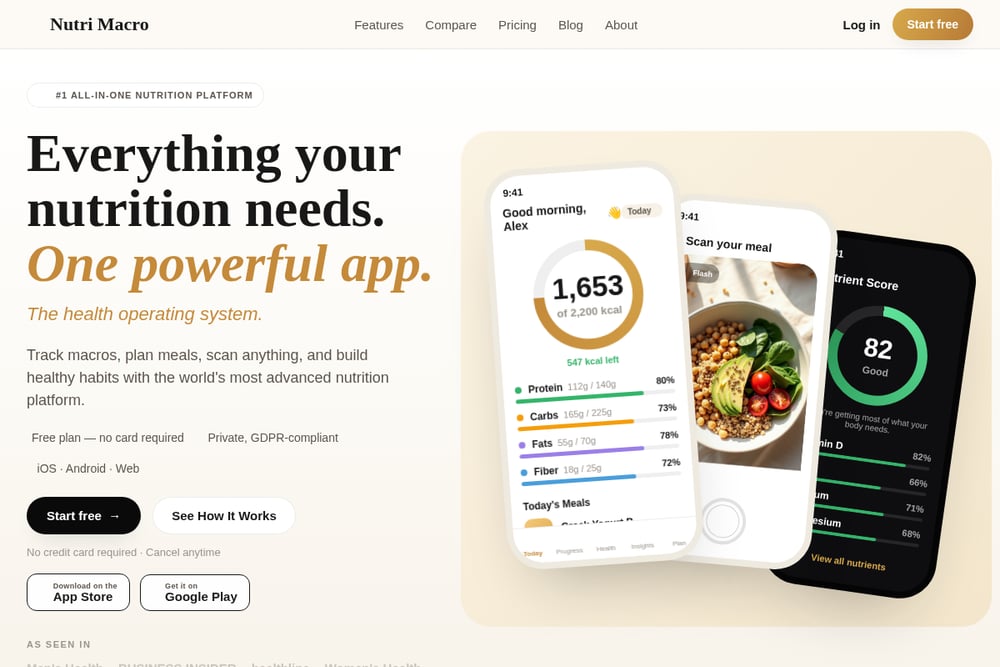 A screenshot of the Nutri Macro website.
Nutri Macro makes the clearest argument for why three apps fail: your calorie target ignores yesterday's long run, your training app has no idea you under-ate, and your recovery data sits somewhere else entirely. It answers that with AI food logging by photo, barcode or fridge scan, GPS activities, a workout logger and an HRV-based recovery score in one place. The pitch is fuel-adjusted decisions, so you eat more on hard training days and back off when recovery drops. It runs on both iOS and Android, which matters if you are not locked into Apple. The writing on its own site is unusually honest about what all-in-one should include, which is a decent signal of how the product is scoped.
#2 FitNyz: food, training and sleep in one simple app
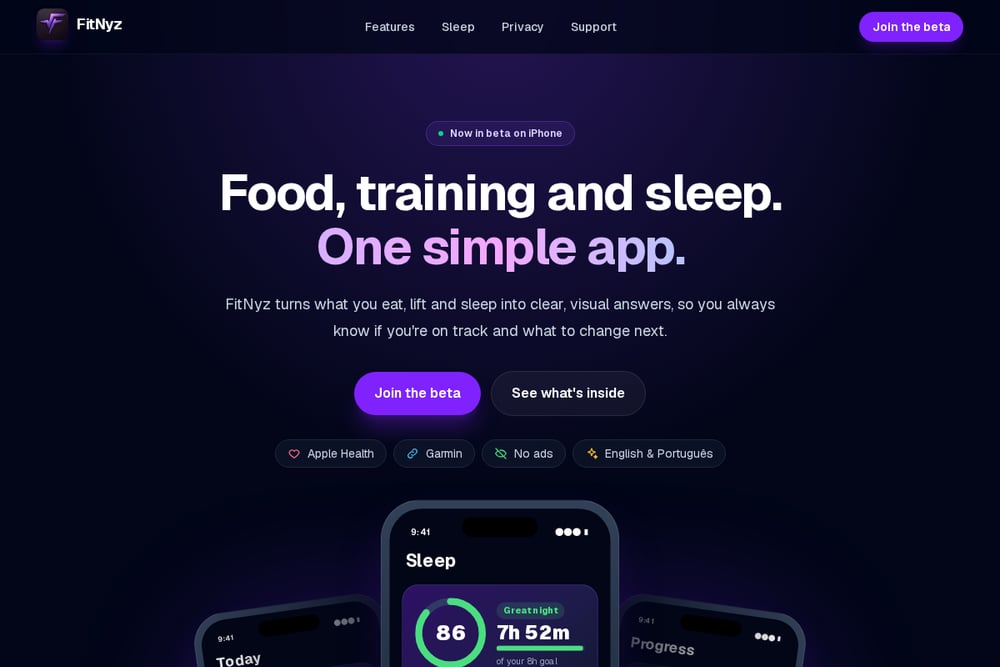 A screenshot of the FitNyz website.
FitNyz is an iPhone app that turns what you eat, lift and sleep into visual answers rather than raw numbers. You snap a meal, search or scan a barcode, and your macros and calories add up on their own, with targets that follow your real weight trend each week. Training is logged set by set, so strength gains and weekly sets per muscle show up at a glance, and a sleep score breaks down deep, light and REM alongside how the night moved your strength, appetite and weight. Apple Health and Garmin fill in the wearable data, and an AI coach reads your actual logs to suggest the next small step. It is built by someone who tracked diet and training in Excel for years, it carries no ads, and it is currently in beta on iPhone with English and Portuguese support.
#3 Trainera
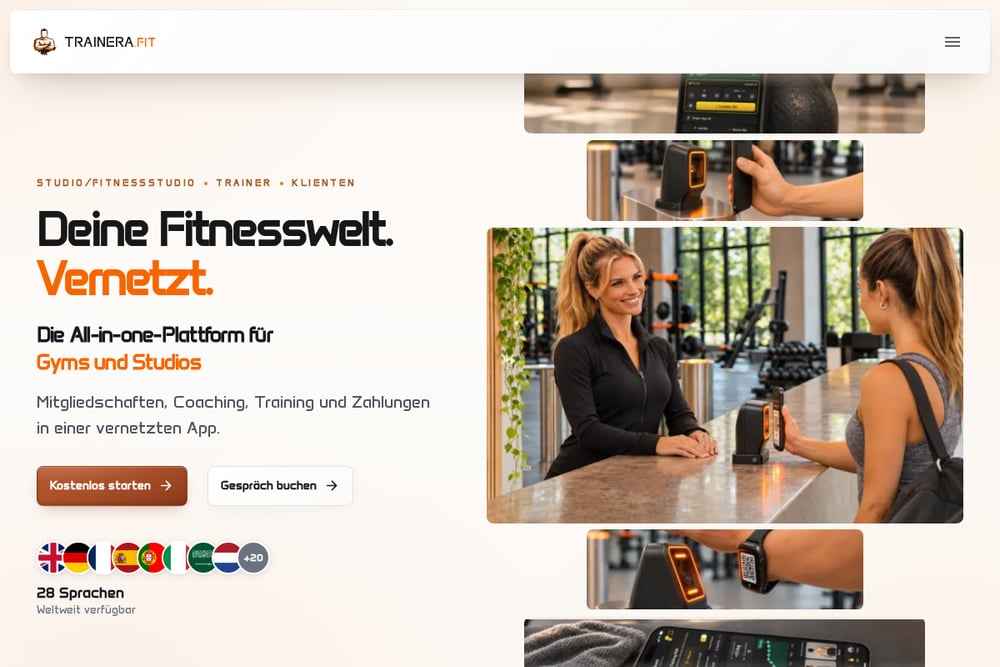 A screenshot of the Trainera website.
Trainera frames the problem as admin fatigue: four apps, four logins, four subscriptions, and none of them talking to each other. Its answer is a single platform for training plans, nutrition and wearable data, with a free AI-generated training and nutrition plan you can create in about a minute. The site is candid about where an all-in-one approach falls short, which is refreshing in a category full of overclaiming. It leans toward people who want a plan generated for them rather than a blank log to fill in. If you have ever retyped a workout into a second app, this is aimed squarely at you.
#4 LifeMaxing
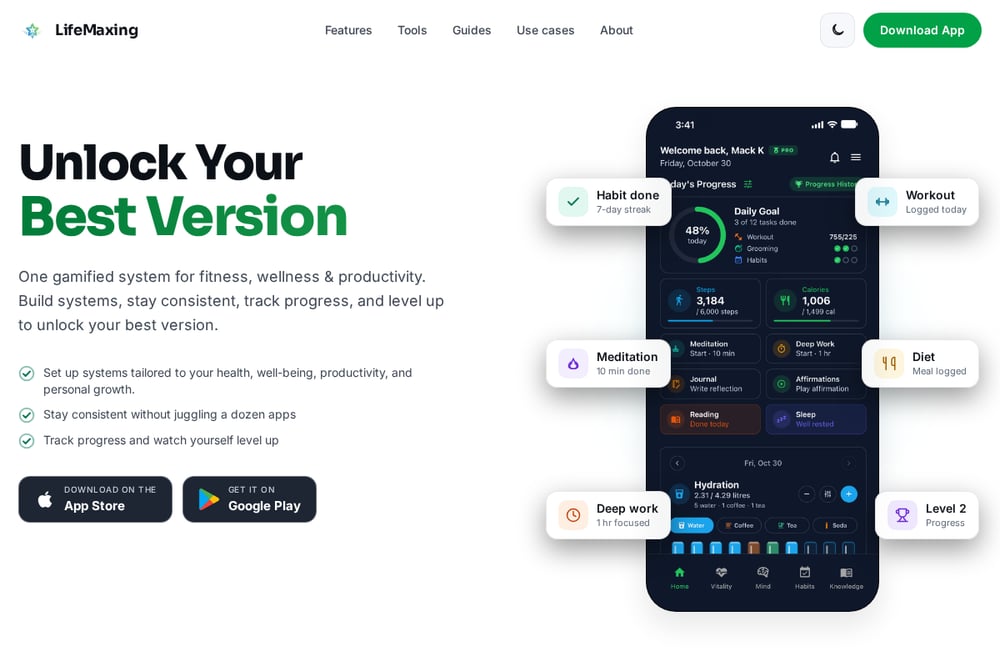 A screenshot of the LifeMaxing website.
LifeMaxing widens the lens beyond fitness into habits, focus and routine, and its guide makes a sharp point: the useful question is not whether an app has a feature, but whether progress in one area shows up next to the others. It is honest that specialist tools like MyFitnessPal, Fitbod or Habitica are better at their single job, and argues the win comes from consolidation. That makes it a fit for someone whose problem is scattered motivation rather than a missing macro tracker. If your goals span training, sleep and focus at once, this is the broader option on the list.
#5 FitnessSyncer
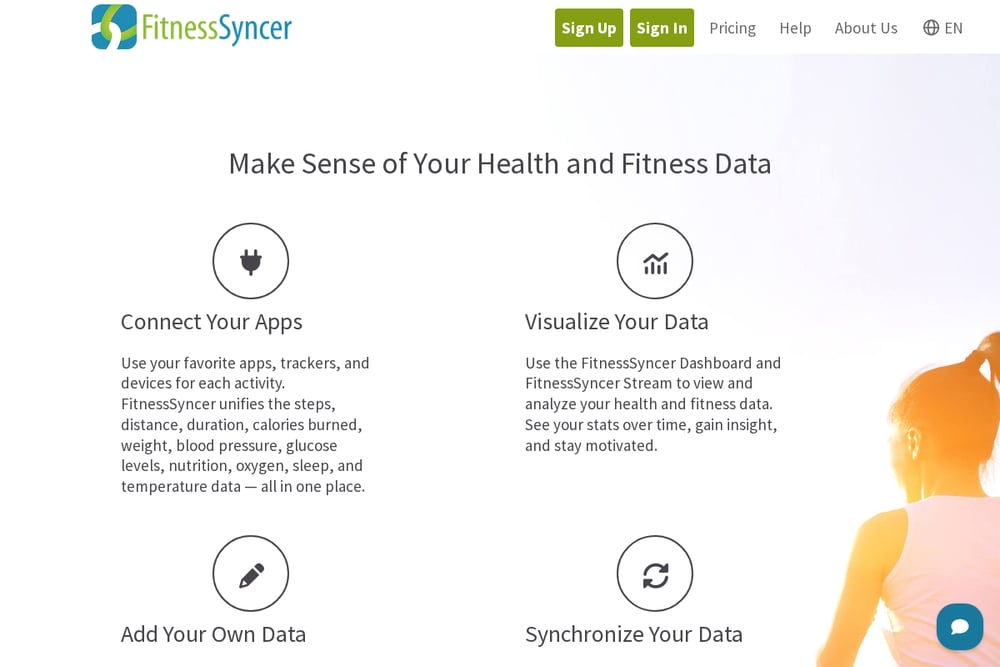 A screenshot of the FitnessSyncer website.
FitnessSyncer is the data plumber of this group rather than a coach. It unifies steps, distance, calories, weight, blood pressure, glucose, nutrition, oxygen, sleep and temperature from the apps and devices you already use, then lets you view it all in a customizable dashboard and stream. You can add data manually through its Notebook or Uploader when something is not already in the cloud, and push data between services so each tool sees the same numbers. It will not tell you what to eat or how to train, and it is not trying to. For anyone already committed to a stack of trackers, it is the glue that makes the picture complete.
How to pick the right one for you
Start with the gap that actually annoys you. If you log meals but have no idea how training affects your intake, pick a tool that closes that loop rather than one that adds another dashboard. If you already own a Garmin or an Apple Watch and like your current apps, a sync hub will serve you better than a replacement. Check platform support early, because an iPhone-only app is a dealbreaker on Android and vice versa. Then look at logging speed, since the app you abandon is almost always the one that takes too many taps. Finally, weigh beta status and pricing honestly: a free beta is great value, but expect rough edges.
A simple weekly review you can automate
Set one recurring 15-minute slot each Sunday and run the same loop. Pull your weight trend and average calories for the week, then compare them against your training volume and sleep score. If weight is flat and training load rose, adjust intake up slightly; if recovery scores dropped alongside strength, cut a set and protect sleep. Log the one change you are making in a note, and let your wearable sync handle the rest automatically. The point is not more data, it is one decision per week made from data you already have.
The bottom line
The best app here is the one that matches how you already work. FitNyz suits iPhone users who want food, lifting and sleep in a single visual view with an AI coach reading their real numbers. Nutri Macro makes the strongest case for fuel-adjusted training across both platforms, Trainera removes the setup work with a generated plan, LifeMaxing covers habits beyond the gym, and FitnessSyncer keeps your existing stack honest. Pick one, give it a month, and judge it on whether you can answer "am I on track?" without opening anything else.