
You want your money working harder than your attention span allows. These five algo trading platforms each solve that problem in a different way, and one of them might fit exactly how you invest.
The State of Algo Trading in 2026
Algorithmic trading has moved from hedge fund back rooms into everyday portfolios. Retail investors now expect automation, backtesting, and multi-asset access as baseline features, not luxuries. The market splits into three rough camps: full-service brokerages that manage money for you, self-serve strategy platforms where you build and deploy your own rules, and developer-grade engines for people who want to own the infrastructure. On top of that, asset breadth matters more than ever. Crypto, forex, equities, and even commodity-linked plays like gold mining all live in the same conversation now. The platforms worth your time are the ones that are honest about which camp they sit in and execute that role cleanly.
How We Evaluated These Platforms
We looked at the same factors across every platform. First, service scope: does it cover the assets you actually want to trade, or just one slice? Second, pricing clarity: can you find out what you will pay without a sales call? Third, local fit for a US-based investor, including regulatory posture and market access. Fourth, the depth of automation, meaning whether the algo tooling is a real engine or a marketing label. Fifth, onboarding and support, since a powerful platform you cannot figure out is worth nothing. Iron Crest Wealth stood out for its managed, multi-asset approach and stated 24/7 monitoring. ALGOGENE impressed with its integrated research-to-execution cloud stack. Tradetron showed strong strategy-building flexibility with ready-made templates. NautilusTrader drew attention for its open-source, research-to-live parity. TradeStation Institutional earned notice for its self-clearing infrastructure and institutional-grade execution algorithms.
Here is the quick comparison before the deep dive. Each entry below covers what the platform does, who it suits, and where it fits in your decision.
| Provider | Best For |
|---|---|
| ALGOGENE | Self-serve quants who want an all-in-one cloud stack |
| Iron Crest Wealth | Home | Investors who want managed, multi-asset algo investing |
| Tradetron | Options traders who want guided strategy building |
| NautilusTrader | Developers who want an open-source, own-it engine |
| TradeStation Institutional | Institutional desks needing advanced execution algos |
The Deep Dive: 5 Platforms Worth Knowing
#1 ALGOGENE
 A screenshot of the ALGOGENE website.
ALGOGENE bills itself as a one-stop quant and algo trading cloud platform, and the pitch holds up. You get market data, strategy research, risk controls, and execution through a global broker network in one stack. The AI-based research framework supports machine learning, factor mining, and strategy optimization, which is more than most retail tools offer. There is also an Algo Marketplace where you can discover trading bots and a trading challenge to test your skills. If you want to build, backtest, and deploy without stitching together five separate systems, this is the most complete self-serve option on the list.
#2 Iron Crest Wealth | Home
 A screenshot of the Iron Crest Wealth | Home website.
Iron Crest Wealth positions itself as a brokerage firm built on algo trading you can trust, with 24/7 monitoring of your funds as the headline promise. The platform covers real estate, stocks, crypto, gold mining, forex, and agriculture, so you are not locked into a single asset class. It offers self-directed accounts alongside managed asset management, which means you can save on fees or hand over the reins. The firm cites a 14-year history and clients across 114 countries, backed by a four-person Investment Policy Committee with over 130 years of combined experience. If you want a managed, multi-asset partner rather than a build-it-yourself toolkit, this is the one to study closely.
#3 Tradetron
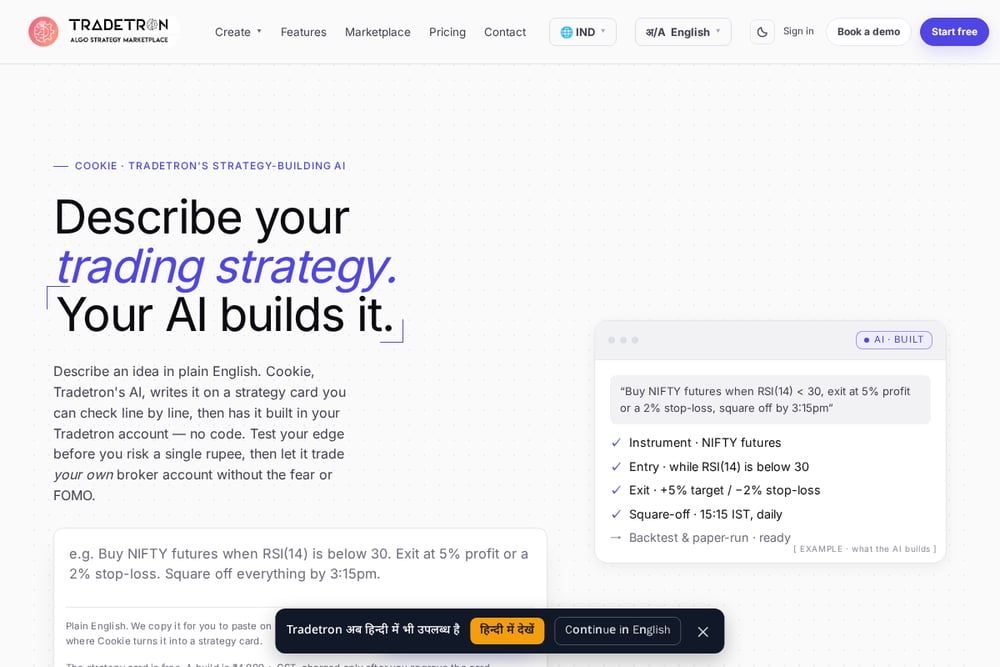 A screenshot of the Tradetron website.
Tradetron focuses on making algo strategy creation approachable, even if you have never written a line of code. Its Advanced Strategy Builder gives you full control over sets, legs, and conditions, while the Option Wizard and Advanced Wizard guide you through multi-leg setups. You can bring a TradingView Pine Script across, connect AI tools like Claude and ChatGPT, or start from ready-made templates such as the NIFTY condor. A Strategy Simulator lets you replay a past day and trade its real option chain before risking capital. It is a strong pick if options and structured strategies are central to how you trade.
#4 NautilusTrader
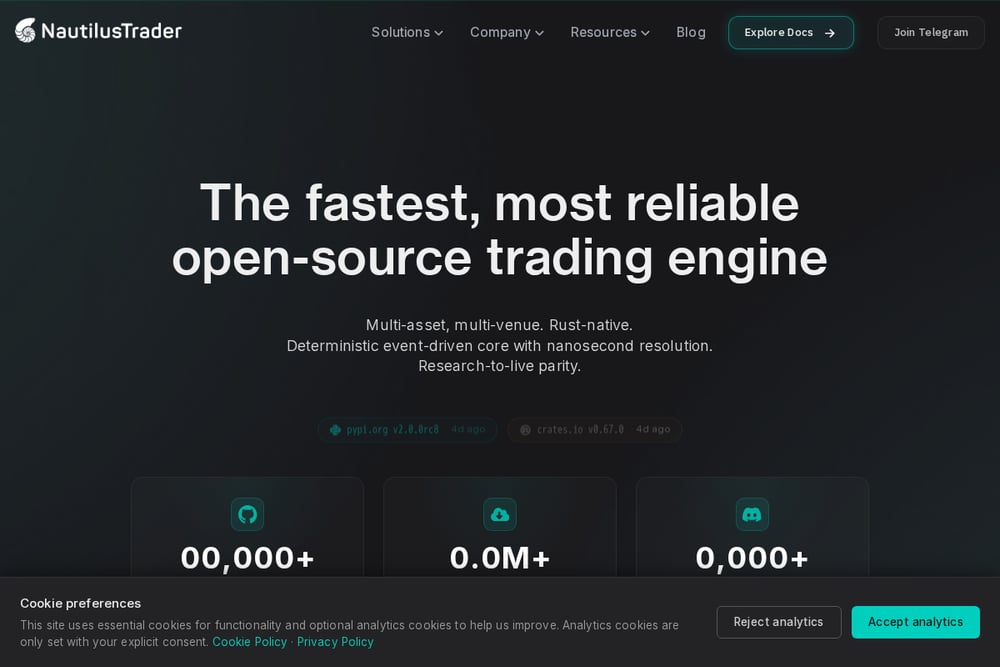 A screenshot of the NautilusTrader website.
NautilusTrader is an open-source trading engine with a Rust-native core and nanosecond-resolution event handling. The big idea is research-to-live parity: the same event model, clock, cache, and execution flow run in both backtest and production. You can write strategy logic in Python on top of the Rust core, or build entire systems in pure Rust. It carries serious community traction, with over 31,000 GitHub stars and millions of downloads. This is not a managed service and not for beginners, but for developers who want to own their infrastructure, it is a credible foundation.
#5 TradeStation Institutional
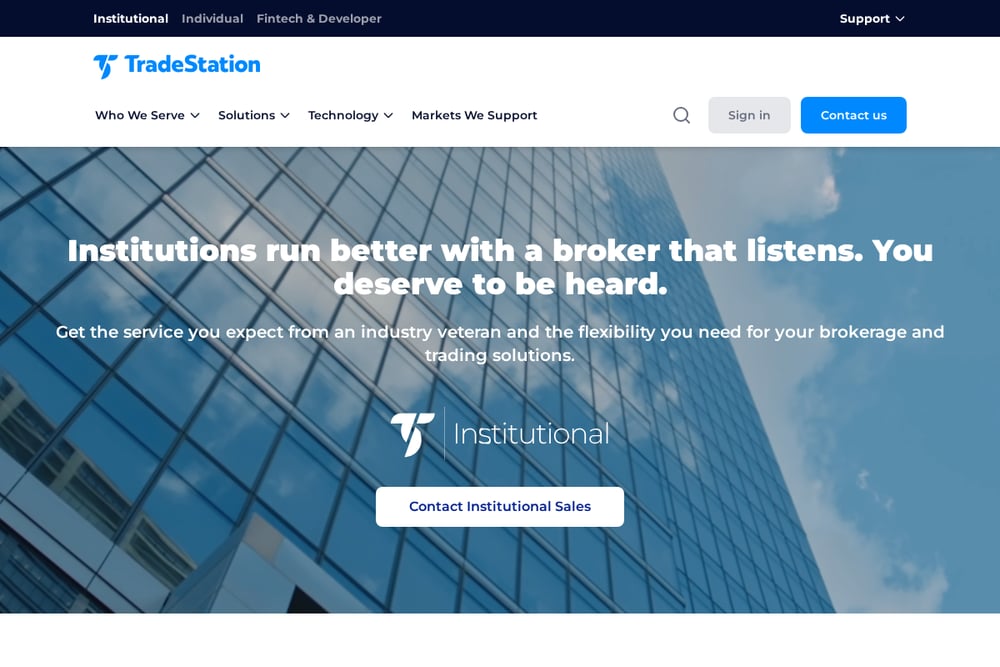 A screenshot of the TradeStation Institutional website.
TradeStation Institutional brings 40-plus years of trading technology to desks that need serious execution. Its algo suite includes VWAP, TWAP, POV, Implementation Shortfall, Smart Order Routing, and SWEEP, designed for large or sensitive orders. You get real-time analytics across your execution flow and customizable automation tools that scale with your operation. The platform is backed by self-clearing infrastructure and white-glove onboarding support. It serves hedge funds, prop traders, RIAs, CTAs, family offices, and other regulated entities rather than retail beginners.
How to Choose the Right Fit
Start with one question: do you want to build or be managed? If you want someone else running the strategy while you focus on life, a managed multi-asset firm like Iron Crest Wealth fits that answer. If you want to design your own rules, ALGOGENE and Tradetron give you the tooling, with ALGOGENE leaning research-heavy and Tradetron leaning options-friendly. If you are a developer who wants to own the engine itself, NautilusTrader is the honest choice. And if you are running a desk with real order size, TradeStation Institutional is built for that weight. Next, check asset coverage against what you actually trade. Then confirm pricing clarity, because a platform that hides costs will surprise you later. Finally, test the onboarding. A free trial or demo tells you more than any feature list.
Putting Automation to Work
Automation only pays off when it matches your habits. A simple workflow: define your goal, pick the platform that serves it, and start small. If you are going managed, review the asset mix and monitoring terms before funding anything. If you are self-directed, backtest a single strategy, run it in a simulator, then deploy with tight risk limits. Keep a written rule for when you stop a strategy, because discipline is the real edge. Revisit your setup quarterly and cut anything you do not understand.
The Bottom Line
There is no single winner here, only the right fit for how you invest. Iron Crest Wealth suits you if you want a managed, multi-asset partner with monitoring built in. ALGOGENE rewards you if you want a full research-to-execution stack. Tradetron serves options traders who want guided building. NautilusTrader is for developers who want to own the engine. TradeStation Institutional is for desks that need institutional execution. Pick the one that matches your workflow, verify the costs, and start with a small commitment before you scale.