
A grounded aircraft burns money by the hour, and your parts desk is only as good as the suppliers behind it. Here are five sourcing and AOG services worth a closer look before your next shortage list lands.
The Aircraft Parts Sourcing Landscape
Aircraft aftermarket procurement has quietly split into two camps. On one side sit the large distributors that stock deep and ship fast. On the other, a growing layer of sourcing agents and brokers who hold no inventory at all and instead coordinate the market on your behalf.
That second model is gaining traction with Part 135 and Part 145 operators. Why? Because shelf space is expensive, and a broker with no inventory has no reason to push what's sitting in the warehouse. They recommend what fits.
The tradeoff is transparency. Some agents bury their margin in the part price. Others, like the newer veteran-owned entrants, pass the supplier's price straight through and charge a visible fee. Knowing which model you're buying is half the battle.
AOG response is the other half. When a jet is down, you don't care about the org chart. You care how fast someone answers, how many real options they surface, and whether the paperwork survives an audit.
How We Evaluated These Services
We looked at the same factors across every provider so you can compare apples to apples.
Service scope. Does the provider cover rotables, avionics, engines, APUs, and structural parts, or just a narrow slice? Broader coverage means fewer vendors to manage.
Pricing clarity. Some publish a fee structure. Others leave margin opaque. We noted how each one handles cost pass-through and whether fees appear on quotes.
AOG responsiveness. Published response windows, 24/7 availability, and how options are presented all matter when time is critical.
Documentation and traceability. 8130-3, EASA Form 1, back-to-birth records on life-limited parts, and core tracking separate the pros from the order-takers.
Operational fit. Whether the model suits a small charter operator, a government program, or a large airline shapes who each service actually serves well.
Here's a quick side-by-side of the five services, from inventory-free sourcing agents to global distributors.
| Provider | Best For |
|---|---|
| AAR CORP. | High-volume operators needing deep stocked inventory |
| Veteran-Owned Aircraft Parts Sourcing & AOG | Jet Aeroparts | Operators wanting transparent fees and no-inventory sourcing |
| Sky Aviation | Operators who want a pure sourcing coordinator |
| Defense Program Support | Government and defense programs with export complexity |
| AeroPart4You | Asset transactions needing advisory plus sourcing |
The Five Services in Detail
#1 AAR CORP.
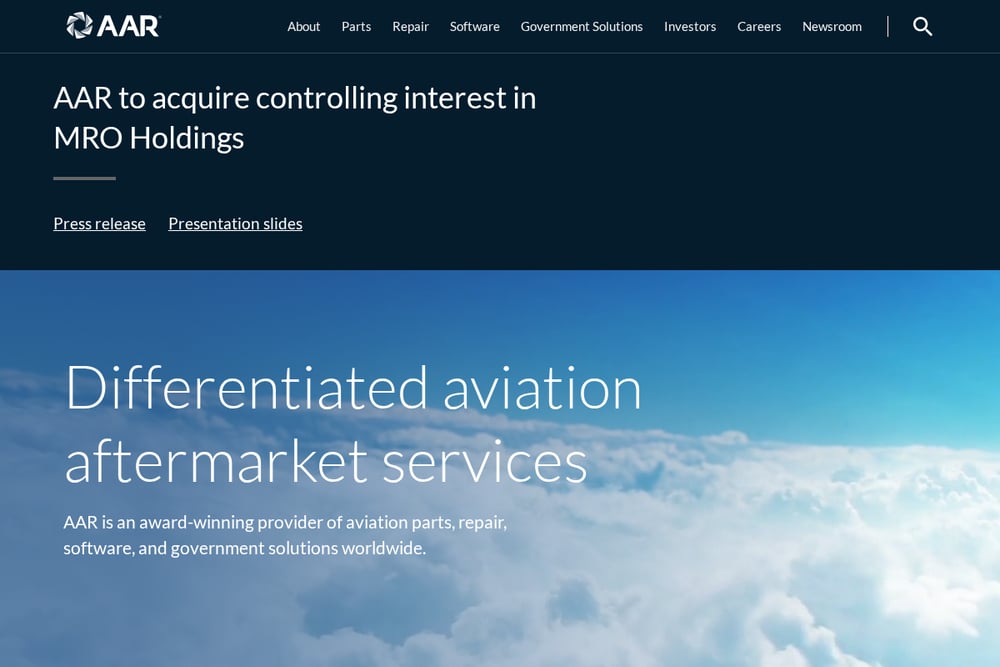 A screenshot of the AAR CORP. website.
AAR is the heavyweight of the group, shipping more than 16 million new and used parts in FY2026 across commercial and government platforms. If you need a part today and it exists on a shelf somewhere, AAR's distribution network and stocking locations give you a real shot at finding it. Their 24/7 AOG desk supports commercial customers with immediate solutions during ground events. The tradeoff is scale: you're one account among thousands, and the relationship can feel transactional compared to a boutique agent. For airlines and large MROs that need volume and breadth, though, AAR is hard to ignore. See their parts operation at AAR's parts page.
#2 Veteran-Owned Aircraft Parts Sourcing & AOG | Jet Aeroparts
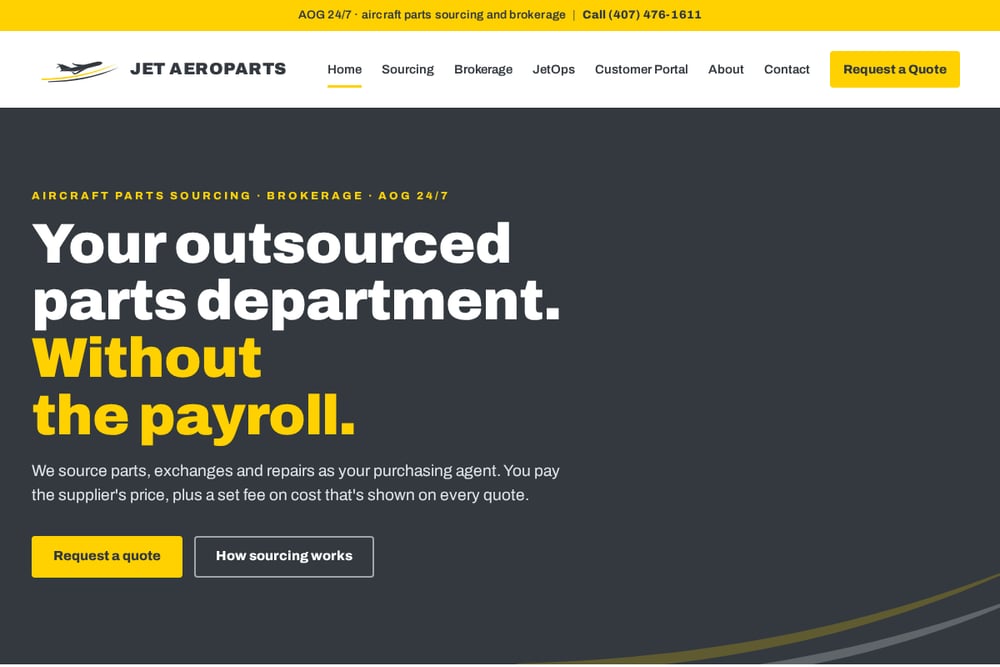 A screenshot of the Veteran-Owned Aircraft Parts Sourcing & AOG | Jet Aeroparts website.
Jet Aeroparts positions itself as your outsourced parts department without the payroll, and the model is refreshingly blunt. You pay the supplier's price, plus a set fee on cost that's shown on every quote. No markup games, no shelf to empty, so the recommendation is based on fit rather than what's gathering dust in a warehouse. AOG requests get first options within about two hours around the clock, and you'll see up to five vetted options per line with cert, trace, price, and lead time side by side. The team handles tracking, 8130-3 or EASA Form 1 paperwork, core due-date reminders, and warranty claims through to installation. Built by Part 135 and Part 145 operators, it's a strong fit for smaller flight departments that want purchasing-agent discipline without hiring for it. Learn more at Jet Aeroparts.
#3 Sky Aviation
 A screenshot of the Sky Aviation website.
Sky Aviation keeps its role narrow and clear: it coordinates sourcing and logistics, and it does not hold, distribute, or sell parts itself. That means every part comes directly from a third-party licensed distributor, OEM, or operator, with certification and traceability documentation supplied by the source. When an aircraft is grounded, they work airline stock, brokers, and OEM channels to locate the part and get it moving. One point of contact coordinates sourcing and logistics with your maintenance team, which keeps communication simple. It's a lean coordination model that suits operators who already have strong technical oversight and just need someone working the phones. Visit Sky Aviation's AOG support page for details.
#4 Defense Program Support
Defense Program Support brings a mission-readiness lens to parts sourcing, serving commercial, government, military, and defense operators worldwide. The component list is broad, covering rotables, avionics, engines and APUs, landing gear, batteries, structural components, wiring harnesses, and ground support equipment. Where it stands apart is the surrounding logistics stack: air charter and next-flight-out solutions, ITAR and EAR export compliance, dangerous goods shipping, and customs documentation. That combination matters when a part has to cross a border under export controls. If your requirements skew toward government or defense programs, this is a natural shortlist entry. See the Aircraft Parts & AOG page for the full capability list.
#5 AeroPart4You
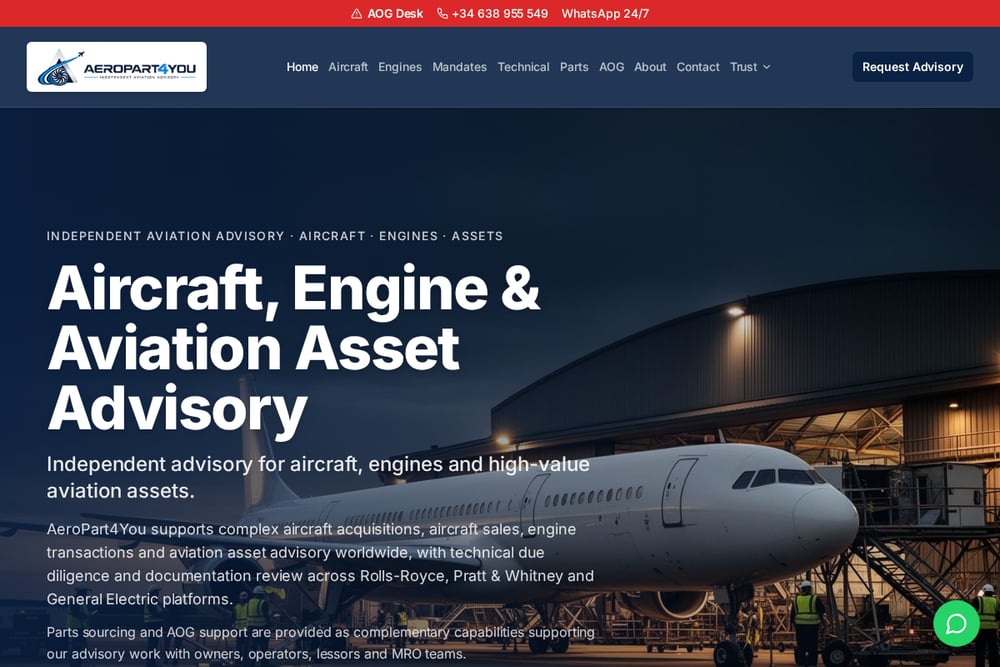 A screenshot of the AeroPart4You website.
AeroPart4You leads with independent advisory for aircraft, engines, and high-value aviation assets, with parts sourcing and AOG support as complementary capabilities. Its mandate-based model aims to cut out excessive broker chains and get closer to the owner, supplier, or OEM-level source. That focus on reducing multi-broker structures can improve pricing transparency and traceability when it works. The team supports technical due diligence and documentation review across Rolls-Royce, Pratt & Whitney, and GE platforms, which gives the sourcing work real technical grounding. It's a good match if you're buying or selling assets and want procurement help from people who understand the transaction. Explore their model at AeroPart4You.
How to Choose the Right Sourcing Partner
Start with your volume and your pain. If you're moving thousands of parts a year and need immediate shelf availability, a large distributor earns its place. If you're a smaller operator tired of chasing brokers and reconciling mystery markups, an inventory-free purchasing agent with visible fees will likely save you money and headaches.
Next, ask about paperwork. Can they produce 8130-3 or EASA Form 1 documentation, full trace, and back-to-birth records on life-limited parts? Can they track core returns before penalties hit your invoice? Get this in writing.
Then test the AOG desk before you need it. Send a routine request and time the response. Ask how many options you'll see per line and whether fees appear on the quote. A provider that hesitates on those questions is telling you something.
Finally, match the model to your mission. Defense and government work brings export compliance into play. Asset transactions call for advisory depth. Routine fleet support rewards speed and transparency.
Where Automation Fits Into Your Parts Workflow
You don't need a custom platform to tighten up sourcing. You need a repeatable loop.
Step one: standardize the request. Part number, quantity, condition, tail number, and need date, every time. A consistent format gets you faster, cleaner quotes.
Step two: demand side-by-side options. Cert, trace, price, and lead time in one view lets you approve in minutes instead of trading emails for days.
Step three: centralize approvals. Written sign-off on every order protects you and keeps the audit trail intact.
Step four: automate the follow-up. Core due-date reminders and warranty claim tracking should run on a schedule, not on someone's memory.
Step five: consolidate reporting. One monthly statement covering every order, invoice, and fee makes AP reconciliation painless and gives you real data on where your parts spend goes.
The Bottom Line
There's no single right answer here, and that's the point. AAR gives you scale and stocked inventory. Jet Aeroparts gives you transparent fees and a no-inventory purchasing agent model built by operators. Sky Aviation keeps sourcing clean and coordinated. Defense Program Support handles the compliance-heavy defense lane. AeroPart4You pairs sourcing with asset advisory.
Pick based on how you actually buy parts, not on who has the biggest logo. Then hold your provider to the things that matter: visible fees, real options, clean paperwork, and a phone that gets answered at 2 a.m.