Buyers are asking ChatGPT and Google's AI Overviews who to hire, and those answers are quietly deciding who gets the call. Here are five services that show you what the machines say about your business, and what to do about it.
Why AI visibility became a small business problem
Search used to mean ten blue links. Now it means a single synthesized answer that names two or three businesses and skips the rest. For a local shop or a small service firm, that shift is brutal: you can rank on page one and still never appear in the answer a buyer actually reads. AI visibility reporting exists to close that gap. These tools run the questions your customers ask, capture what the assistants say, and show you which competitors got named instead of you. The category is young, the measurement is genuinely hard, and the vendors differ wildly in scope and price.
How we looked at each service
We compared these services on four things: how clearly they explain what you actually get, whether pricing is visible before you commit, how well the output fits a small local business rather than an enterprise brand, and whether the report tells you what to fix rather than just what happened. We also weighed the format of delivery, since a one-time PDF and a weekly dashboard solve very different problems.
Here is the short version before the detail. Each entry below solves a slightly different job, so match the tool to your situation rather than to a ranking.
| Provider | Best For |
|---|---|
| Snoika | Brands that want a scored, repeatable benchmark against competitors |
| One-time AI visibility report for small businesses | Do We Show Up | Small businesses that want a one-time, actionable fix list |
| UtilitySEO | Businesses that want weekly monitoring across multiple AI assistants |
| Lighthouse Local | Local businesses and agencies serving them |
| Amplitude | Teams already inside the Amplitude analytics ecosystem |
The five services in detail
#1 Snoika
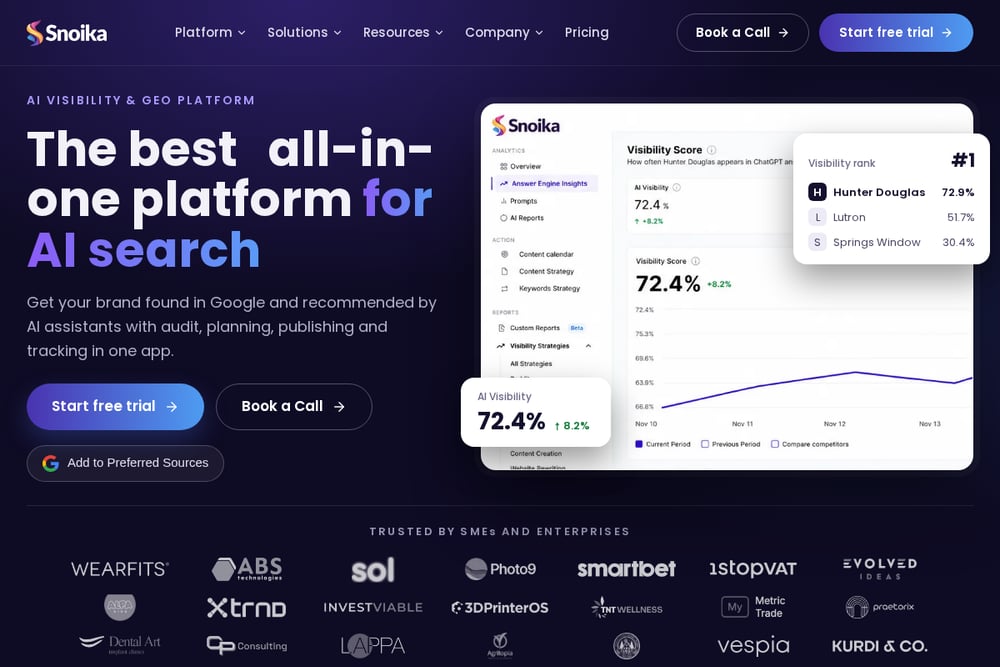 A screenshot of the Snoika website.
Snoika frames its AI visibility report around six questions, each tied to a decision you make afterward: visibility score, brand mentions, sentiment, endorsement, share of voice, and AI readiness. That structure is genuinely useful because it separates monitoring from diagnosis. The visibility score is calculated across repeated prompt runs and only means something next to competitor scores on the same prompts, which the report shows. There is a human review layer on top of the automated workflows, and a free audit lets you see where you stand before spending. It suits brands that want a recurring score to watch over time.
#2 One-time AI visibility report for small businesses | Do We Show Up
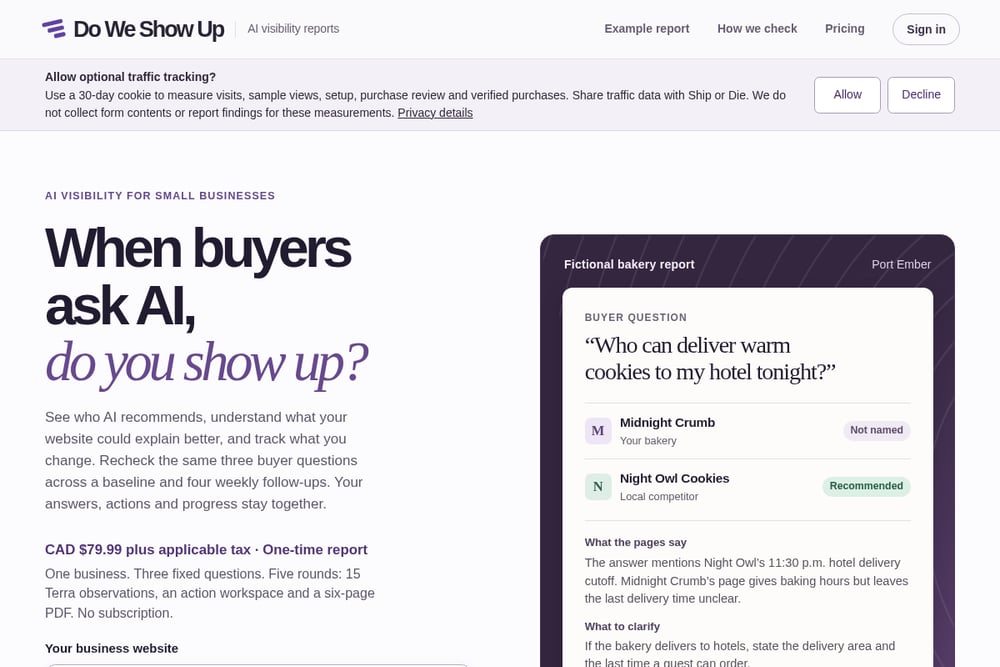 A screenshot of the One-time AI visibility report for small businesses | Do We Show Up website.
Do We Show Up does one thing and does it without a subscription. You pick three questions a customer might ask before they know your name, and the report returns the original AI answers, website checks, an edit brief, and a six-page PDF. The sample bakery report is the clearest illustration of the model: a fictional shop called Midnight Crumb gets left out of an answer that recommends Night Owl Cookies, and the report shows exactly which page detail caused it. You review your business and questions before paying, and a private dashboard lets you spend a remaining search to compare a later answer. For a small business that wants a concrete fix list rather than another monthly bill, this is the most direct option on the list.
#3 UtilitySEO
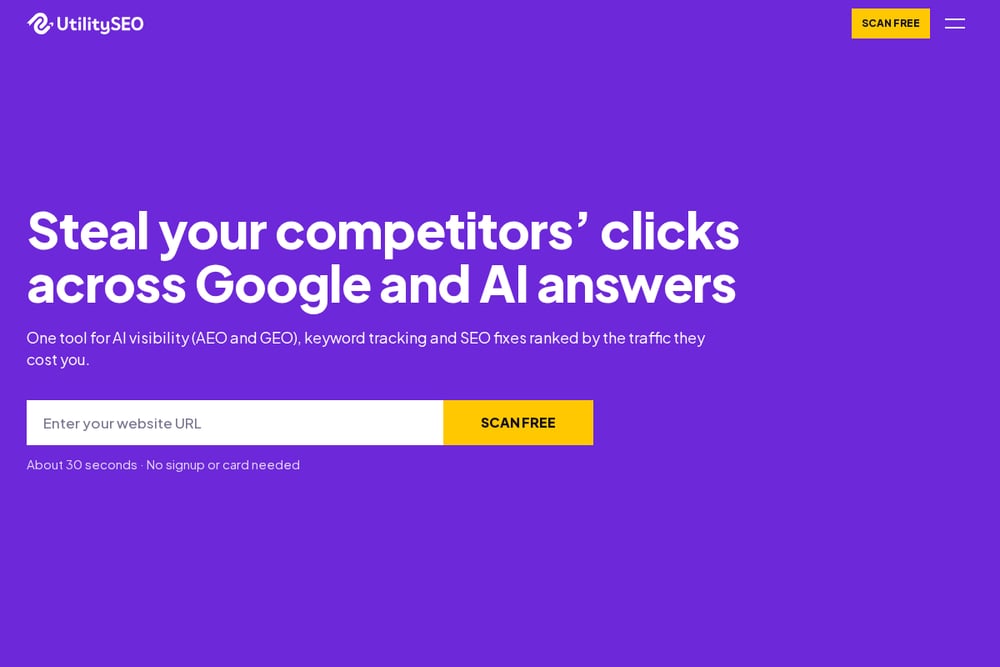 A screenshot of the UtilitySEO website.
UtilitySEO takes the opposite approach: continuous tracking rather than a single snapshot. It checks what ChatGPT, Claude, Gemini, and Perplexity say about you for your customers' questions every week, with Google AI Overview and AI Mode figures pulled from your own Search Console. The reporting covers mentions, citations, share of voice, and which competitors get named when you do not. What stands out is the honesty about measurement, since the team openly discusses how non-deterministic AI responses break the idea of a tidy position. Entry pricing starts low with a free trial and no card required, which makes it easy to test.
#4 Lighthouse Local
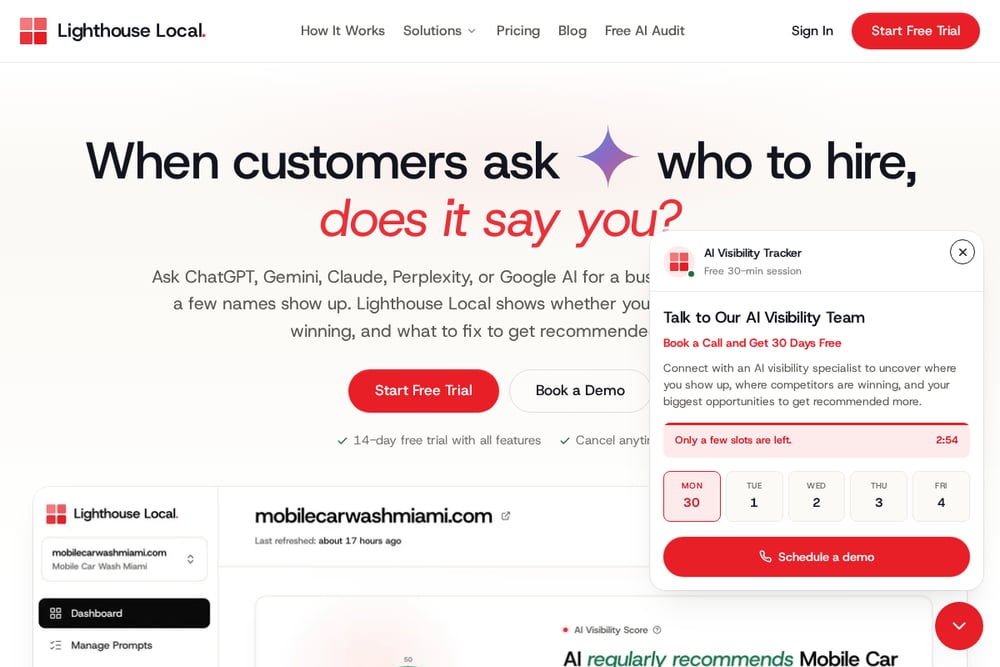 A screenshot of the Lighthouse Local website.
Lighthouse Local is built specifically for local businesses, and its editorial work reflects that. Its breakdown of AI visibility metrics argues that a local business needs five numbers: named rate per assistant, the share of answers naming a rival and leaving you out, how often your own site is cited, how many answers state a wrong fact about you, and calls and direction requests on your Google Business Profile. That last metric matters because local customers convert by phone, not by form. The platform tracks all five major AI platforms and offers a free AI audit as an entry point. There is also a reseller program for agencies that want to run audits under their own brand.
#5 Amplitude
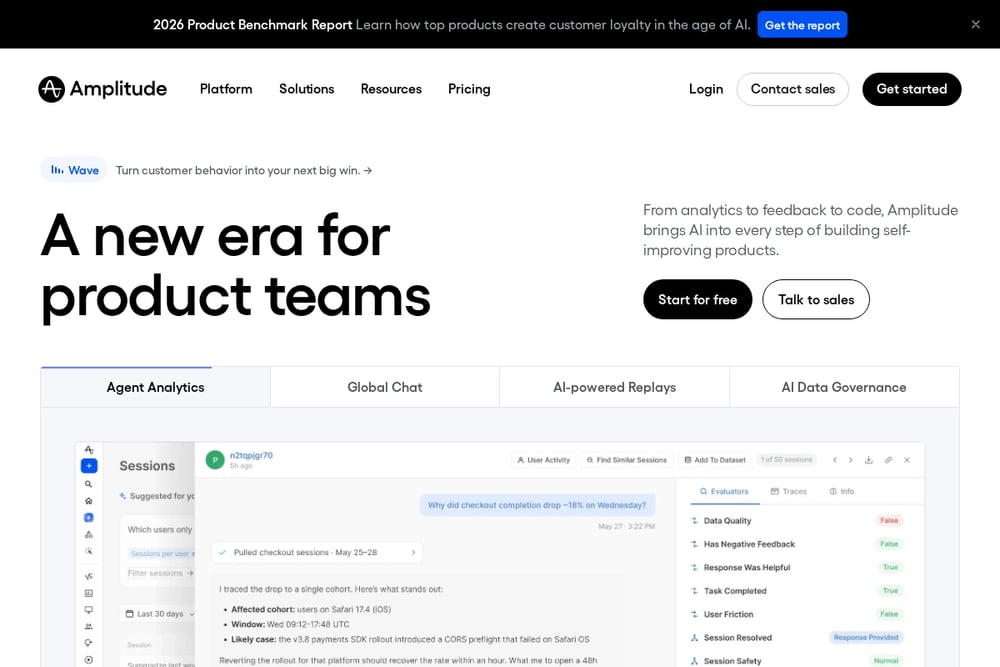 A screenshot of the Amplitude website.
Amplitude is a product analytics platform, and its AI visibility report is a free entry point rather than a dedicated standalone product. The report shows where you appear in AI search, how AI talks about your brand, and what to fix next. Because it sits inside a much larger analytics suite, the real value appears if you already use Amplitude for product or marketing data and want AI visibility in the same place. For a small business with no existing Amplitude footprint, it is a lightweight way to get a first read on the problem. Treat it as a starting point rather than a complete workflow.
How to pick the right one for you
Start with the question you are actually asking. If you want to know why a specific competitor keeps getting named and you want a fix list you can hand to whoever edits your site, a one-time report is the right shape. If you want to watch whether your changes worked, you need recurring tracking, and that means a subscription. If you are a local business, weight the metrics that map to phone calls and direction requests over abstract share-of-voice scores. And check the pricing page before you sign up, because the difference between a single fee and a monthly charge changes the math entirely for a small operator.
Where automation fits into the workflow
AI visibility work is repetitive by nature, which makes it a good fit for automation. The loop looks like this: define the handful of questions your buyers actually ask, run them against the assistants on a schedule, capture the answers and the cited sources, diff the results against last month, then route any newly named competitor into a content task. The manual part is the judgment, deciding which page detail caused the omission and what to rewrite. Tools that automate the capture and leave the interpretation to you tend to be more useful than ones that promise a single score.
The bottom line
AI answers are now a storefront, and most small businesses have no idea what theirs looks like. The good news is that the fix is usually unglamorous: state your service area, your hours, your cutoff times, and your proof points in plain language on the page the assistant is already reading. Pick a service that shows you the original answer and the evidence behind it, not just a number. Start with one report, make the edits, then measure again. That loop beats any dashboard you never open.