
You have deep expertise. AI companies need it. The trick is finding a network that treats you like a professional, not a data point.
The New Market for Expert Knowledge
AI training work has quietly become a real income stream for doctors, lawyers, engineers, and other specialists. These platforms connect your domain knowledge to companies building and refining large language models. The work ranges from rating AI outputs to writing prompts and red-teaming models for safety. Pay varies widely, from entry-level rates to specialist contracts that rival consulting fees. The catch? Not every platform is transparent about timelines, pay, or what happens after you apply. That is where the right network makes all the difference.
How We Evaluated These Networks
We looked at five factors across every platform. First, service scope: does it cover multiple fields or just one? Second, pricing clarity: are rates visible before you commit? Third, application transparency: do you know where you stand after applying? Fourth, support quality: can you reach a real person when something goes wrong? Fifth, local fit for US-based professionals, including payment methods and contract terms. Landfall stood out for its honest wait times and human support. Mindrift impressed with its range of domains and Toloka backing. Braintrust offered clear hourly bands across task types. Mercor showed strong rates for specialized roles. OpenTrain AI delivered a free, freelancer-first experience with a large trainer community.
Here is a quick look at how these five networks compare on the factors that matter most to experts entering AI training work.
| Provider | Best For |
|---|---|
| Mindrift | Experts who want a wide range of project types and performance bonuses |
| Landfall | Paid AI training work for experts | Professionals who want clear communication and support at every step |
| Braintrust | Experts who want transparent hourly bands and a variety of task types |
| Mercor | Specialists seeking premium rates and fast payout cycles |
| OpenTrain AI | Freelancers who want a free entry point and a large peer community |
The 5 Networks in Detail
#1 Mindrift
 A screenshot of the Mindrift website.
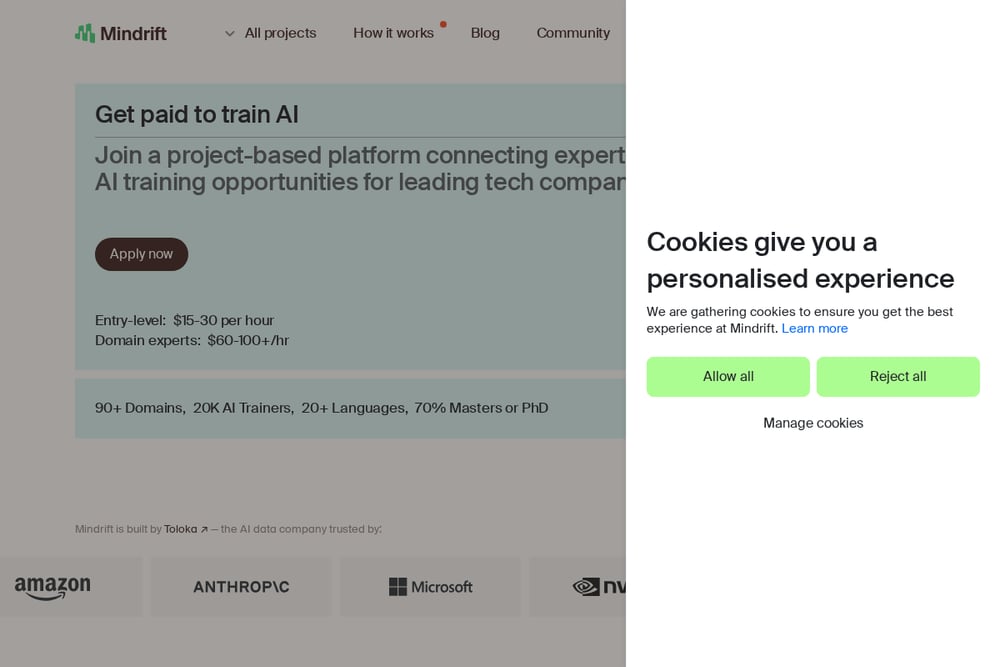
Mindrift is a project-based platform built by Toloka, an AI data company with serious enterprise clients. It connects experts to AI training opportunities across more than 90 domains, from STEM and coding to legal and consulting. Rates range from $15 to $30 per hour for entry-level tasks up to $60 to $100 or more for domain experts. The platform reports 20,000 AI trainers and notes that 70 percent hold a master's degree or PhD. Projects include prompt writing, output evaluation, and response improvement, with performance bonuses and monthly earnings that can reach $6,400 for top contributors.
#2 Landfall | Paid AI training work for experts
 A screenshot of the Landfall website.
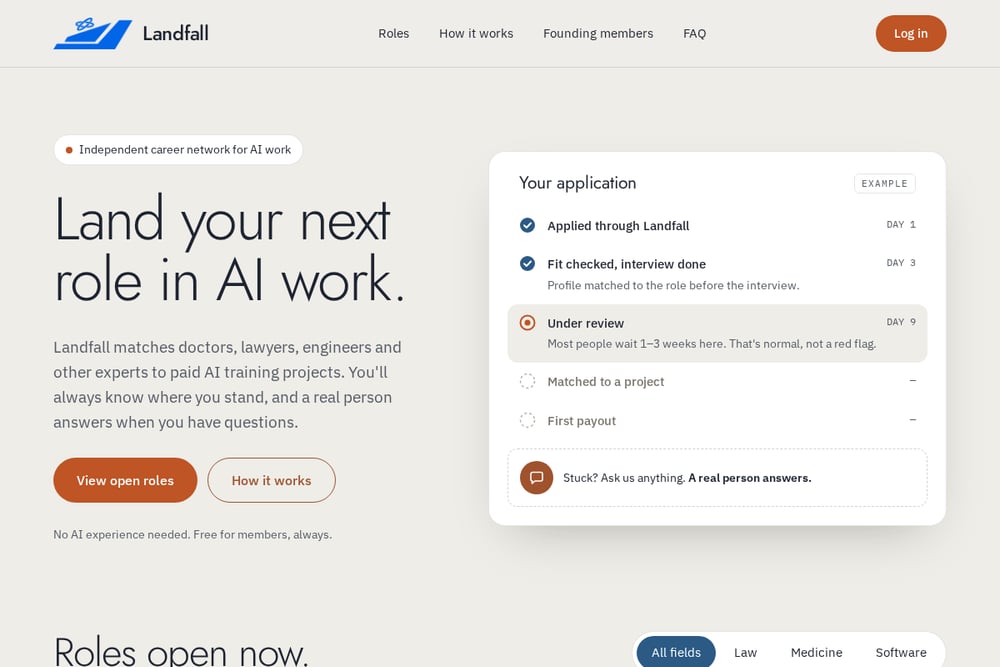
Landfall is an independent career network that matches doctors, lawyers, engineers, and other experts to paid AI training projects. It is free for members, always, and requires no prior AI experience. What sets it apart is transparency: you see every stage of your application, get honest wait times (typically one to three weeks in review), and a real person answers when you have questions. Landfall also preps you with a fit check and profile checklist before you apply, addressing the number one blocker it identified in a review of 18,000+ public posts: qualified people getting filtered out because their profile does not state their experience. Your ID and bank details stay with the platform, never with Landfall.
#3 Braintrust
 A screenshot of the Braintrust website.
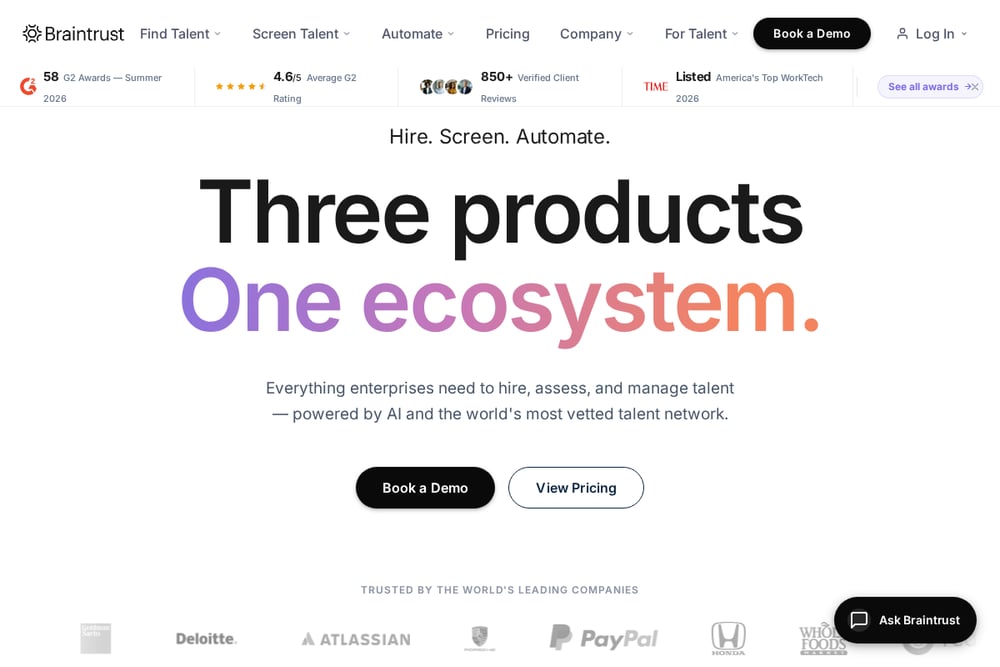
Braintrust is a talent network that has expanded into AI training gigs for domain experts. It advertises pay ranges from $20 to $200 per hour, with 100 percent of earnings going to the worker. The platform lists task types including RLHF rating, data labeling, expert evaluation, prompt and content creation, red teaming, and code review. Each task is clearly described with transparent pay before you start. Braintrust emphasizes that no AI background is required and that your domain knowledge is the skill companies need. It covers fields like medicine, law, finance, education, and engineering.
#4 Mercor
 A screenshot of the Mercor website.
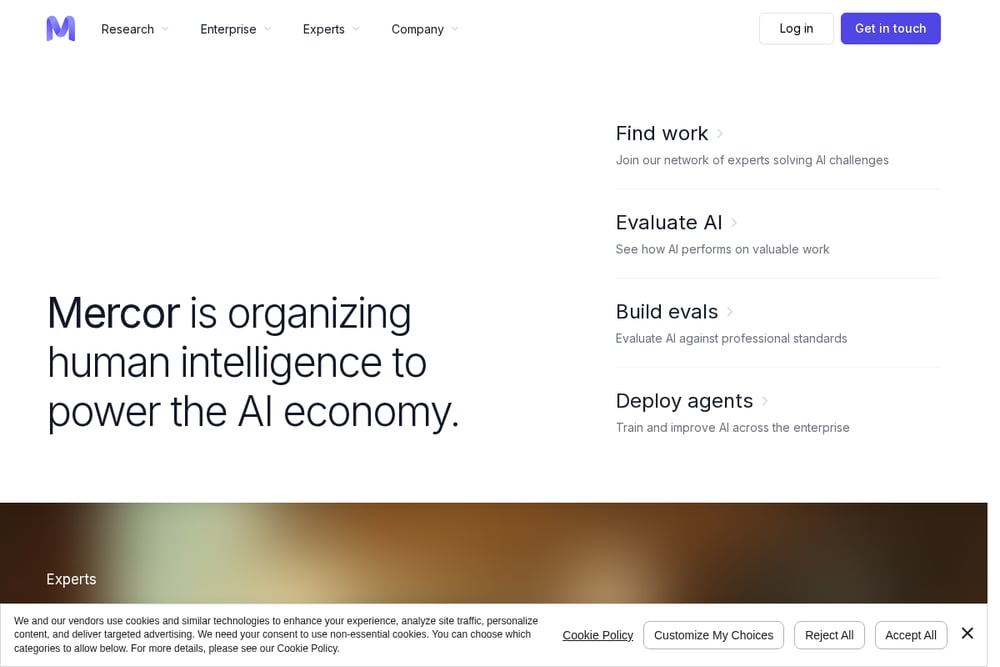
Mercor connects professionals to high-paying contract opportunities with AI companies. The platform reports an average contracted rate of $106 per hour and daily payouts. Roles listed include oncologist at $350 to $450 per hour, machine learning expert at $150 to $200 per hour, and general physician at $150 per hour. Mercor says thousands of professionals work remotely on AI projects through its network. The process involves creating a profile, taking AI assessments, and getting matched to opportunities. It emphasizes competitive pay and weekly payments for contributing expertise.
#5 OpenTrain AI
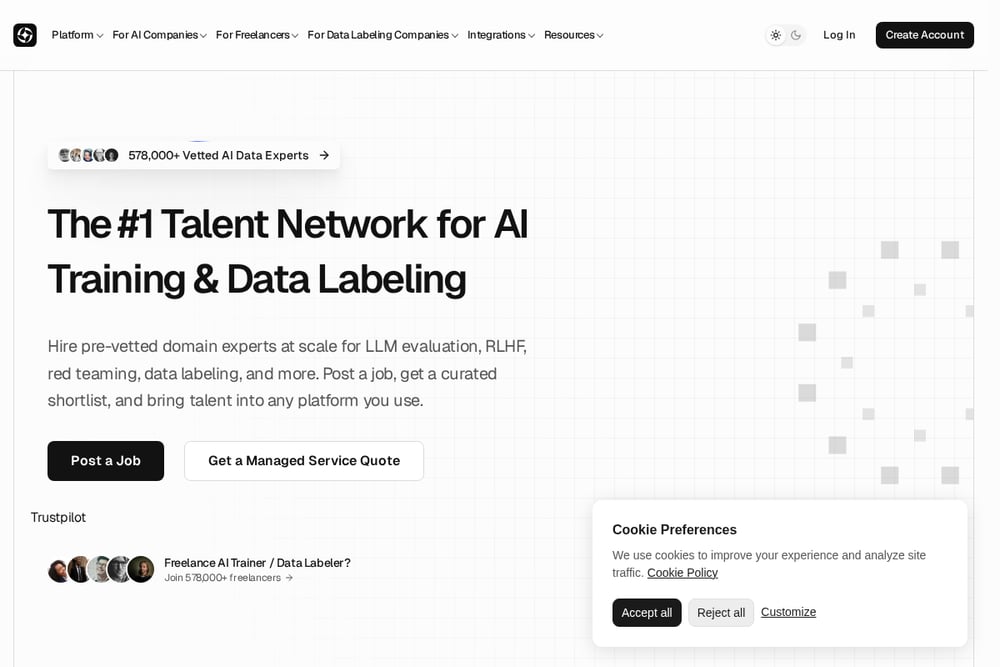 A screenshot of the OpenTrain AI website.
OpenTrain AI is a free platform for finding AI training jobs, with no fees or credit card required for freelancers. It lists open projects with hourly rates, such as LLM evaluation specialist review at $40 per hour, prompt review writing at $55 per hour, and LLM hybrid-RLHF at $72 per hour. The platform says it works with 20+ AI platforms and has a community of 579,000+ AI trainers and data labelers. It organizes career paths by subject expertise, helping you move from your existing skills into remote AI training work. User reviews highlight reliable payments and responsive support.
How to Choose the Right Network for You
Start with your field. If you are a doctor, lawyer, or engineer, look for platforms that explicitly match roles to your background. Landfall does this by design, and Mercor lists specialized roles with high rates. Next, check pricing clarity. Braintrust and OpenTrain AI show hourly bands before you apply, which helps you set expectations. Then consider support. If you have been burned by silent applications, Landfall's tracker and real-person answers are a strong fit. Finally, think about volume. Mindrift offers the widest range of project types, while OpenTrain AI gives you a free way to browse many platforms at once. Pick the one that matches your tolerance for waiting, your need for transparency, and your income goals.
A Simple Workflow to Get Started
Step one: pick two networks from this list that fit your field and sign up. Step two: complete your profile with specific, quantified experience, because that is the number one blocker Landfall identified. Step three: apply to one role per network and track your status. Step four: while you wait, use OpenTrain AI to browse additional projects and keep your pipeline warm. Step five: once you land a project, deliver quality work and ask about performance bonuses, which Mindrift and others offer. Repeat the process until you have a steady stream of AI training income.
The Bottom Line
AI training work is not a side hustle anymore. It is a legitimate way for experts to monetize what they already know. The five networks here each take a different approach: Mindrift for variety, Landfall for transparency and support, Braintrust for clear rates, Mercor for premium contracts, and OpenTrain AI for free access and community. Your best move is to start with the one that matches your need for communication and clarity. For many professionals, that means Landfall at number two on this list, because knowing where you stand is worth as much as the paycheck.