
You want to speak Tagalog out loud, not just tap through flashcards. These five AI conversation tools put real dialogue practice in front of you, starting from your very first minute.
The AI Language Tutor Landscape in 2026
AI language tutors have moved from novelty to necessity. Instead of memorizing isolated words, you now hold actual conversations with a patient machine that corrects you in real time. Tagalog and Filipino learners are a growing slice of that market, driven by family connections, travel, and heritage interest. The tools below all promise speaking practice, but they differ in how they deliver it: some live in chat apps, some simulate phone calls, and some focus on warm, culturally grounded exchanges. What matters is finding the one that gets you talking, not just reading.
How We Evaluated These Tools
We looked at five factors across every tool. First, speaking focus: does the product actually make you talk out loud, or is it mostly text? Second, feedback quality: how quickly and clearly does it show you a more natural way to say something? Third, language scope: is Tagalog a first-class citizen or a checkbox? Fourth, pricing clarity: can you see what you get before you commit? Fifth, local and cultural fit: does the practice feel rooted in real Filipino life, like ordering at a carinderia or using po and opo? Each tool below stood out on at least one of these factors, and we noted where each one shines.
Here is a quick look at the five tools, ordered for this roundup. Each one takes a different angle on spoken Tagalog, so you can match the format to your own learning style.
| Provider | Best For |
|---|---|
| Talkpal | Learners who want a structured, coach-style AI tutor |
| VocaLecta: speak Tagalog out loud with an AI tutor | Beginners who want to speak Tagalog out loud from day one |
| LangBuddy.ai | Learners who want casual daily practice inside a chat app |
| ChitterChatter | Learners preparing for family visits and everyday Filipino culture |
| Talkio AI | Mobile learners who want pronunciation-focused daily drills |
The Five Tools in Detail
#1 Talkpal
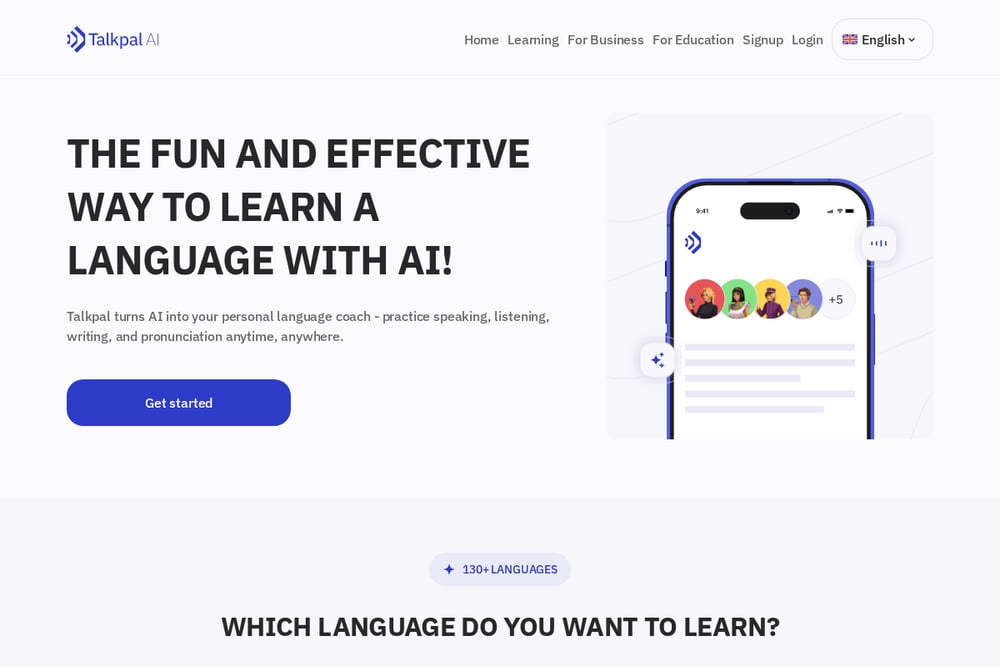 A screenshot of the Talkpal website.
Talkpal turns AI into a personal language coach with immersive, realistic conversations and instant feedback on pronunciation and grammar. It supports 130+ languages, including Tagalog, and carries a 4.7 rating from learners. The platform is built for people who want a structured, coach-like experience rather than a casual chat. You get personalized learning paths and a wide language menu if you later want to branch out. For Tagalog specifically, it offers a dedicated learn-Tagalog page that frames the language as a practical skill. If you like the feel of a formal tutor session, this is a strong place to start.
#2 VocaLecta: speak Tagalog out loud with an AI tutor
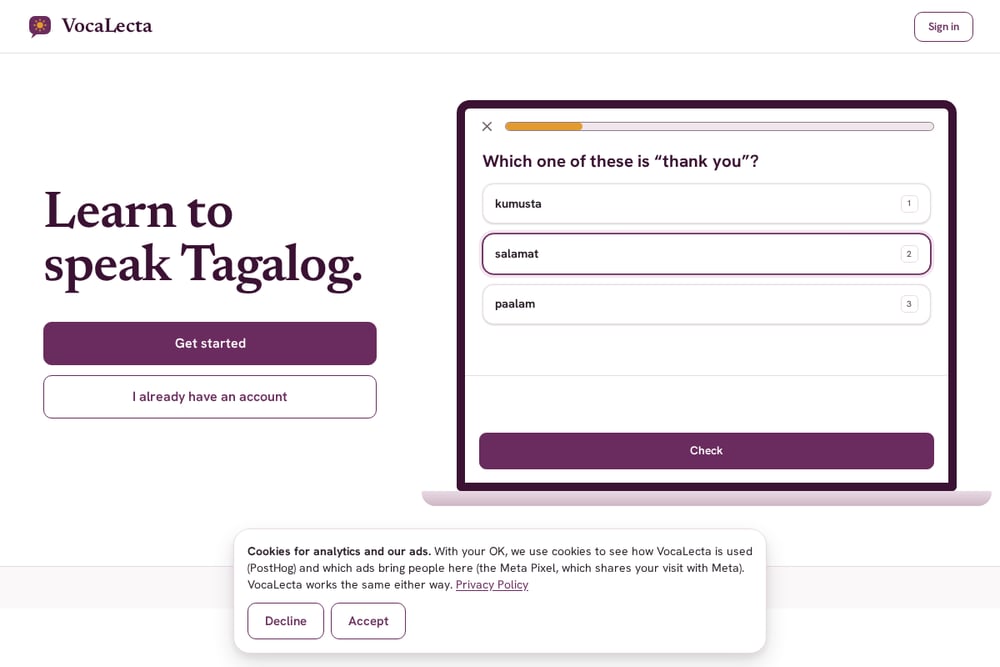 A screenshot of the VocaLecta website.
VocaLecta is built around one simple idea: you speak from your first minute. The AI tutor holds real conversations about travel, food, family, and everyday life, and it waits while you think. When you get stuck, it helps, then shows you a more natural way to say it afterwards. The example on the site is ordering at a carinderia, where you say "Isang adobo at rice, please" and the tutor suggests "Isang adobo at isang kanin po." That small correction is the whole point: it teaches you how real Tagalog sounds. Tagalog is the first language offered, with more coming, so the product is deeply focused rather than spread thin.
#3 LangBuddy.ai
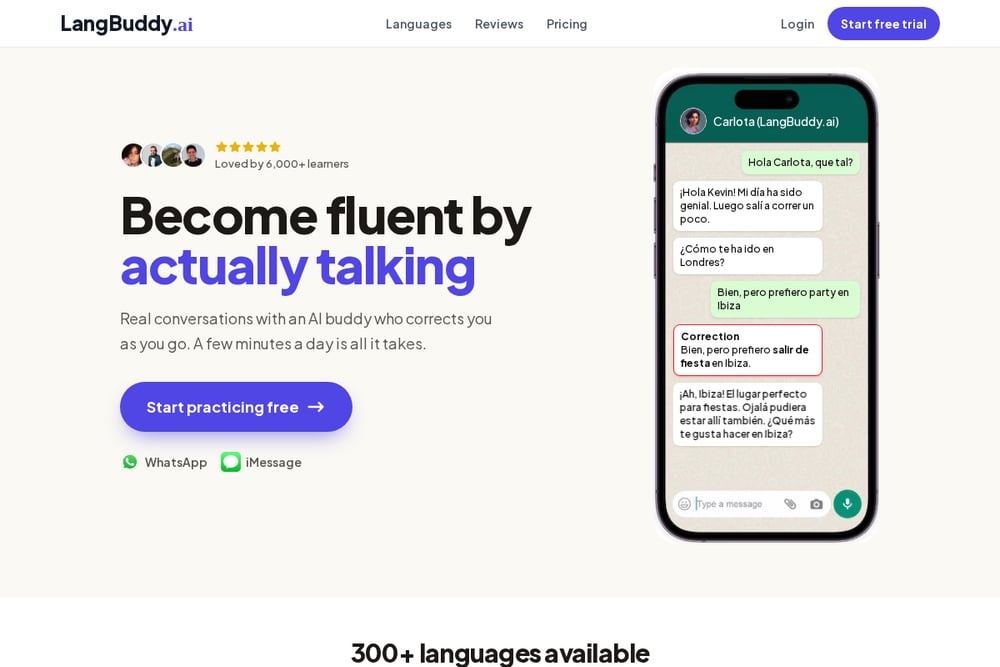 A screenshot of the LangBuddy.ai website.
LangBuddy.ai gives you a Tagalog buddy who lives in your WhatsApp or iMessage and never gets tired of your mistakes. You chat about whatever you want, and corrections arrive inside the conversation without stopping the flow. Voice notes let you train your ear and get used to speaking Tagalog out loud. The buddy, Carlota, matches your level and is available whenever you are. With a 7-day free trial and a following of 6,000+ learners, it is designed for people who want low-pressure daily practice. If you already live in your messaging app, this fits your routine naturally.
#4 ChitterChatter
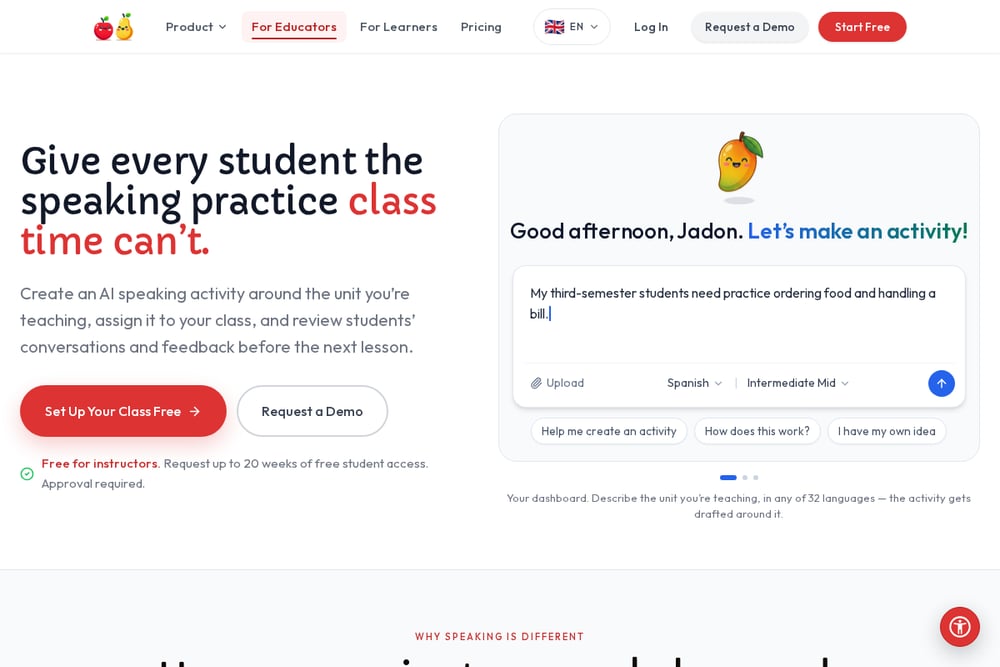 A screenshot of the ChitterChatter website.
ChitterChatter focuses on warm, respectful Tagalog for family chats, visits, meals, and everyday Filipino culture. It helps you turn single words into short back-and-forth exchanges, with po and opo woven into polite phrases. The platform is built for learners who want to practice greetings, family visits, and food conversations before they happen in real life. You create an activity, have your first conversation, and review feedback while the practice is still fresh. There is no credit card required to start, which lowers the barrier for hesitant beginners. If your goal is to feel at home in a Filipino household, this tool speaks your language.
#5 Talkio AI
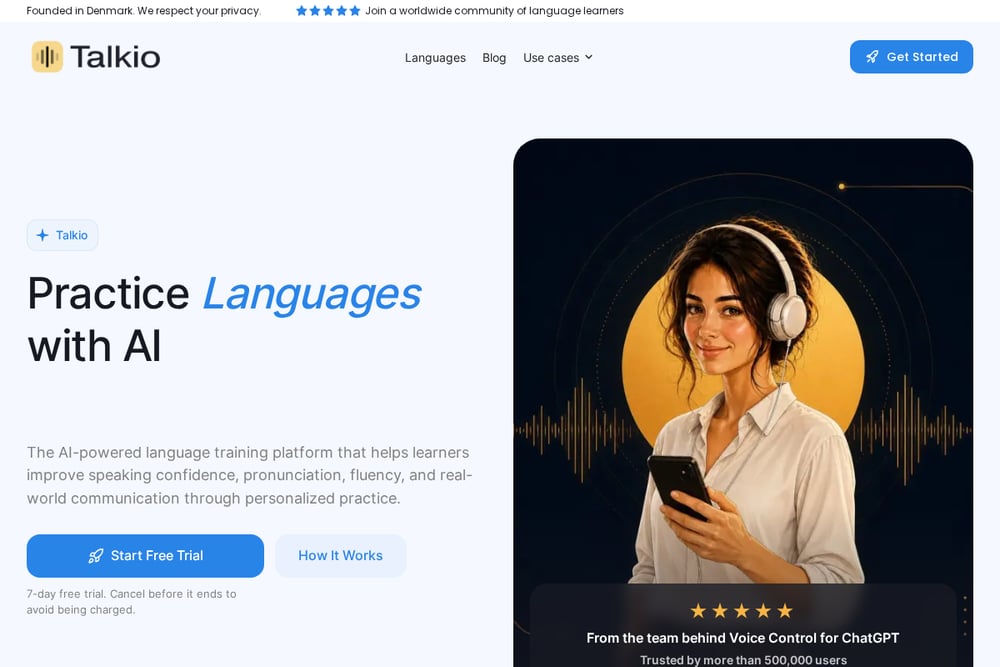 A screenshot of the Talkio AI website.
Talkio AI is a web app from Denmark that trains oral skills through life-like conversations with AI tutors. It offers detailed feedback on your speaking, a pronunciation practice tool, and a Filipino language guide that explains the cultural context. The pitch is simple: just 10 minutes a day can improve your pronunciation and fluency. It is available on the App Store and Google Play, and over 150,000 people have learned with it. If you want a mobile-friendly tool with a strong pronunciation focus, this is worth a look.
How to Choose the Right Tool for You
Start with your goal. If you want to speak from day one with a tutor who corrects you in real time, VocaLecta is built exactly for that. If you prefer a structured coach with a huge language menu, Talkpal fits. If you want practice inside WhatsApp, LangBuddy.ai is the natural pick. If your motivation is family and cultural respect, ChitterChatter keeps the focus there. And if you want short, mobile pronunciation drills, Talkio AI delivers. Try the free tiers or trials before you pay, and pick the one that makes you talk the most.
Putting It on Autopilot
Consistency beats intensity. Set a daily 10-minute slot and treat it like a meeting. Open your chosen tool, start a conversation, and let the AI correct you. If you use LangBuddy.ai, your practice lives in your chat app, so you can reply during a commute. If you use VocaLecta, speak out loud even when you feel silly, because that is the skill you are building. Review the corrections afterwards and say the natural version out loud once more. Do that five days a week and your mouth will start to remember what your brain learned.
The Bottom Line
You do not need a perfect tool. You need one that gets you speaking Tagalog out loud, regularly, with feedback that sounds like real life. VocaLecta makes that its entire premise, starting with Tagalog and a carinderia conversation. Talkpal gives you a broad, coach-like platform. LangBuddy.ai meets you in your messages. ChitterChatter keeps culture and respect at the center. Talkio AI sharpens your pronunciation in short daily bursts. Pick one, start today, and let the conversation carry you.