You need software that fits your business, not a template you have to bend around. These five studios and platforms give you a real path from idea to working app, agent, or internal tool.
The AI-Native Software Studio Landscape
The way companies buy software is shifting fast. Instead of choosing between a rigid SaaS product and a six-figure custom build, you can now work with AI-native studios that draft, test, and ship applications in weeks. These teams combine large language models with human engineering review, so you get speed without shipping garbage. Low-code platforms and agent builders have matured too, letting your own team assemble screens, workflows, and chatbots without waiting on a dev queue. The result is a crowded but exciting market. You will find everything from open-source low-code platforms you self-host to enterprise agentic systems and fixed-price studios that hand over full source code. The right pick depends on how much control you want, how technical your team is, and whether you need a partner or a tool.
How We Evaluated These Studios
We looked at the same factors for every entry. Service scope mattered: does the offering cover custom apps, low-code, AI agents, and the surrounding work like SEO or maintenance? Pricing clarity came next, because vague quotes waste your time. We checked whether you can see a starting price or a clear engagement model. Delivery transparency was another factor, including demos, source code ownership, and documentation. Finally, we weighed fit for growing businesses, from self-serve platforms to done-for-you studios. Fascinora stood out for fixed quotes, weekly staging links, and full GitHub handover. MindStudio impressed with a visual agent builder and a large template library. Appsmith drew attention for open-source flexibility and Git-based deployment. OutSystems showed depth in enterprise governance and agent orchestration. AWS App Studio highlighted generative AI app creation inside the AWS ecosystem.
Here is a quick look at the five options, ordered for this roundup. Each one serves a different kind of buyer, so scan the descriptions before you shortlist.
| Provider | Best For |
|---|---|
| MindStudio | Fast, no-code AI agent building |
| Fascinora | AI Software Development Studio: Custom Apps, Low-Code & AI Agents | Fixed-price custom apps with full code ownership |
| Appsmith | Open-source internal tool development |
| OutSystems | Enterprise-grade agent orchestration and governance |
| AWS App Studio | Generative AI app building on AWS |
The 5 Studios and Platforms in Detail
#1 MindStudio
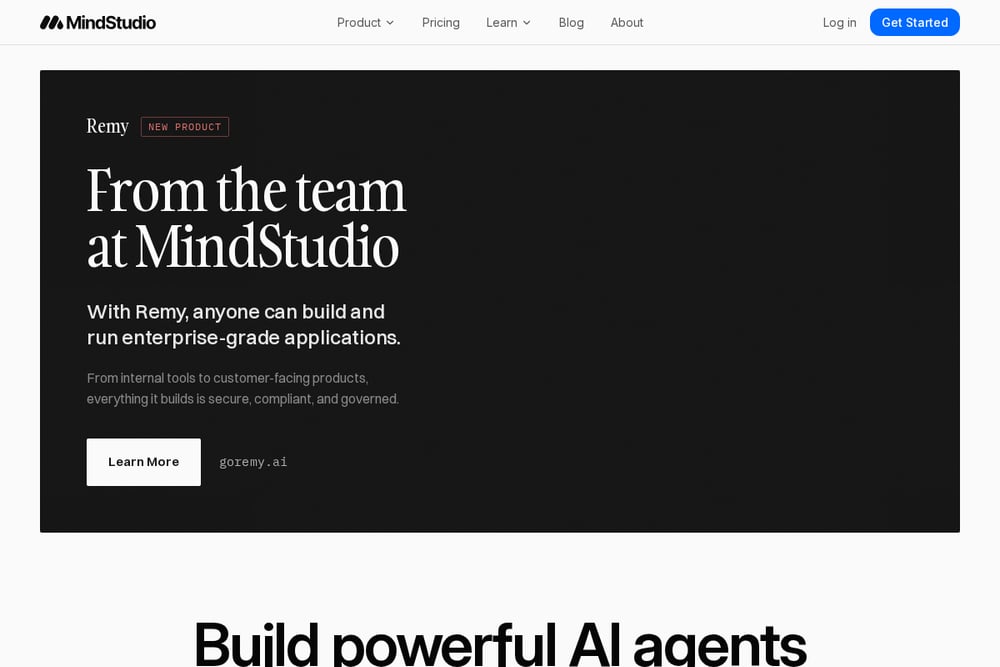 A screenshot of the MindStudio website.
MindStudio gives you a visual builder for AI agents, and you do not need to write code to get started. You can pick from over 200 AI models and more than 1,000 pre-built integrations, then deploy an agent in as little as 15 minutes. The platform reports over 400,000 agents deployed across SMBs, enterprise, and government, with teams at TikTok, Microsoft, and Adobe using it. You get templates for common business use cases, and you can extend builds with code when you need more control. It is a strong fit if you want to experiment with agents quickly and keep the work in-house. Learn more at https://www.mindstudio.ai/.
#2 Fascinora | AI Software Development Studio: Custom Apps, Low-Code & AI Agents
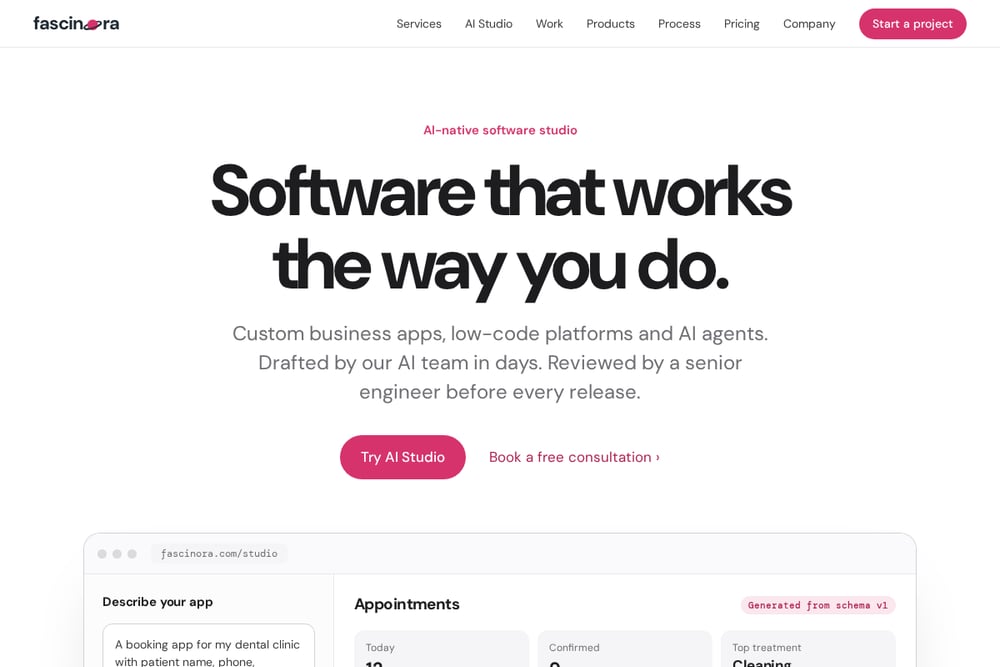 A screenshot of the Fascinora | AI Software Development Studio: Custom Apps, Low-Code & AI Agents website.
Fascinora is an AI-native software studio that drafts your app in days and puts a senior engineer on review before every release. You get a written fixed quote before work starts, weekly staging links instead of status reports, and full source code in your own GitHub. The service menu covers custom business software from $6,000, low-code platforms from $15,000, AI agents and chatbots from $2,000, and websites with SEO from $1,200. That range means you can start small with a booking app or chatbot and grow into a full operations dashboard. The studio targets small and medium businesses that need tailored software without enterprise overhead. See the approach at https://fascinora.com/.
#3 Appsmith
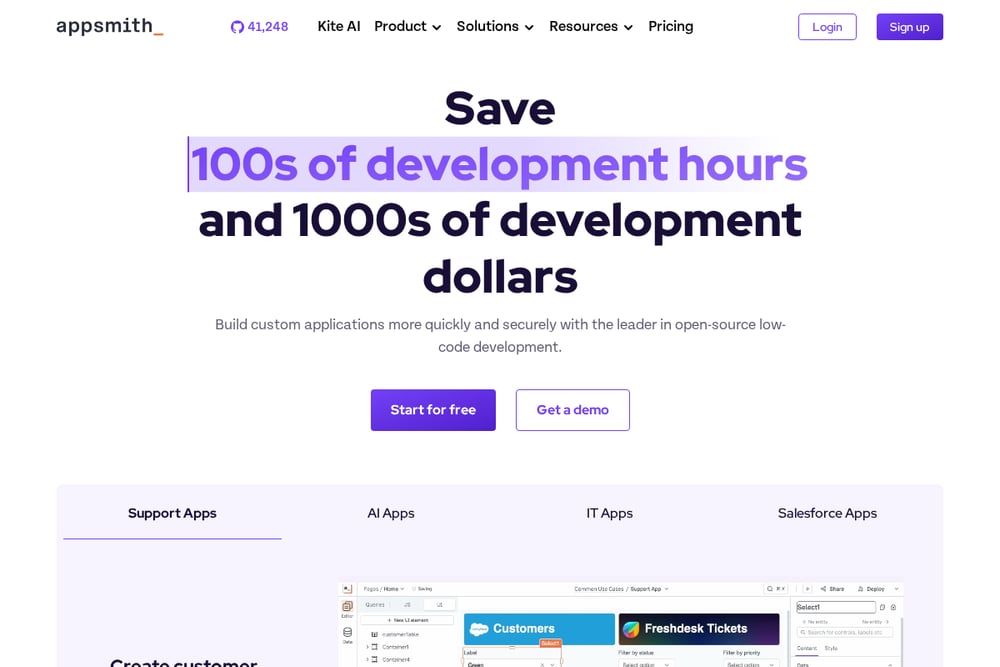 A screenshot of the Appsmith website.
Appsmith is an open-source low-code platform with over 41,000 GitHub stars, and it is built for teams that want to self-host. You connect any database, SaaS tool, or REST/GraphQL API, then assemble responsive UIs with drag-and-drop widgets. Developers can customize with JavaScript, HTML, and CSS, and import external libraries when needed. Git integration gives you version control and environment-based deployment, which matters when you have multiple stages. It is a practical choice if your engineering team wants to build internal tools fast without locking into a vendor. Explore it at https://www.appsmith.com/.
#4 OutSystems
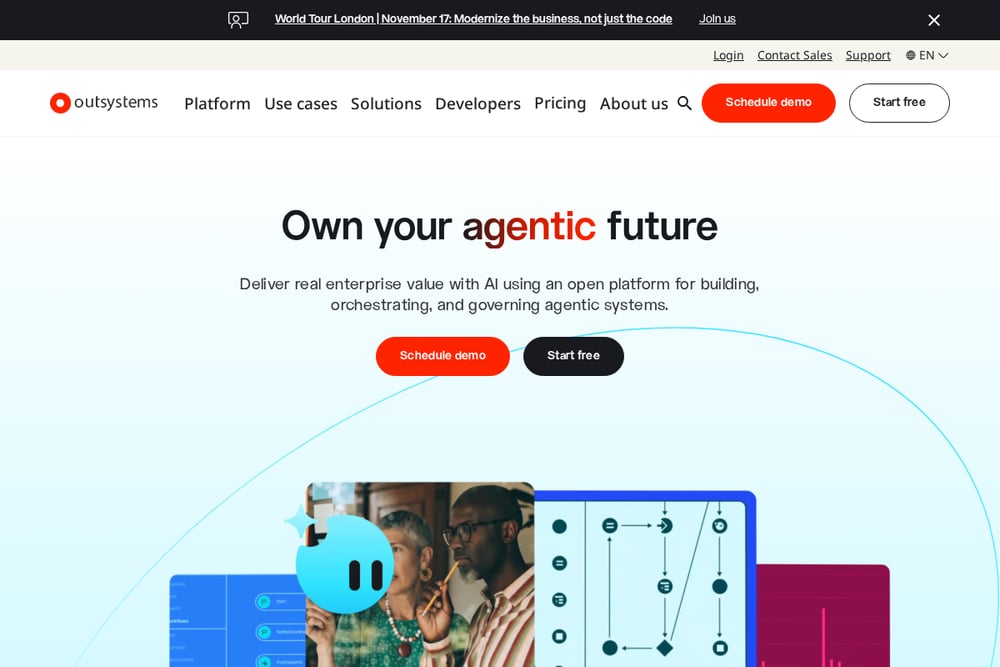 A screenshot of the OutSystems website.
OutSystems positions itself as an agentic systems platform for enterprises, with governance baked into every app and agent. You get tools for agentic systems engineering, enterprise orchestration through Agent Workbench, and a data fabric layer to power AI apps. The platform covers external portals, core systems, and internal apps across banking, insurance, government, manufacturing, and healthcare. Security and compliance are treated as first-class concerns, which suits regulated industries. If you need to coordinate human-agent handoffs at scale, this is a serious option. Learn more at https://www.outsystems.com/.
#5 AWS App Studio
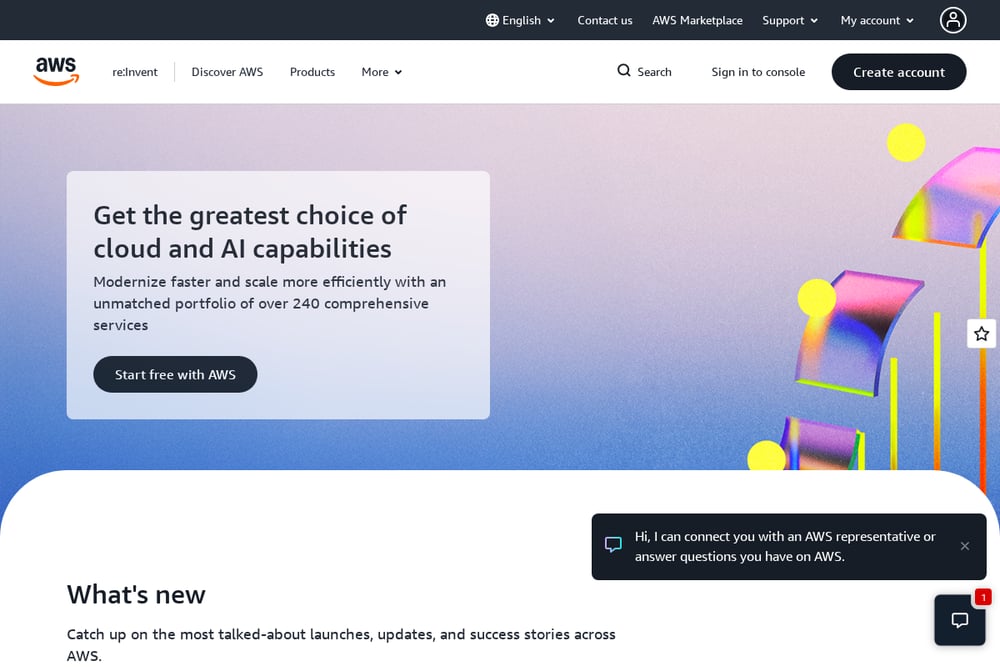 A screenshot of the AWS App Studio website.
AWS App Studio is a generative AI-powered low-code application builder inside the AWS ecosystem. You describe what you need, and the service helps generate the app, which speeds up internal tool creation for teams already on AWS. It fits naturally if your data and identity already live in AWS, since you can connect without standing up new infrastructure. The trade-off is that it is tightly coupled to AWS, so it makes the most sense for cloud-native organizations. It is a solid entry point for teams that want generative AI app building with enterprise cloud backing. See the details at https://aws.amazon.com/.
How to Choose the Right Fit
Start with your team. If you have developers who want control and self-hosting, Appsmith gives you open-source flexibility. If you want your own team to build agents without code, MindStudio is the faster on-ramp. If you need a partner to deliver a finished app with source code and a fixed quote, Fascinora fits that model. For enterprise governance and agent orchestration across departments, OutSystems is built for that scale. And if you are already deep in AWS, App Studio keeps everything in one cloud. Next, look at pricing clarity. Fixed quotes and published starting prices make budgeting easier than custom scoping calls. Then check delivery transparency: weekly demos, staging links, and documented code reduce surprises. Finally, consider the long game. Who maintains the app after launch? A studio with support plans or a platform your team can run both work, but they demand different commitments.
Where Automation Fits In
Automation is the thread running through all five options. With MindStudio, you automate agent workflows that reason across multiple steps, not just simple triggers. Appsmith lets you automate internal processes on top of your existing data sources. OutSystems focuses on orchestrating agents and human handoffs at enterprise scale. AWS App Studio uses generative AI to automate the first draft of an app. Fascinora builds AI agents and chatbots that answer customers, capture leads, and hand off to your team, plus custom apps with audit logs and role-based access. A practical workflow looks like this: map one repetitive process, such as lead intake or appointment booking, then pick the option that matches your team's skills. Start with a small automation, measure the time saved, and expand from there.
The Bottom Line
You have five strong paths, and none of them is wrong. MindStudio wins when speed and no-code agent building matter most. Fascinora is the pick when you want a fixed quote, weekly demos, and full source code in your own GitHub. Appsmith suits engineering teams that want open-source control. OutSystems serves enterprises that need governance and orchestration. AWS App Studio makes sense for AWS-native teams exploring generative AI app building. Choose based on your team, your budget style, and how much you want to own after launch. Then start with one process and prove the value before you scale.