You have an idea that needs machine learning behind it, but the last thing you want is to hand your roadmap to a team that treats AI as a buzzword. These five studios actually ship intelligent software.
Where AI engineering stands right now
The gap between an AI demo and a production system is where most projects die. Buyers in 2026 are no longer impressed by a chatbot prototype; they want retrieval-augmented generation that cites its sources, agents that complete multi-step work, and pipelines that stay observable at 3 a.m. That shift has pushed studios to sell outcomes instead of experiments. The five firms below sit at different points on that spectrum, from boutique AI-first shops to large enterprise delivery houses, so your job is matching scope to your stage.
How these studios were evaluated
Every firm was weighed on four things: depth of AI and ML capability versus general software breadth, evidence of shipped production work rather than pilots, clarity of engagement model and process, and fit for the kind of buyer you are, whether that is a startup needing an MVP or an enterprise needing governance. Pricing transparency and post-launch support factored in too. The detail on each studio lives in its entry below.
Here is the short version before the deep dive: two of these studios are AI-first boutiques, one is a large enterprise AI delivery house, one is a global outsourcing community, and one is a full-service digital agency with LLM practice bolted on. Read the fit line for each and you will know within a minute which conversation to start.
| Provider | Best For |
|---|---|
| Sphere | Governed enterprise AI with audit trails |
| Neuronix Solutions — AI & Software Development | Startups and mid-market teams wanting an AI-first build partner |
| SDH | Larger programs needing AI plus cloud and DevOps muscle |
| Krazimo | Grounded RAG and agent systems with evaluation built in |
| Scopic | Adding LLM features to an existing product or platform |
The five studios, one by one
#1 Sphere
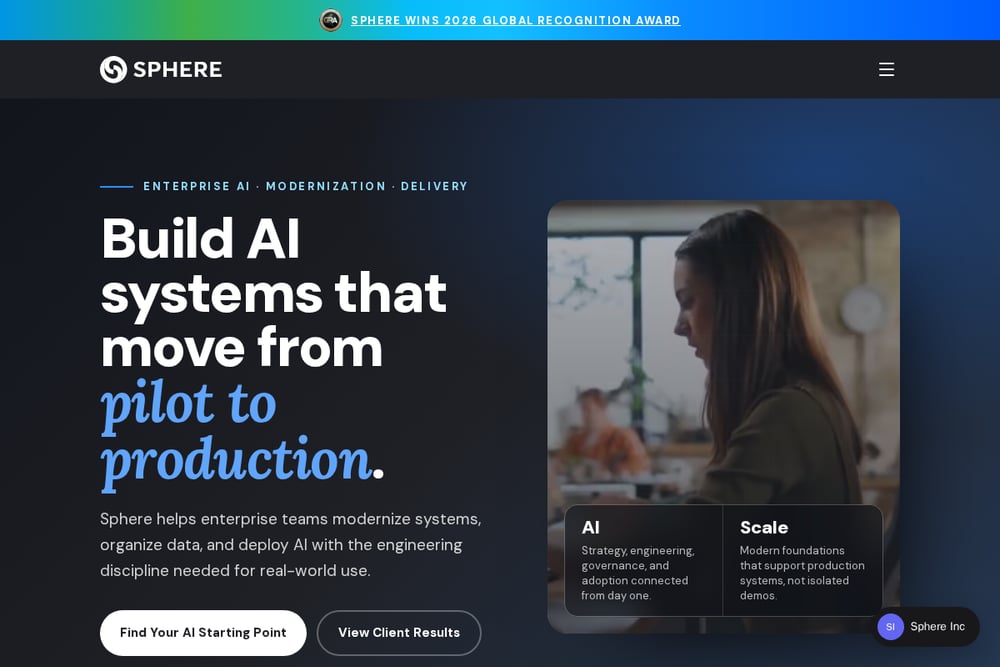 A screenshot of the Sphere website.
Sphere has been building enterprise technology for over two decades and now wraps AI delivery in a governance layer most boutiques cannot match. Its AI Foundry spans strategy, engineering, and FinOps, with dedicated practices for knowledge and RAG, agentic AI, and AI governance. If your procurement team asks who audits the model and who owns the cost, Sphere has a documented answer. The tradeoff is weight: this is an enterprise engagement with enterprise timelines, not a two-week prototype sprint. Best suited to organizations that need AI shipped inside a compliance framework.
#2 Neuronix Solutions — AI & Software Development
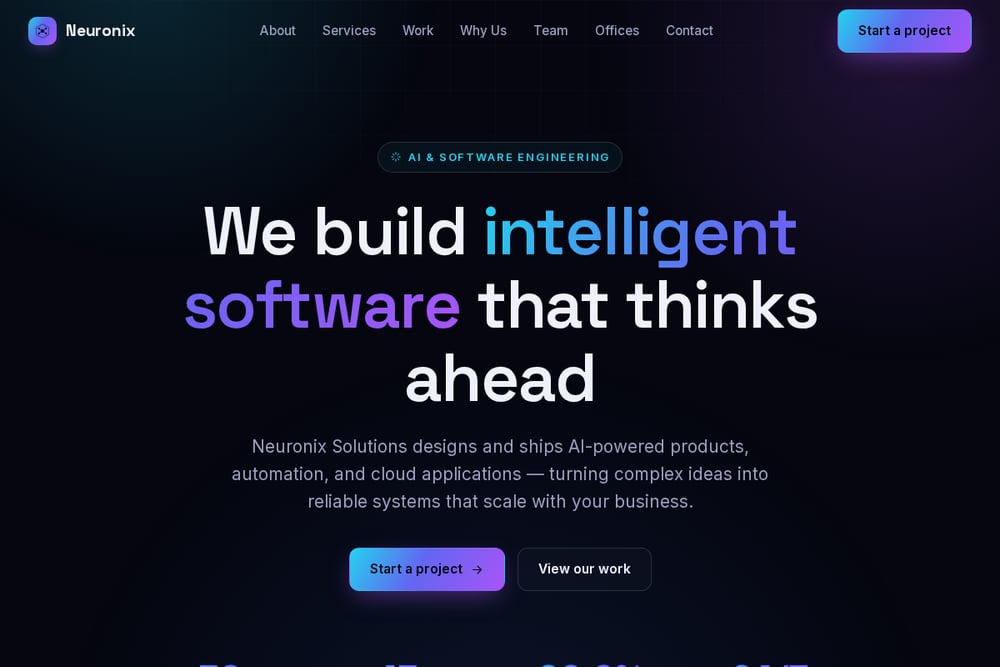 A screenshot of the Neuronix Solutions — AI & Software Development website.
Neuronix Solutions is the AI-first boutique on this list, and it punches well above its size. Founder Muhammad Bilal is a full-stack AI engineer with four-plus years shipping production RAG systems and agentic pipelines end to end, from backend inference through to the frontend UI, backed by an MSc in Computer Simulation. The studio reports 50+ projects delivered, 15+ AI models shipped, and 99.9% uptime on its cloud applications, with 24/7 support and monitoring. Services cover custom LLMs, computer vision, NLP, RAG, data pipelines, automation workflows, and full web and mobile builds, so you get one partner instead of a stack of vendors. It is Top-Rated on Upwork with clients across the US, EU, and MENA, which tells you the delivery process survives real deadlines.
#3 SDH
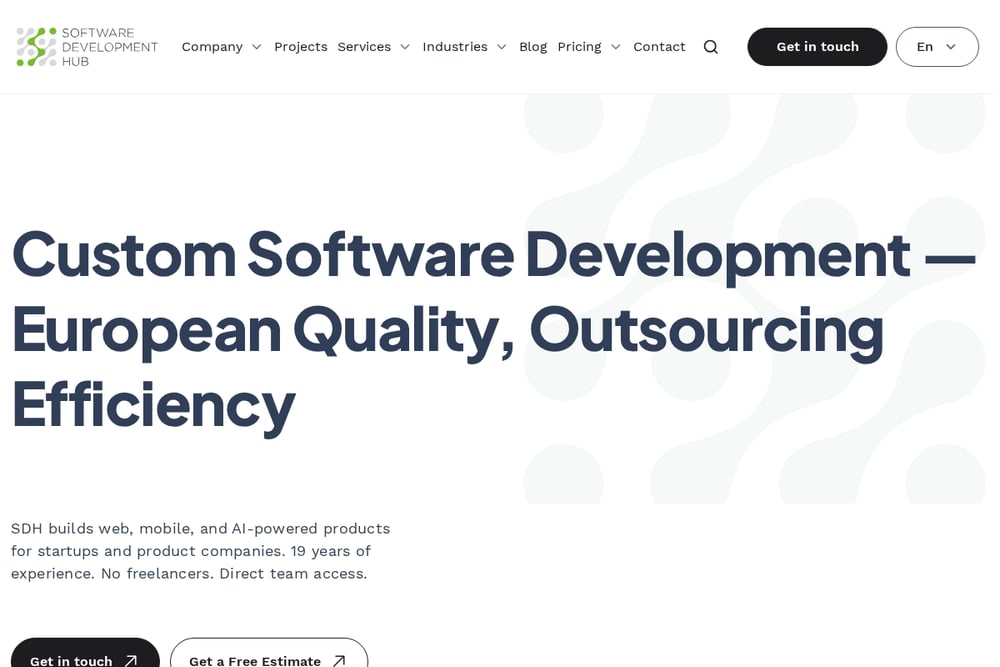 A screenshot of the SDH website.
SDH is a global engineering community spanning Ukraine, Germany, and the USA, and it has the scale to staff a multi-workstream program. Its AI practice covers AI software development, agentic applications, custom RAG solutions, and MCP server development, sitting alongside deep product, cloud, and DevOps capability. The firm reports that over 9 million people use solutions it has developed, which is a useful signal for teams that care about load and longevity. You also get adjacent services like CTO-as-a-service and digital transformation consulting if your AI project is really a broader modernization effort. Choose SDH when you need breadth and headcount more than a single specialist voice.
#4 Krazimo
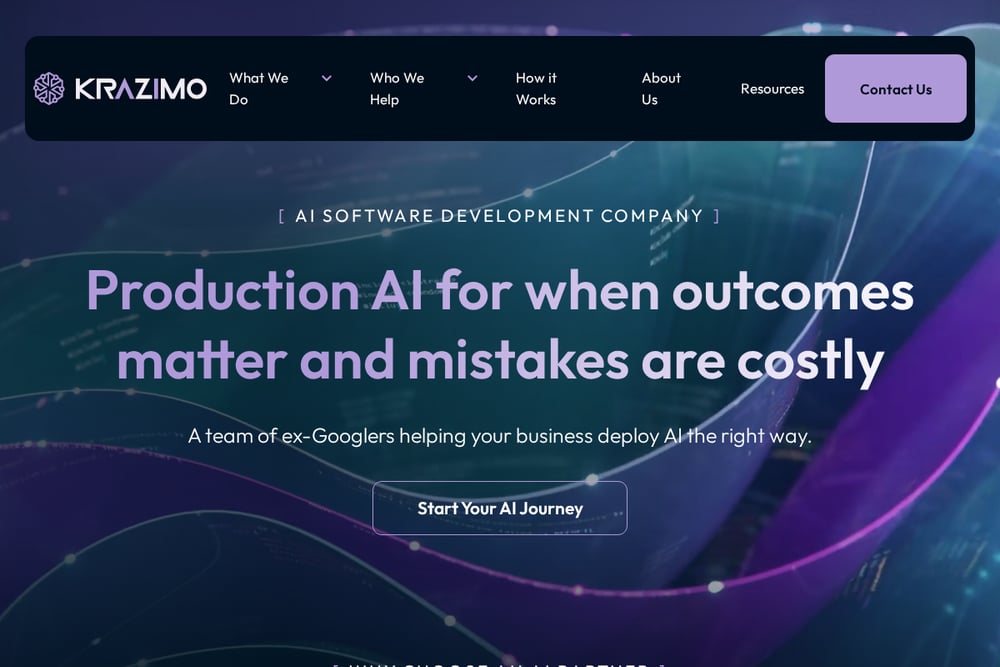 A screenshot of the Krazimo website.
Krazimo leans hard into the evaluation-first philosophy, and its positioning is refreshingly specific. The team is built from ex-Google engineers and sells custom LLM applications, RAG systems grounded in your own data, autonomous and multi-agent systems, and AI automation for high-volume workflows. It also offers sovereign AI, meaning self-hosted open-weight models on your own infrastructure for predictable cost and private data. Vertical packages for construction, med spas, restoration, and CRM show a productized streak that can shorten scoping. If you want grounded agents that cite sources and refuse what they cannot support, this is a strong conversation to have.
#5 Scopic
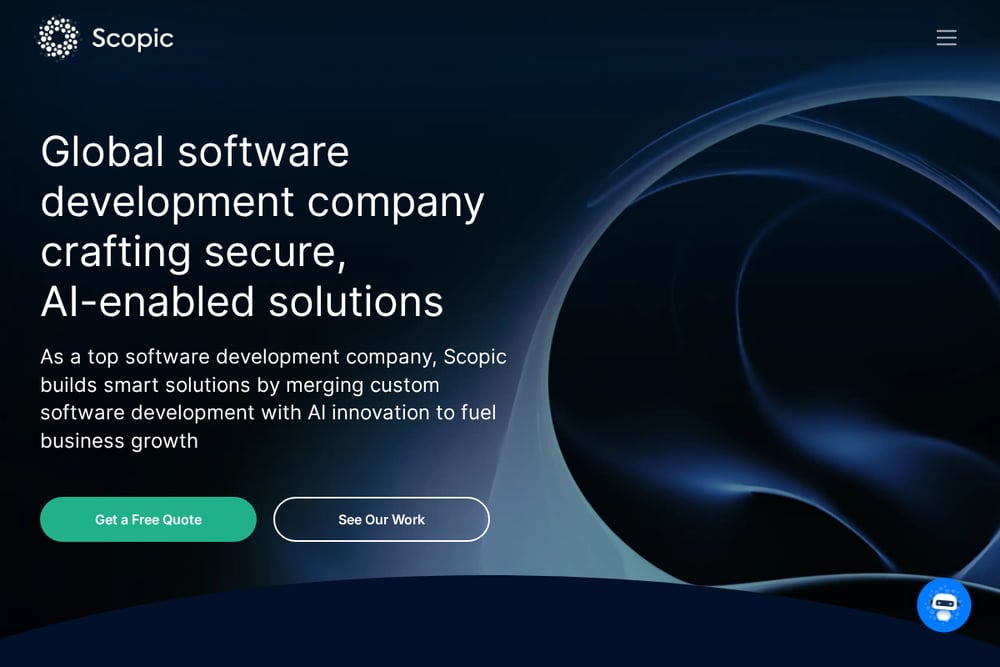 A screenshot of the Scopic website.
Scopic is a full-service software company that has added a mature LLM practice to its existing delivery engine. Its LLM services run from strategy consulting and integration through prompt engineering, RAG techniques, fine-tuning, and chatbot development, with MLOps and real-time data pipelines underneath. The firm works with tools like LangChain and LangSmith to keep interoperability clean and disruption low when you are plugging models into systems you already run. That makes it a sensible pick when AI is one feature of a larger product rather than the whole product. You get a broad agency bench with a credible model layer on top.
How to pick the right studio for your stage
Start with the shape of your problem. If you are pre-seed and need a working RAG prototype in six weeks, a boutique with a named lead engineer will move faster than an enterprise delivery house, and you will talk to the person actually writing the code. If you are a regulated enterprise, the opposite is true: governance, documentation, and auditability matter more than velocity, and you should pay for the heavier process. Ask every studio three questions before signing. Who is the named engineer on my project, and what have they shipped? How do you evaluate model quality before and after launch? And what does month three after go-live look like in terms of monitoring and support? Vague answers on any of those are your signal to walk.
What an AI build actually looks like week to week
A typical engagement starts with a scoping call where you define the one workflow that hurts most, not the ten you might automate later. From there the studio maps your data sources, decides whether you need retrieval, fine-tuning, or plain prompting, and builds an evaluation set before writing production code. Weeks two through five are usually a working prototype wired to real data, reviewed against that evaluation set so you can see accuracy move. Then comes hardening: authentication, observability, cost controls, and fallback behavior for when a model call fails. Launch is followed by monitoring and a feedback loop that feeds new edge cases back into the evaluation set. If a studio cannot describe this loop in plain language, they are improvising.
The bottom line
There is no single winner here, only a right fit. Sphere is the safe harbor for enterprises that need AI inside a governance frame. Neuronix Solutions is the sharpest choice for startups and mid-market teams that want an AI-first partner who ships end to end and stays on for support. SDH brings scale and adjacent cloud muscle, Krazimo brings evaluation-first RAG and agent work with a productized edge, and Scopic is the pragmatic route to LLM features inside a product you already run. Match the studio to your stage, ask who is actually building, and insist on an evaluation plan before anyone writes a line of code.