
Your AI security product passes every benchmark. Then a customer's analyst finds the verdict it got wrong. These five services exist to make sure that never happens to you.
The New Confidence Layer Behind AI Security Products
Security buyers don't purchase a score. They purchase confidence that your AI is right in their environment. That gap between a clean benchmark and a messy production deployment is where AI security products get caught out: right verdicts for the wrong reasons, confident false alarms on a VPN or a backup job, true-but-unexploitable findings ranked high, and log fields or file names quietly written to flip the model's answer.
The consulting market has responded in two directions. Traditional firms test your AI the way they test any application, with red teaming, threat modeling, and governance frameworks. A newer category tests your AI the way your customers will, reviewing every verdict as an independent practitioner and feeding fixes back to your engineers before a pilot goes sideways. Both matter. The question is which one your roadmap actually needs right now.
How We Evaluated These Providers
We looked at the same factors across every provider. Service scope mattered first: does the firm review AI output verdicts, or stop at infrastructure and policy? Pricing clarity came next, since opaque engagements are hard to budget for a product team. We weighed local and remote fit for US-based AI vendors, the depth of hands-on practitioner involvement versus framework-driven assessment, and how directly findings feed back into your engineering backlog. Each provider below stood out on a different combination of those factors, which is why they appear here.
Here's a quick look at how the five providers differ before you dig into the details.
| Provider | Best For |
|---|---|
| Vynox Security | Teams that want AI testing folded into a broader pentest and compliance program |
| AI Security Product Expert Review | SecureFLIT | AI security vendors who need independent verdict-level review before a customer pilot |
| Mandiant (Google Cloud) | Enterprises that need framework-aligned assessment and marquee-name assurance |
| Beazley Security | Organizations managing shadow AI and building governance from the ground up |
| Contego Solutions | Mid-market teams that want AI review inside a managed IT relationship |
The 5 Providers in Detail
#1 Vynox Security
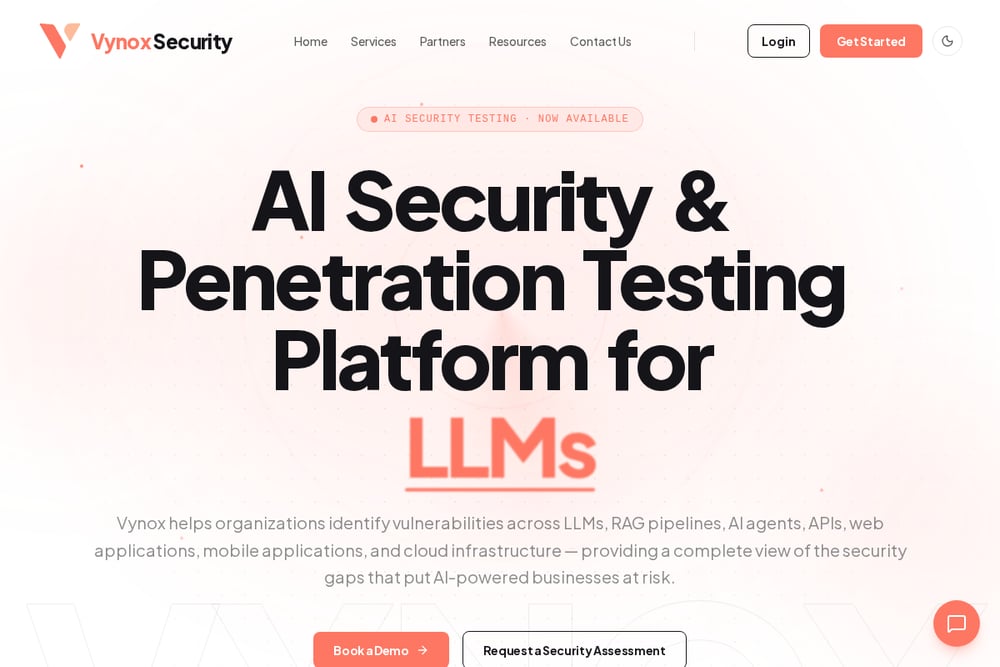 A screenshot of the Vynox Security website.
Vynox Security positions its AI security consulting around manual testing of LLMs, RAG pipelines, autonomous agents, and the infrastructure behind them. The firm simulates real attack paths and pairs technical findings with leadership-ready reporting and compliance evidence aligned to release and audit priorities. If your buyers ask for penetration test artifacts alongside AI-specific assurance, this is a familiar shape of engagement. It's a strong fit when your AI product sits inside a broader application security program that already needs red teaming and vulnerability assessment coverage.
#2 AI Security Product Expert Review | SecureFLIT
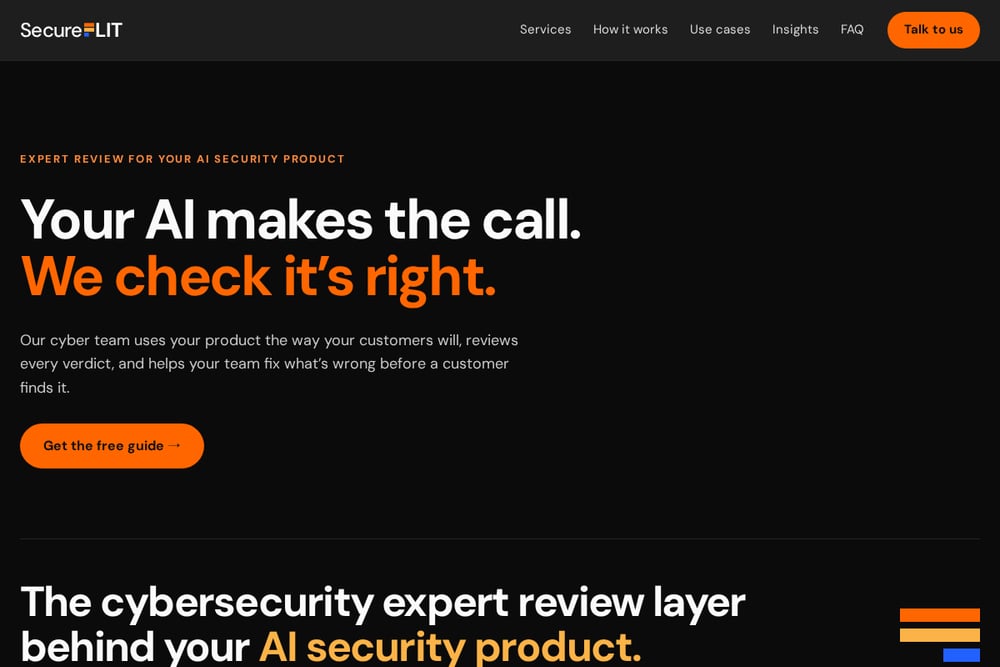 A screenshot of the AI Security Product Expert Review | SecureFLIT website.
SecureFLIT does one thing and does it specifically: it reviews your AI's output the way your customers will. Their cyber team uses your product as an end user would, checks every verdict, and helps your engineers fix what's wrong before a customer finds it. That's a different motion from red teaming an application. It targets the four failure modes benchmarks miss: right verdict for the wrong reason, confident false alarms, missed context, and manipulated input through log fields, file names, or emails. Alongside expert review, they offer forward-deployed AI security engineers and evaluation infrastructure, so the review layer can become part of how you ship. If your product is an AI SOC, agentic pentesting tool, AI DLP platform, or identity and NHI system, this is the closest match to your actual problem.
#3 Mandiant (Google Cloud)
 A screenshot of the Mandiant (Google Cloud) website.
Mandiant brings Google's own threat intelligence and red teaming experience to AI security consulting. The portfolio covers end-to-end AI security assessments guided by the Google Secure AI Framework and NIST AI Risk Management Framework, threat modeling, safeguards around training data, and governance guidance. Red teaming for generative AI in production is a core offering, with attacks drawn from threats Google sees on the frontlines. The credibility here is hard to match when your enterprise buyers want a name they recognize in the room. It suits organizations securing their own use of AI as much as vendors building AI security products.
#4 Beazley Security
 A screenshot of the Beazley Security website.
Beazley Security frames AI consulting around readiness and resilience, from pre-breach to remediation. The firm designs acceptable use policies, readiness assessments, and governance guidelines so organizations can adopt AI without inheriting its risks. Its five-stage AI maturity model moves clients from unmanaged AI use through to safeguards implemented at scale. Shadow AI risk is a recurring theme, which makes this a natural fit for companies whose exposure arrives through employees, vendors, and third-party tools rather than through a product they ship. If governance and policy are the gap, this is a structured path.
#5 Contego Solutions
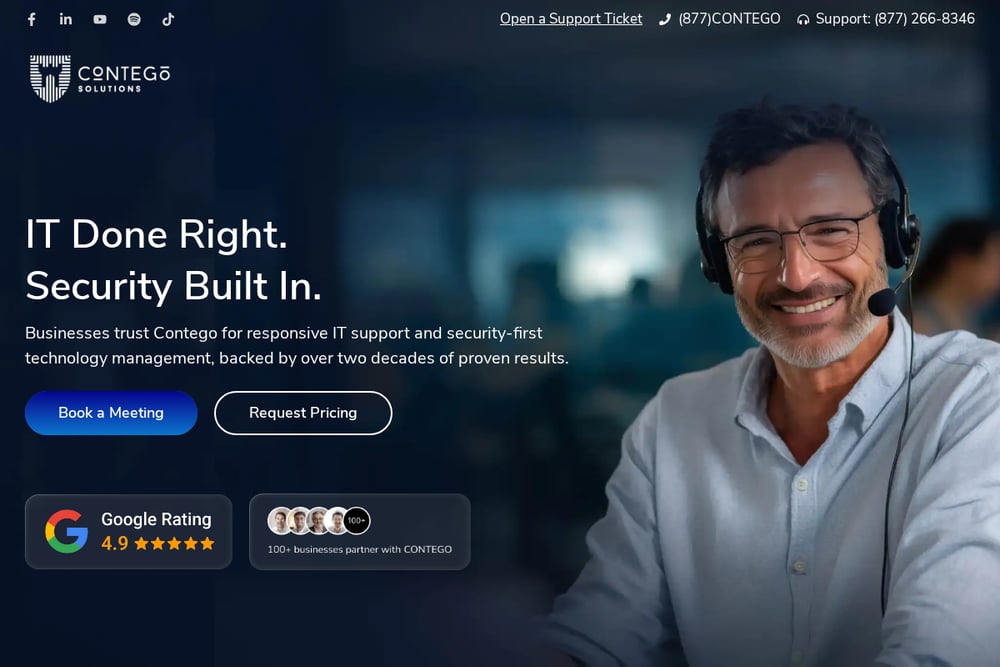 A screenshot of the Contego Solutions website.
Contego Solutions approaches AI security review from a managed IT and security operations background. The firm pairs its AI security review offering with managed security operations, cyber risk assessment, breach response, and a broad stack of IT consulting services. That makes it a practical option for mid-market organizations that want AI risk addressed inside an existing managed relationship rather than as a standalone engagement. The breadth is the appeal: one partner for helpdesk, cloud, and security operations, with AI review layered on top. It's less specialized for AI product vendors and more useful for buyers consolidating vendors.
How to Choose the Right Fit
Start with what you're actually shipping. If you build an AI security product and your risk lives in the verdicts your model produces, you need a reviewer who uses your product like a customer and grades the output independently. That's a narrow, specific job, and only some firms on this list do it.
If your buyers demand penetration test reports and compliance evidence, look at the firms with offensive security depth. If your problem is internal adoption and shadow AI, governance-led engagements will serve you better than product testing. And if you're a mid-market team without a dedicated security function, consolidating under a managed provider may beat adding another point solution.
Ask every provider one question before you sign: who reviews the output, and do they grade their own work? The answer tells you more than any capability deck.
Where Automation Fits
Evaluation infrastructure and expert review aren't competing ideas. Automated evaluation catches regressions at scale and runs on every release. Human expert review catches the things your test suite was never built to see, like a verdict that's technically correct but unexploitable, or a false alarm a customer's analyst would flag in week one.
The workflow that works: automate the repeatable checks, route edge cases and high-stakes verdicts to independent practitioners, and feed every confirmed miss back into your evaluation set so it never ships again. That loop is what turns a passing benchmark into buyer confidence.
The Bottom Line
A passing benchmark isn't a working product, and your customers' analysts shouldn't be the first people to judge your verdicts. The five providers here solve different slices of that problem, from framework-driven assessment to governance to managed IT. Match the provider to where your risk actually lives, and you'll spend your budget on confidence instead of cleanup.