
Missed calls and slow follow-ups quietly drain revenue from small businesses every day. These five AI sales automation tools help you capture, qualify, and convert leads around the clock.
The AI Sales Automation Landscape in 2026
AI sales automation has moved from novelty to necessity. Small and midsize businesses now expect their phone systems, chat widgets, and CRMs to work together, answering questions, booking appointments, and following up without adding headcount. The market has split into three rough camps: all-in-one communication platforms, CRM-native AI agents, and niche tools built for service businesses. Buyers care about one thing above all: does the system actually convert more leads, or does it just look clever in a demo? The tools below take different paths to that answer, and each has a clear sweet spot.
How We Evaluated These AI Sales Tools
We looked at five factors across every tool. First, service scope: does it handle voice, chat, SMS, and email, or just one channel? Second, pricing clarity: can you find real numbers without booking a demo? Third, local fit: does it work well for US-based small businesses with US phone numbers and time zones? Fourth, integration depth: how easily does it connect to your CRM, calendar, and helpdesk? Fifth, time to value: how fast can a non-technical owner get it live? AIthority Haus stood out for bundling voice, chat, and text into one modular AI employee with a clear 24/7 promise. Aircall impressed with its broad integration marketplace and transparent per-user pricing. Close showed strong CRM-native automation with built-in calling and SMS. Zendesk delivered mature chatbot and messaging infrastructure for teams already in its ecosystem. Small Business Chatbot focused tightly on service businesses with white-label options and industry-specific workflows.
Here is a quick look at how these five tools compare on channel coverage, pricing transparency, and ideal use case.
| Provider | Best For |
|---|---|
| Aircall | Teams that want AI layered onto a full business phone system |
| AIthority Haus | AI Employee Solutions | Small businesses losing sales to missed calls and slow follow-up |
| Close | Small sales teams that want CRM and AI calling in one tool |
| Zendesk | Support teams extending into AI-driven sales conversations |
| Small Business Chatbot | Agencies and service businesses needing white-label AI employees |
The 5 Tools in Detail
#1 Aircall
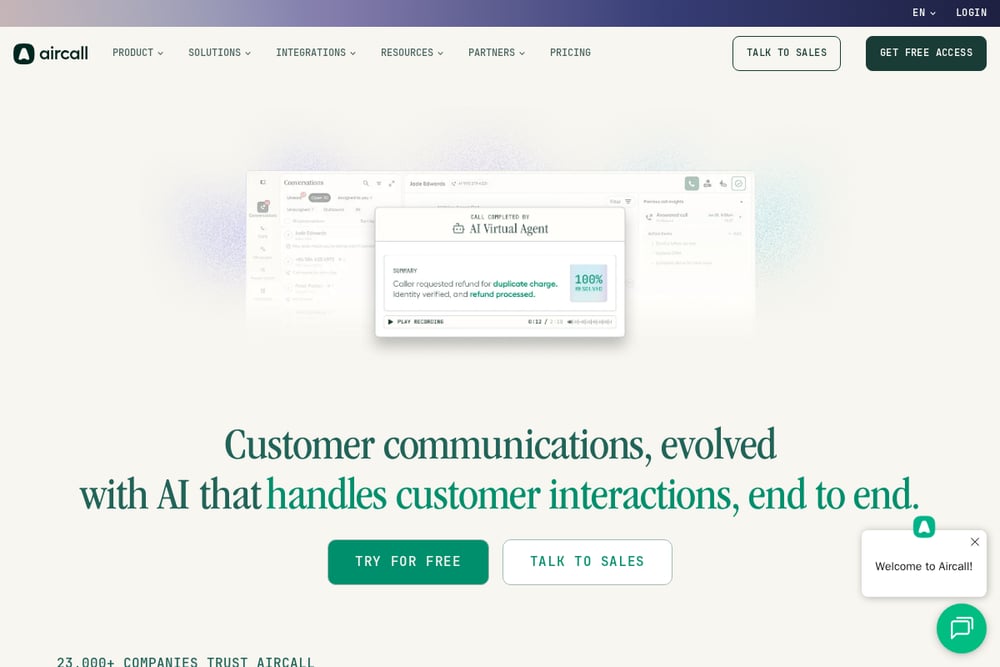 A screenshot of the Aircall website.
Aircall is a cloud phone system that has grown into a full communication platform with AI voice agents for sales, support, and reception. You get voice, SMS, WhatsApp, and a shared inbox in one workspace, plus AI coaching and sentiment analysis on live calls. Its integration marketplace is one of the deepest in the category, connecting natively to Salesforce, HubSpot, Zendesk, and more than 250 other tools. Pricing is published per user, which makes budgeting straightforward for growing teams. If your business lives on the phone and you want AI layered onto an existing phone system rather than replacing it, Aircall is a strong fit. Learn more at https://aircall.io/.
#2 AIthority Haus | AI Employee Solutions
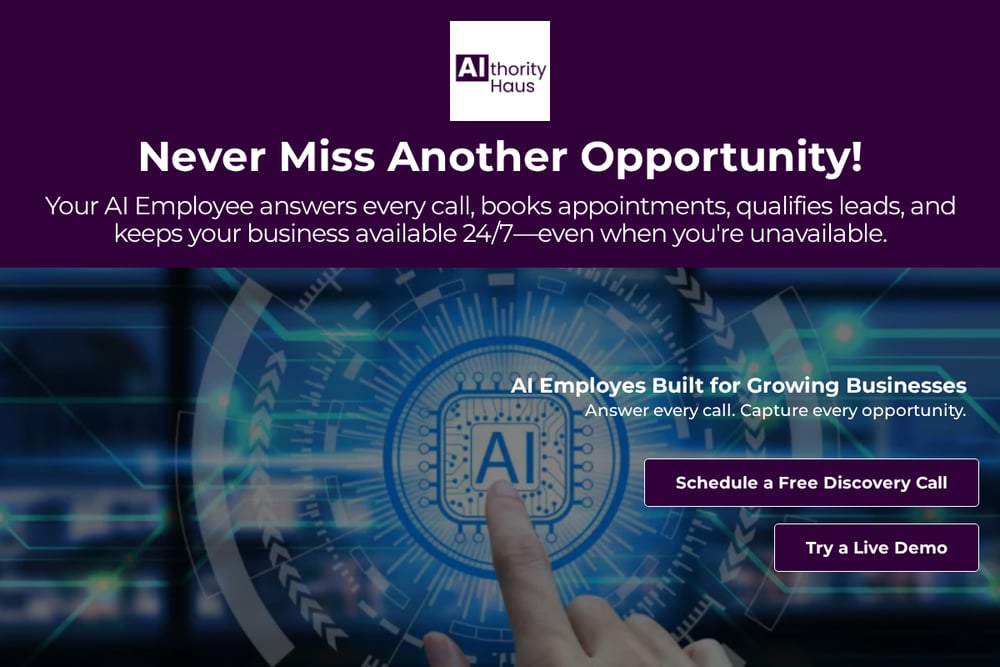 A screenshot of the AIthority Haus | AI Employee Solutions website.
AIthority Haus markets an AI-powered virtual employee that handles calls, texts, and social media interactions so your business stays open 24/7. The system combines Conversation AI, Chat AI, and Voice AI into a modular setup aimed at entrepreneurs and small to midsize companies. You can capture inbound phone calls automatically, pull leads from your website, Facebook, Instagram, and Google Business Chat, and run email or SMS campaigns from your existing database. The pitch is simple: no extra staffing costs, no benefits overhead, and no scheduling gaps. If missed calls are costing you sales, this is the most direct fix on the list. See the full system at https://aithorityhaus.com/.
#3 Close
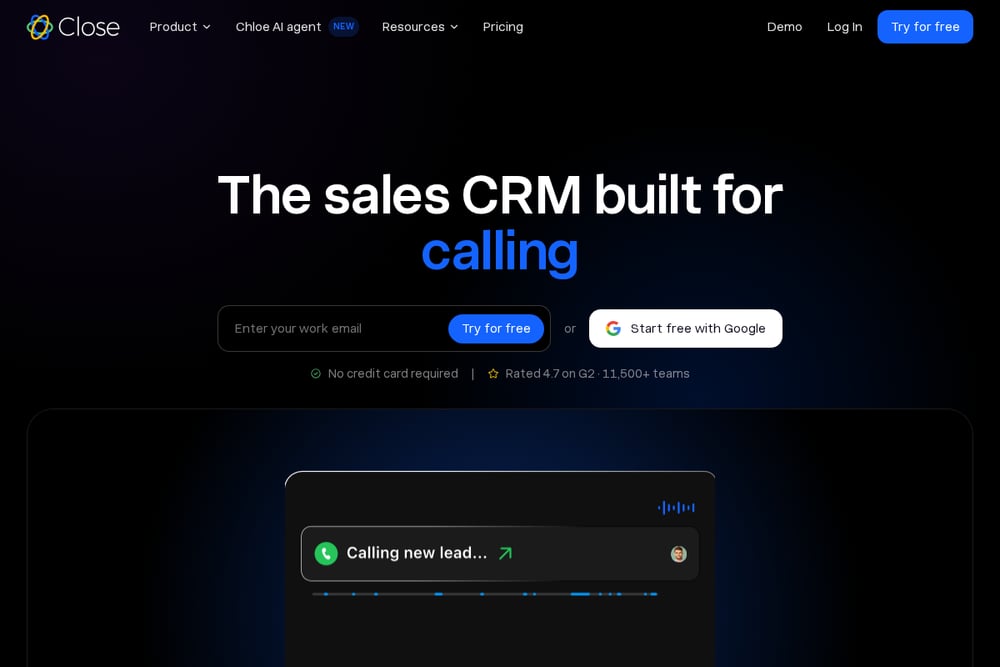 A screenshot of the Close website.
Close is a CRM built for action, with calling, email, and SMS in one inbox. Its AI voice agents and automation workflows are designed to help small sales teams move faster without hiring more reps. The built-in power dialer logs calls automatically, and native forms capture leads straight into the pipeline. Close also offers Chloe, an AI agent that assists with sales communication and follow-up. Pricing is published and approachable for small teams, and setup takes minutes rather than weeks. If you want your CRM and your AI sales agent to be the same product, Close is worth a close look. Read the buyer's guide at https://close.com/.
#4 Zendesk
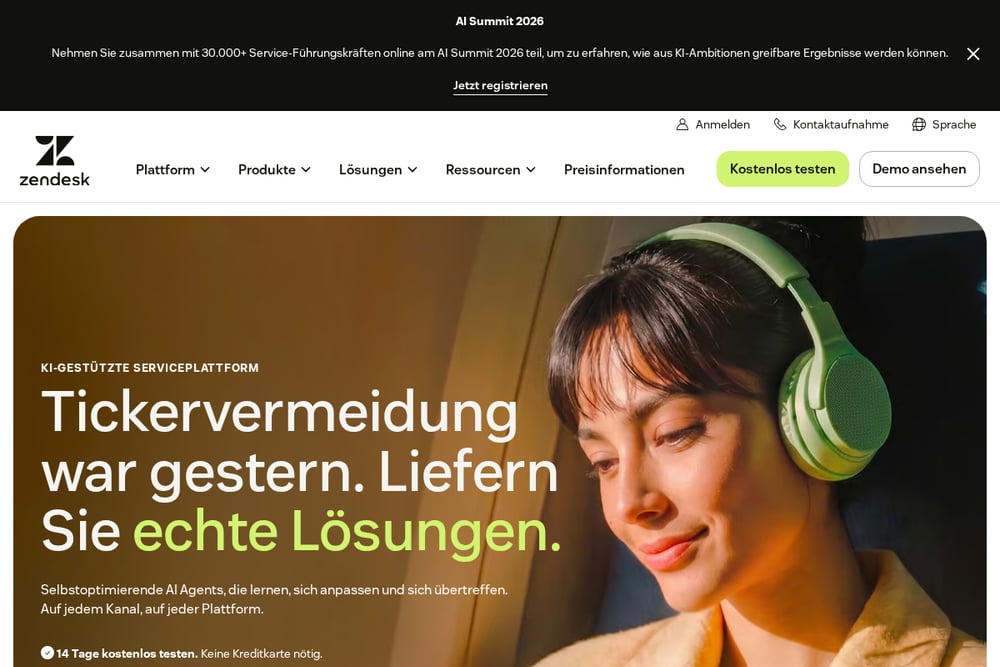 A screenshot of the Zendesk website.
Zendesk is a mature customer service platform with a growing set of AI chatbots aimed at sales and messaging. Its chatbot tools are designed to guide customers to the right products and increase revenue without adding support headcount. You get messaging, help center, and AI automation in one ecosystem, with deep integrations across CRMs and ecommerce platforms. Pricing is tiered and published, though the full AI feature set sits in higher plans. The platform shines for teams already using Zendesk for support who want to extend into sales conversations. It is less of a fit if you need a standalone AI receptionist with no existing helpdesk. Explore the chatbot lineup at https://www.zendesk.de/.
#5 Small Business Chatbot
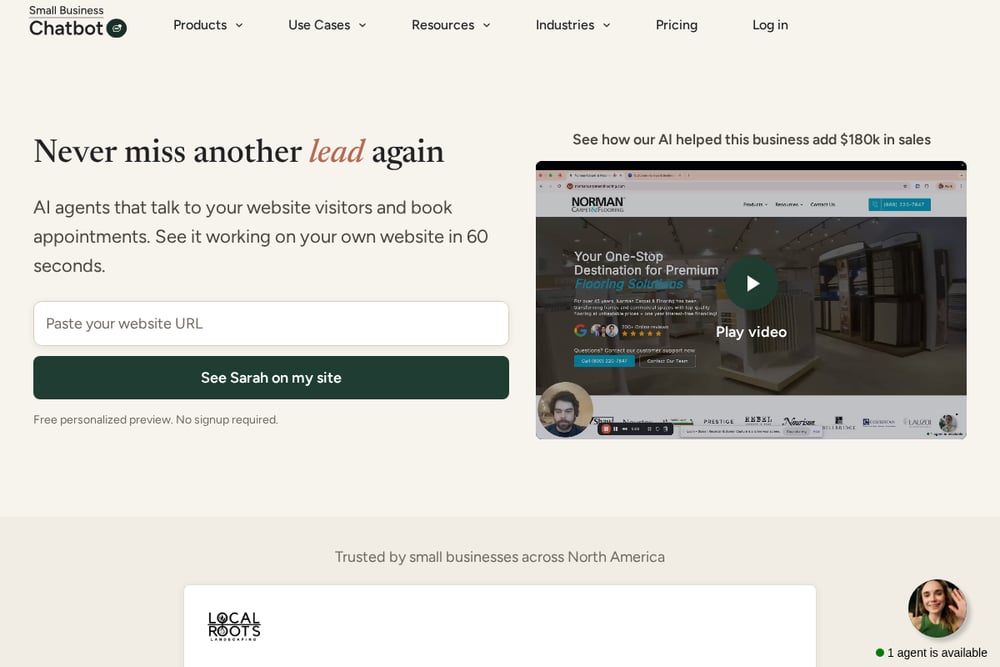 A screenshot of the Small Business Chatbot website.
Small Business Chatbot offers white-label AI employees for agencies and service businesses, covering chat, answering service, follow-ups, and a self-managing CRM. Its AI answering service picks up calls, qualifies leads, and books appointments 24/7, while follow-up sequences run over SMS, email, and AI voice. The platform is built with industry-specific workflows for plumbing, HVAC, roofing, law firms, and more. Agencies can resell the whole stack under their own brand, which is a rare option in this category. If you run a service business or an agency serving them, this tool is purpose-built for your world. See the full product line at https://smallbusinesschatbot.com/.
How to Choose the Right AI Sales Tool
Start with your biggest leak. If missed calls are your problem, prioritize voice AI and 24/7 answering. If leads sit in your inbox too long, prioritize chat and SMS automation. If your CRM is already the center of your sales process, pick a tool that plugs into it natively rather than adding another dashboard. Next, check pricing transparency. Tools that publish per-user or per-plan pricing are easier to budget for than those that require a demo just to see numbers. Then look at integration depth. Your AI agent is only as useful as the systems it can talk to. Finally, test time to value. Ask for a trial or a sandbox and see how fast you can get a real conversation flowing. The right tool should feel like an extra employee, not an extra project.
What to Automate First
Start with inbound call answering. Route every missed call to an AI voice agent that can greet, qualify, and book. Next, add website chat that captures leads and pushes them into your CRM automatically. Then layer SMS follow-up for leads who went quiet, since text is the preferred channel for most customers. After that, set up email and SMS campaigns from your existing database so you can generate sales with the push of a button. Finally, connect your calendar so appointments book themselves and reminders go out without manual work. Each step builds on the last, and you can add channels as you grow.
The Bottom Line
There is no single winner here, only the right fit for your business. Aircall suits phone-centric teams that want AI on top of a full communication stack. AIthority Haus is the most direct answer for owners who lose sales to missed calls and want a modular AI employee handling voice, chat, and text. Close keeps your CRM and AI calling in one place. Zendesk extends mature support infrastructure into sales conversations. Small Business Chatbot gives agencies and service businesses a white-label path. Pick the one that matches your biggest leak, test it fast, and let the AI handle the rest.