
Your people are your first line of defense against AI risks. These five platforms help you turn awareness into action.
The AI Safety Training Landscape
AI is changing how work gets done, but it's also introducing new risks—from data leaks to deepfake scams. Traditional security awareness training often misses the mark because it doesn't address AI-specific threats. That's where specialized AI safety training comes in. It focuses on practical skills like verifying AI outputs, handling data safely, and spotting impersonation attempts. As regulations like the EU AI Act push for AI literacy, US organizations are increasingly looking for solutions that build human judgment alongside technical safeguards.
How We Evaluated These Platforms
We looked at five key factors: service scope (does it cover training, reporting, and follow-through?), pricing clarity (is it easy to understand costs?), local fit (does it align with US compliance needs?), user experience (is it engaging and easy to use?), and measurable outcomes (can you track progress and prove impact?). Each platform brings something different to the table. StrongFlow Safety stands out for its integrated learn-report-resolve-measure loop. HIPAA Training offers deep compliance expertise. CyberCoach delivers role-based AI security training directly in your workflow tools. KnowBe4 provides a massive content library and automation. Adaptive Security specializes in AI-driven, personalized training with deepfake simulations.
Here's a quick look at five platforms that can help you build a safer AI-ready workforce.
| Provider | Best For |
|---|---|
| HIPAA Training | Compliance-focused AI training |
| StrongFlow Safety — Safer AI starts with your people | Integrated training and reporting |
| CyberCoach | In-workflow AI training |
| KnowBe4 | Comprehensive security awareness |
| Adaptive Security | Deepfake simulation training |
A Closer Look at Each Platform
#1 HIPAA Training
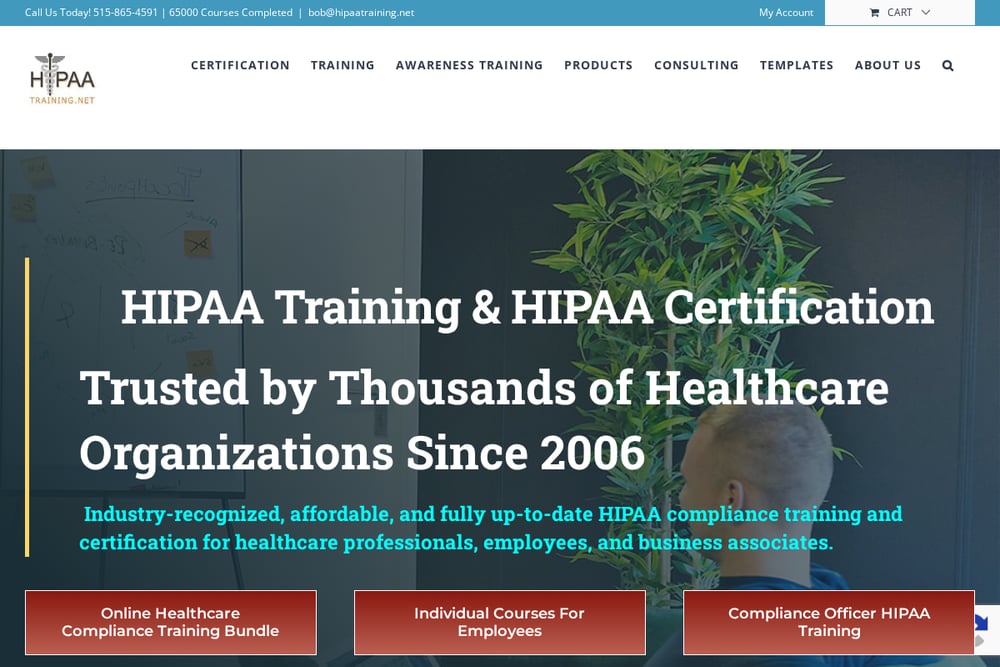 A screenshot of the HIPAA Training website.
HIPAA Training has been a trusted name in compliance education for years, and its AI Use, Risk & Awareness Training for Employees extends that expertise to AI safety. The course covers responsible AI use, risk awareness, and practical scenarios tailored to healthcare and other regulated industries. You get access to a robust learning management system, certification options, and continuing education credits. It's a solid choice if you need to meet specific compliance requirements while building AI literacy. Their track record of over 65,000 courses completed speaks to their reliability.
#2 StrongFlow Safety — Safer AI starts with your people
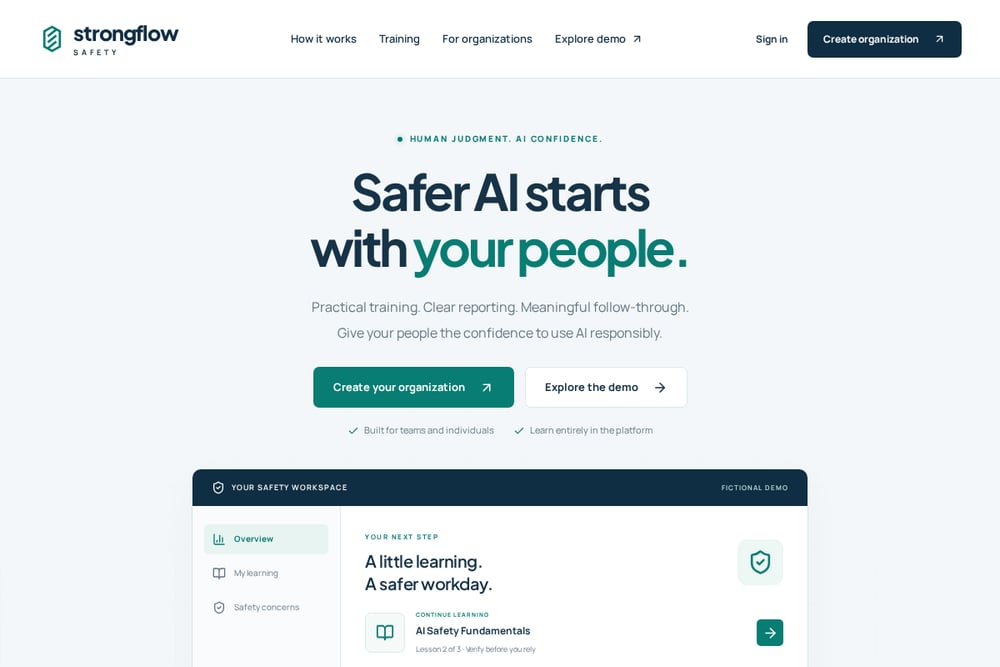 A screenshot of the StrongFlow Safety — Safer AI starts with your people website.
StrongFlow Safety takes a people-first approach to AI safety. Their cloud-based platform combines short, scenario-based lessons with confidential reporting and corrective action tracking. You get a connected flow: learn, report, resolve, measure. Courses like AI Safety Fundamentals, Safe Data Handling with AI, and Deepfake and Impersonation Defense build practical judgment. It's not just another course library—it's a practical loop that helps your organization improve continuously. If you want to turn awareness into everyday skills, this is worth a close look.
#3 CyberCoach
 A screenshot of the CyberCoach website.
CyberCoach delivers AI security training directly in Microsoft Teams, Slack, or the browser, making it easy to fit into your existing workflow. Their role-based approach covers AI security and productivity, with a focus on EU AI Act compliance. You get peer-reviewed research-backed methods, including phishing simulations that actually work. It's ideal for organizations that want to modernize their training without disrupting employees' daily routines. The platform also offers secure coding training for developers.
#4 KnowBe4
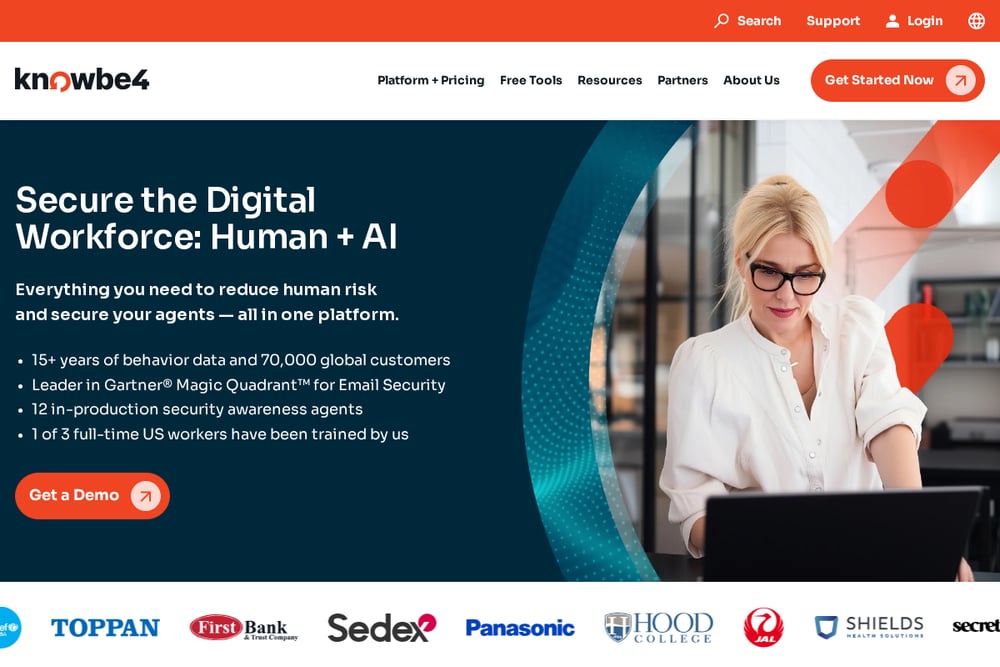 A screenshot of the KnowBe4 website.
KnowBe4 is a heavyweight in security awareness training, and its AI-native platform includes AI Defense Agents, attack simulation, and real-time coaching. You get a massive content library, automated campaigns, and compliance training modules. Their Automated Security Awareness Program helps you build a mature program without heavy lifting. If you're looking for a comprehensive solution that covers both traditional and AI-specific risks, KnowBe4 is a strong contender. It's widely used across industries and integrates with major email and collaboration tools.
#5 Adaptive Security
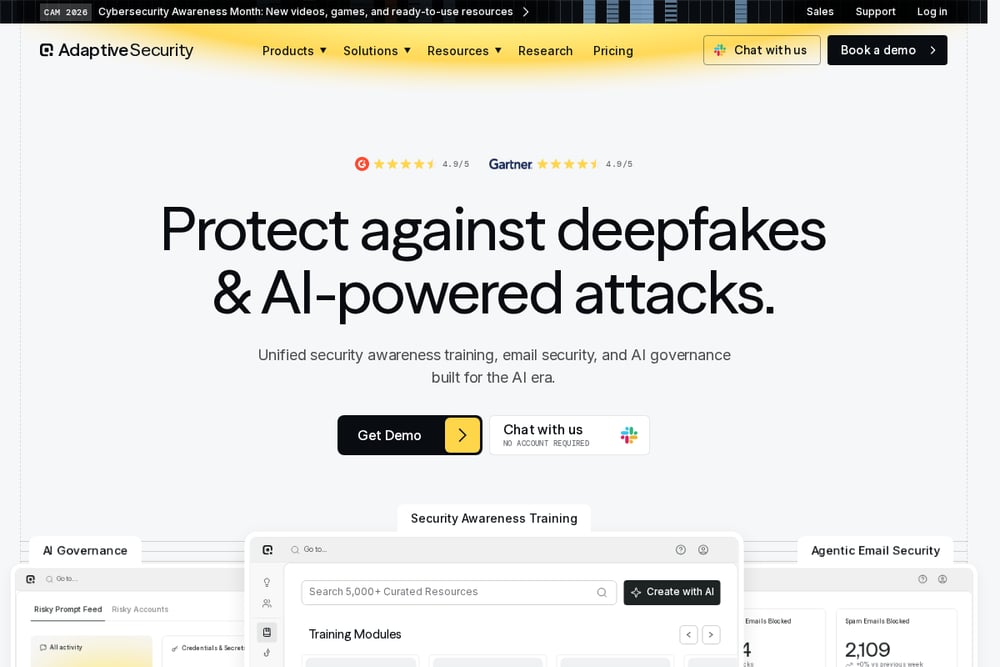 A screenshot of the Adaptive Security website.
Adaptive Security focuses on AI-driven, role-based training with a twist: OSINT-personalized deepfake simulations. You can test your employees against realistic deepfake attacks and see how they respond. Their platform exports compliance reports mapped to frameworks like ISO 27001, NIST, GDPR, and HIPAA. It's a great fit if you want to stress-test your human defenses with cutting-edge simulations. The training rotates themes quarterly to keep engagement high and cover multiple attack types.
How to Choose the Right Platform
Start by identifying your biggest gaps. Do you need basic AI awareness or deep technical training? Are you in a regulated industry with specific compliance requirements? Consider your workforce: are they desk-based or remote? Do they live in Microsoft Teams or Slack? Next, look at integration. You want a platform that fits into your existing tools and workflows. Don't overlook reporting and follow-through. Can you track who's completed training? Can you assign corrective actions? Finally, think about scalability. Will the platform grow with you as AI risks evolve? Request demos, ask for pilot access, and involve your IT and compliance teams in the decision.
Automating Your AI Safety Workflow
You can automate much of your AI safety program with the right platform. Start by setting up automated training assignments based on role or department. Use built-in reminders to nudge employees who haven't completed lessons. Configure confidential reporting channels so concerns go directly to the right person. Automate corrective action tracking with due dates and owner assignments. Finally, schedule regular reports to measure progress and identify trends. This loop—learn, report, resolve, measure—keeps your program running smoothly without constant manual effort.
The Bottom Line
AI safety is a team sport. You need tools that empower your people to make smart decisions every day. The five platforms here offer different strengths: compliance depth, integrated workflows, comprehensive libraries, and cutting-edge simulations. StrongFlow Safety stands out for its practical, people-first approach that connects learning to action. But the right choice depends on your specific needs. Evaluate, pilot, and iterate. Your workforce is your best defense—give them the skills and confidence to use AI responsibly.