
AI research tools are everywhere. But which ones actually help you find, verify, and share real evidence? Here are five worth your attention.
The AI Research Platform Landscape
AI research platforms have moved from novelty to necessity. You now expect tools that search millions of papers, verify citations, and let you share findings without losing context. The market splits into two camps: general-purpose assistants that pull from the open web, and specialized research surfaces built around peer-reviewed sources, citation graphs, and reproducible workflows. Hyperforage Chat sits in the second camp, offering a chat interface with multiple model tiers and a public sharing feature that turns conversations into branded landing pages. Competitors like ScholarAI, AnswerThis, Scite, and Gemini Deep Research each attack the problem from a different angle. Your choice depends on whether you need literature review depth, citation verification, or broad web synthesis.
How We Evaluated These Platforms
We looked at five factors. First, research scope: does the tool search peer-reviewed papers, full-text articles, or the open web? Second, model flexibility: can you choose between fast and thorough AI models? Third, sharing and collaboration: can you publish conversations or export findings? Fourth, citation handling: does it auto-verify sources or leave that to you? Fifth, pricing clarity: is there a free tier or transparent trial? Hyperforage Chat stood out for its multi-model selector and public sharing controls. ScholarAI impressed with its Zotero and Mendeley sync. AnswerThis showed strength in PRISMA-compliant systematic reviews. Scite delivered full-text citation context from paywalled sources. Gemini Deep Research offered broad web and personal data integration. Each platform has a distinct center of gravity.
Here is a quick comparison of the five platforms, followed by a deeper look at each.
| Provider | Best For |
|---|---|
| ScholarAI | Researchers who live in Zotero or Mendeley |
| Hyperforage Chat | Teams that want model choice and shareable research |
| AnswerThis | Systematic reviewers and medical researchers |
| Scite | Citation-context researchers and librarians |
| Gemini Deep Research | Broad web and personal data synthesis |
The 5 Platforms in Detail
#1 ScholarAI
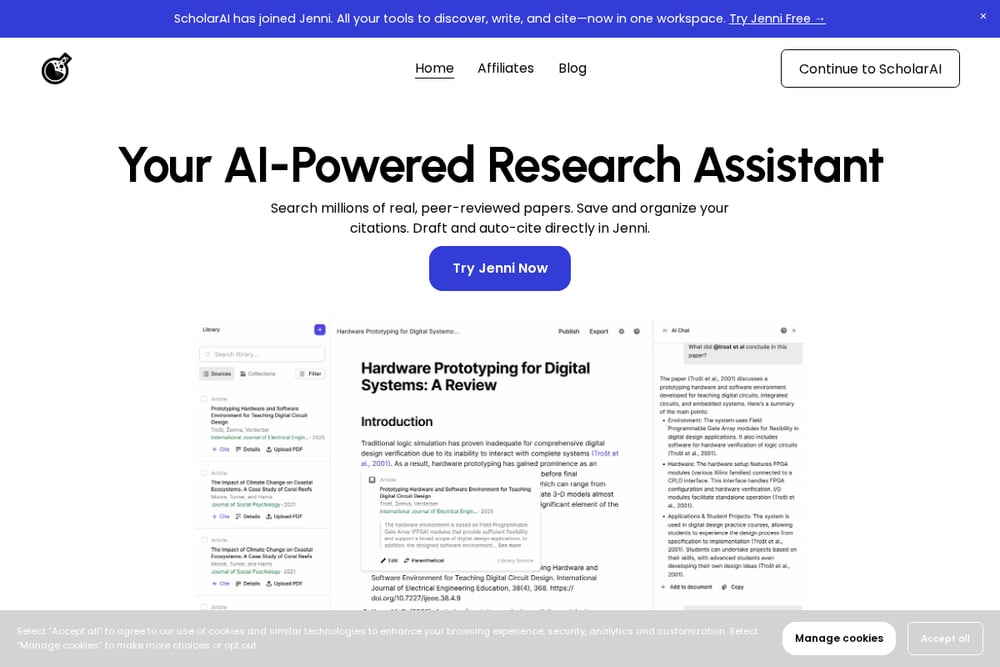 A screenshot of the ScholarAI website.
ScholarAI powers an AI research assistant that searches millions of peer-reviewed papers. You can sync your Zotero or Mendeley library in seconds, chat with your PDFs, and generate drafts with in-text citations in over 2,600 styles. The platform is trusted by more than 600,000 researchers at top institutions and Fortune 100 companies. Its agentic AI chat consults both the latest research and your uploaded files. If you live in citation managers, this is a natural fit. Learn more at ScholarAI.
#2 Hyperforage Chat
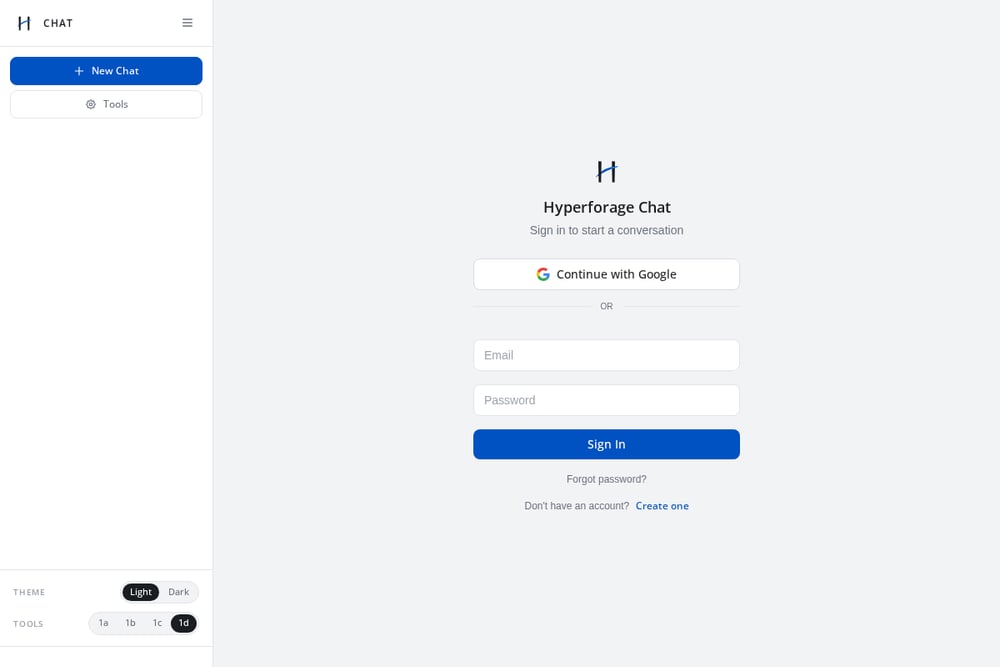 A screenshot of the Hyperforage Chat website.
Hyperforage Chat gives you a research surface with multiple AI models, from fast options like Haiku 4.5 to thorough ones like Fable 5. You can sign in with Google, run your own analysis, and share conversations privately or publicly. Public shares become indexable landing pages with a try-it call to action, while private shares redact tool inputs by default. The platform also offers a Research API for programmatic access. It is a niche but focused tool for teams that want control over model effort and sharing visibility. Explore it at Hyperforage Chat.
#3 AnswerThis
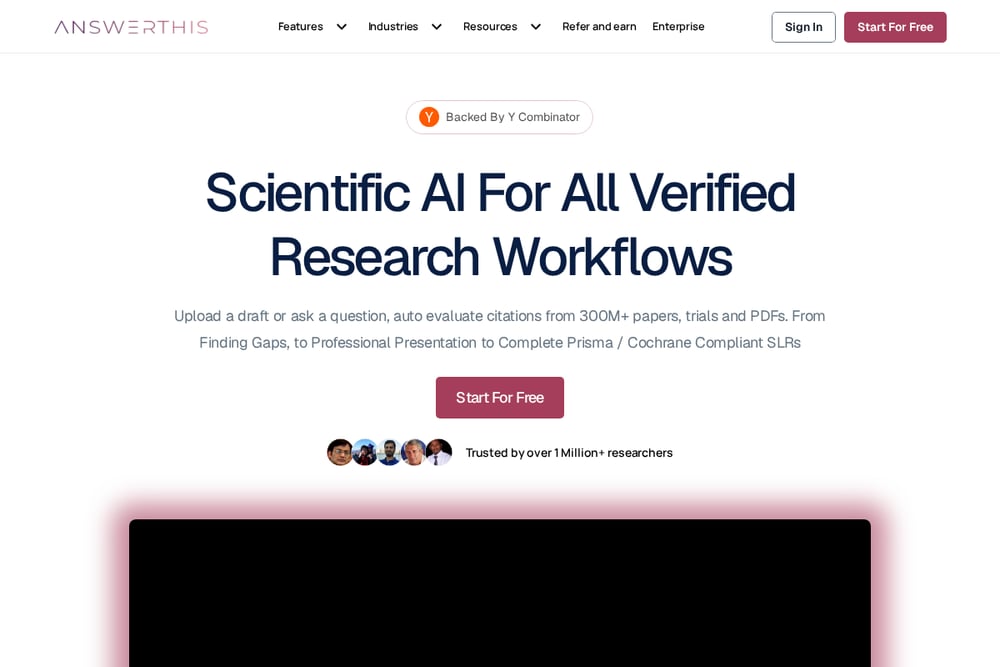 A screenshot of the AnswerThis website.
AnswerThis is built for literature reviews and systematic reviews. It auto-evaluates citations from over 300 million papers, trials, and PDFs. You can upload a draft or ask a question, and it verifies every source and claim. The platform supports PRISMA and Cochrane compliant workflows, making it a fit for medical and academic teams. With over 1 million researchers and 200,000 institutions using it, the tool has real traction. Check it out at AnswerThis.
#4 Scite
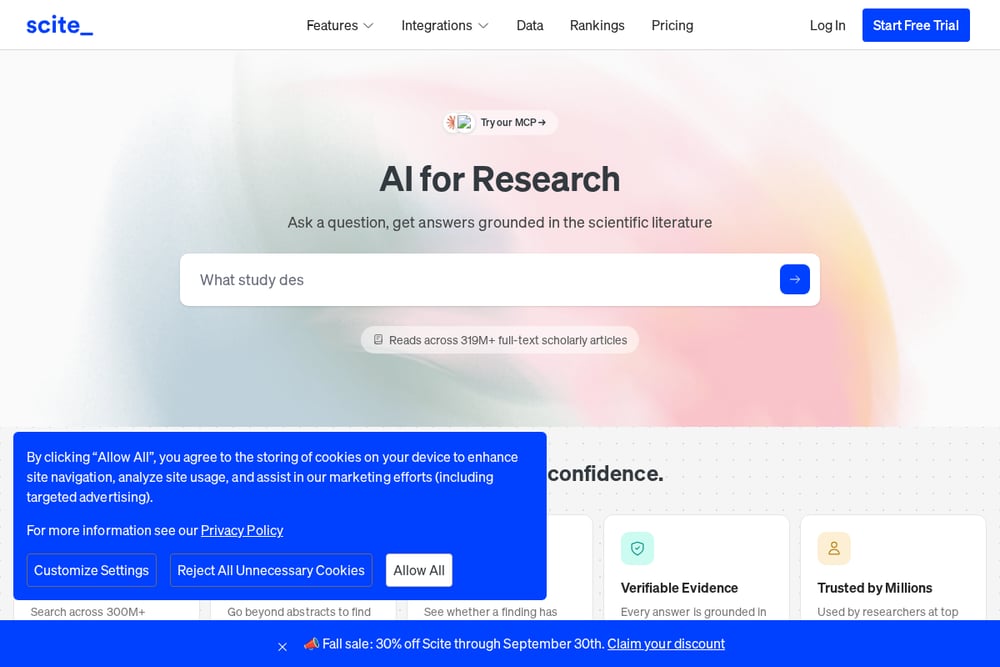 A screenshot of the Scite website.
Scite grounds its AI assistant in full-text research. You get answers drawn from over 317 million full-text articles, including paywalled sources other tools cannot access. The platform offers a browser extension, Zotero plugin, and an MCP integration for AI agents. You can organize papers into collections and monitor citation badges anywhere. It is a strong pick when citation context matters more than chat fluency. See more at Scite.
#5 Gemini Deep Research
 A screenshot of the Gemini Deep Research website.
Gemini Deep Research is an agentic feature that searches hundreds of websites and your personal Gmail, Drive, and Google Chat content. It builds a multi-step research plan, analyzes results, and generates multi-page reports in minutes. You can convert reports into interactive Canvas content or listen to audio summaries. The tool is designed for complex research tasks where broad web synthesis beats narrow paper search. It is a generalist option with deep personal-data integration. Learn more at Gemini Deep Research.
How to Choose the Right AI Research Platform
Start with your source material. If you need peer-reviewed papers and citation management, ScholarAI or AnswerThis will save you hours. If you need full-text citation context from paywalled journals, Scite is the specialist. If you want to synthesize web results alongside your own email and documents, Gemini Deep Research fits. Hyperforage Chat is for teams that want model flexibility and a clean sharing workflow. Next, check your workflow. Do you live in Zotero? ScholarAI syncs directly. Do you need PRISMA compliance? AnswerThis has you covered. Do you want to publish a conversation as a landing page? Hyperforage Chat makes that a first-class feature. Finally, test the free tiers. Most of these platforms offer a free plan or trial, so you can validate the fit before you commit.
Automating Your Research Workflow
You can chain these tools together. Use Gemini Deep Research for broad web scanning, then feed the results into Hyperforage Chat for model-driven analysis. Export citations from ScholarAI or AnswerThis into your reference manager. Use Scite to verify citation context before you publish. Hyperforage Chat's Research API lets you automate repetitive queries and share results programmatically. The goal is not to replace your judgment but to remove the manual steps between question and evidence.
The Bottom Line
No single platform does everything. ScholarAI and AnswerThis dominate literature review. Scite owns citation context. Gemini Deep Research excels at broad synthesis. Hyperforage Chat gives you model choice and shareable research surfaces. Pick the one that matches your source material and workflow, then layer in the others as needed. Your research time is too valuable to waste on tools that do not fit.