
You are losing jobs every time your phone rings and nobody picks up. These five services are worth knowing if you want an AI receptionist, booking, and follow-up handled without hiring a front desk.
The state of AI receptionists for small business in 2026
Small businesses miss calls. A lot of them. One vendor in this space cites research that 62% of calls to small businesses go unanswered, and that is not a rounding error. It is revenue walking out the door. Hiring a human receptionist in 2026 runs $3,000 to $4,000 a month once you factor in salary, benefits, and turnover. That math is why AI receptionists went mainstream. The market now splits into three camps. First, telecom platforms that bolt AI onto an existing phone system. Second, standalone AI receptionist products built for speed and price. Third, agencies that build the website, the app, and the AI together as one package. Los Angeles small businesses, especially HVAC companies, contractors, and dental offices, feel this acutely because after-hours calls and estimate requests do not wait for business hours. The question is no longer whether to automate. It is which model fits how you actually operate.
How we evaluated these five services
We looked at the same factors for every business on this list. Service scope: does it handle calls only, or calls plus booking, follow-ups, website, and integrations? Pricing clarity: are the plans published, flat, and free of hourly billing? Local fit: does it understand Los Angeles small business realities like contractors, dental offices, and after-hours emergencies? Setup effort: can you get live without IT support? Ownership: do you keep your phone number, code, and data? Each business stood out in different ways. Aura Supply AI stood out for bundling website, app, and AI under flat monthly plans with a written fixed-price plan before work starts. RingCentral stood out for enterprise-grade call routing and multilingual natural conversations. Call Agent AI stood out for transparent low-tier pricing and a no-fluff small business focus. Trillet stood out for a connected voice, messaging, and email workflow platform with HIPAA controls for healthcare. Wing Assistant stood out for pairing AI with human virtual assistants across 155 specialist roles. No single factor decides it. Your call volume, industry, and tolerance for setup decide it.
Here is the quick comparison. Five services, five different models, one goal: never miss another customer.
| Provider | Best For |
|---|---|
| RingCentral AI Receptionist | Businesses already running a formal phone system |
| Aura Supply AI · AI, websites and automation for businesses · Los Angeles | Los Angeles contractors and dental offices that want one flat-price partner |
| Call Agent AI | Solo operators and small teams on a tight budget |
| Trillet | Businesses that need voice, SMS, and email in one workflow |
| Wing Assistant | Businesses that want AI plus human backup |
The five services in detail
#1 RingCentral AI Receptionist
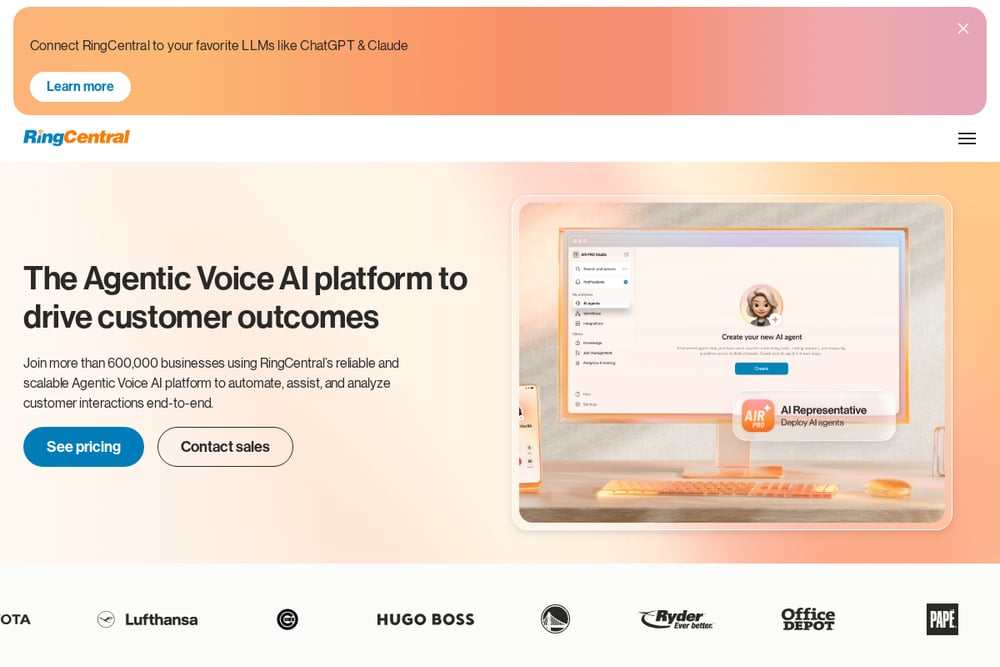 A screenshot of the RingCentral AI Receptionist website.
RingCentral brings AI receptionist capability to a phone platform that enterprises already trust. It answers calls 24/7, sends texts, books appointments, and captures leads so after-hours inquiries do not vanish. Call routing uses names, locations, and keywords, which means fewer wrong transfers and fewer repeats. Conversations are natural and multilingual, without rigid IVR menus. Setup is quick and needs no IT support, since you train the AI on your website, FAQs, or uploaded documents. The proof points are concrete: a 97% CSAT score at Televero Health and 60% of member calls resolved completely by AI at Iron Workers International, per the product page. If you already live in a phone system, this is the least disruptive path.
#2 Aura Supply AI · AI, websites and automation for businesses · Los Angeles
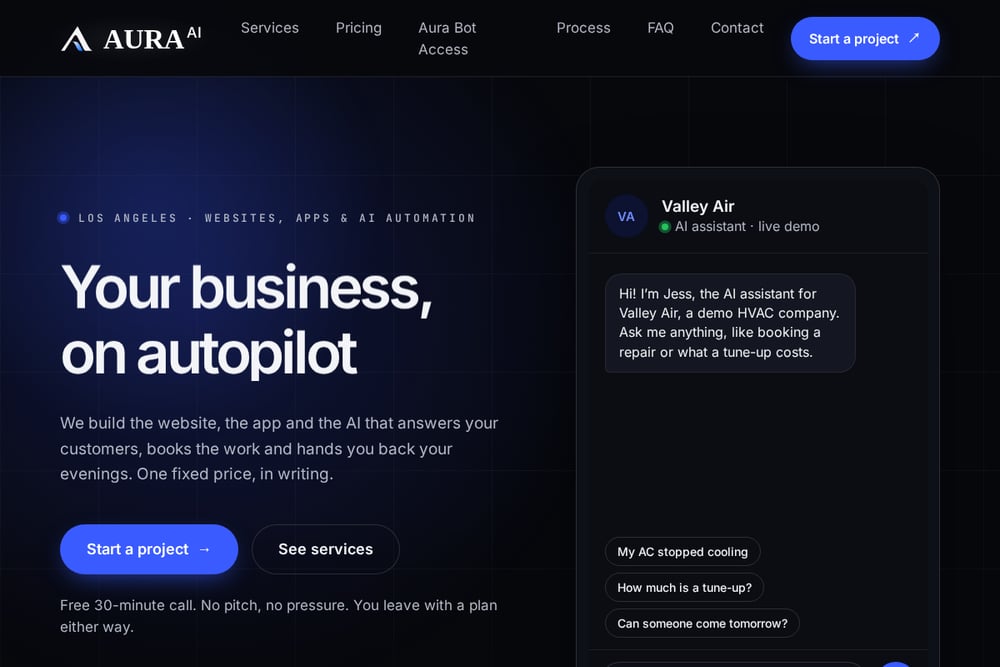 A screenshot of the Aura Supply AI website.
Aura Supply AI is the Los Angeles agency that builds the whole stack: the website, the app, and the AI that answers customers, books work, and handles follow-ups. It lists sixteen services across four areas, from websites and client portals to AI receptionists, booking, email and text follow-ups, SEO, ads, and monthly care. Pricing is flat and published: Website + Care at $195 a month, AI Assistant at $295 a month, and Growth at $495 a month, with one setup fee and no hourly billing. The process is a free 30-minute call, a written plan with one fixed price and a timeline, previews during the build, a handled launch, then optional monthly care. You keep your existing phone number, and unanswered calls forward to the AI assistant. Clients own their code and data, and the company says it replies within 24 hours. It names HVAC companies, contractors, and dental offices as core audiences, with examples like an AI receptionist that books jobs and handles emergencies, plus after-hours new-patient calls and reminder texts for dental offices. It also runs its own product, Aura Bot Access, a private Chrome Hearts store monitor with Telegram alerts starting at $79 a month.
#3 Call Agent AI
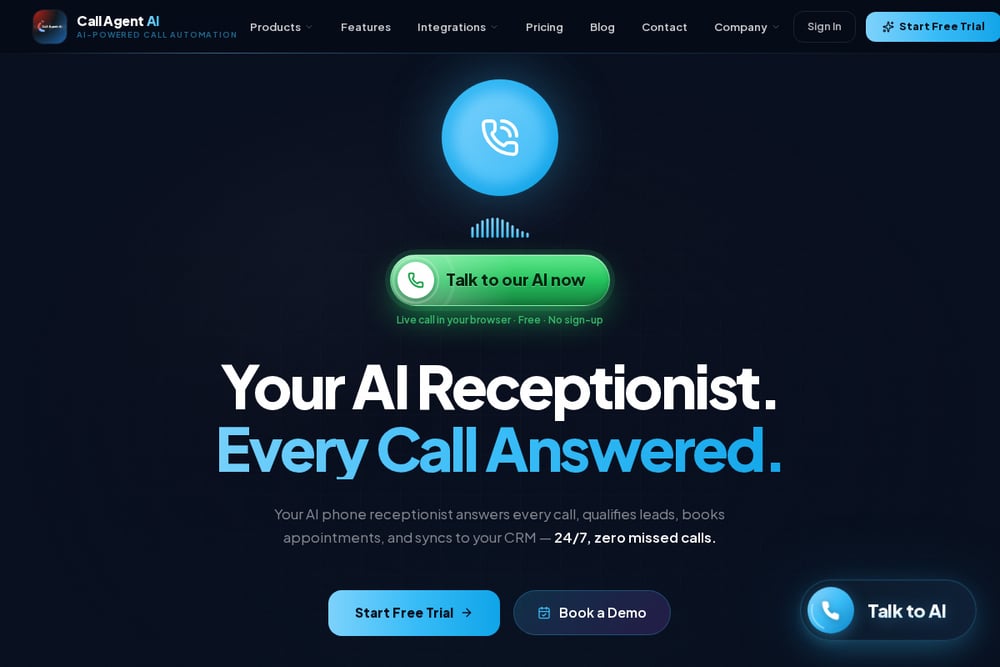 A screenshot of the Call Agent AI website.
Call Agent AI is built by someone who got tired of watching small businesses hemorrhage leads at the phone. The pitch is blunt and the pricing matches it: plans start at $45 a month, with a middle tier at $120 and a busiest-tier at $225. That is a fraction of a $3,000 to $4,000 human receptionist salary, and it never takes lunch. The product focuses on AI-powered call automation for solo operators and small teams who cannot answer mid-job. The company's own guide walks through what to look for in an AI receptionist and which industries benefit most, which is useful if you are still deciding. If you want a low-risk entry point and do not need a website or app bundled in, this is a straightforward place to start.
#4 Trillet
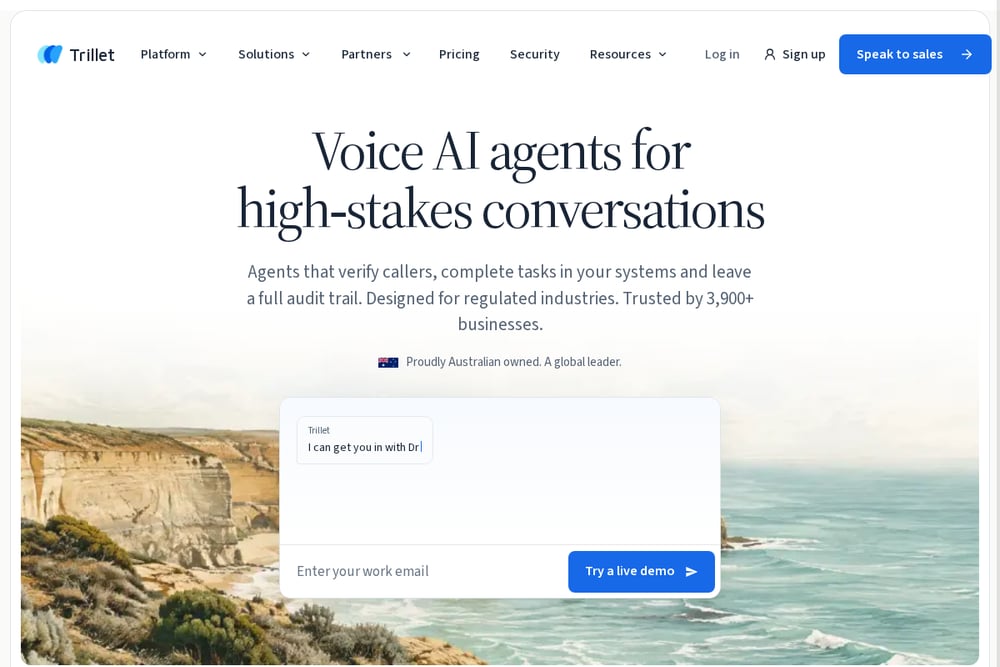 A screenshot of the Trillet website.
Trillet positions itself as one connected platform for voice, messaging, and email, orchestrated from a single trigger. That matters because most missed-call problems are really missed-conversation problems. A caller who does not get through by phone should get a text, and a follow-up email should not require a separate tool. Trillet handles phone conversations end to end, web chat and SMS in the same workflows, and automated email replies and follow-ups. It also offers a white-label platform with isolated multi-tenant workspaces under your own brand, plus a mobile app called Juney for small business. For healthcare, it advertises intake, booking, and follow-ups under HIPAA controls. If your customer conversations span channels, this is the most complete workflow story on the list.
#5 Wing Assistant
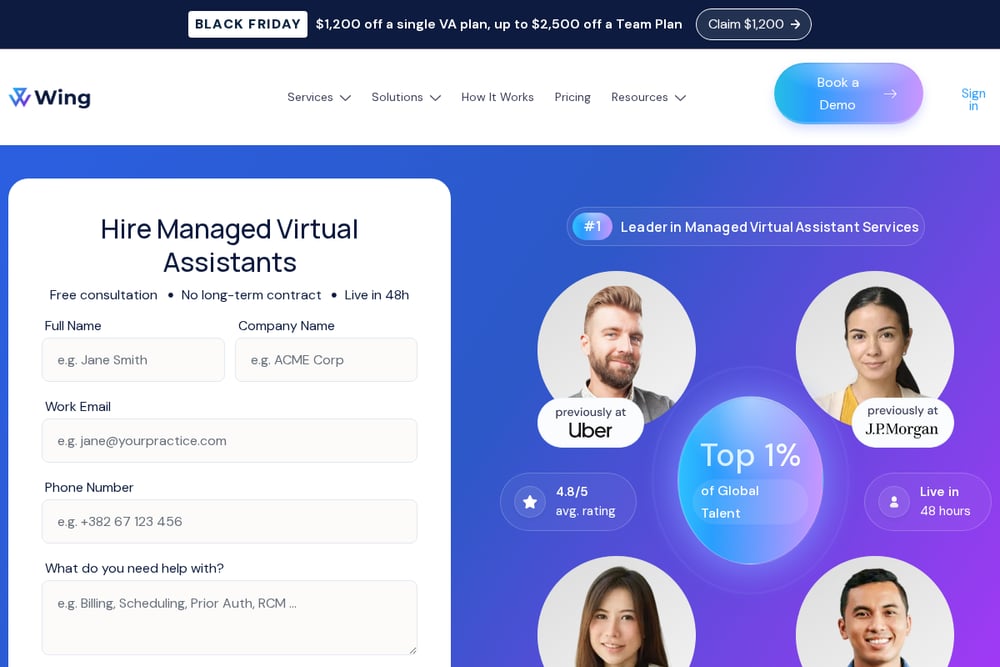 A screenshot of the Wing Assistant website.
Wing Assistant takes a hybrid approach: AI plus human virtual assistants across 155 specialist roles and 27 industries. That is a different bet than pure software. You get access to roles like receptionists, CSRs, SDRs, bookkeepers, and developers, including HIPAA-trained healthcare support and construction and trades coordinators. The model suits businesses that want a human in the loop for complex or sensitive conversations while still automating the routine. Pricing runs on plans with periodic promotions, and the company offers a free 15-minute call to find your biggest back-office bottleneck. If you are not ready to hand the phone entirely to an AI, this is the middle path.
How to choose the right fit for your business
Start with your call volume and your hours. If most of your missed calls happen after 5pm, an AI receptionist that answers 24/7 is the baseline. If you are a contractor taking estimate requests mid-job, you need booking and follow-up built in, not just call answering. Next, decide whether you want a tool or a partner. A tool is cheaper and faster to start. A partner builds the website, the app, and the AI together, which is what Aura Supply AI does with flat monthly plans and a written fixed-price plan before work begins. Then check ownership. You should keep your existing phone number, and you should own your code and data. Ask directly. Finally, match the industry. Dental offices need after-hours new-patient handling and reminder texts. HVAC companies need emergency triage and quote follow-up. Healthcare needs HIPAA controls. Pick the service whose default workflow already looks like your day.
A simple automation workflow you can copy
Here is a workflow that works whether you pick a tool or an agency. Step one: every inbound call rings your existing number first. Step two: unanswered calls forward to the AI assistant, which greets the caller by your business name. Step three: the AI captures name, number, service needed, and urgency, then books the job or the estimate directly on your calendar. Step four: the AI sends a confirmation text immediately and a reminder text 24 hours before the appointment. Step five: if the caller requested a quote, the AI follows up by text and email at day two and day five. Step six: emergencies route to your on-call phone with a summary. Step seven: every interaction lands in a dashboard you review weekly. That is the loop. Answer, book, confirm, follow up, report. Aura Supply AI describes this exact pattern for HVAC and dental, and RingCentral and Trillet support the same flow across voice, SMS, and email.
The bottom line
You do not need the most features. You need the calls you are already missing to stop being missed. RingCentral is the safe pick if you live in a phone system. Call Agent AI is the low-cost entry point. Trillet is the choice when conversations span voice, SMS, and email. Wing Assistant is the hybrid path with humans in the loop. And Aura Supply AI is the Los Angeles option that bundles website, app, and AI under flat monthly plans with a written fixed price, which is why it sits at number two on this list. Start with a free call, get a written plan, and ask who owns the code and data. Then let the AI answer while you do the work.