
Engineering ships faster than ever, but product discovery still drowns in scattered calls, tickets, and Slack threads. These five tools turn that noise into cited specs and prioritized roadmaps.
The Signal-to-Spec Shift in Product Management
Product teams in the US are hitting a strange new bottleneck. Code generation has accelerated, but discovery, synthesis, and PRD writing still run on manual note-taking and gut feel. That gap has created a fast-growing category of AI product management platforms that ingest customer signals from Zoom, Jira, Slack, and Linear, cluster them into patterns, and push cited requirements straight into engineering backlogs. The tools below sit at different points on that spectrum, from full signal-to-PRD pipelines to lightweight generators that structure a single idea in under a minute. What matters is whether the tool knows enough context to write something you would actually ship.
How We Evaluated These Platforms
We looked at the same factors across every tool. First, signal coverage: which sources can it actually ingest, and does it handle calls, tickets, threads, and usage events together. Second, synthesis quality: does it cluster patterns and cite evidence, or just reformat whatever you typed. Third, handoff depth: can it push structured PRDs and tickets into Jira, Linear, or an MCP-connected agent. Fourth, pricing clarity: is the model transparent, per-seat, or ingestion-based. Fifth, fit for the team: a lean startup and a product-ops function need very different things. Aligno stood out for end-to-end signal ingestion with cited PRDs and MCP generation. VocxAI stood out for its managed signal-to-PR pipeline with human approval gates. BuildBetter stood out for multi-source ingestion and a non-per-seat pricing model. Telos stood out for its clear breakdown of context-aware versus prompt-only generators. PRDForge stood out for agent-ready, machine-readable PRD output and fast generation.
Here is the short version before the deep dive. Each tool solves a different slice of the discovery problem, so match it to where your team actually gets stuck.
| Provider | Best For |
|---|---|
| VocxAI | Teams that want feedback-to-pull-request automation with approval gates |
| Aligno - Your AI Product Manager | Product teams drowning in scattered feedback who need cited, source-backed specs |
| BuildBetter | Teams that want multi-source ingestion without per-seat pricing |
| Telos | Product managers comparing context-aware generators before committing |
| PRDForge | Builders who need agent-ready, machine-readable PRDs fast |
The Five Tools, One by One
#1 VocxAI
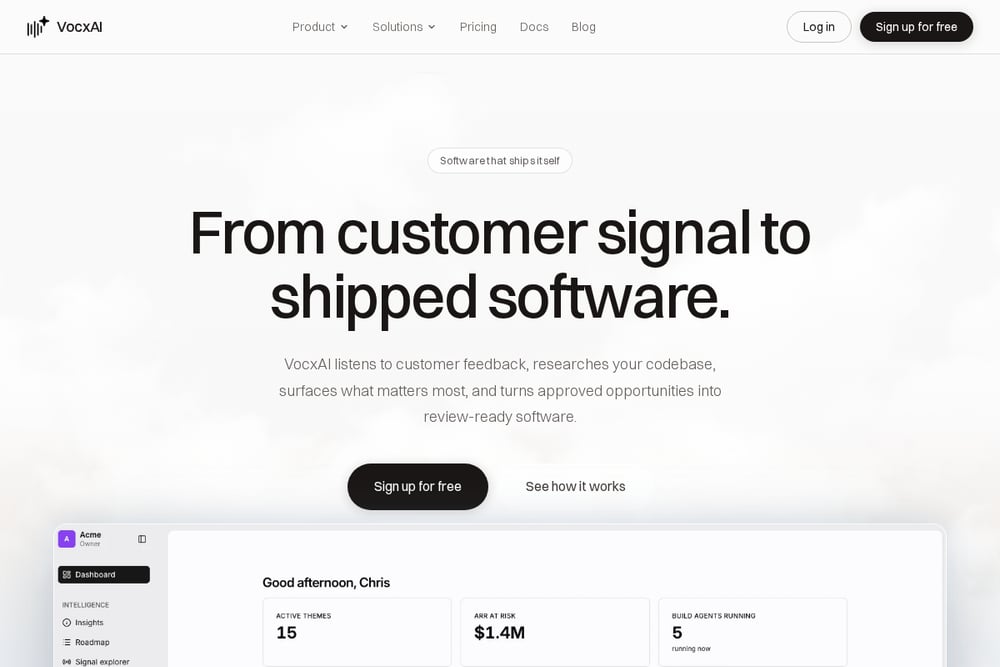 A screenshot of the VocxAI website.
VocxAI runs a full signal-to-PR pipeline, from raw customer feedback through clustering and classification to an AI-generated PRD. Its platform page walks through how data is handled, including managed versus BYO-key setups where tokens are minted per job and never stored. You get revenue intelligence that scores work by business impact, plus AI build agents and GitHub PR automation that open reviewable pull requests. Human approval gates sit before anything ships, which keeps product managers in control of what goes out. The blog post on auto-generating a PRD from customer feedback is a useful primer on why a pre-flight gap-check matters before AI drafts anything.
#2 Aligno - Your AI Product Manager
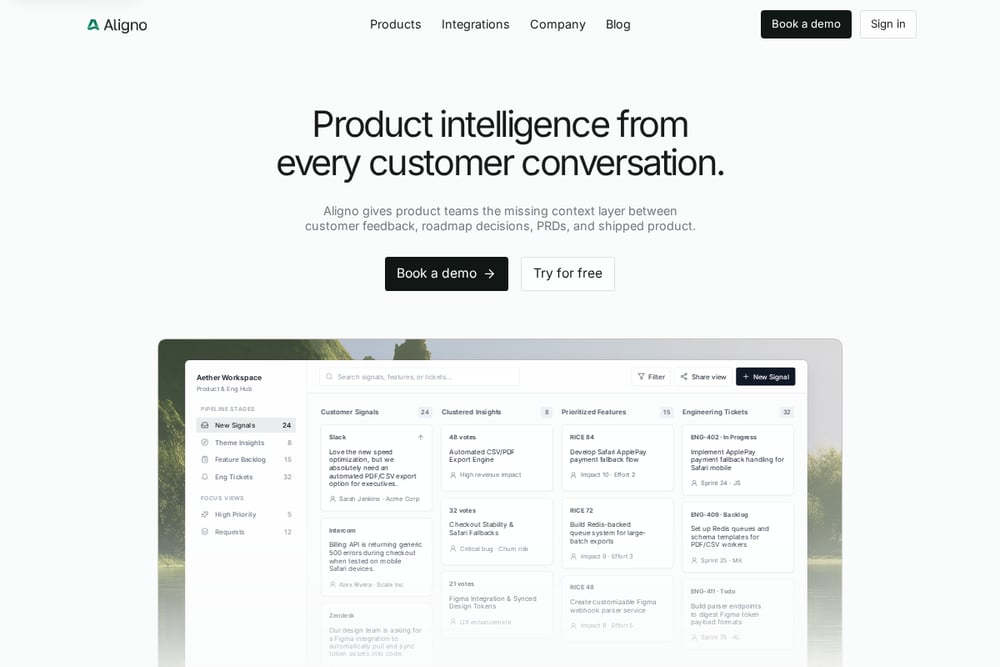 A screenshot of the Aligno website.
Aligno is an AI-powered product management platform that automates discovery, synthesis, and PRD creation. It ingests signals from Zoom, Jira, Slack, and Linear into a living repository of user needs, then clusters thousands of data points to surface recurring themes, bugs, and revenue opportunities. Every claim in a generated PRD is cited back to its source, so you can trace a requirement to a specific call, ticket, or usage event. The platform generates PRDs via MCP and pushes prioritized tickets directly to engineering, keeping discovery in sync with shipping speed. Its signals inbox shows confidence scores and impact ratings side by side, which makes prioritization evidence-based rather than opinion-based.
#3 BuildBetter
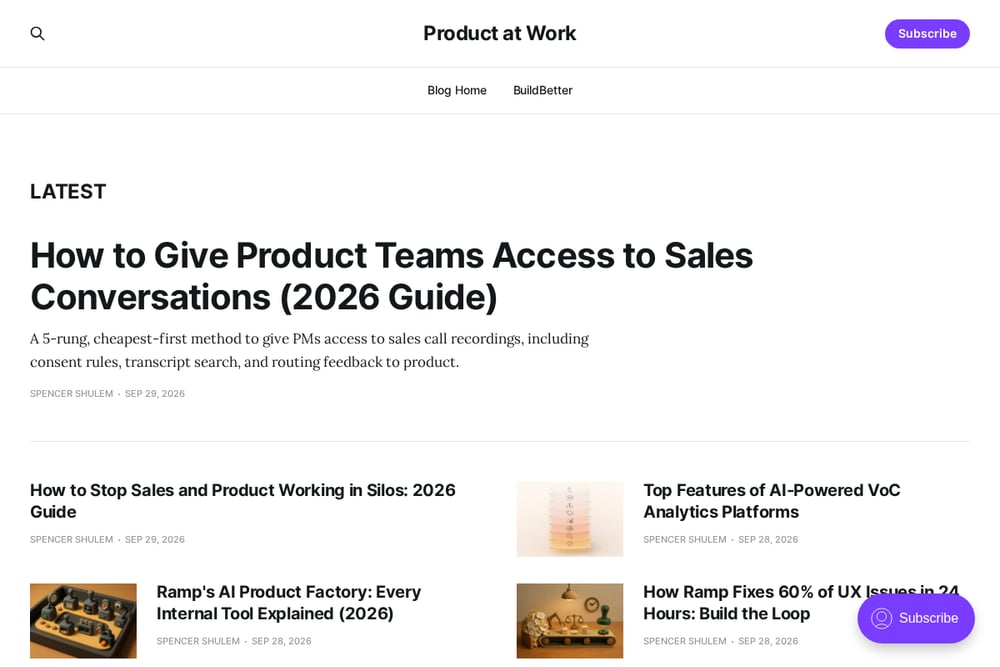 A screenshot of the BuildBetter website.
BuildBetter ingests data from calls, Slack, tickets, and email, then runs AI analysis with full quantitative insights and live clustering. Its comparison table positions it against Notion AI and Coda AI on data source coverage, and the difference is real: most PRD tools rely on manual input or a narrow set of integrations. BuildBetter closes the customer feedback loop and generates PRDs, specs, and summaries from that ingested data. Pricing is ingestion-based rather than per-seat, which matters if you have a large team that needs access. The blog is a practical resource for anyone learning how to write a PRD with AI, complete with templates and real examples.
#4 Telos
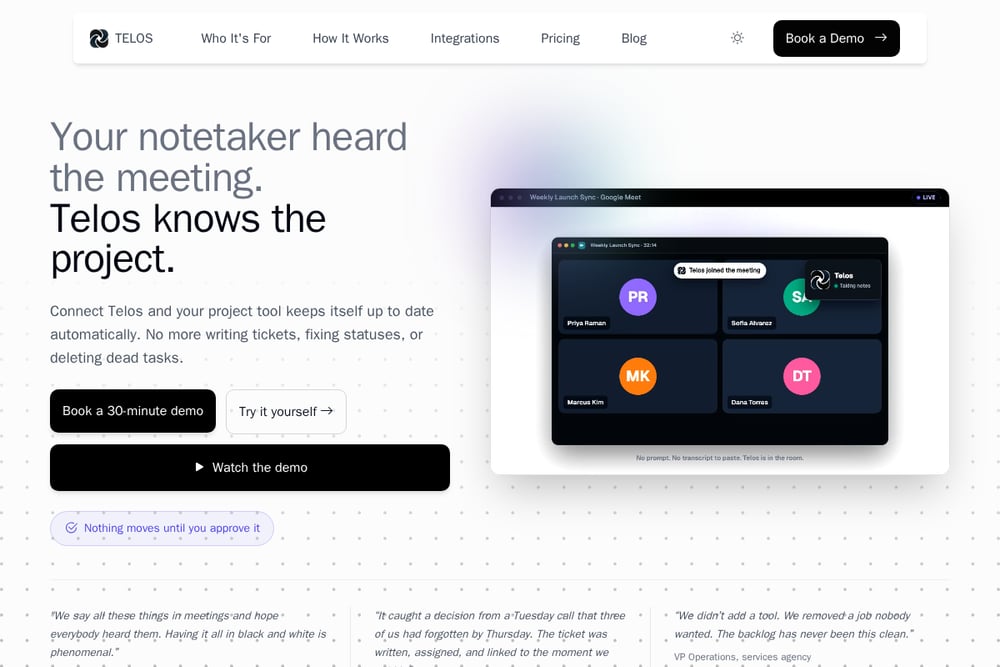 A screenshot of the Telos website.
Telos publishes a clear-eyed comparison of AI PRD generators, splitting them into free single-prompt tools and context-aware platforms that write from your actual meeting and Slack data. Its own platform focuses on that context-aware end of the spectrum, where the generator knows your recordings, threads, and existing tickets. The blog lays out what makes a good PRD generator: automatic sections, clear scope definition, testable acceptance criteria, iteration without starting over, and downstream integrations with Jira, Linear, and Notion. That framework is genuinely useful even if you end up choosing a different tool. Telos is the one to read when you are still deciding what kind of generator your team actually needs.
#5 PRDForge
 A screenshot of the PRDForge website.
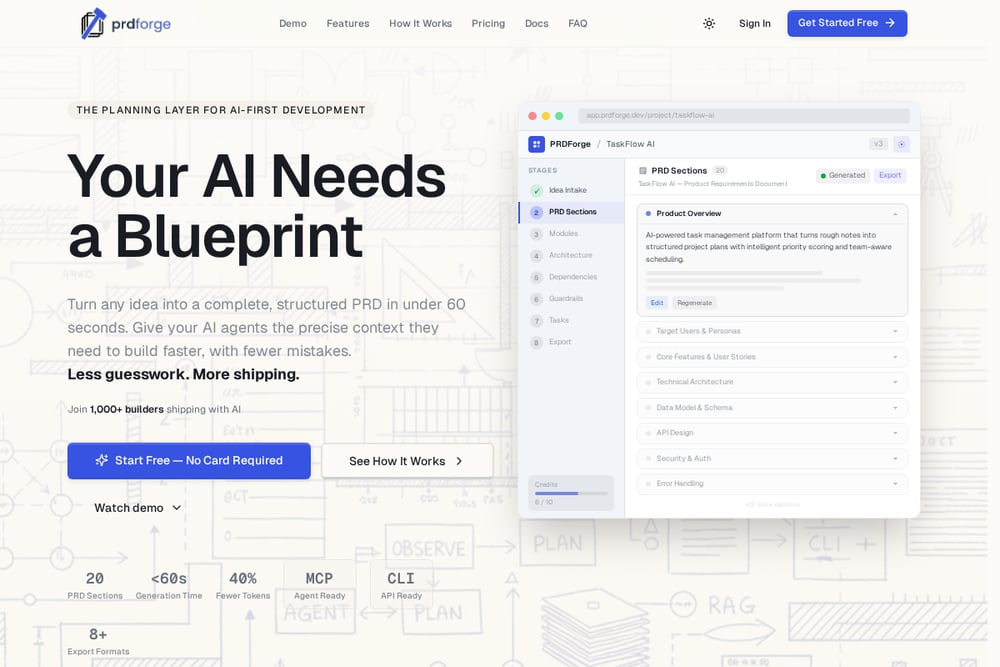
PRDForge calls itself the planning layer for AI-first development, and it turns any idea into a structured PRD in under 60 seconds. It generates 20 PRD sections covering personas, technical architecture, data model, API design, security, and error handling. The real differentiator is agent readiness: MCP integration connects directly to Claude Desktop, Cursor, or any MCP-compatible agent, and it auto-generates CLAUDE.md and AGENTS.md files pre-formatted for each tool. PRDs use structured requirements syntax and deterministic language so agents parse intent precisely rather than approximately. If your bottleneck is giving coding agents enough context, this is the tool aimed squarely at that problem.
How to Pick the Right One for Your Team
Start with where you actually lose time. If feedback lives in ten places and nobody trusts the roadmap, you need ingestion and clustering first, which points you toward Aligno, VocxAI, or BuildBetter. If your problem is that coding agents keep building the wrong thing, PRDForge's machine-readable output is the sharper fit. If you are still figuring out what a good PRD generator even looks like, read Telos before you buy anything. Then check the handoff: does the tool push tickets into the system your engineers already use, and does it cite its sources? A fluent PRD with no evidence behind it is worse than a rough one you wrote yourself. Finally, look at pricing shape. Per-seat models punish large teams, while ingestion-based and per-job models scale differently depending on how much signal you actually have.
What the Automated Workflow Looks Like
The pattern across these platforms is consistent. Signals flow in from calls, tickets, threads, and usage events. The AI clusters them, scores confidence and impact, and surfaces the patterns that repeat. From there it drafts a PRD with every claim cited back to its source, then pushes prioritized tickets into engineering. Some tools stop at the draft and hand it to you for review. Others, like VocxAI, go further with build agents and pull requests behind human approval gates. Aligno keeps the loop tight by generating PRDs via MCP and syncing discovery with shipping speed. The point is not to remove you from the process. It is to make sure the decisions you do make are backed by evidence you can point to.
The Bottom Line
Discovery is the last manual bottleneck in an otherwise automated pipeline, and these five tools attack it from different angles. Aligno connects the full loop from signal to cited spec. VocxAI extends that loop all the way to a reviewable pull request. BuildBetter brings broad ingestion without per-seat pricing. Telos helps you think clearly about what you need. PRDForge feeds your coding agents the context they are missing. Pick the one that matches your actual constraint, not the one with the longest feature list. Your roadmap will thank you.