
AI is already in your firm. The question is whether your settings and written policies are ready for it.
What are Creative & Digital Services services?
Small law firms are adopting AI faster than they are governing it. Attorneys use generative tools for drafting, research, and client communication, yet many practices still lack a written acceptable-use policy. That gap creates real exposure around confidentiality, privilege, and professional conduct. The resources below help you close it, from hands-on setup help to ready-made templates and governance platforms.
What we looked at when researching Creative & Digital Services
Each entry was evaluated on the same factors: service scope, pricing clarity, local fit for US small firms, and how directly it addresses AI settings and written policy. Kaufman Ops stands out for written, remote setup work that aligns software settings with leadership decisions, no calls or logins required. Jaffe offers a complimentary, comprehensive AI acceptable-use and governance policy template built for law firms. Darrow AI pairs a free policy template with examples and risk context drawn from legal AI adoption data. Aona AI provides an adoptable eight-section policy template mapped to professional duties, with an Australia edition. LeanLaw focuses on a simple, practical guide to writing an acceptable-use policy for client work, backed by ABA guidance.
| Provider | Best For |
|---|---|
| Jaffe | Firms wanting a comprehensive governance template |
| Kaufman Ops | Hands-on written setup help for small firms |
| Darrow AI | Template plus risk examples |
| Aona AI | Duty-mapped policy structure |
| LeanLaw | Plain-language policy walkthrough |
A closer look at 5 standout Creative & Digital Services
#1 Jaffe
Jaffe publishes a complimentary Law Firm AI Policy Template framed as an Acceptable Use and Governance Policy. It covers attorney-client privilege, confidentiality, work-product protections, professional conduct rules, client engagement obligations, and cybersecurity standards. The template includes placeholders for effective dates, policy owners, and review cycles, so you can adapt it without starting from scratch. It is a strong starting point if your firm wants a formal, controls-driven document. You can review the template directly on Jaffe's site.
#2 Kaufman Ops
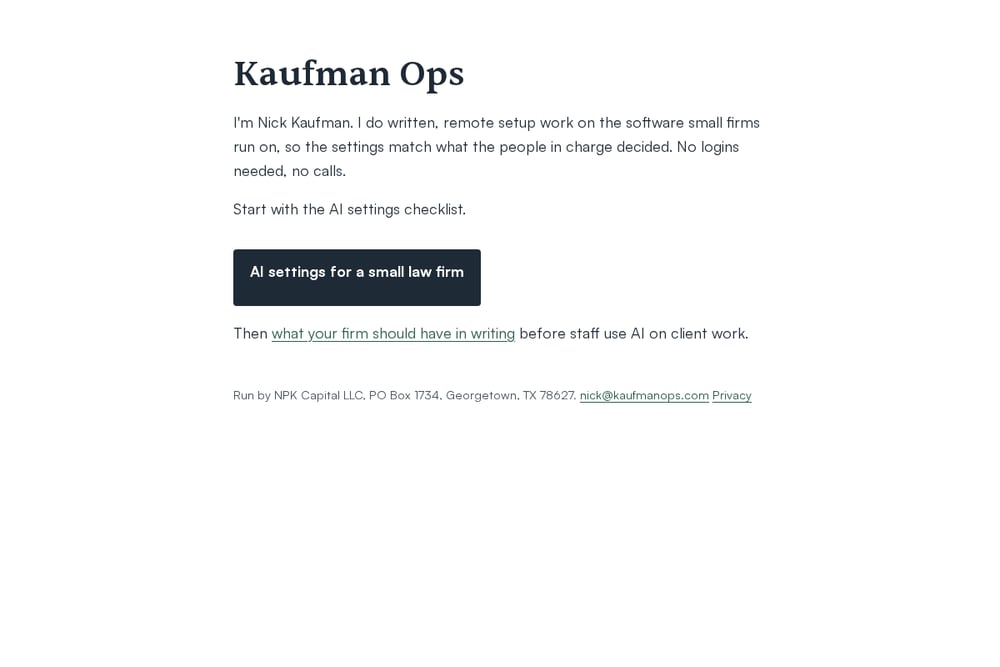 A screenshot of the Kaufman Ops website.
Kaufman Ops does written, remote setup work on the software small firms run on, so your settings match what the people in charge decided. Run by Nick Kaufman under NPK Capital LLC in Georgetown, Texas, the service requires no logins and no calls. Start with the AI settings checklist for small law firms, which covers what your firm should have in writing before staff use AI on client work. It is a practical fit if you want implementation help rather than another template to fill out yourself. You can reach the team at nick@kaufmanops.com.
#3 Darrow AI
 A screenshot of the Darrow AI website.
Darrow AI offers a free AI policy template for law firms along with examples and risk context. The resource highlights why firms need a policy, covering hallucinations, bias, and transparency concerns. It cites adoption data showing legal AI use rising sharply while many teams still lack formal policies. If you want a template plus a plain explanation of the risks to bring to partners, this is a useful read. The template is available on Darrow's resources page.
#4 Aona AI
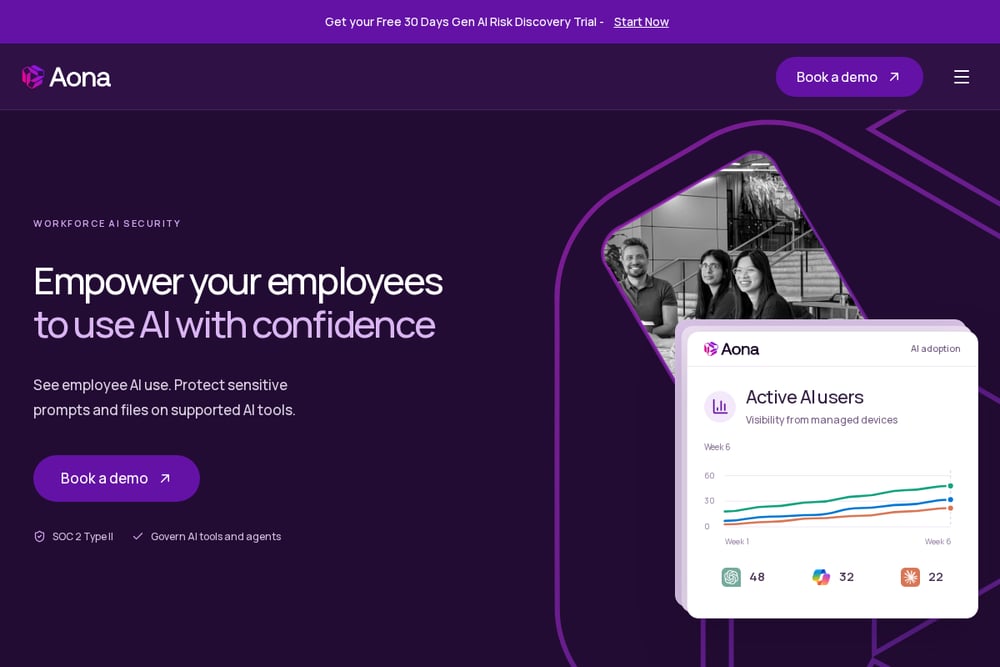 A screenshot of the Aona AI website.
Aona AI publishes a Law Firm AI Policy Template with eight sections covering approved tools, client data and privilege rules, prompt confidentiality, supervision, court disclosure, and breach response. Each section is mapped to the professional duty it protects, with sourcing from regulator and court guidance. The template uses square-bracket placeholders so your firm can adopt it quickly. Note that this edition is built for Australian firms, so US practices should adapt it to their own jurisdiction. It is still a well-structured reference for policy language.
#5 LeanLaw
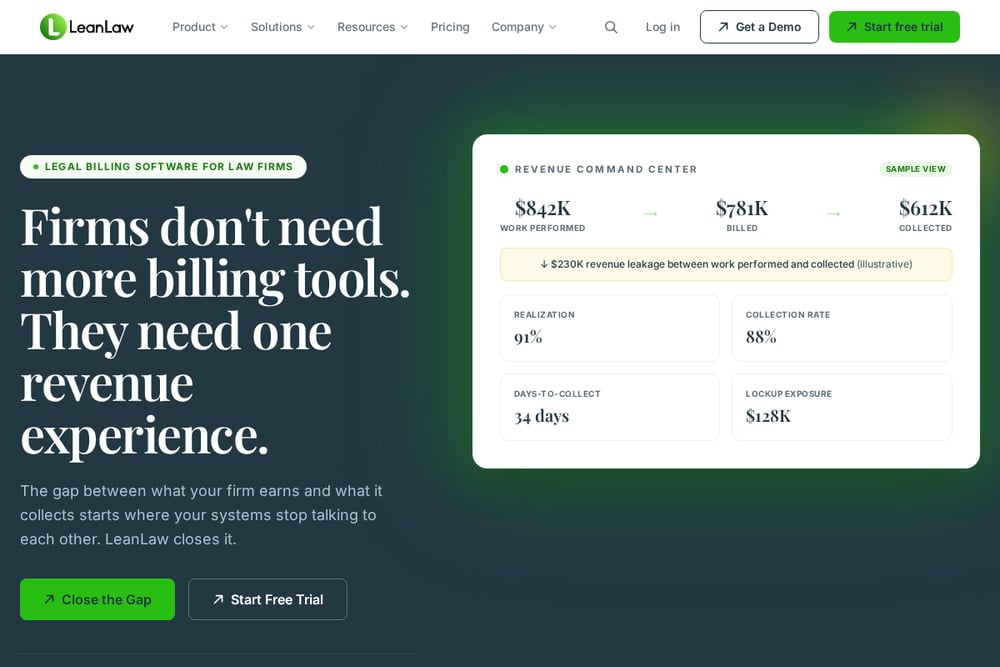 A screenshot of the LeanLaw website.
LeanLaw's guide walks you through writing a simple firm policy on acceptable use of generative AI for client work. It notes that firm AI adoption climbed from 26% to 42% between 2024 and 2026, while governance lags behind. The guide references ABA Formal Opinion 512 and the ethical obligations around competence and confidentiality. If you want a plain-language walkthrough before drafting your own policy, this is a solid starting point. The full guide is on LeanLaw's blog.
How to choose the right Creative & Digital Services
Start with your gap. If your software settings are the problem, look for written setup help that does not require handing over logins. If you need a document fast, a template with placeholders gets you moving. If partners need convincing, pair the template with risk examples and adoption data. Check jurisdiction fit, especially if a template was written for another country. And confirm what is included before you commit, since pricing clarity varies widely across these resources.
Expert Conclusion
You do not need every resource on this list. You need one that matches where your firm is stuck. Kaufman Ops handles the settings side in writing. Jaffe and Darrow AI give you policy language and context. Aona AI offers a duty-mapped structure, and LeanLaw explains the why in plain terms. Pick your starting point, put the policy in writing, and make sure your software settings match it.