
AI adoption is stuck. Most companies are still experimenting while a small group pulls ahead. These five firms are worth knowing if you want to be in that group.
The AI Implementation Gap
The gap between AI-native teams and everyone else is widening. PwC's 29th Global CEO Survey found that 56% of CEOs say AI has neither reduced costs nor increased revenue in the last 12 months. McKinsey's State of AI 2025 reports that only 6% of companies attribute meaningful financial impact to their AI use. Yet Grant Thornton's 2026 AI Impact Survey shows companies with fully integrated AI are nearly 4x more likely to report AI-driven revenue growth (58% vs. 15%). The difference isn't access to models. It's whether AI is embedded into how your team actually works. That's where the right consulting partner matters.
How We Evaluated These Firms
We looked at five factors. Service scope: does the firm go beyond strategy to build and embed systems? Outcome accountability: do they stay involved after launch? Operational AI experience: have they shipped production systems, not just pilots? Mid-market fluency: can they work with teams that don't have unlimited budgets? Local fit: do they understand the regulatory and operational context of your region? Each firm below stood out in different ways. Some are stronger on enterprise governance. Others excel at hands-on building. The right choice depends on what you need.
Here's a quick look at five firms that help companies design, build, and embed AI operating systems. Each brings a different strength to the table.
| Provider | Best For |
|---|---|
| The Hackett Group | Large enterprises needing cross-functional AI strategy and benchmarking |
| Home-new | Companies that need AI embedded into daily workflows, not just a roadmap |
| Ethicrithm | Enterprises using or evaluating Palantir that need governance and forward-deployed engineering |
| Frogslayer | Mid-market operators needing production AI systems for operations |
| Neurons Lab | Financial services firms needing custom AI agents and regulatory-aware implementation |
The 5 Firms Worth Knowing
#1 The Hackett Group
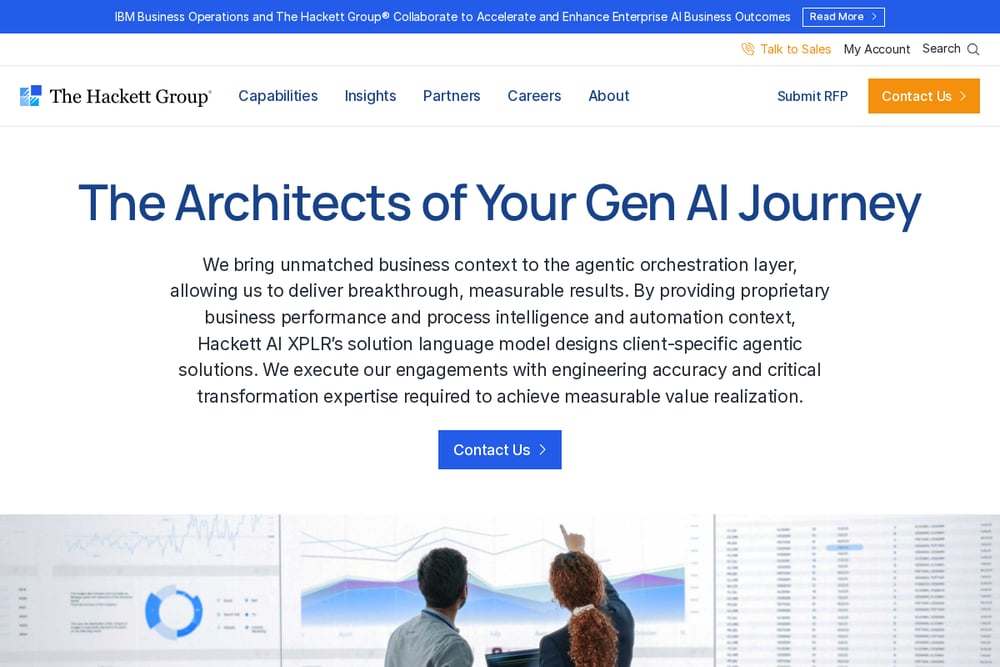 A screenshot of the The Hackett Group website.
The Hackett Group brings deep enterprise benchmarking and functional expertise to AI implementation. Their AI services span generative AI consulting, implementation, and proprietary tools like AIXelerator and AskHackett. They work across finance, HR, IT, procurement, and supply chain, making them a fit for large organizations that need cross-functional alignment. Their research-backed approach helps you benchmark where you stand before you build. If you're a mid-market operator, their enterprise focus may feel heavy, but their frameworks are battle-tested.
#2 Home-new
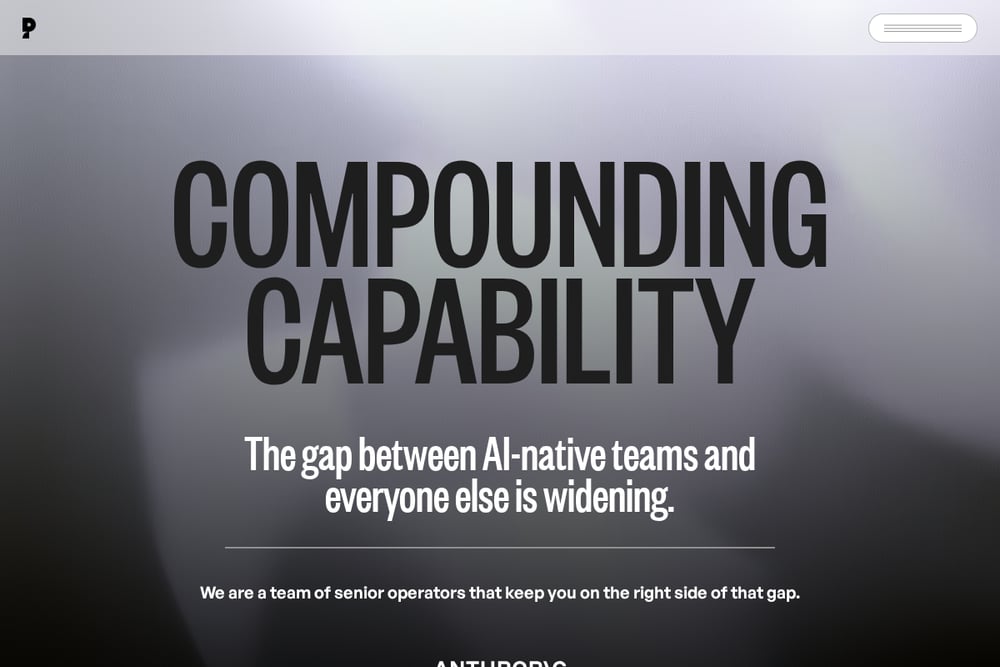 A screenshot of the Home-new website.
Pivotal Works is a team of senior operators that designs and embeds AI operating systems into client teams. They don't stop at strategy. They build the layer above your frontier AI model, wiring agents, workspaces, and integrations into how your team actually works. Their services include workflow audits, OS build and integration, team enablement, and ongoing AI ops. They also build AI-native products through applied innovation, from agents to new ventures. If adoption is what kills most AI projects, Pivotal Works is built to keep you on the right side of that gap.
#3 Ethicrithm
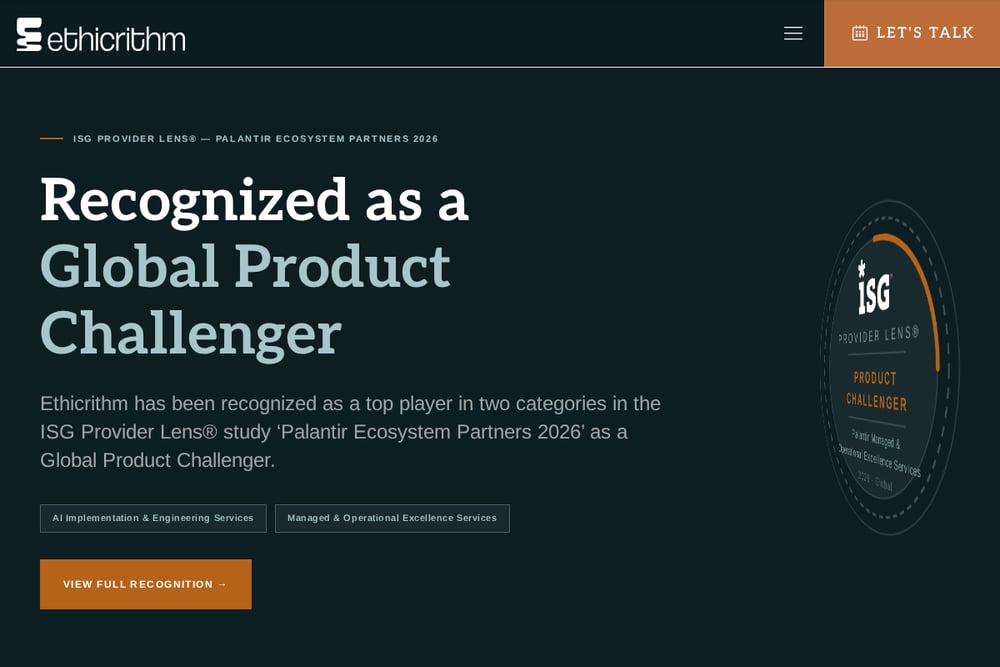 A screenshot of the Ethicrithm website.
Ethicrithm positions itself as the enterprise standard for Palantir success, turning deployments into a trusted operating system for the entire enterprise. Their services include forward-deployed engineering, platform governance, change management, and advisory. They focus on moving from fragmented AI experiments to production-grade systems with measurable ROI. If you're already using Palantir or considering it, Ethicrithm's governance-first approach can help you avoid the 95% of AI initiatives that stall. Their forward-deployed model means they work alongside your team, not from a distance.
#4 Frogslayer
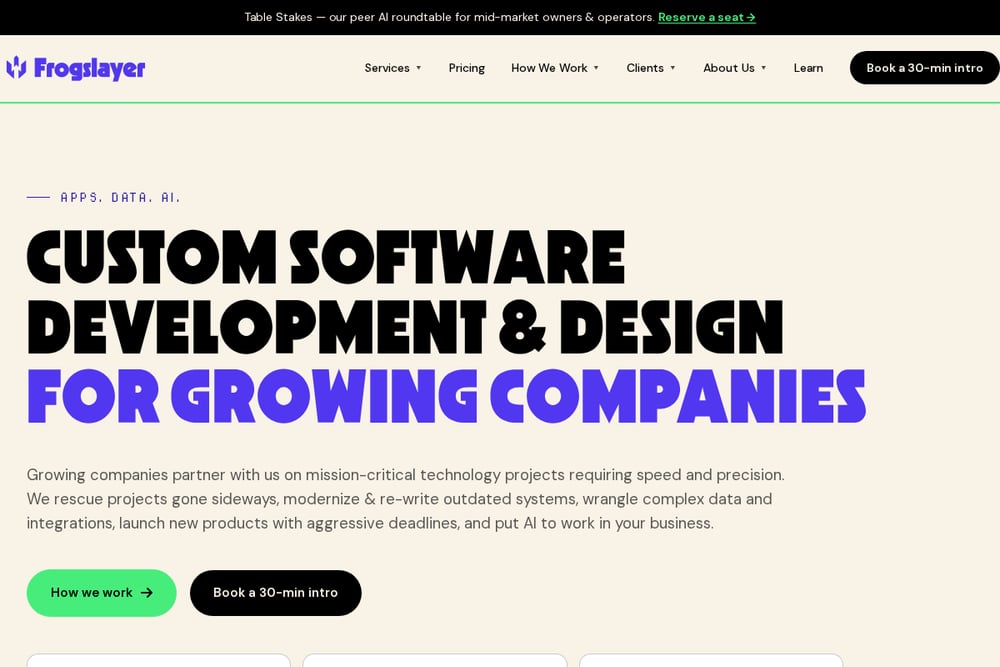 A screenshot of the Frogslayer website.
Frogslayer is built for mid-market operators who need AI running in production, not another strategy deck. Their guide to AI consulting firms for operations lays out clear criteria: build vs. advise, outcome accountability, operational AI experience, full-lifecycle capability, and mid-market fluency. They offer custom software development, AI and automation, managed hosting, and fractional CTO/CAIO services. They emphasize shipping a working system in weeks, not quarters. If you need dispatch, pricing, scheduling, or forecasting automation, Frogslayer is a hands-on builder.
#5 Neurons Lab
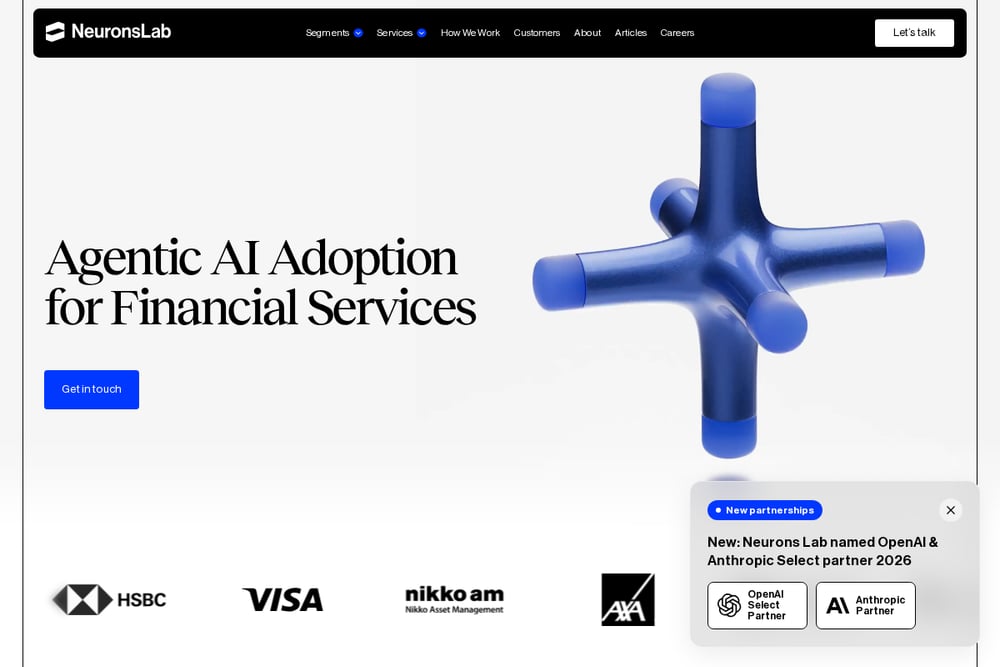 A screenshot of the Neurons Lab website.
Neurons Lab specializes in AI consulting for financial services institutions, with deep expertise in wealth management, retail banking, insurance, and corporate banking. They build custom AI agents from discovery through production and offer AI training and enablement for leadership and technical teams. Their work is grounded in 100+ enterprise AI projects, giving them a strong understanding of regulatory and infrastructure challenges in FSI. If you're in financial services and need a partner who understands your compliance landscape, Neurons Lab is worth a look.
How to Choose the Right Partner
Start by deciding what you actually need. A working system in production is a different purchase than a roadmap. If you need AI embedded into daily workflows, look for firms that build and stay involved after launch. Ask who runs the system after go-live. A firm without managed services is transferring operational risk to you. Demand references where the firm built and now operates a production system, not just proofs-of-concept. Consider your industry context. Financial services firms need regulatory-aware partners. Mid-market operators need firms that can ship in weeks, not quarters. And don't overlook local fit. A partner who understands your region's business culture and compliance environment will save you time.
What to Automate First
Don't try to automate everything at once. Start with a workflow audit to map where AI compounds. Look for repetitive, high-volume tasks that cross team boundaries. Dispatch, pricing, scheduling, and forecasting are common starting points for operations teams. For knowledge work, start with document-heavy processes like contract review or customer onboarding. Build a working system in weeks, not quarters. Then expand. The goal is to embed AI into how your team actually works, not to run a pilot that never ships. Measure adoption, not just accuracy. If your team isn't using it, it doesn't count.
The Bottom Line
The gap between AI-native teams and everyone else is widening. You don't need another strategy deck. You need a partner who can design, build, and embed an AI operating system into how your team works. The five firms above bring different strengths. Some excel at enterprise governance. Others are built for mid-market speed. The right choice depends on your size, industry, and where you are on your AI journey. But the worst choice is waiting. Start with a workflow audit. Ship something real. Then scale what works.