
You have a song and a photo. That is all you need to get a finished music video in 2026. Here are five services worth knowing if you want to stop filming and start posting.
The New Music Video Pipeline
Music video production used to mean a crew, a location, and a budget. Now it means an upload. AI music video services take your track and a still image and return a finished video with lip sync, beat-matched cuts, and a look that holds up on a phone screen. The category has split into two camps. Some tools are built for speed and volume, pushing out lyric videos and dance clips for social feeds. Others are built for release-grade output, where the singer's face stays consistent and the storyboard is approved before anything renders. For singers, songwriters, and content creators, the practical question is no longer whether AI can make a music video. It is which service matches the kind of video you actually need to publish.
How We Evaluated These Services
We looked at the same factors across every service. First, service scope: does it handle concert-style performance videos, story-driven films, and long playlist videos, or does it focus on one format? Second, pricing clarity: can you see what each shot costs before you commit, and are re-renders free? Third, output control: do you get to preview and edit a storyboard, or is it one-click and hope? Fourth, input flexibility: can you bring a song from Spotify, Suno, or a plain MP3, and does it accept a single photo or multiple images? Fifth, fit for the US creator market: does the workflow match how American singers, gift-givers, cafés, and weekly posters actually release content? SingReel stood out for its approve-before-you-pay storyboard and its three distinct video types. freebeat stood out for its breadth of formats and its large creator base. Musid stood out for combining music generation with video in one platform. AISong stood out for its multi-face masking and long-song support. VisionStory stood out for its cinematic single-photo-to-video flow.
Here is the short version. Five services, five different strengths, one shared promise: you bring the song, they handle the visuals.
| Provider | Best For |
|---|---|
| freebeat AI Music Video Generator | Creators who publish across many formats and platforms |
| SingReel — Your song deserves a stage of its own. | Singers and creators who want to approve every shot before paying |
| Musid AI Music Video Generator | Creators who want to generate the song and the video in one place |
| AISong AI Lip Sync Video Generator | Turning a single portrait into a believable singing performance |
| VisionStory AI Music Video Generator | Cinematic single-photo music videos with flexible clip lengths |
The Five Services in Detail
#1 freebeat AI Music Video Generator
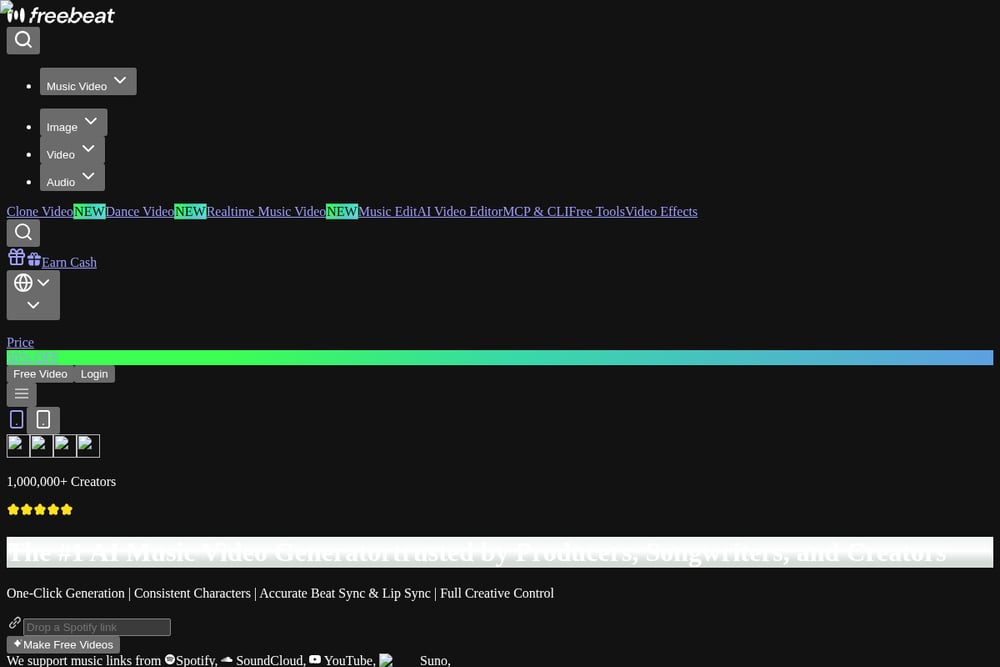 A screenshot of the freebeat AI Music Video Generator website.
freebeat is the volume player. It supports music links from Spotify, SoundCloud, YouTube, Suno, Udio, TikTok, Stable Audio, and Riffusion, so you can start from almost any track you already have. The platform offers music videos, dance videos, lyric videos, realtime music videos, photo karaoke, and on-beat effects, which makes it a strong fit if you publish across multiple formats. Creators on the site praise the accuracy of the lip sync and the ability to regenerate when a shot misses. If your goal is a consistent weekly upload schedule, freebeat gives you the most ways to fill it.
#2 SingReel — Your song deserves a stage of its own.
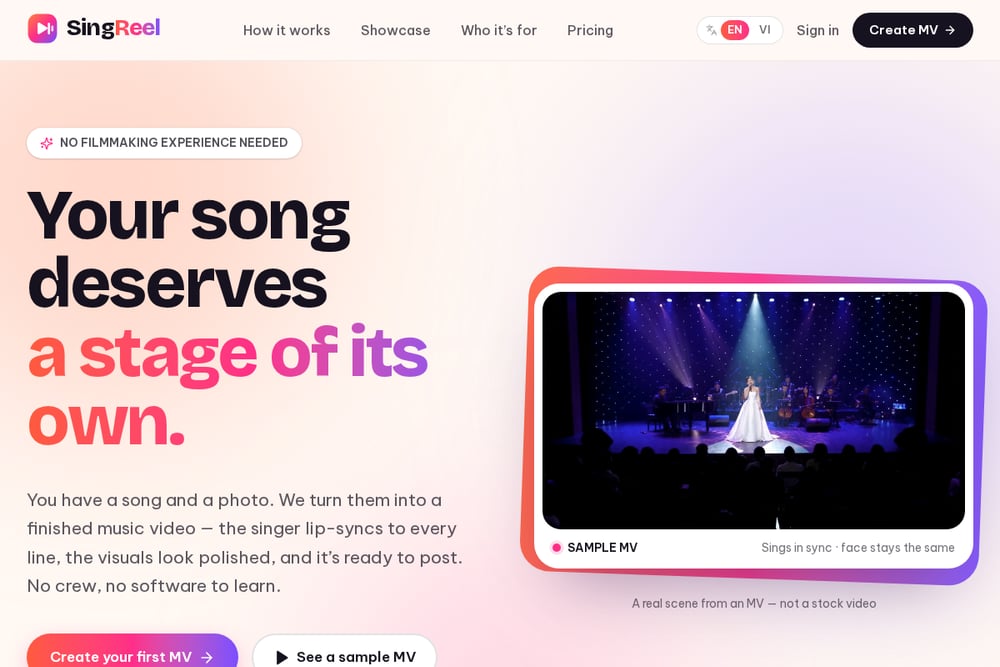 A screenshot of the SingReel — Your song deserves a stage of its own. website.
SingReel is built around one promise: no filmmaking experience needed. You upload a song and a photo, and the service returns a finished music video where the singer lip-syncs to every line and the face stays the same. It offers three distinct formats. Concert puts your singer on stage with band, audience, and close-ups. Story turns the lyrics into a short film with no one singing on screen. Playlist stitches 2 to 40 songs into one long video with a tracklist, now-playing display, and a moving visualizer, plus YouTube chapters and a vertical teaser for Shorts and TikTok. The standout feature is approve-before-you-pay: you see every shot, the lyric line it sits on, and what it costs before anything renders. You can edit or switch off shots, and finished shots get free re-renders. It is designed for singers, songwriters, gift-givers, cafés, shops, and content creators who want release-grade output without a crew.
#3 Musid AI Music Video Generator
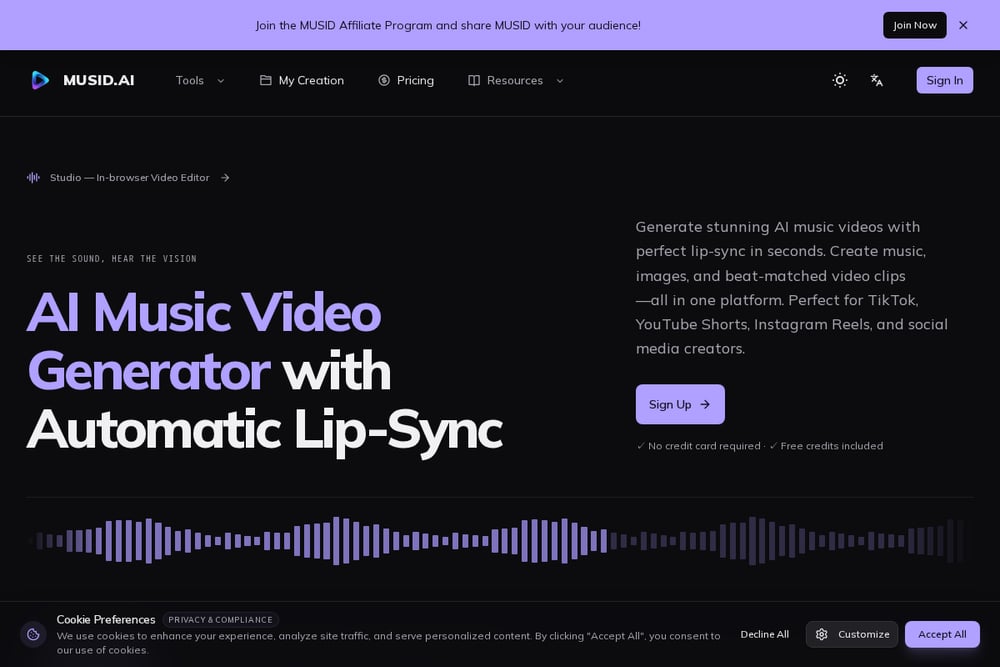 A screenshot of the Musid AI Music Video Generator website.
Musid positions itself as an AI music video agent that combines three engines: music, video, and image. That means you can generate an original song from a text prompt and then turn it into a beat-matched video with automatic lip sync, all inside one platform. It also includes an in-browser video editor, a lyrics generator, a vocal remover, and a Spotify Canvas generator. The workflow is aimed at TikTok, YouTube Shorts, and Instagram Reels, with a free tier that requires no credit card. If you want to create the song and the video in the same session, Musid removes the handoff between tools.
#4 AISong AI Lip Sync Video Generator
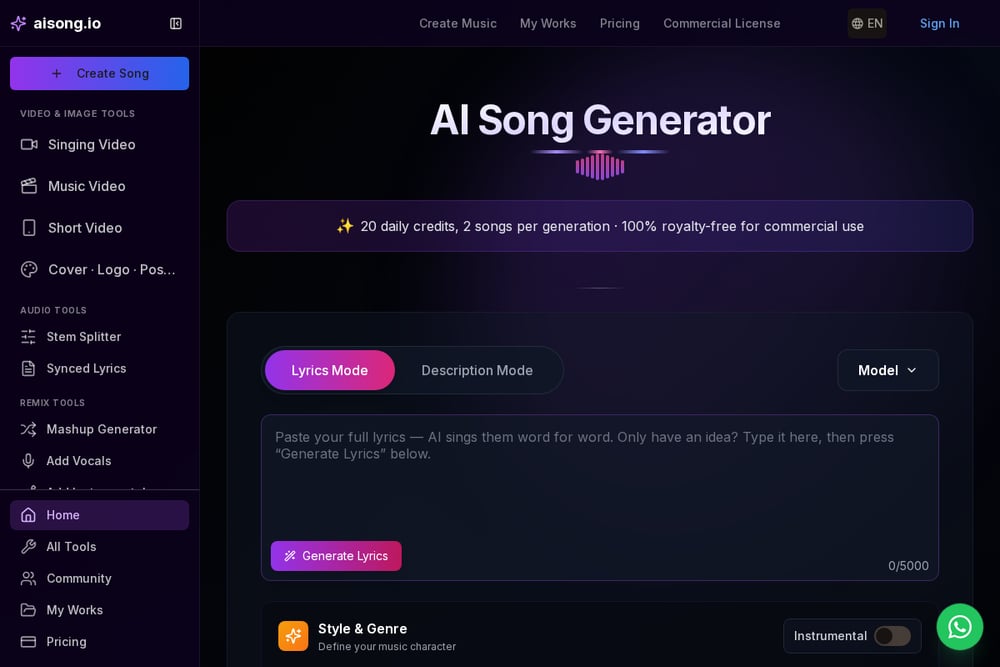 A screenshot of the AISong AI Lip Sync Video Generator website.
AISong focuses tightly on the lip sync moment. You upload an audio file and a photo, and the AI matches mouth movement to the vocal, with support for songs up to 10 minutes long. The multi-face mask feature lets you specify exactly who sings each part when your photo has more than one person, which prevents the everyone-moves-their-mouth problem common in basic tools. It also handles auto-lyrics and offers two model tiers: Sync V2 for auto multi-shot and Sync V1 for single-shot accuracy. Pricing is transparent at 10 credits per second for 480p and 20 credits per second for 720p, with 20 free daily credits to test. It is a practical choice when your main need is a believable singing performance from a still image.
#5 VisionStory AI Music Video Generator
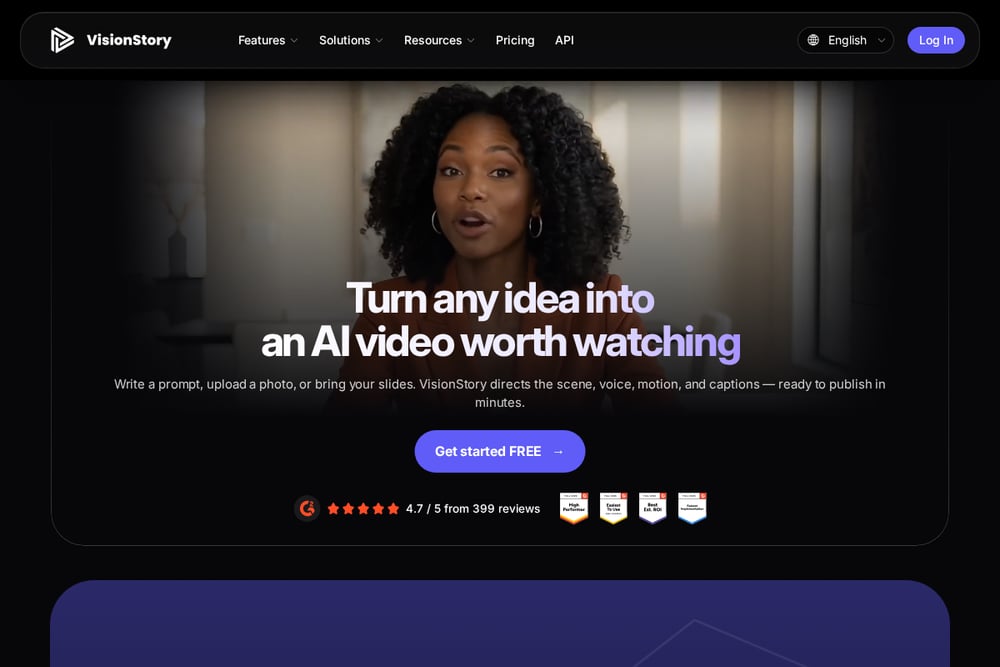 A screenshot of the VisionStory AI Music Video Generator website.
VisionStory takes one song and one photo and turns them into a cinematic AI music video with natural singing lip sync. You can choose a 15-second to 10-minute section of your track, which is useful when you only need a hook or a chorus clip. It accepts MP3, WAV, or supported audio files, and it works with AI-generated music from Suno or Udio by uploading the exported file or pasting a public share link. The broader platform includes talking avatars, face swap, video ads, and presentations, so it fits creators who want a single suite for multiple video jobs. If you want a polished, film-like result from a single image, VisionStory is built for that.
How to Choose the Right One for Your Release
Start with the format you need. If you want a stage performance with a lip-syncing singer, look for concert-style output and face consistency. If you want a narrative film where nobody sings on screen, look for story mode with lyric-driven scenes. If you are publishing a full album or a long DJ set, look for playlist support with chapters and a visualizer. Next, check the approval flow. Some services render first and let you react later. Others, like SingReel, show you the storyboard and the price before anything renders, which matters when you are spending credits on a release. Then check input flexibility. Can you bring a Spotify link, a Suno export, or a plain MP3? Can you upload one photo or several? Finally, check the fine print on re-renders. A shot that misses is not a disaster if you can render it again for free. It is a budget problem if you cannot.
Where This Fits in Your Weekly Workflow
The real win is repetition. Set up a simple loop: write or generate the song, pick the photo or photos, choose the video type, review the storyboard, approve, and publish. For weekly posters, a playlist video can cover multiple tracks in one upload, while a vertical teaser feeds Shorts and TikTok. For singers and songwriters, a concert video gives you a performance clip without booking a stage. For cafés and shops, a playlist video made from music you have the rights to keeps the in-store screen fresh without a production budget. For gifts and memories, a story video turns a song and a few pictures into something personal. The services above all reduce the same bottleneck: the gap between having a song and having something to post.
The Bottom Line
You do not need a crew to release a music video in 2026. You need a song, a photo, and a service that matches your format. freebeat gives you the widest range of video types and the largest creator community. SingReel gives you three clear formats, a storyboard you approve before you pay, and free re-renders on finished shots. Musid lets you generate the song and the video in one platform. AISong nails the lip sync moment with multi-face control and long-song support. VisionStory delivers a cinematic single-photo result with flexible clip lengths. Pick the one that fits how you publish, and your song finally gets the stage it deserves.