You don't always need another answer. Sometimes you just need a quiet place to pause. These five tools each offer a different version of that pause, from no-sign-up breathing spaces to voice-first AI coaches.
Where AI meets a calmer mind
AI-assisted mindfulness has moved well past generic audio libraries. Today's tools generate sessions around your mood, your recovery data, or a single sentence you type in. Some lean clinical, some lean athletic, and some simply want to give you two quiet minutes. The category is crowded, so the real question is what kind of support you actually want on a hard day.
How we looked at each tool
We weighed four things: how quickly you can start a session, how clear the free tier is, how personal the guidance feels, and how well the tool respects your privacy. We also considered whether it fits everyday emotional support or a more specialized use case. No single factor decided the order.
Here's the short version before the details. Each entry below serves a slightly different need, so scan for the one that matches how you actually feel on a rough afternoon.
| Provider | Best For |
|---|---|
| Medito | A free, no-strings daily meditation habit |
| ZenBuddy AI — A little more space to feel okay. | A no-sign-up mindful pause in the middle of your day |
| InTheMoment | Personalized sessions generated from a short conversation |
| Wellness AI | Talking it out plus a tailored meditation afterward |
| Vora | Athletes who want mindfulness tied to recovery data |
The five tools, one by one
#1 Medito
 A screenshot of the Medito website.
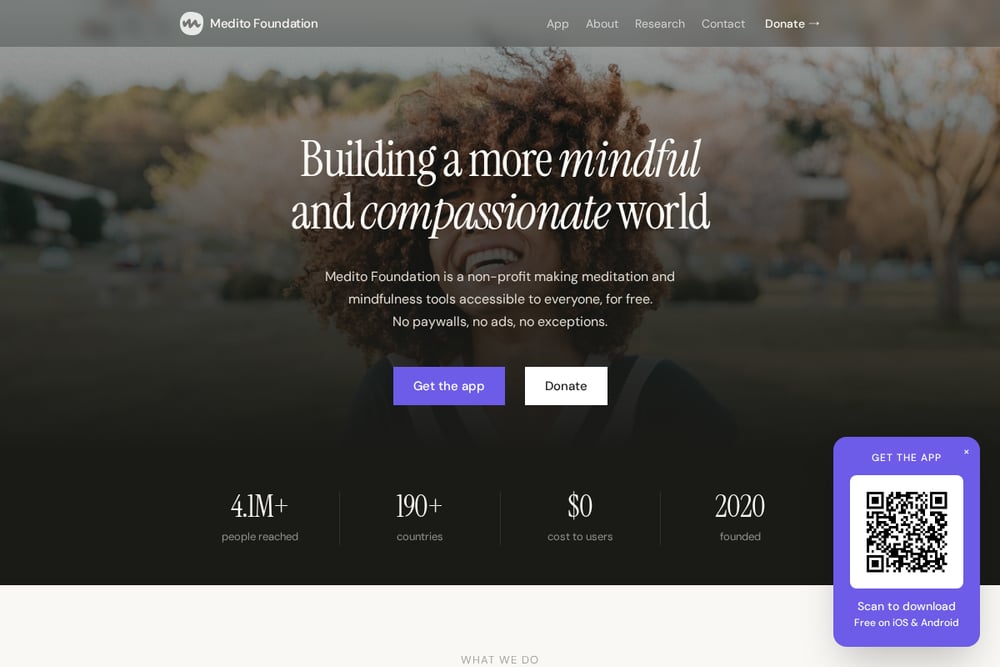
Medito is the rare thing in wellness: genuinely free, forever. The non-profit behind it offers hundreds of guided meditations, sleep stories, courses, and breathing exercises with no ads, no paywalls, and no account required. You can download it and be meditating in under 30 seconds, which matters more than it sounds when you're already overwhelmed. It's open source, so you can see exactly how it works and what it tracks. If you want a dependable daily practice without a subscription decision hanging over you, start here.
#2 ZenBuddy AI — A little more space to feel okay.
 A screenshot of the ZenBuddy AI — A little more space to feel okay. website.
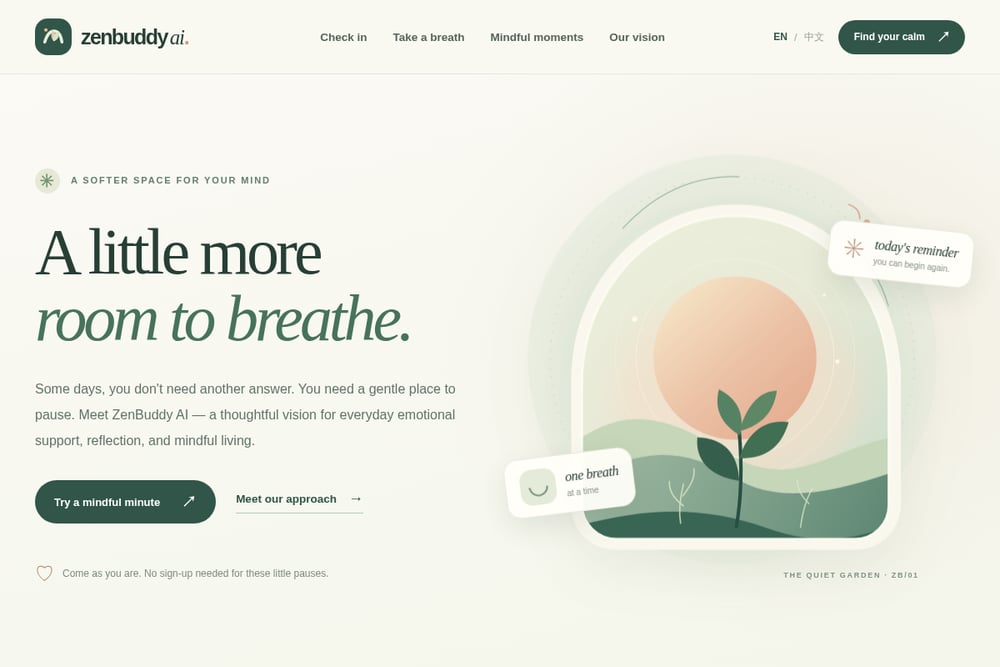
ZenBuddy AI is built around a simple idea: some days you don't need another answer, you need a gentle place to pause. The site opens with a check-in where you pick how you're arriving, and your choice stays on the page rather than being sent or saved. From there you can follow an optional slow breathing rhythm or choose a short text-guided ritual like a two-minute grounding exercise, a three-minute self-kindness practice, or a five-minute evening reset. No sign-up, no headphones, and no perfect quiet required. It's honest about its limits too, noting that its reflections are prewritten rather than clinical assessments.
#3 InTheMoment
 A screenshot of the InTheMoment website.
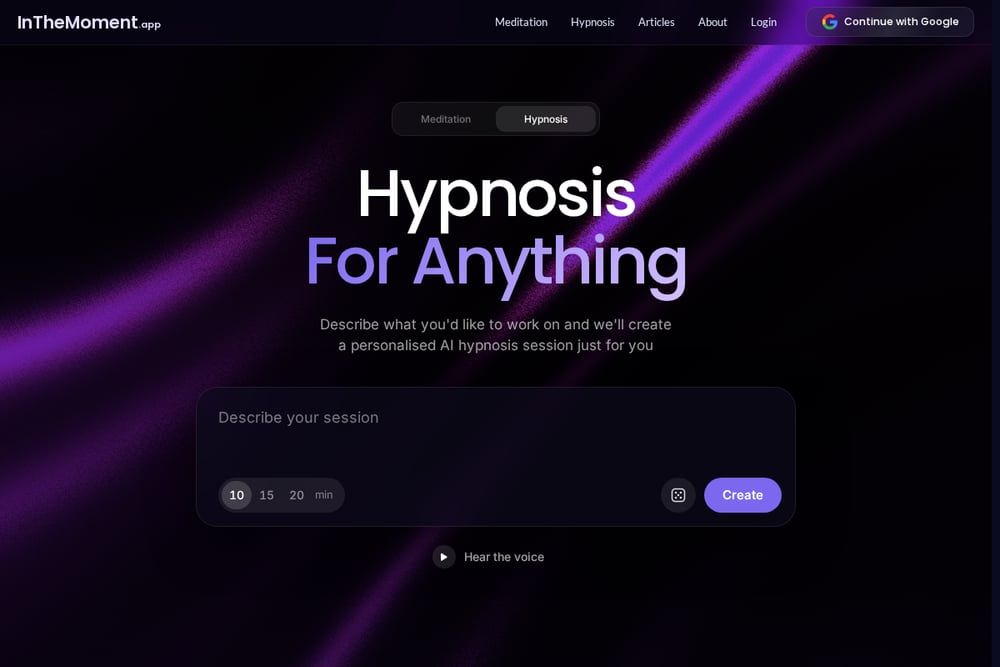
InTheMoment starts each session with a quick conversation instead of a fixed library. You describe what's going on and how you want to feel, and the AI generates a personalized meditation built on expert-written scripts. The free tier is unusually generous, giving you two fully personalized sessions a day up to 20 minutes each, with no credit card required. You can pick from multiple AI voices and listen on the web or through the Android and iOS apps. Sessions build on your feedback over time, so the guidance gets more relevant the more you use it.
#4 Wellness AI
 A screenshot of the Wellness AI website.
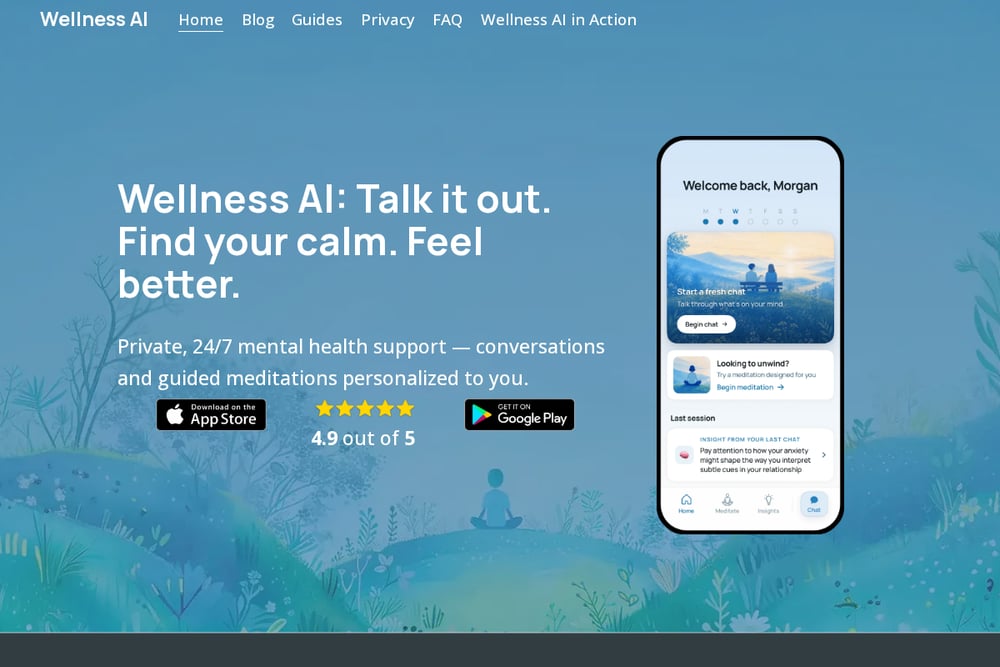
Wellness AI pairs supportive AI conversations with guided meditations tailored to what came up in them. It positions itself as private, 24/7 mental health support, which suits the moments when you need to talk something through at an odd hour. Users report an average 15 percent mood improvement after a session, according to the company. The meditations are designed to help you integrate insights from the conversation rather than stand alone. It's a heavier, more therapy-adjacent experience than a simple breathing break.
#5 Vora
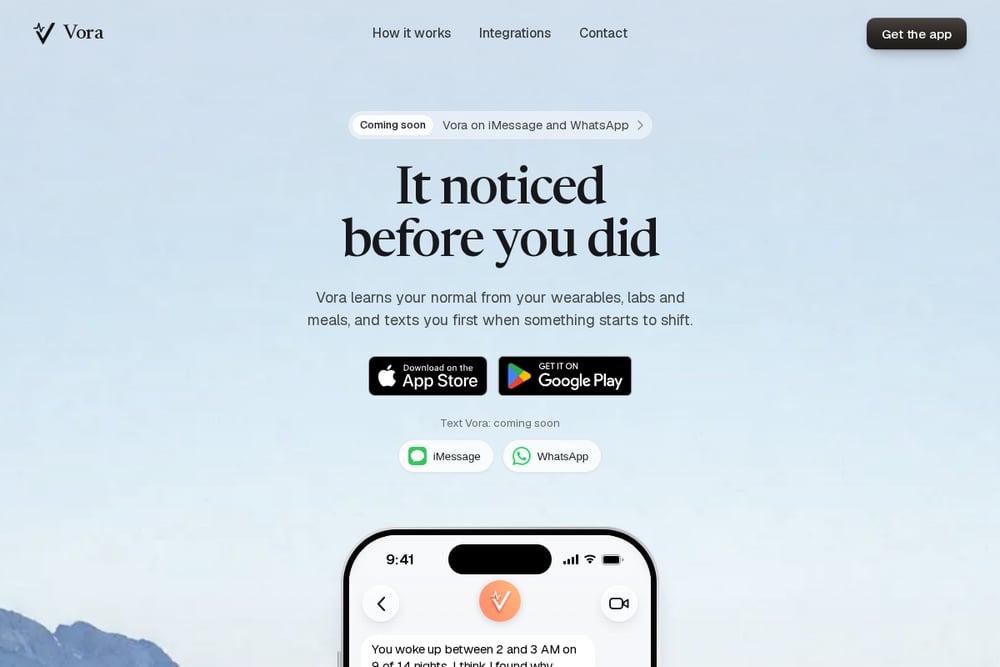 A screenshot of the Vora website.
Vora takes a voice-first approach aimed at athletes and anyone tracking recovery. Instead of browsing a library, you just say something like "give me a quick meditation for stress" and your AI coach guides you through a session in real time. It connects mindfulness to biometric data, recommending sessions when your body actually needs them based on signals like heart rate variability. Sessions span stress relief, pre-workout focus, post-workout cooldown, sleep preparation, and anxiety management. If your training and your mental reset are already intertwined, this fits that world.
Pick the pause that fits your day
Start with friction. If you want to be breathing within seconds and never think about an account, Medito or ZenBuddy AI will serve you better than anything with a login screen. If you want guidance shaped around your specific situation, InTheMoment and Wellness AI go deeper, at the cost of a few setup steps. And if you're training hard and want your nervous system to keep up, Vora's data-driven approach makes more sense than a generic library. Be honest about whether you want a two-minute reset or a longer conversation, because those are different products.
Building a small daily ritual
You don't need a complicated system. Pick one anchor moment, like the first minute after you sit down at your desk or the last few before bed. Open your chosen tool, do a single short practice, and stop there. If you want more structure, let a calendar reminder nudge you once a day and keep a one-line note about how you felt before and after. Over a couple of weeks, that tiny loop tells you more about what works for you than any feature list will.
The bottom line
There's no single winner here, because these tools solve different problems. Medito gives you a free, dependable foundation. ZenBuddy AI gives you a soft, private pause with zero commitment. InTheMoment and Wellness AI personalize the experience around your words, and Vora connects it to your body's data. Try one for a week, notice whether you actually return to it, and let that answer decide.