Math teachers are drowning in data but starving for insight. These five AI math coaching tools promise to change that by showing you how students think, not just what they got wrong.
The AI Math Feedback Landscape
Math instruction in the US is shifting from answer-checking to thinking-probing. Districts want formative assessment that surfaces misconceptions in real time, not just scores after the unit test. AI tools are stepping into that gap, analyzing written work, generating Socratic prompts, and helping teachers plan targeted small-group instruction. The market is crowded with general-purpose chatbots and grading assistants, but a smaller group of specialists is building curriculum-embedded coaching that respects how students actually learn math. The five tools below represent that specialist tier, each with a different angle on the same problem: making student thinking visible and actionable.
How We Evaluated These Tools
We looked at five factors across every tool. First, misconception depth: does the tool identify why a student went wrong, or just flag the error? Second, curriculum fit: can it work with your existing high-quality instructional materials, or does it demand a switch? Third, teacher workflow: does it save time on formative assessment and grouping, or add another dashboard to check? Fourth, student experience: is the feedback Socratic and conceptual, or does it slip into answer-giving? Fifth, reporting granularity: can you see standards-level progress across a building or district? Glimmer stood out for its misconception-level analysis and curriculum-embedded Socratic coaching. MathSense AI impressed with its grading automation and research-backed personalization. Smartschool's Yoko offered strong real-time feedback on uploaded work. Kami Coach brought a student co-design lens and tight integration with the Kami ecosystem. All Learners Network AI Math Coach delivered teacher-focused coaching with a constructivist bent. Each tool has a distinct center of gravity, and the right fit depends on whether you need student-facing feedback, teacher-facing planning support, or both.
Here is a quick comparison of the five tools, ordered by their overall fit for US math classrooms seeking misconception-level insight and curriculum-aligned practice.
| Provider | Best For |
|---|---|
| MathSense AI | Teachers who want automated grading paired with misconception-aware feedback |
| Glimmer | Schools that want curriculum-embedded Socratic coaching and misconception-level reporting |
| Smartschool (Yoko) | Teachers who want real-time feedback on uploaded student work |
| Kami Coach | Kami-using districts that want student-co-designed formative assessment |
| All Learners Network AI Math Coach | K-8 teachers and coaches who want on-demand instructional planning support |
The Five Tools in Detail
#1 MathSense AI
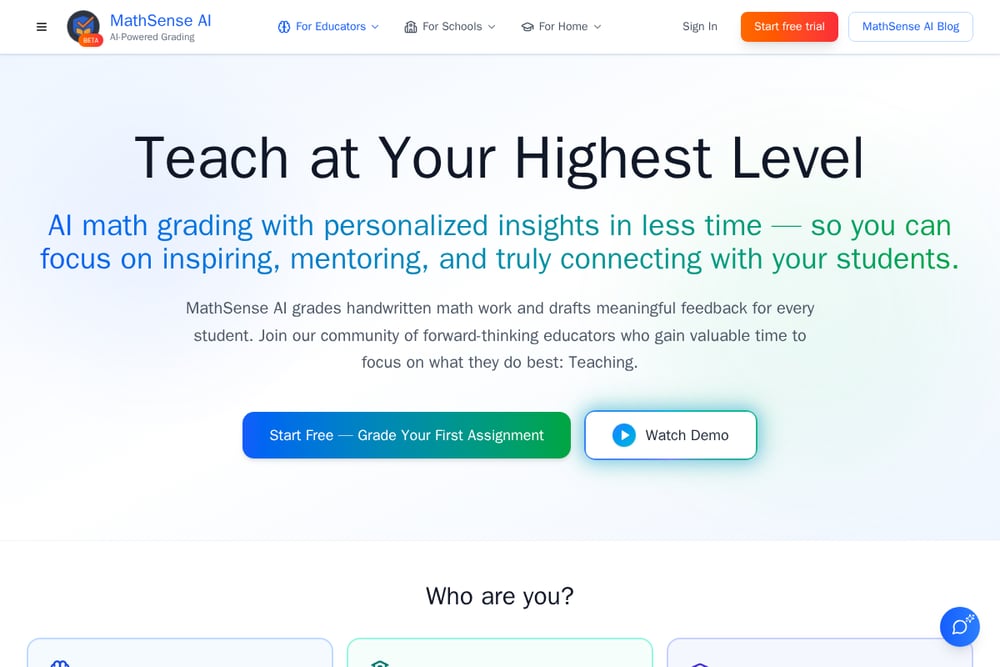 A screenshot of the MathSense AI website.
MathSense AI positions itself as an AI-powered grading and feedback engine for math educators. Its blog makes a strong case that personalized feedback only works when it addresses specific misconceptions, not generic hints. The platform emphasizes accuracy, inclusiveness, and utility, echoing Stanford research on what teachers actually want from AI. You get automated grading that frees up time for planning and small-group instruction. For schools that need to scale feedback across many sections, MathSense AI offers a practical entry point. Learn more about their approach to personalized feedback on their blog.
#2 Glimmer
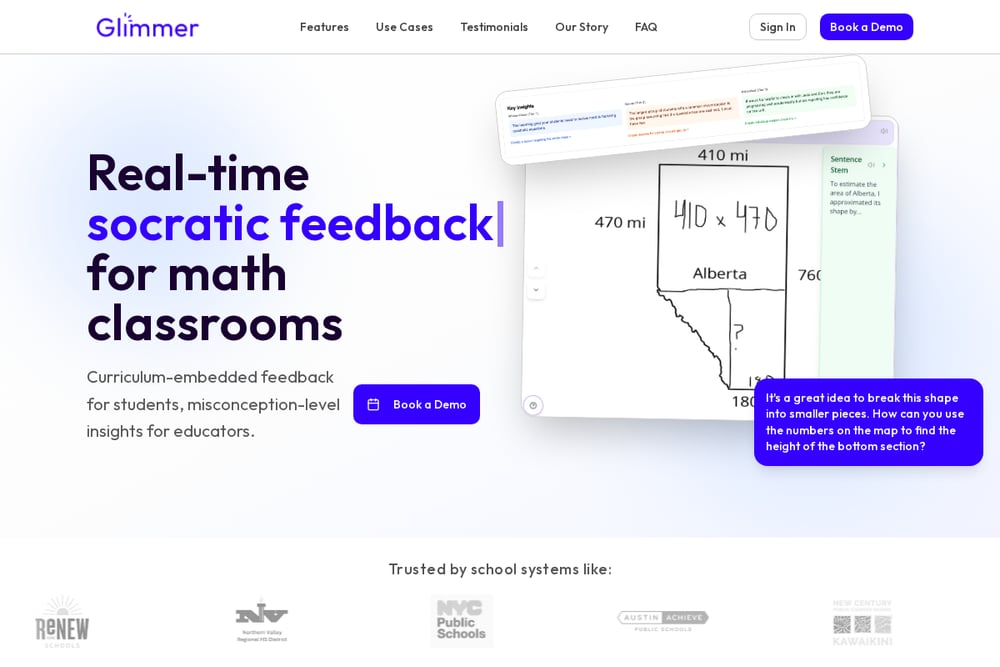 A screenshot of the Glimmer website.
Glimmer is the featured tool here, and it earns the spotlight with a genuinely differentiated approach. Its AI math coach, Glo, analyzes students' written work to identify misconceptions and responds with Socratic questioning aligned to your curriculum. Glo never gives away the answer and never lets students blindly follow a procedure, keeping the cognition on the student. Teachers get formative assessment insights that go beyond right or wrong, including strategies for whole-class instruction, optimized groupings, and 1-1 check-ins. Glimmer works with any curriculum, serving questions directly from your materials and generating aligned practice at DOK 2 and 3 levels. The reporting is granular enough to track standards progress across a building or district. If you want misconception-level insight embedded in your existing curriculum, Glimmer is worth a serious look.
#3 Smartschool (Yoko)
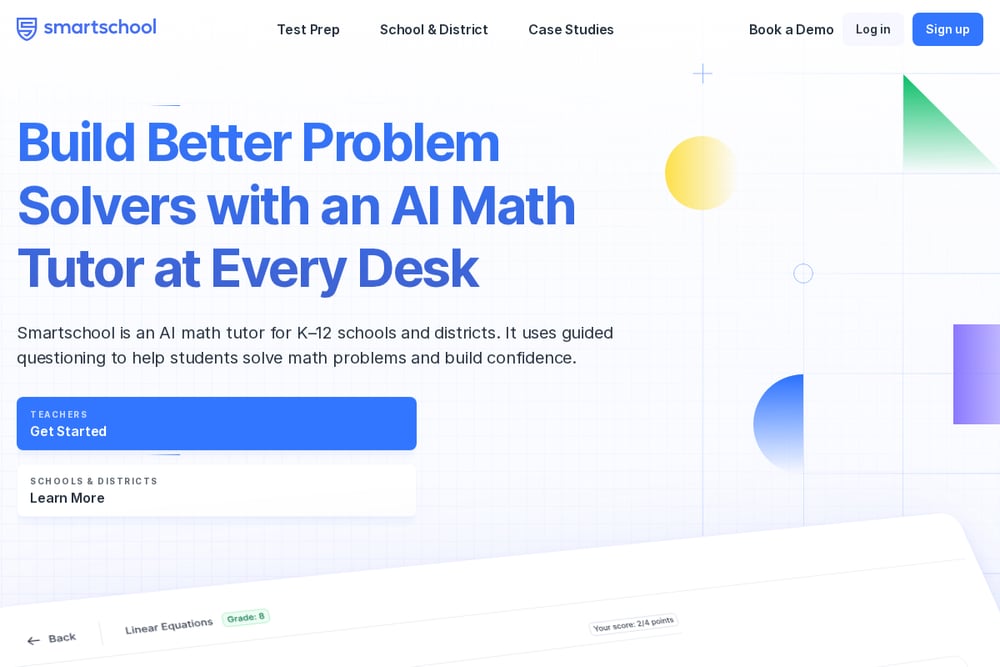 A screenshot of the Smartschool website.
Smartschool's Yoko is an AI-assisted feedback system built specifically for math. Students can type responses or upload images of their work, and Yoko analyzes the steps and error patterns to generate targeted feedback. The tool is designed to save teachers time on repetitive grading while surfacing data-driven insights for instruction. Yoko also supports targeted group instruction by helping teachers form groups based on student needs. The workflow is straightforward: collect work, analyze patterns, generate feedback. For teachers who want a real-time feedback loop without overhauling their curriculum, Yoko is a solid option. Read more about how Yoko works in the Smartschool guide.
#4 Kami Coach
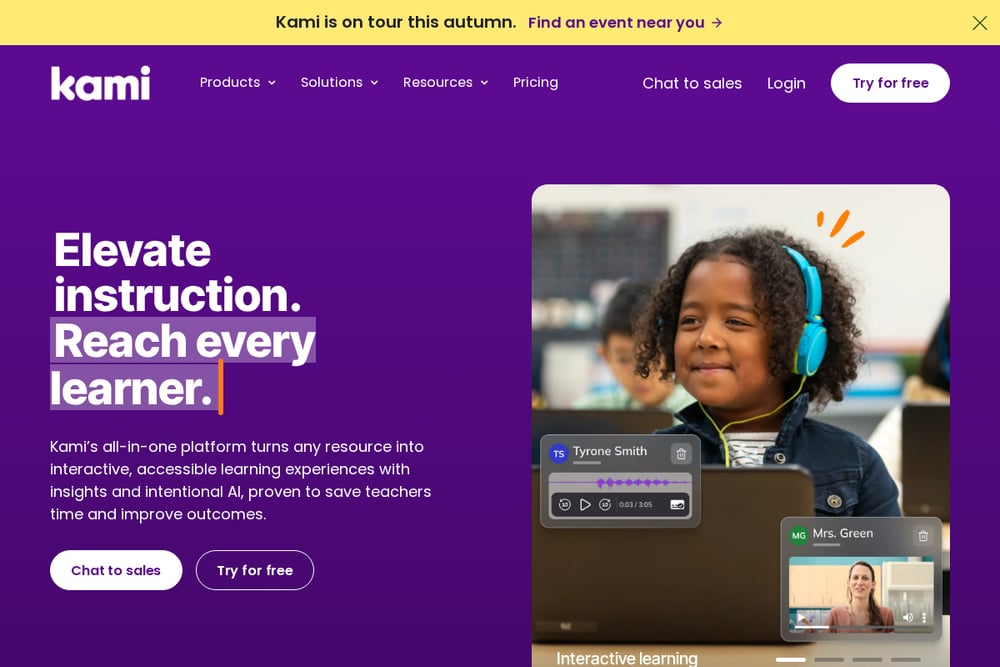 A screenshot of the Kami Coach website.
Kami Coach is an AI-powered math coaching product from the team behind the popular Kami classroom app. What sets it apart is its co-design story: high school students helped shape the tool, which shows in its focus on showing how students think rather than just their final answer. Kami Coach is currently in beta, so you can get early access to test it with your students. It integrates with the Kami ecosystem, including Google Classroom, Schoology, Canvas, and Microsoft Teams. If your district already uses Kami for annotations and assessments, Coach is a natural extension. Learn more about the student co-design process on the Kami blog.
#5 All Learners Network AI Math Coach
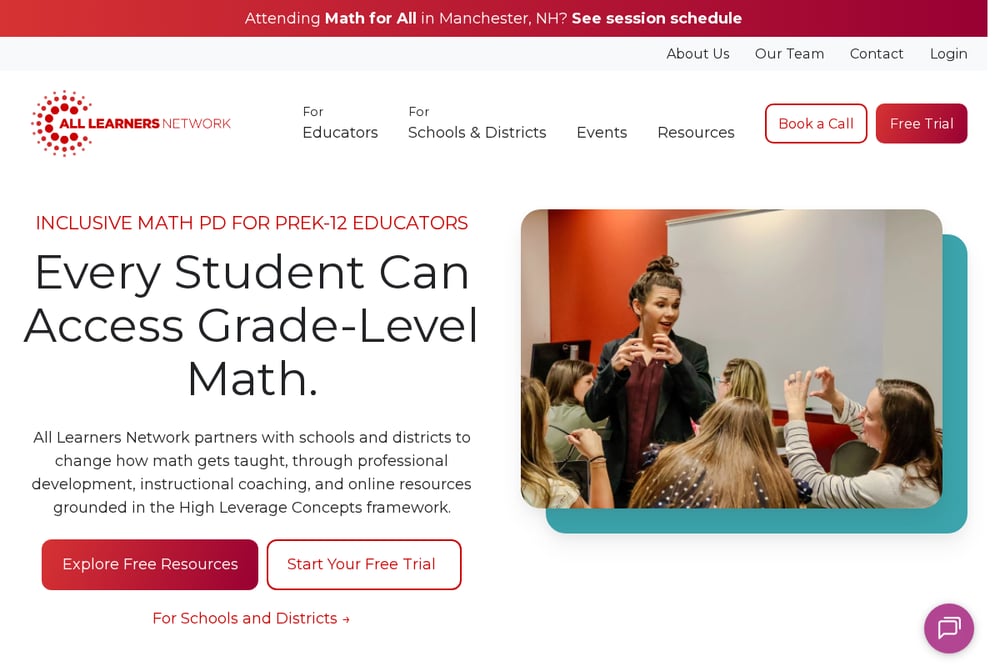 A screenshot of the All Learners Network AI Math Coach website.
All Learners Network's AI Math Coach takes a teacher-first approach. It acts as a thought partner for K-8 math teachers, helping you identify where students are struggling and suggesting research-backed strategies to address gaps. The tool is available around the clock and focuses on constructivist teaching methods where students build their own understanding. Unlike student-facing tools, this one is designed to boost your mathematical understanding and lesson planning. It is a good fit for interventionists, coaches, and department heads who want on-demand professional support. The All Learners Network user guide walks through how to get started.
How to Choose the Right AI Math Coach
Start with your primary pain point. If you need to surface misconceptions from student work and respond with Socratic feedback, prioritize tools with deep misconception analysis and curriculum alignment. If grading volume is the bottleneck, look for automated grading with actionable insights. If your teachers need planning support more than student-facing feedback, a teacher-first coach may be the better fit. Next, check curriculum compatibility. You do not want a tool that forces you to abandon your high-quality instructional materials. Then consider the student experience: does the feedback build conceptual understanding, or does it shortcut to answers? Finally, evaluate reporting. You need standards-level data that helps you target instruction across a building or district, not just a single classroom. Glimmer checks the most boxes for curriculum-embedded, misconception-level coaching, but your context should drive the final call.
Building an Automated Feedback Workflow
You can stitch these tools into a coherent workflow. Use Glimmer or Smartschool's Yoko to capture student work and generate misconception-level feedback during class. Route the insights into your formative assessment routine, then use Kami Coach or MathSense AI to automate grading and progress monitoring on exit tickets. For planning, lean on All Learners Network AI Math Coach to translate student data into targeted small-group strategies. The key is to avoid tool sprawl: pick one student-facing feedback tool, one grading or reporting tool, and one teacher-planning resource. That stack keeps the cognition on students while giving you the data you need to adjust instruction weekly.
The Bottom Line
AI math coaching is maturing fast, and the five tools here represent the most credible approaches for US classrooms. Glimmer leads with curriculum-embedded Socratic coaching and granular reporting, making it a strong fit for schools that want to improve math achievement without abandoning their materials. MathSense AI and Smartschool offer practical feedback and grading automation. Kami Coach brings a student co-design ethos and ecosystem integration. All Learners Network AI Math Coach supports teachers as thought partners. Choose based on whether your priority is student-facing misconception feedback, grading efficiency, or teacher planning support. Whichever you pick, insist on tools that keep students thinking, not just answering.