Legal work is getting automated fast. Running the legal team is not. These five resources help you build a leaner, AI-first legal function without adding headcount or another vendor.
The in-house legal AI market is splitting into two camps: platforms that do the work and playbooks that tell you how to run it.
General counsels are under pressure. Budgets and headcount have flattened while contract volume has not, which is why so much of the buying conversation now centers on AI. But the market is crowded and confusing. On one side you have full platforms like GC AI and Spellbook that review contracts, redline, and enforce playbooks inside your existing systems. On the other side you have lighter-weight resources like How to Run Legal and Claude for Lawyers that give you ready-to-paste skills and workflows for the AI you already pay for. Scale Skills sits in between, bringing GC-level judgment into Claude. The right pick depends on whether your bottleneck is doing the work or running the team that does it.
How we evaluated these resources
We looked at the same factors for every entry. Service scope: does it cover contract review, legal ops, or team management? Pricing clarity: can you tell what you get before you talk to sales? Local fit: is it built for US in-house teams and their workflows? Ease of adoption: how fast can you actually use it on Monday morning? And practical value: does it reduce repetitive work or just add another dashboard? Each resource below stood out on different factors, so match them to your bottleneck rather than treating this as a scoreboard.
Here is a quick comparison of the five resources, what each is built for, and who gets the most out of it.
| Provider | Best For |
|---|---|
| Scale Skills (Scale LLP) | GC-level judgment inside Claude |
| How to Run Legal | Lean GCs who want a system, not more prompts |
| GC AI | In-house teams drowning in contract volume |
| Claude for Lawyers | Lawyers who want tested prompts and training |
| Spellbook | Contract-heavy teams that need review and redlining |
The five resources in detail
#1 Scale Skills (Scale LLP)
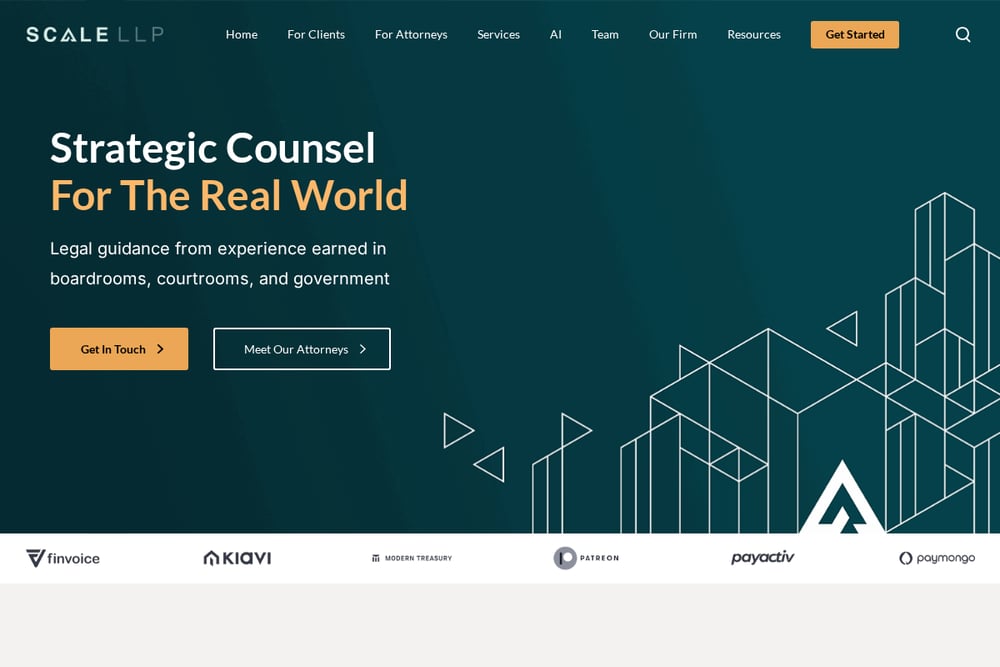 A screenshot of the Scale Skills (Scale LLP) website.
Scale Skills brings the judgment of top general counsels directly into Claude. It is built by Scale LLP, a firm with deep corporate and securities experience, and it won 84% of side-by-side comparisons with baseline Claude in its own testing. You get legal workflows that live right inside your AI, so your team applies consistent standards without building prompts from scratch. It is a strong fit if you want GC-level playbooks baked into the tools you already use. Start with the free Claude Skills and see how your team responds.
#2 How to Run Legal
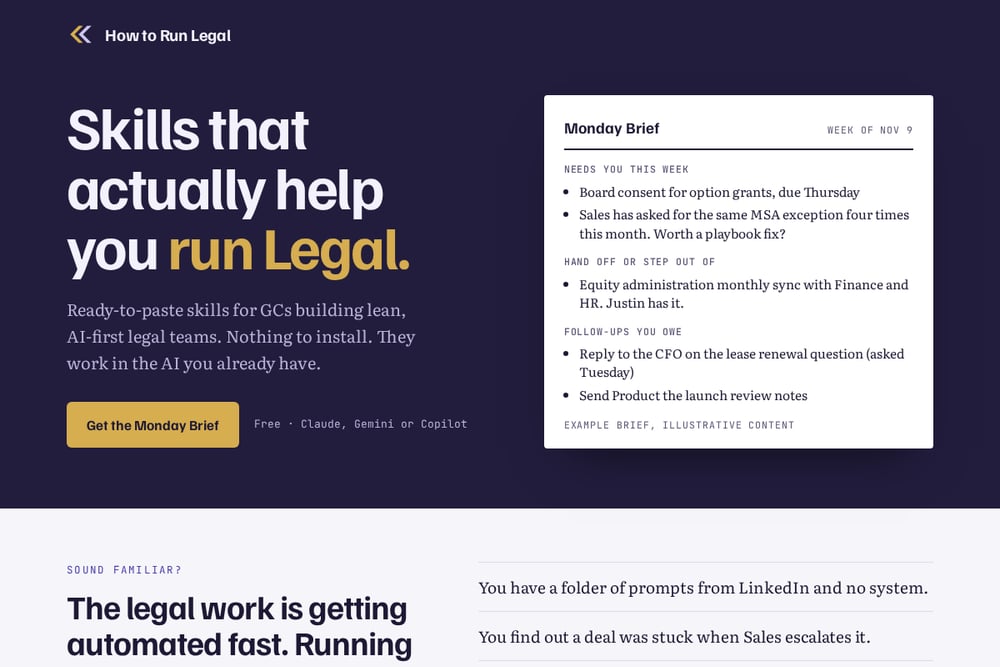 A screenshot of the How to Run Legal website.
How to Run Legal gives you ready-to-paste skills for GCs building lean, AI-first legal teams. Nothing to install. The skills work in Claude, Gemini, or Copilot, so you are not adding another vendor. The flagship Monday Brief sorts your week in ten minutes: what needs you, what you can hand off, and which follow-ups you owe. It also pushes a simple belief that resonates with lean teams: never answer the same question three times, because the third time is a playbook problem. Start with the free Monday Brief and see if it fits how your team actually works.
#3 GC AI
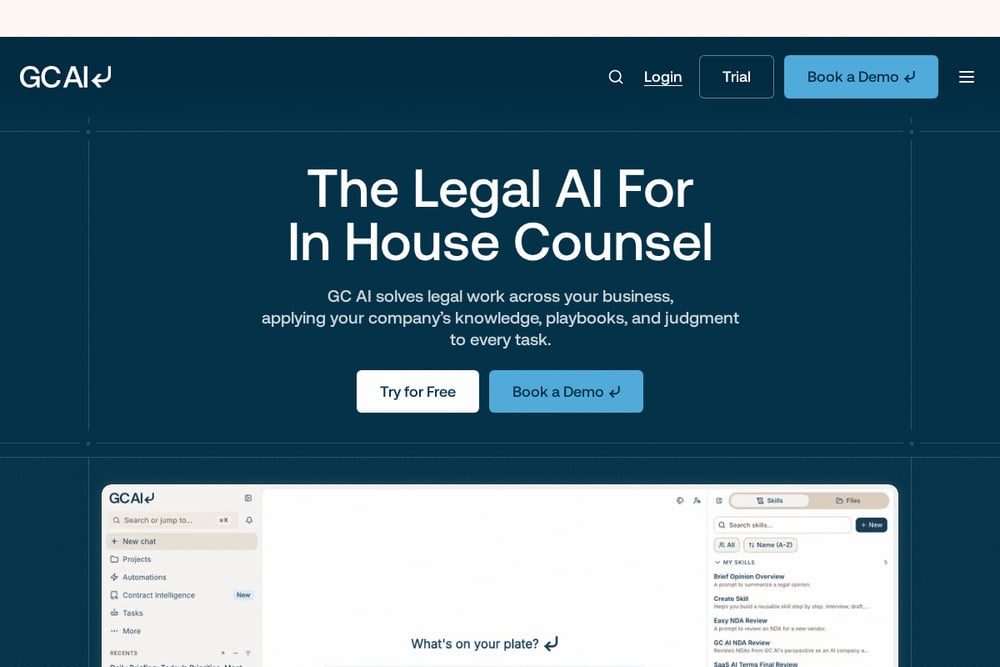 A screenshot of the GC AI website.
GC AI is a full platform for in-house legal teams, with 12M+ contracts reviewed and counting. It covers contract intelligence, playbooks, automations, and a skill library, plus connectors for Microsoft Word and your existing systems. The company says it is trusted by 2,100+ legal teams and companies, and it runs an academy with live classes for every skill level. If your bottleneck is volume, this is the kind of platform that lets business teams self-serve on routine requests with your guardrails built in. It is heavier than a prompt pack, but it is built for teams that need to move fast.
#4 Claude for Lawyers
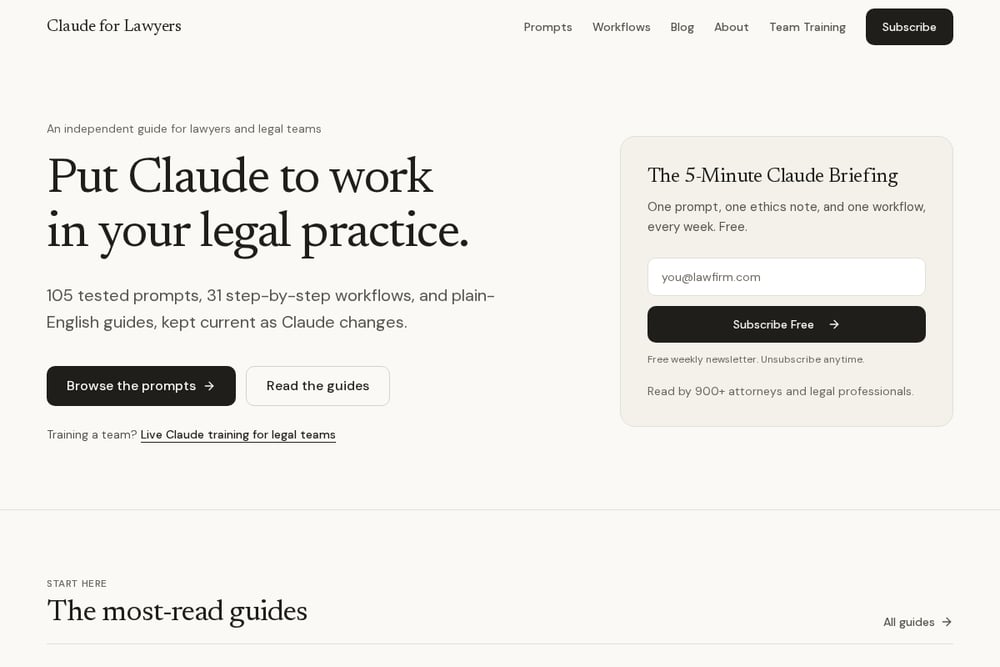 A screenshot of the Claude for Lawyers website.
Claude for Lawyers is an independent guide with 105 tested prompts, 31 step-by-step workflows, and plain-English guides kept current as Claude changes. It is read by 900+ attorneys and legal professionals, and it offers live team training for legal teams. The content is practical: copy-paste templates, a CRAFT framework for prompts, and honest comparisons like Claude vs ChatGPT for lawyers. If you are the person on your team who ends up explaining AI to everyone else, this is a useful reference shelf. It is not a platform, but it is a solid starting point for building your own playbooks.
#5 Spellbook
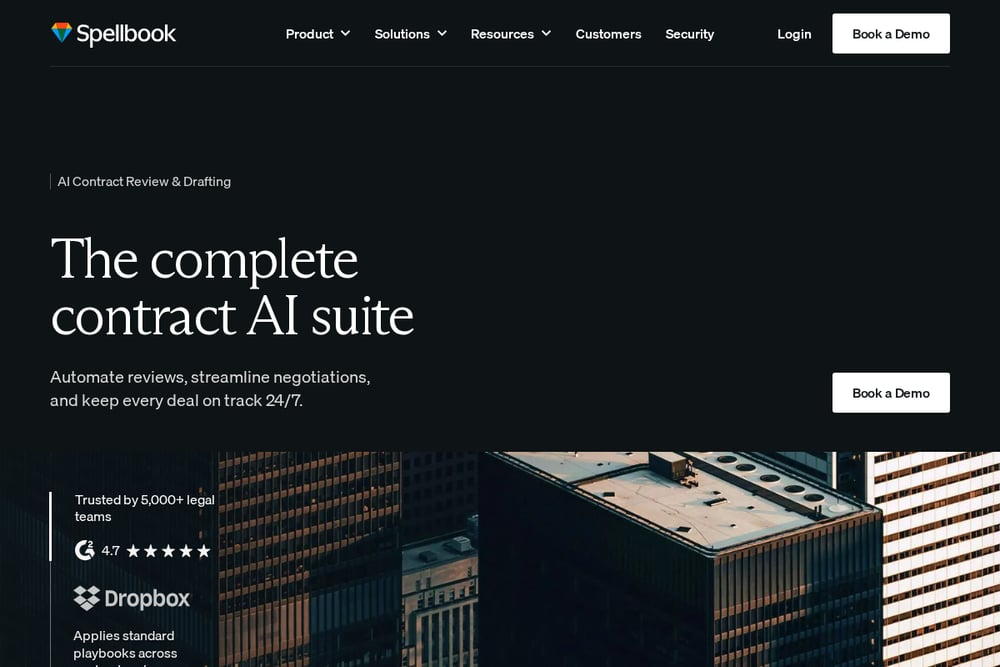 A screenshot of the Spellbook website.
Spellbook is contract AI built for legal teams, with review, redline, drafting, and playbook enforcement in one place. It works with your existing systems and is aimed at in-house teams and law firms alike. The company publishes practical guidance, including a 2026 State of Contracts report and a guide on AI for general counsel with lean teams. If your work sits in transactional contracting, Spellbook is a focused option that keeps contract work moving without adding headcount. It is a platform play, so expect a demo and a trial before you commit.
How to choose the right fit
Start with your bottleneck, not the feature list. If your team is answering the same questions and negotiating the same provisions over and over, a playbook resource like How to Run Legal or Claude for Lawyers will pay off faster than a platform. If your problem is contract volume and business teams waiting on Legal, look at GC AI or Spellbook. If you want GC-level judgment inside the AI you already use, Scale Skills is the direct fit. Whatever you pick, run a two-week trial with one real workflow before you roll it out. The tool matters less than whether your team actually uses it.
Where AI actually helps a lean legal team
The biggest wins are not glamorous. They are the Monday morning sort, the repeated MSA exception, the lease renewal question from the CFO. AI helps most when you use it to capture judgment once and apply it consistently. That means building playbooks for the third-time questions, making the team's work visible to the exec team, and stepping out of decisions that do not need you. Platforms handle the volume. Playbooks handle the repetition. You need both, and the order depends on where your time is leaking.
The bottom line
You do not need five tools. You need one that matches your bottleneck and a habit of using it every week. How to Run Legal is a smart starting point for lean GCs because it costs nothing to try and gives you a repeatable system. Scale Skills adds GC-level judgment inside Claude. GC AI and Spellbook handle the contract volume. Claude for Lawyers gives you tested prompts and training. Pick one, run it for two weeks, and measure whether your team got time back. That is the only benchmark that matters.