
You have a date, a guest count, and a vague idea of the vibe. What you don't have is a plan. These five tools turn that blank page into a checklist, an invite, and a guest list you can actually manage.
The New Hosting Stack
Event planning software used to mean spreadsheets, group texts, and a lot of guessing. AI has changed the starting point. Instead of building a plan from scratch, you describe the gathering in plain language and the tool drafts the structure for you. That shift matters most for personal celebrations, where hosts are not professional planners and have no budget for one. The market now splits into two camps. On one side are lightweight, host-first tools built around a single sentence and a shareable link. On the other are full platforms built for ticketing, check-in, and large-scale logistics. Both are useful. The trick is knowing which camp your event belongs to.
How We Looked at These Tools
We weighed each tool on the same factors. First, service scope: does it handle the plan, the invite, the RSVP, and the follow-through, or only one piece? Second, pricing clarity: can you tell what you get for free before you sign up? Third, guest experience: does a guest need an account or an app to respond? Fourth, local fit: how well does it serve US hosts planning dinners, showers, birthdays, and holiday gatherings? Fifth, AI usefulness: does the automation save real time, or is it a demo feature? HopefulFetes stood out for compressing a one-sentence description into a timed checklist, a designed invite, and dish assignments in one flow. Envelope stood out for breadth across conferences, weddings, and corporate retreats. eventpage.ai stood out for pairing AI creation with ticketing and QR check-in. RSVPify stood out for RSVP depth and guest-list control. Eventbrite stood out for reach and a free RSVP system backed by a large consumer audience.
Here is the short version. Each tool below earns its place for a different kind of host, so scan for the one that matches your event rather than the one with the longest feature list.
| Provider | Best For |
|---|---|
| Envelope | Planners running varied, larger events |
| HopefulFetes | Hosts planning personal celebrations at home |
| eventpage.ai | Organizers who need ticketing and check-in |
| RSVPify | Hosts who live and die by the guest list |
| Eventbrite | Public events that need an audience |
The Five, Up Close
#1 Envelope
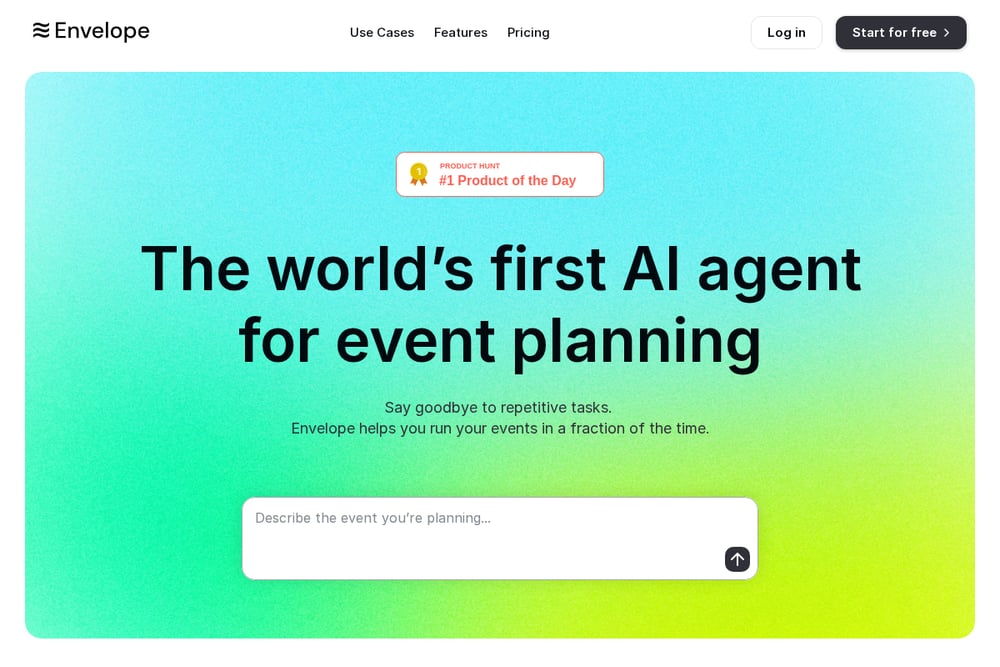 A screenshot of the Envelope website.
Envelope positions itself as an AI agent for event planning, and it aims wide. You type a prompt like a wedding reception for 120 guests with meal preferences and plus-ones, and it builds the RSVP forms, confirmation emails, and registration logic around it. The platform covers guests, RSVP and emails, registrations, and reporting in one place. That makes it a fit for planners juggling multiple event types rather than a single dinner. If your calendar includes conferences, retreats, and receptions, the breadth is the point. See the workflow examples on the Envelope site.
#2 HopefulFetes
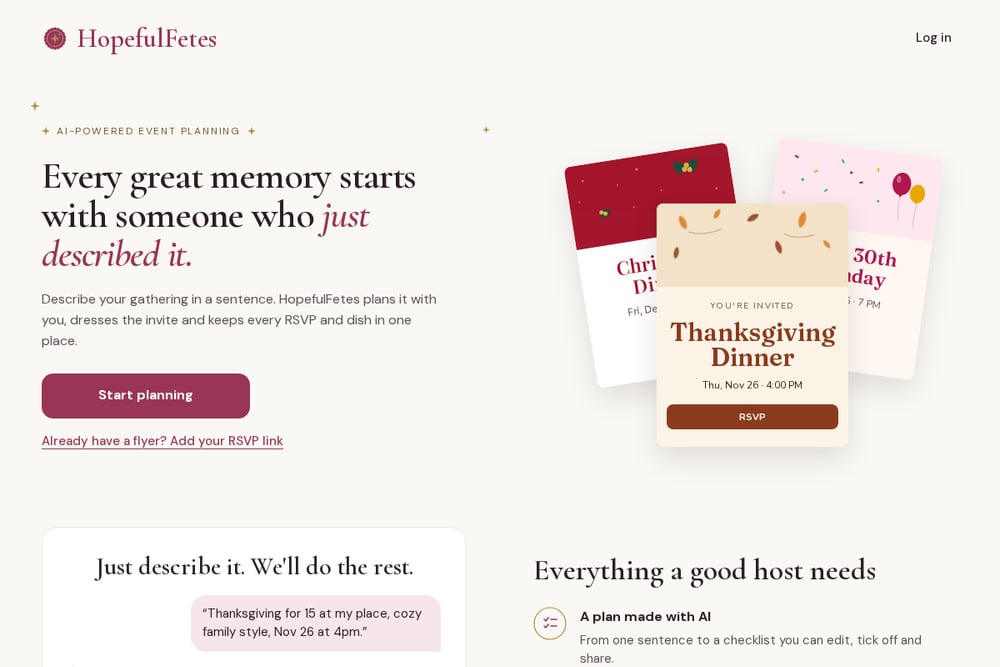 A screenshot of the HopefulFetes website.
HopefulFetes starts where most hosts actually are: with one sentence. Describe your gathering, and it returns a timed to-do list, a set of dishes guests can claim, and a single invite link dressed in a look picked for the occasion. Guests RSVP in a tap with no app and no account, which removes the most common reason people never respond. Helpers get their own task links so the work spreads beyond you. It is free to start, ad-free, and built for personal celebrations like Thanksgiving, birthdays, and bridal showers. The whole flow lives at HopefulFetes.
#3 eventpage.ai
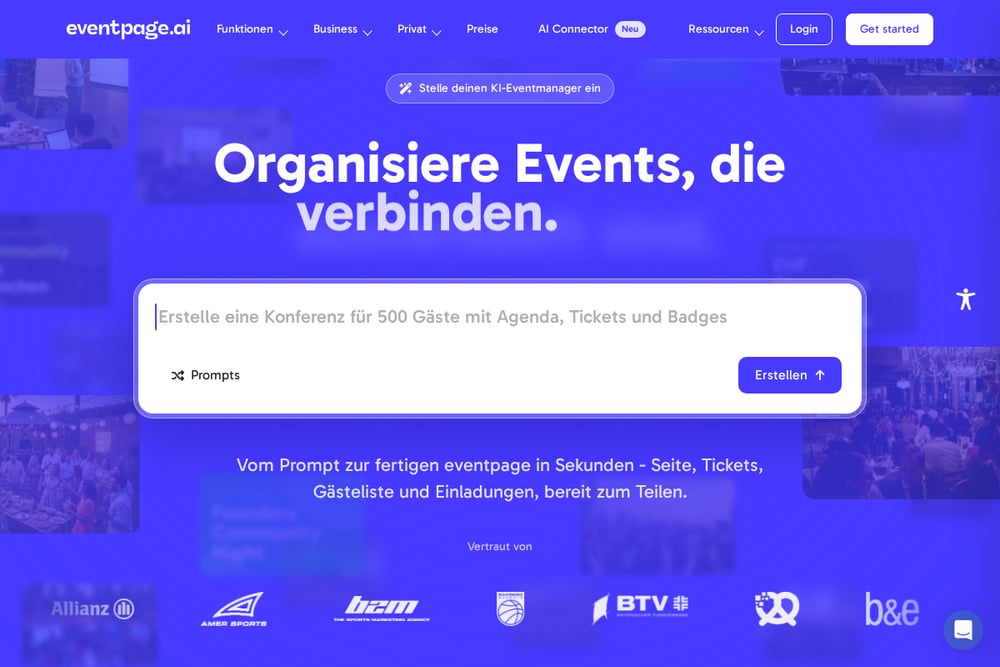 A screenshot of the eventpage.ai website.
eventpage.ai takes the prompt-to-event idea and adds commerce. You describe the event, and it generates a live page, tickets, guest list, and invitations ready to share. From there you get QR check-in, seating plans, badge printing, and an AI to-do list and briefing to keep the run of show straight. Smart invitations and automated notifications handle the communication layer. It suits organizers who need to sell tickets or manage entry, not just collect RSVPs. The feature set is laid out clearly on the eventpage.ai site.
#4 RSVPify
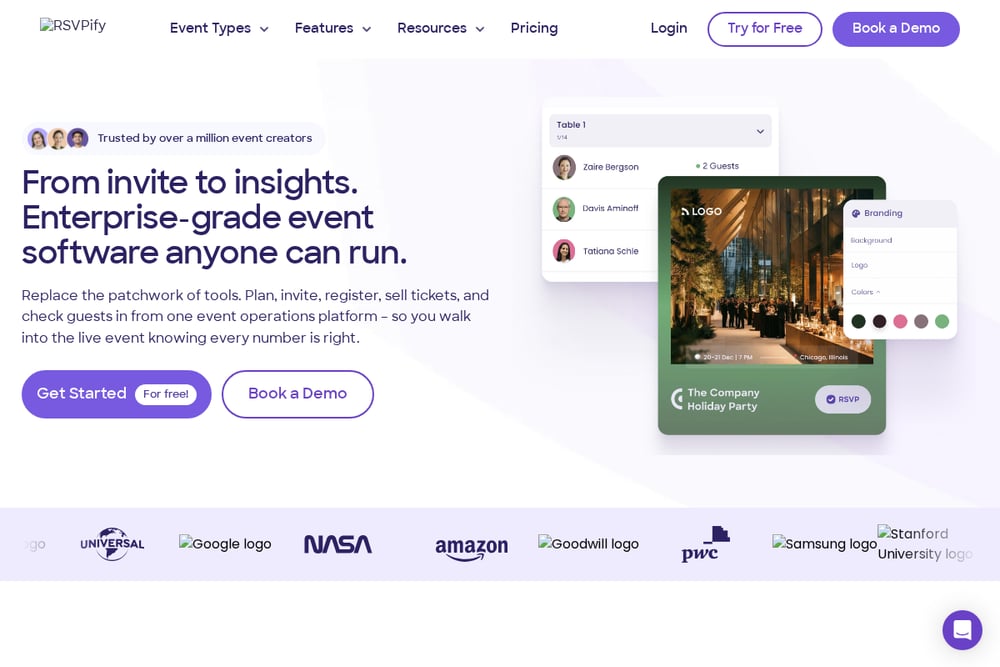 A screenshot of the RSVPify website.
RSVPify is the specialist in the room. Its AI layer sits on top of a mature RSVP engine, so you get structured guest lists, response tracking, and the kind of control that matters when headcount is the whole ballgame. If your event hinges on meal choices, plus-one rules, or seating, this is the depth you want. It is less about dressing the invite and more about knowing exactly who is coming. Worth a look if RSVP accuracy is your main worry.
#5 Eventbrite
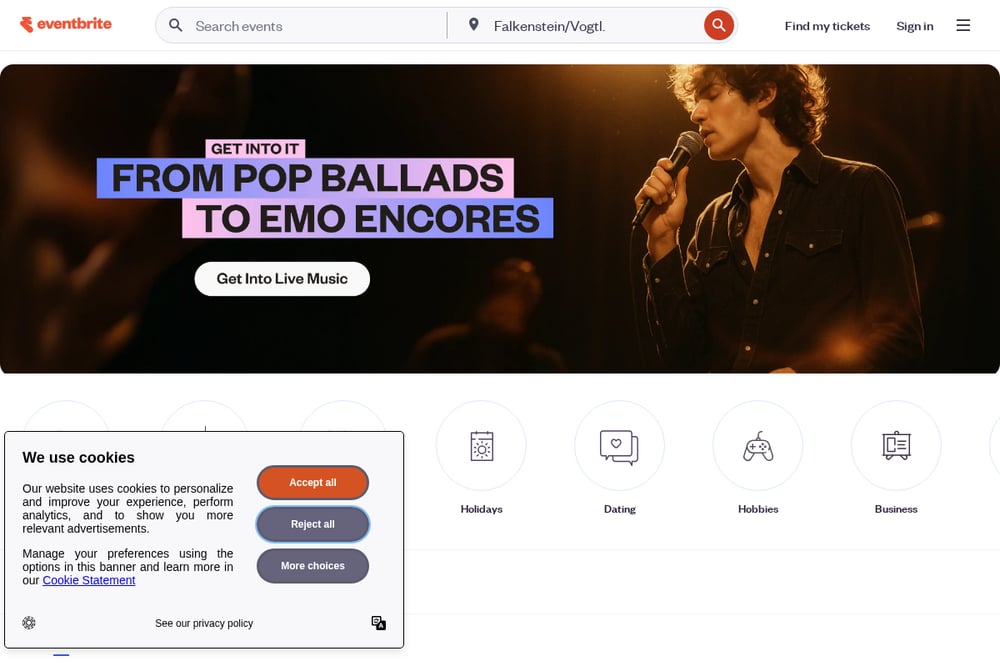 A screenshot of the Eventbrite website.
Eventbrite brings reach. Its free online RSVP tools let you create invitations, track responses, and manage a guest list without paying upfront. The real advantage is audience: the platform's consumer base gives public events a discovery channel that smaller tools cannot match. AI-powered email and social ad tools help you push the invite further. For a private dinner it is more machinery than you need. For anything open to the public, the distribution is hard to ignore. Details are on the Eventbrite RSVP page.
Pick by the Shape of Your Event
Start with one question: is this private or public? A private dinner, shower, or birthday needs a plan, an invite, and a way for guests to claim dishes. That points you toward a host-first tool. A public event needs discovery and ticketing, which points you toward a platform with an audience. Next, ask whether guests will tolerate friction. If your aunt will not download an app, prioritize tools with no-app RSVP. Then check pricing clarity before you commit, and confirm the tool handles the one thing you cannot afford to get wrong, whether that is headcount, check-in, or dish coordination. Match the tool to the event, not the other way around.
Where the AI Actually Saves You Time
The useful automation is not the flashy part. It is the first ten minutes. Describe your gathering in a sentence and let the tool draft the checklist, timed backward from your date. Edit it, then share it. Send one invite link and let guests RSVP and claim dishes without a follow-up thread. Give helpers their own task links so you are not the bottleneck. Use automated reminders for the people who have not responded. The pattern is the same across all five tools: let the machine build the skeleton, then spend your time on the parts that need a human, like the menu and the guest list.
The Short Version
You do not need the biggest platform. You need the one that matches your event. If you are hosting a personal celebration and want the plan, the invite, and the dish assignments in one place, HopefulFetes is built for exactly that. If you run varied or larger events, Envelope gives you the breadth. If you sell tickets, eventpage.ai covers the commerce. If RSVP precision is everything, RSVPify goes deep. And if you need an audience, Eventbrite brings one. Pick the shape that fits, and let the AI handle the first draft.