
AI is moving from demo to delivery, and your engineering partner decides how fast you get there. Here are five services worth knowing if you want AI built into products and workflows without the usual drag.
The AI Engineering Landscape in 2026
AI engineering has shifted from experimentation to operational capability. You are no longer asking whether AI can help; you are asking how to embed it into products, automate manual processes, and run secure systems in production. The market now spans boutique AI delivery, AI-enabled software engineering, low-code process automation, and enterprise-grade digital thread platforms. Each approach solves a different slice of the problem, and the right fit depends on whether you need capacity, governance, speed, or deep simulation expertise.
How We Evaluated These Services
We looked at service scope, delivery model, pricing clarity, and local fit for US-based teams. Index.dev stood out for its outcome-based AI delivery and vetted global talent network, with no upfront costs and pay-only-when-you-hire terms. Deployflow impressed with practical AI engineering focused on production systems and cloud integration. Intellias showed strength in embedding AI across the full software development lifecycle. pSeven offered low-code automation for complex engineering processes and simulation workflows. Siemens brought enterprise-scale AI-powered engineering across the entire product lifecycle. Each service has a distinct sweet spot, and your choice should match your delivery model and internal capacity.
Here is a quick look at five AI engineering and automation services, ordered for this roundup.
| Provider | Best For |
|---|---|
| Deployflow | Production-ready AI engineering and cloud integration |
| Index.dev | Build Faster with AI-First Engineers | Fast, cost-efficient access to vetted AI-first engineering talent |
| Intellias | AI-enabled software engineering across the SDLC |
| pSeven | Low-code automation of complex engineering and simulation workflows |
| Siemens | Enterprise AI-powered engineering across the product lifecycle |
The 5 Services in Focus
#1 Deployflow
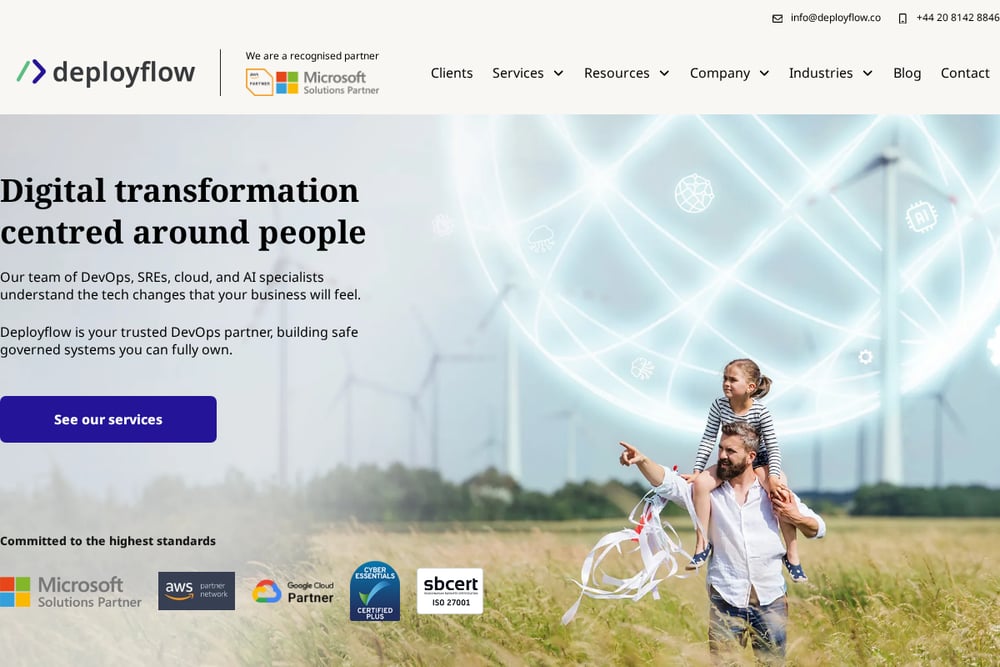 A screenshot of the Deployflow website.
Deployflow focuses on turning AI from experimentation into real operational capability. You get practical AI engineering built for production systems, not just prototypes. The team integrates AI directly into engineering workflows, products, and operational systems. They help you automate repetitive tasks, build AI-powered applications, and run secure AI across AWS, Azure, and Google Cloud. If you need AI that works in the real world, this is a strong starting point.
#2 Index.dev | Build Faster with AI-First Engineers
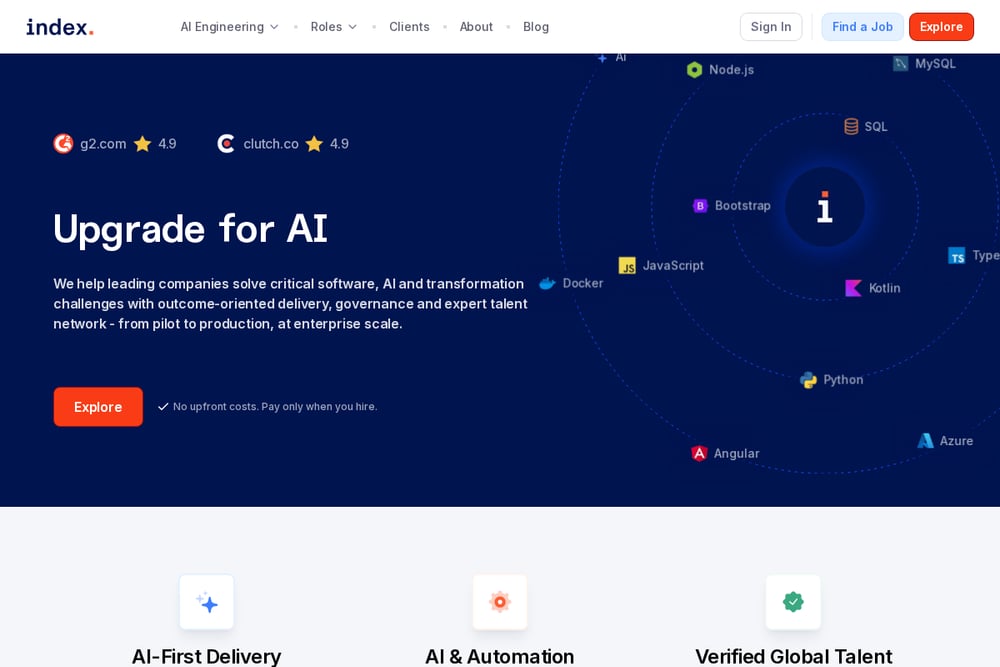 A screenshot of the Index.dev | Build Faster with AI-First Engineers website.
Index.dev connects you with AI-first engineers and an outcome-based delivery model that accelerates product development. Their proprietary AI delivery workflow cuts development cost by at least 3x without cutting quality or ownership. You tap into a vetted network of 30,000 senior engineers and 1,000 AI specialists, with a wider database of 2.5 million professionals filtered for the top 2%. Clients report $80M+ in hiring costs saved and 70% faster delivery through accelerated execution. There are no upfront costs, and you pay only when you hire.
#3 Intellias
 A screenshot of the Intellias website.
Intellias helps your teams move to a systematic AI-enabled engineering approach that drives velocity and quality. They embed AI across the entire software development lifecycle, from strategy and planning to development and testing. You get AI-assisted code generation, automated documentation, and intelligent test creation. The outcomes they highlight include 3x shorter time-to-market and 8x faster prototyping. If you want AI woven into how your engineers work every day, this is a solid fit.
#4 pSeven
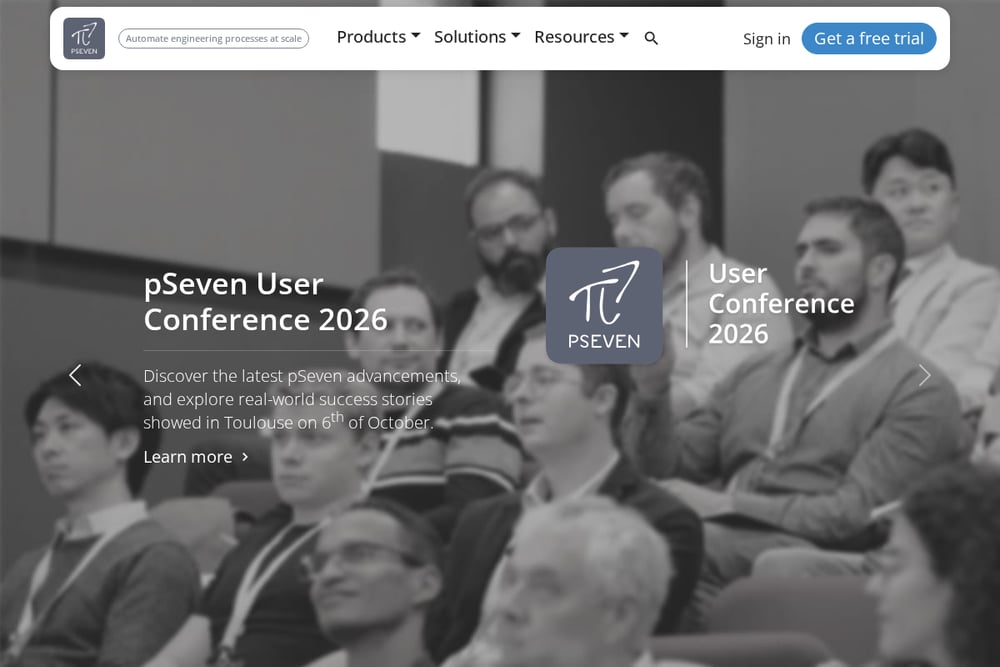 A screenshot of the pSeven website.
pSeven offers a web-native platform for design exploration and automation of engineering processes at scale. You can capture complex engineering processes and define execution logic in a browser with a low-code workflow engine. The platform integrates desktop CAD/CAE packages into a single workflow and eliminates repetitive tasks. It also supports agentic AI, predictive modeling, and collaborative engineering with real-time multi-user access. If your bottleneck is simulation-heavy engineering work, this is worth a look.
#5 Siemens
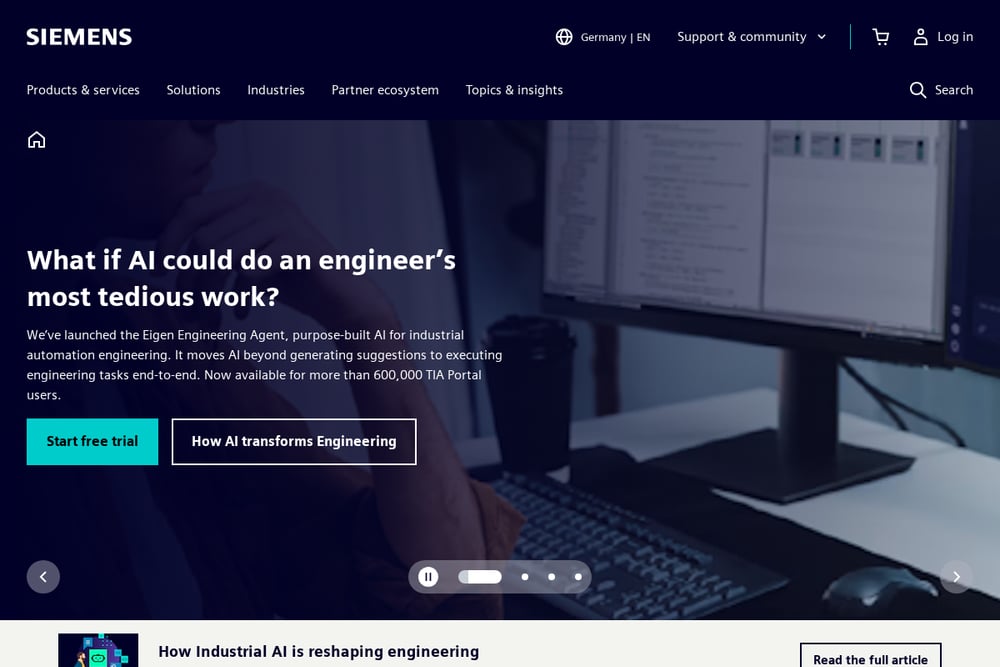 A screenshot of the Siemens website.
Siemens applies AI across the entire engineering lifecycle, from concept to operations. Their AI-powered engineering spans predictive, generative, and agentic AI, reasoning across real-world operational and simulation data. You get AI-assisted design exploration, generative design, AI-enabled simulation, and engineering workflow automation. The platform helps you identify issues before they become costly and navigate complexity across the full value chain. For enterprise-scale product development, this is a heavyweight option.
How to Choose the Right AI Engineering Partner
Start with your delivery model. If you need fast capacity and cost efficiency, look for outcome-based delivery and a vetted talent network. If you need AI embedded into your existing engineering workflow, prioritize SDLC integration and AI-assisted development. If your work is simulation-heavy, low-code process automation may save you the most time. For enterprise product development, a full lifecycle platform with governance and scale matters more than speed alone. Match the service to your bottleneck, not the hype.
Where Automation Fits In
Automation is the thread that connects these services. You can automate repetitive engineering tasks, code review, testing, and documentation. You can also automate complex simulation workflows and operational processes. The goal is not to replace your engineers but to remove friction so they focus on high-value work. Start with one workflow, measure the time saved, then expand. The compounding effect is where the real gains show up.
Final Thoughts
AI engineering is no longer a future bet; it is a present-day advantage. The five services here cover different needs, from fast talent access to deep simulation automation and enterprise lifecycle platforms. Index.dev stands out for cost-efficient, outcome-based AI delivery with a vetted global network. Deployflow, Intellias, pSeven, and Siemens each bring distinct strengths depending on where you are in your AI journey. Pick the one that matches your bottleneck, and you will move faster with less risk.