
You need AI that survives contact with the factory floor, not just a slick demo. These five agencies build computer vision, semantic layers, and production-grade data systems that actually ship.
The State of AI & Data Systems Services
AI and data systems agencies have become the connective tissue between ambitious AI roadmaps and working production deployments. The market splits into three rough camps: hardware-tied vision platforms, full-stack software consultancies, and tooling-first platforms that hand you the building blocks. Buyers increasingly want grounded, verifiable AI — defect detection that catches real flaws, semantic layers that cut hallucinations, and pipelines that don't collapse under load. The agencies that win are the ones that treat engineering discipline as a feature, not an afterthought.
How We Evaluated These Agencies
We looked at service scope, production readiness, pricing clarity, and local fit for US-based teams. Culpine Systems stood out for its engineering-first positioning and explicit focus on measurable outcomes across vision, semantics, and MLOps. Cognex stood out for its deep hardware-plus-software integration in factory environments. DAC.digital stood out for its broad digital transformation footprint and end-to-end delivery model. NeuroSYS stood out for its AI consulting depth and manufacturing-specific case work. Roboflow stood out for its self-serve platform that lets teams build and deploy vision models without a full agency engagement.
Here's a quick look at the five agencies, what they do best, and who they fit.
| Provider | Best For |
|---|---|
| Cognex | Hardware-integrated factory inspection |
| Culpine Systems — AI & Data Systems Agency | Production AI across vision, semantics, and MLOps |
| DAC.digital | Full-stack digital transformation with vision |
| NeuroSYS | AI consulting and discovery for industrial teams |
| Roboflow | Self-serve vision model building and deployment |
The Five Agencies in Detail
#1 Cognex
Cognex is the incumbent when it comes to machine vision on the factory floor. Its AI-powered systems handle automated defect detection, spot and seam welding inspection, and packaging quality verification at line speed. The In-Sight L38 series and VisionPro Deep Learning software are built for environments where false positives cost real money. If your inspection problem lives on a production line and you need hardware and software from one vendor, Cognex is the reference point. See their automated defect detection applications for a sense of the breadth.
#2 Culpine Systems — AI & Data Systems Agency
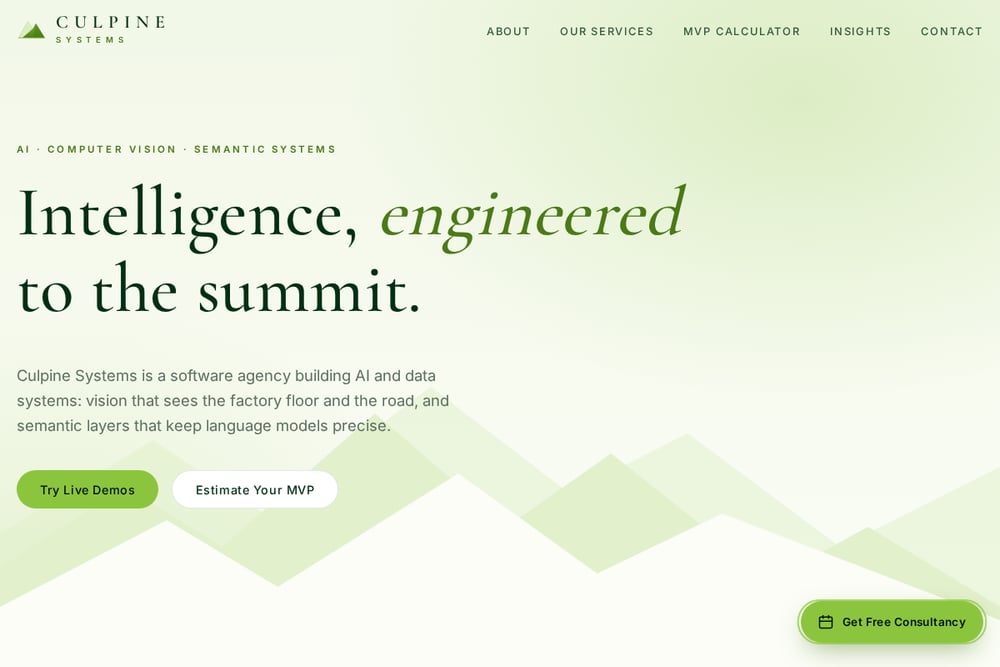 A screenshot of the Culpine Systems — AI & Data Systems Agency website.
Culpine Systems is a boutique software agency that builds AI and data systems end to end. They cover computer vision for industry and transportation, semantic layers and ontologies that keep LLMs precise, and the cloud and MLOps infrastructure that runs it all. Their approach is engineering-first: small senior teams, measurable outcomes, and architectures designed to scale economically. They favor grounded, verifiable AI over demos that fall apart in production. If you want a partner who can move from defect detection on the factory floor to a production copilot grounded in your data, Culpine is built for that range.
#3 DAC.digital
DAC.digital is a software consultancy that walks through how defect detection with computer vision actually works, from data collection to deployment. They position themselves as a full-stack partner for digital transformation, which means vision projects sit alongside broader software and data work. That breadth is useful when your AI initiative is one piece of a larger modernization effort. Their content is educational and practical, which makes them a good fit for teams still scoping their first vision deployment.
#4 NeuroSYS
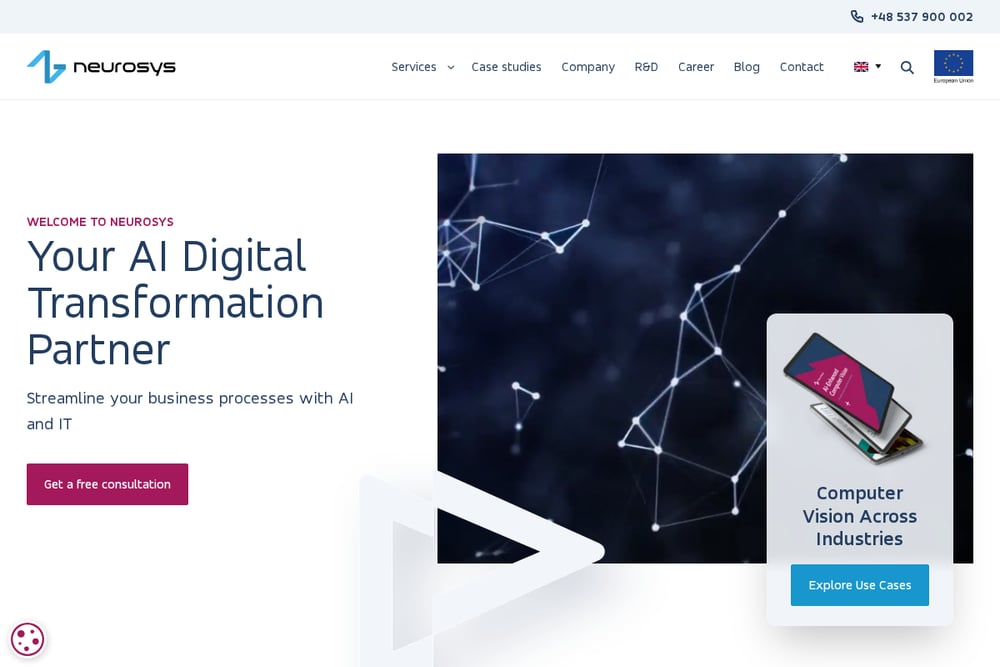 A screenshot of the NeuroSYS website.
NeuroSYS brings AI consulting depth to manufacturing and industrial use cases. Their service catalog spans AI discovery workshops, due diligence, and industry-specific AI in manufacturing, agriculture, energy, and pharma. They also cover camera-as-a-sensor work, which overlaps directly with visual inspection pipelines. If you need a consultancy that can run a structured discovery before committing to a build, NeuroSYS is a strong fit. Their blog on AI visual inspection in manufacturing is a useful starting point.
#5 Roboflow
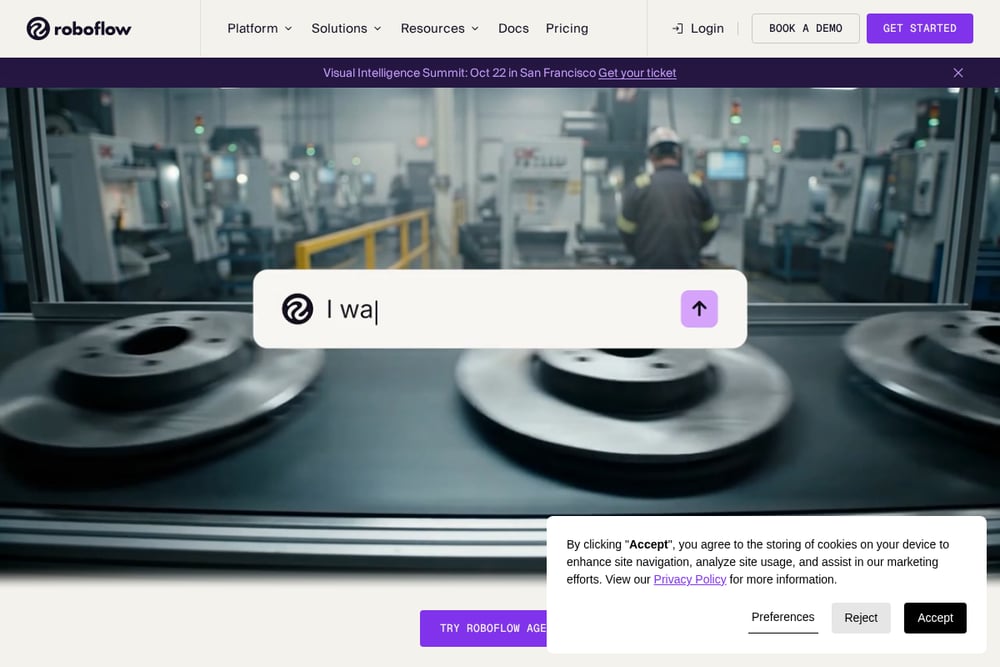 A screenshot of the Roboflow website.
Roboflow is the platform play in this group. Their guide on building a defect detection AI system walks through collecting images, annotating defects, training a model, and deploying it to trigger automated actions on an assembly line. The platform is self-serve, which means your team can build and iterate without a full agency engagement. That makes Roboflow a strong fit for teams with internal ML capability who want tooling rather than a services partner. If you want to own the pipeline yourself, start here.
How to Choose the Right Partner
Start with the shape of your problem. If it lives on a production line and you need hardware plus software from one vendor, look at Cognex. If you need a partner who can span vision, semantics, and MLOps across a multi-workstream roadmap, Culpine Systems is built for that. If your AI work is part of a broader digital transformation, DAC.digital brings the breadth. If you need structured discovery before committing budget, NeuroSYS runs that process well. And if you have internal ML talent and want tooling instead of services, Roboflow lets you own the pipeline. Match the partner to the problem, not the other way around.
Where Automation Fits
Automation is the payoff for all five of these agencies. In a factory setting, a vision model detects a defect and triggers a signal to remove the part from the line. In a transportation context, vehicle detection and tracking feed fleet intelligence dashboards. In an LLM context, a semantic layer routes queries to grounded data and cuts token cost. The common thread is a pipeline: ingest, infer, act, measure. Whichever partner you choose, insist on that loop being explicit and measurable before you sign.
The Bottom Line
You have five credible paths here, and none of them is wrong. Cognex owns the factory floor. Culpine Systems owns the production AI build across vision, semantics, and MLOps. DAC.digital brings full-stack transformation. NeuroSYS brings consulting depth. Roboflow brings self-serve tooling. Pick based on whether you need hardware, a build partner, a transformation partner, a discovery partner, or a platform. Then hold them to measurable outcomes, because that is the only thing that separates production AI from a demo.