Your archived emails, support tickets, and internal documents are sitting in cold storage while AI labs pay real money for exactly that kind of material. Here are five services helping companies turn those records into a licensed revenue line.
The quiet market for your old business records
AI models learn from realistic examples of how businesses actually communicate and work. That has created a buyer market for de-identified archives: email threads, chat logs, tickets, and knowledge bases. The catch is that licensing requires clean ownership, GDPR-compliant handling, and buyers who will actually pay. Brokers, marketplaces, and advisory firms have stepped in to bridge that gap, each with a different model and a different appetite for risk.
How these services were compared
Each service was assessed on four factors: scope of service (assessment only, full brokerage, or technical de-identification), pricing clarity (whether indicative ranges or fee structures are published), regional fit for European and Australian companies navigating GDPR and local privacy law, and transparency around ownership and permissions. The detail on each provider sits in its description below.
Here is a quick look at the five services, ordered for this roundup, before the deeper breakdown.
| Provider | Best For |
|---|---|
| OpenTrain AI | Companies that want buyer choice and full control over what gets shared |
| AI Data Licensing & Data Monetisation | Sapphyre | European and Australian firms wanting a free, fast data-value assessment |
| Troveo | Rights holders who want marketplace reach and deal-structure education |
| FE International | Technology companies that want a confidential, advisor-run process |
| Synthesized | Teams that need provable de-identification before licensing |
The five services in detail
#1 OpenTrain AI
 A screenshot of the OpenTrain AI website.
OpenTrain AI runs a buyer-matching model: you fill in roughly nine questions, no files uploaded, and the platform emails you a shortlist of AI data buyers within 24 hours. It publishes a broad range of $10K to over $3M for records like email, chat, and documents, and it explicitly welcomes companies with more than 10 staff as well as closed businesses. The key selling point is control. Your records never pass through OpenTrain, and you sign only a license that states what is shared, how it is used, and what you are paid. It also advises keeping personal files, payment data, and patient records out of any license, which is sensible guidance for European firms. The trade-off is that pricing is set buyer by buyer, so your first offer is a starting point, not a valuation.
#2 AI Data Licensing & Data Monetisation | Sapphyre
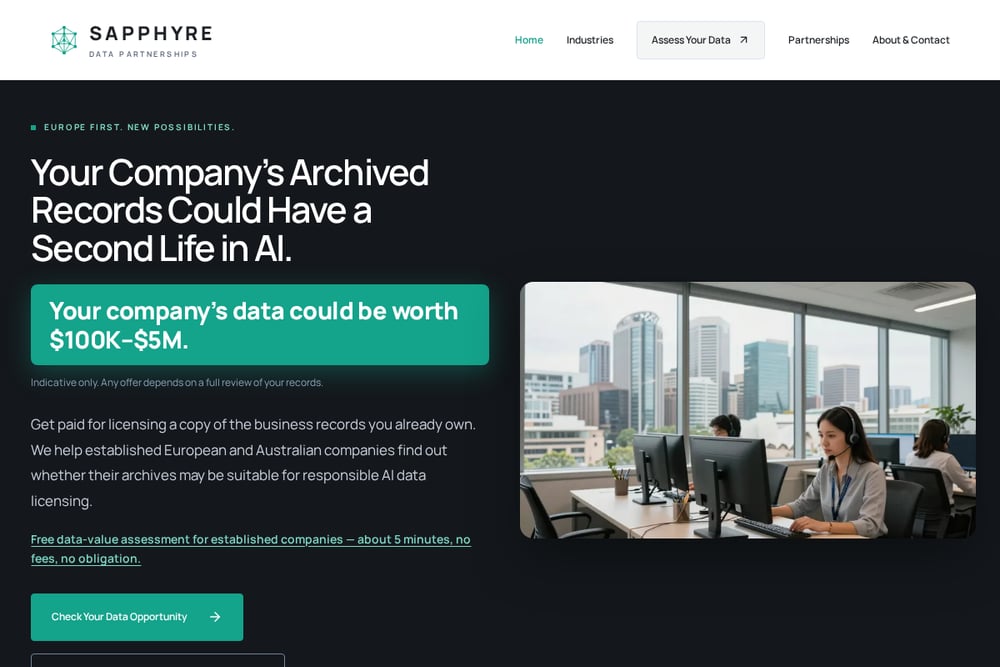 A screenshot of the AI Data Licensing & Data Monetisation | Sapphyre website.
Sapphyre is built specifically for established European and Australian companies, which makes it the most regionally aligned option in this roundup. You answer four quick questions about industry, desk headcount, years of records, and location, and the site returns an indicative range of $100K to $5M plus a fit strength rating. The free assessment takes about five minutes with no fees and no obligation, and the company is upfront that any figure is indicative and depends on a full review of ownership and permissions. It focuses on records you already own, such as archived business email, support tickets and chat logs, and internal documents, framed around responsible AI data licensing and GDPR. If you are a European or Australian firm that wants a fast, low-commitment read on whether your archive is worth pursuing, this is the natural starting point.
#3 Troveo
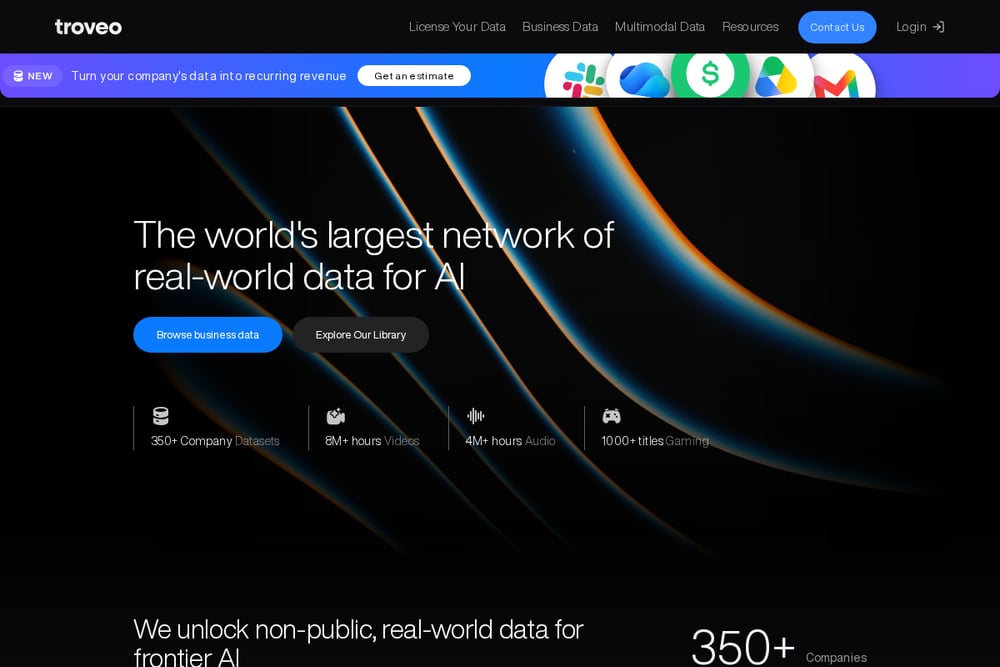 A screenshot of the Troveo website.
Troveo operates the marketplace version of data licensing and has the track record to back it: more than $20 million paid to over 7,000 rights holders across video, audio, gaming, robotics, and business data. Its published guide breaks a training license into the five questions that matter, covering use, scope, term and exclusivity, and who carries the risk if something in the data was not yours to give. That framing is genuinely useful if you are negotiating your first deal and want to know what a real grant looks like versus a stock or editorial license that does not cover AI training. The marketplace model means less hand-holding than an advisory firm, but broader buyer reach and a clear picture of how deals get priced.
#4 FE International
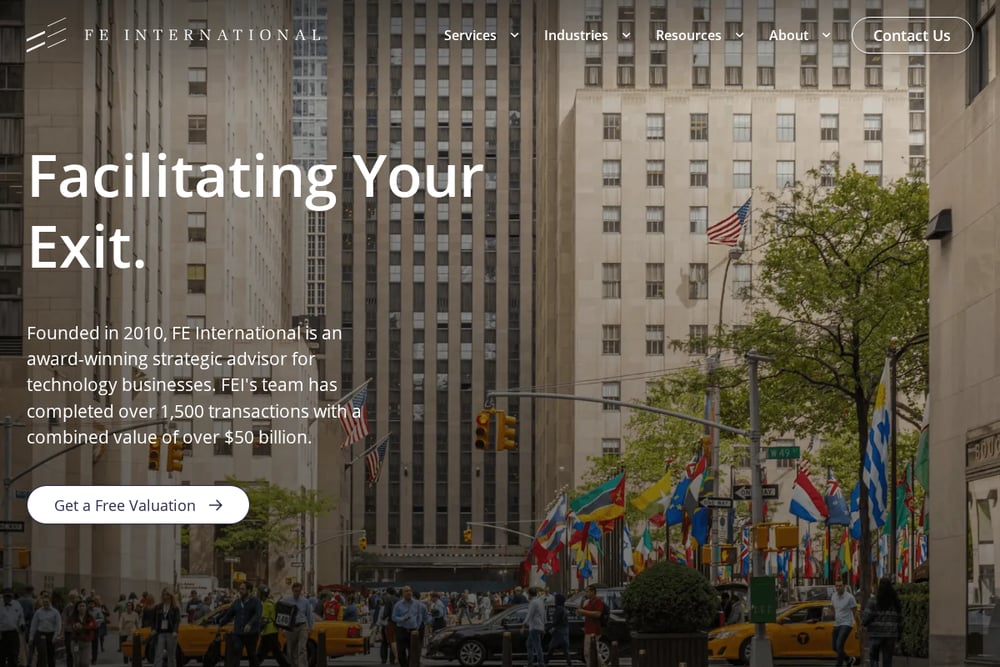 A screenshot of the FE International website.
FE International brings M&A discipline to data licensing, running a confidential, competitive process with qualified AI buyers rather than a simple listing. It audits what you own and what you are permitted to license, estimates value, packages the data, and takes it to market without naming your company until you choose to engage. The firm has completed more than 1,500 transactions, and its pitch is that a well-structured license should pay well now without damaging the value of the business when you eventually sell. That exit-protection angle is the differentiator, and it matters if your data is core to your company's valuation. Expect a more involved, advisory-led engagement rather than a self-serve form.
#5 Synthesized
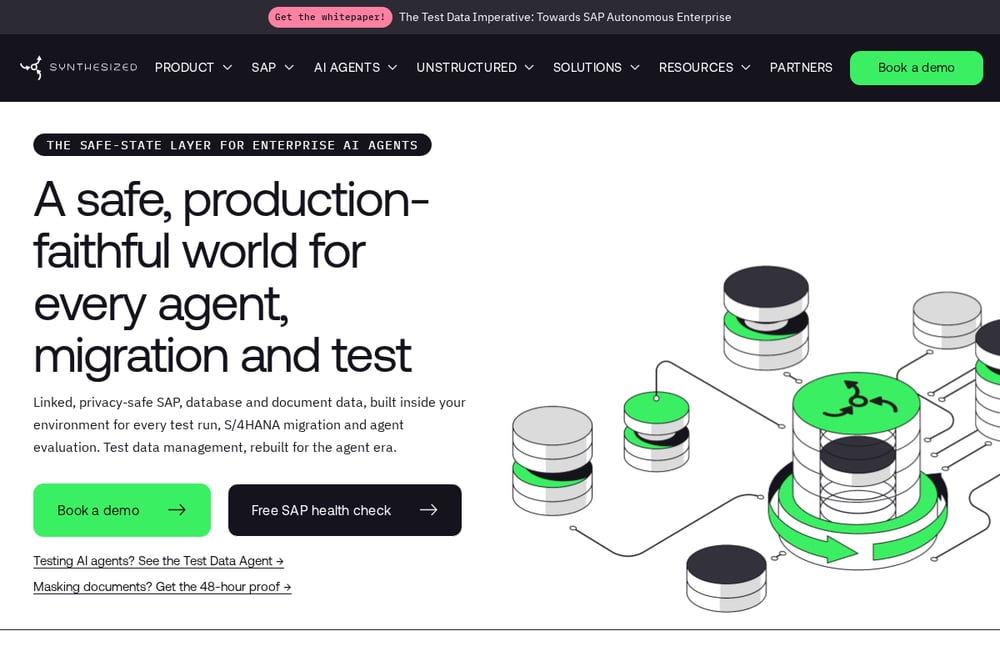 A screenshot of the Synthesized website.
Synthesized comes at the problem from the technical side: de-identifying company data so it can be licensed or sold without exposing personal information. Its platform covers unstructured formats including documents, PDFs, emails, chats, tickets, call transcripts, and clinical notes, with compliance framing around GDPR, UK GDPR, HIPAA, PCI DSS, and DORA. It also offers a 48-hour proof on 50 of your own documents at a fixed fee, credited if you proceed, which is a concrete way to test whether redaction holds up before you commit. This is the option to consider when your blocker is not finding a buyer but proving your archive can be safely de-identified. It complements rather than replaces a broker.
How to pick the right one for your archive
Start with your actual blocker. If you do not yet know whether your records are worth anything, take a free assessment first, which is where Sapphyre fits for European and Australian firms. If you already have buyer interest and want competitive tension, an advisor-led process like FE International makes more sense. If your concern is privacy exposure, get de-identification proven before you talk to anyone, and Synthesized is built for that. If you want maximum buyer reach and are comfortable managing the relationship yourself, a marketplace like Troveo or a matcher like OpenTrain AI gives you options. Whichever route you take, confirm in writing what is being licensed, for how long, and who carries the risk.
Where automation fits into the workflow
The licensing process itself is mostly human, but several steps can be systematized. Use a short qualification form to score your archive on industry, headcount, record age, and jurisdiction before you invest time in a full review. Automate PII detection and redaction testing on a sample of documents so you know your de-identification holds before buyers see anything. Keep a single inventory of record types, ownership status, and permission gaps so every buyer conversation starts from the same facts. Finally, template your license terms so use, scope, term, and exclusivity are answered consistently across negotiations.
The bottom line
Your archive is either an asset or a liability, and the difference is paperwork and preparation. European and Australian companies have a genuine advantage here because GDPR-compliant, rights-cleared data is exactly what buyers say they want. Start with a free assessment to size the opportunity, prove your de-identification works, then negotiate with a clear inventory in hand. The five services above cover the full path from first question to signed license, so pick the one that matches where you are stuck.