Your team does not fail the easy calls. It fails the ones where a customer is angry, repeating themselves, and running out of patience. These five platforms let you rehearse those moments before they cost you a customer.
The state of AI conversation training
Customer service training has moved from scripts and shadowing to live simulation. Generative AI now plays the customer, reacts to what your agent actually says, and scores the outcome. That means new hires can practice escalations, refund disputes, and repeat hand-offs without exposing real customers to the learning curve. The market splits into enterprise platforms built for large contact centers and leaner tools aimed at owners and small teams who need results without a six-month rollout.
How we looked at these platforms
We compared each platform on scenario realism, how feedback is delivered after a call, setup effort for a non-technical owner, team and leaderboard features, pricing transparency, and fit for small versus enterprise operations. The detail on each one lives in the write-ups below.
Here is the short version before the deep dive. Each platform below earns its place for a different reason, so match the tool to your team size and how much control you want over scenario building.
| Provider | Best For |
|---|---|
| Call Simulator | Enterprise L&D teams scaling practice across departments |
| Difficult Customer Conversation Training | Happy Customer | Owners and small teams who want to start practicing today |
| Attensi | Contact centers chasing faster time to proficiency |
| ReflexAI | Contact centers that want training and QA in one system |
| RDI Corp AI Simulator | Teams that want screening and training from one vendor |
The five platforms in detail
#1 Call Simulator
 A screenshot of the Call Simulator website.
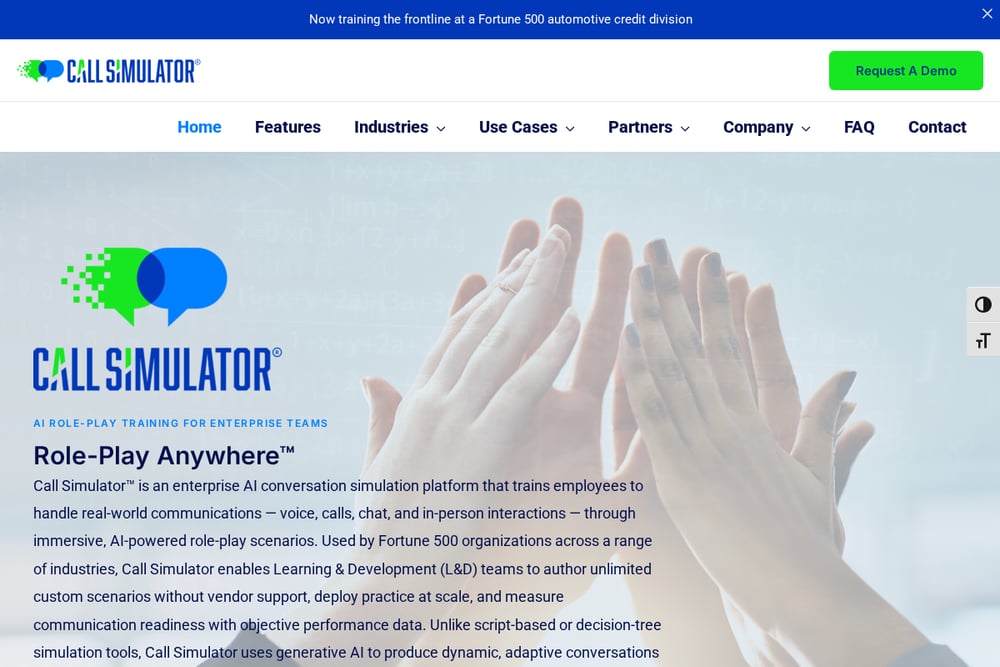
Call Simulator is the enterprise-grade option, built for learning and development teams that want to author unlimited custom scenarios without vendor help. It uses generative AI rather than decision trees, so conversations stay unpredictable the way real calls are. You can train voice, chat, and in-person interactions from one platform, and it is already used by Fortune 500 organizations across banking, healthcare, insurance, and BPO. If you need to deploy practice at scale and measure readiness with objective data, this is the most complete package on the list. The trade-off is that it is aimed at larger operations rather than a five-person front desk.
#2 Difficult Customer Conversation Training | Happy Customer
 A screenshot of the Difficult Customer Conversation Training | Happy Customer website.
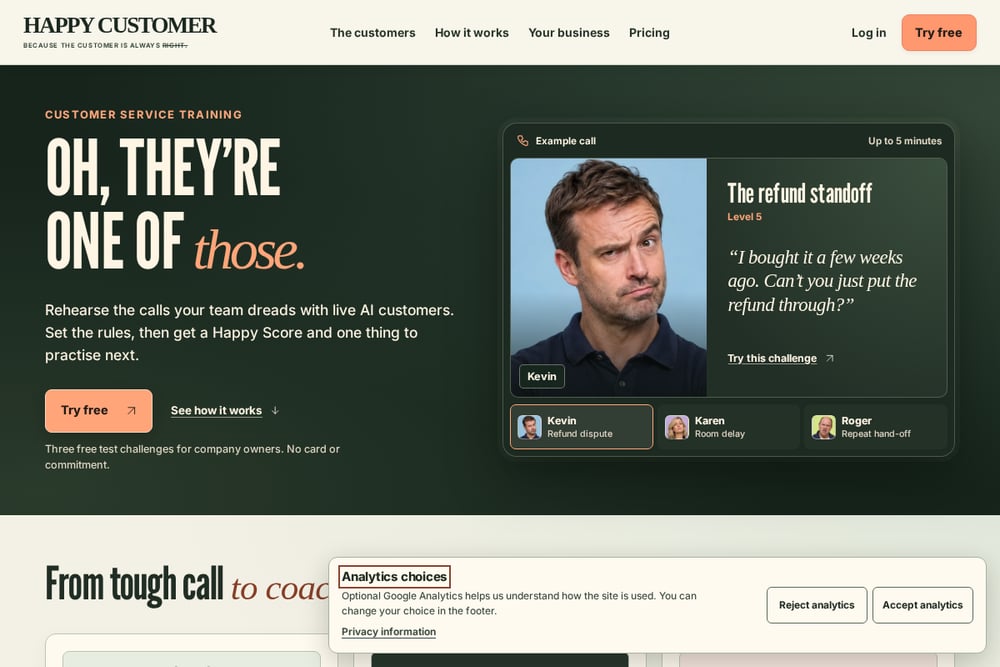
Happy Customer is built for the calls your team actually dreads. You pick a ready-made challenge like the refund standoff or the repeat hand-off, set your workplace rules, then talk naturally while an AI customer pushes back. After the call you get a Happy Score out of 100 and one clear thing to practice next, which keeps coaching focused instead of overwhelming. The company leaderboard turns practice into a friendly competition. Three free test challenges for company owners mean you can try it with no card or commitment before rolling it out.
#3 Attensi
 A screenshot of the Attensi website.
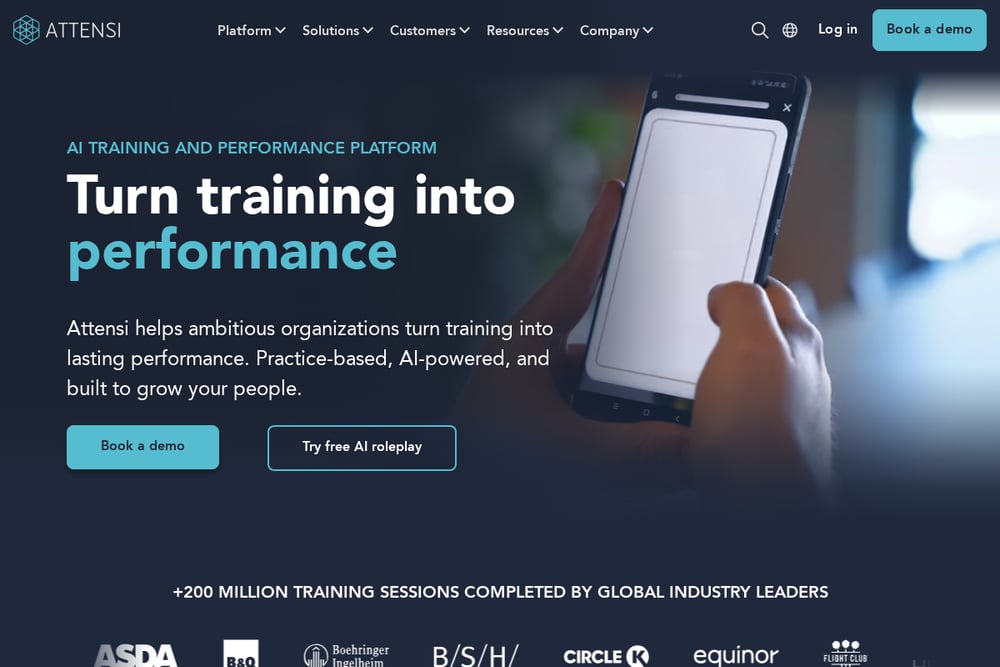
Attensi brings a gamified, AI-native approach to call center training, with realistic simulations built around your products and processes. Its published results are the headline: roughly three times ROI from reduced training time and staff churn, around 90 percent of the knowledge gap closed, and 25 percent less training time for new joiners. Users average more than 26 playthroughs each, which tells you the format keeps people coming back. It suits organizations that want measurable speed-to-proficiency gains and are willing to invest in a structured rollout.
#4 ReflexAI
 A screenshot of the ReflexAI website.
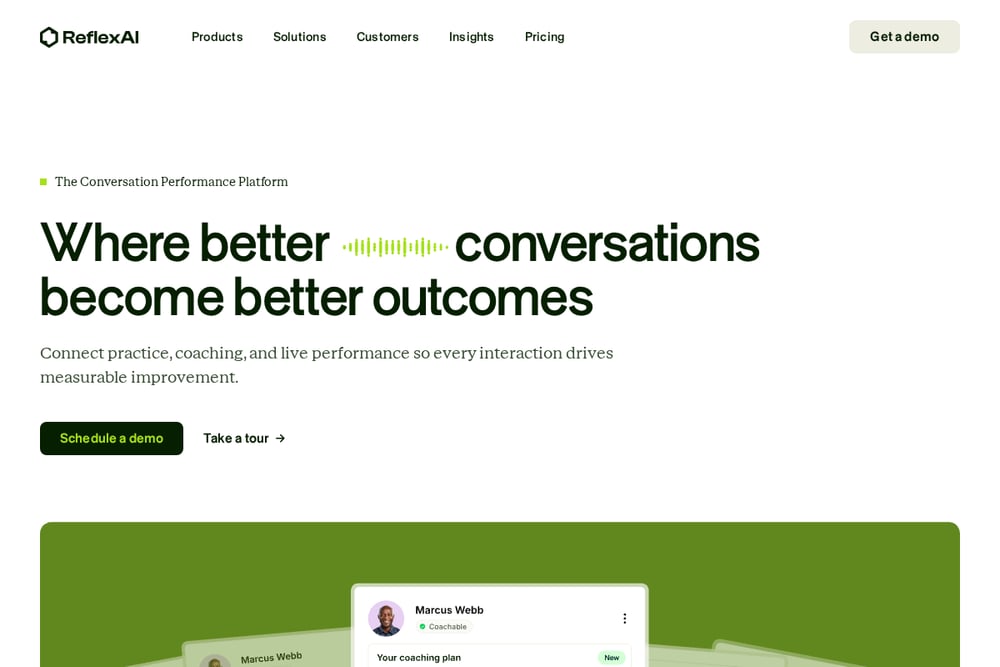
ReflexAI was built by people who ran contact centers with more than 2,000 agents, and it shows in the product. Alongside AI simulations, it offers automated QA that gives visibility into 100 percent of conversations instead of the usual small sample. That combination of training and quality assurance in one place is genuinely useful for teams tired of subjective manual reviews. It reports a 93 percent communication skills improvement and 4x-plus ROI among contact center customers. It is a strong fit for high-stakes conversations where empathy and consistency both matter.
#5 RDI Corp AI Simulator
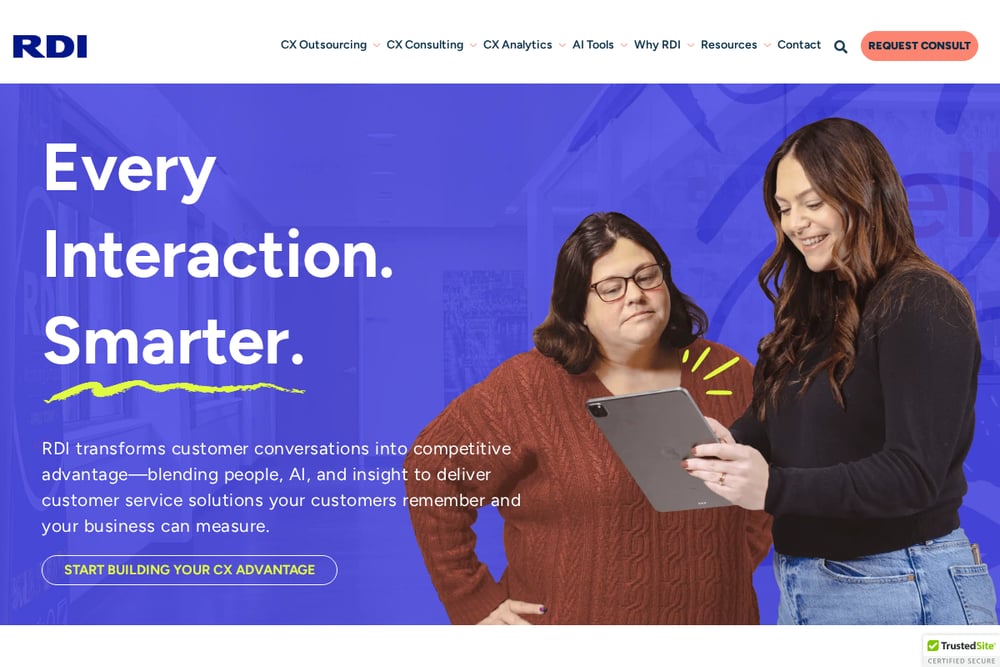 A screenshot of the RDI Corp AI Simulator website.
RDI's AI Simulator focuses on real-world readiness without real-world risk, using speech-enabled scenarios with dynamic branching logic. Scenarios evolve based on what the agent says, and built-in scoring tracks accuracy, tone, compliance, and resolution. A custom scenario builder lets you model your most common or complex call types, including escalations, and agents get instant coaching during the interaction. It also supports applicant screening through voice interactions, which is a neat extra if you want to test soft skills before making an offer.
How to pick the right one
Start with team size. If you are an owner or a small team, you want something you can use this afternoon, which points you toward Happy Customer's ready-made challenges and free starts. If you are running a contact center with dozens or hundreds of agents, weigh Call Simulator, Attensi, ReflexAI, and RDI on rollout effort and reporting depth. Then ask what you need after the call: a single coaching cue, a leaderboard, or full QA visibility across every conversation. Finally, check pricing clarity before you commit, and use free trials where they exist so your team can feel the realism for themselves.
A simple practice workflow you can run weekly
Pick one dreaded scenario per week, such as refund disputes or repeat hand-offs. Have each agent run the simulation twice and note their score. Review the scorecard together in a fifteen-minute huddle and agree on one behavior to change. Post scores to the leaderboard to keep momentum, then re-run the same scenario the following week to confirm the improvement. Rotate scenarios monthly so nobody memorizes a single call.
The bottom line
Every platform here solves the same core problem: your team learns difficult conversations on real customers unless you give them somewhere safe to fail first. Call Simulator leads for enterprise scale, Happy Customer is the fastest path for owners and small teams, and Attensi, ReflexAI, and RDI each bring something distinct for larger operations. Pick based on your size and the feedback you need, then make practice a weekly habit rather than a one-time event.