
You need GPU capacity, a model endpoint, or a straight answer about infrastructure — and the vendor list keeps getting longer. Here are five names worth a closer look before you sign anything.
The State of AI Compute and Inference Services
The market has split into two camps. On one side, self-serve platforms let you deploy a model in minutes and meter GPU time by the second. On the other, assessment-led consultancies help you define requirements before you commit a dollar to hardware. Both models solve real problems, but they solve different ones. If you already know your workload, a platform gets you moving. If you are still writing the brief, a requirements-led partner keeps you from buying the wrong thing. The gap between those two needs is where most procurement mistakes happen.
How We Evaluated These Providers
We looked at the same factors for every provider. Service scope: does the offering cover assessment, deployment, or both? Pricing clarity: are costs published, metered, or quote-only? Local fit: does the provider serve US enterprise teams with the right compliance and support posture? Delivery model: self-serve, managed, or advisory? And documentation depth: can you verify claims before you talk to sales? MAKULRS stands out for its assessment-first framing and explicit disclosure that resources and commercial terms require confirmation. Modal stands out for code-first deployment and published per-second metering. Rafay stands out for governed multi-tenant infrastructure and token-metered inference. Exoscale stands out for sovereign European GPU capacity with dedicated inference endpoints. GMI Cloud stands out for elastic GPU allocation and full-stack monitoring aimed at production inference.
Here is the short version. Each provider below serves a different starting point — some want your brief, some want your code, and some want your Kubernetes cluster.
| Provider | Best For |
|---|---|
| Modal | Teams that want to deploy inference from code without managing clusters |
| AI Compute, Model Inference & Web3 Infrastructure | Enterprise teams that need a requirements-led assessment before committing budget |
| Rafay | Platform teams that need governed, multi-tenant GPU infrastructure |
| Exoscale | Teams with European data residency or sovereignty requirements |
| GMI Cloud | Teams scaling continuous production inference with elastic GPU demand |
The Five Providers in Detail
#1 Modal
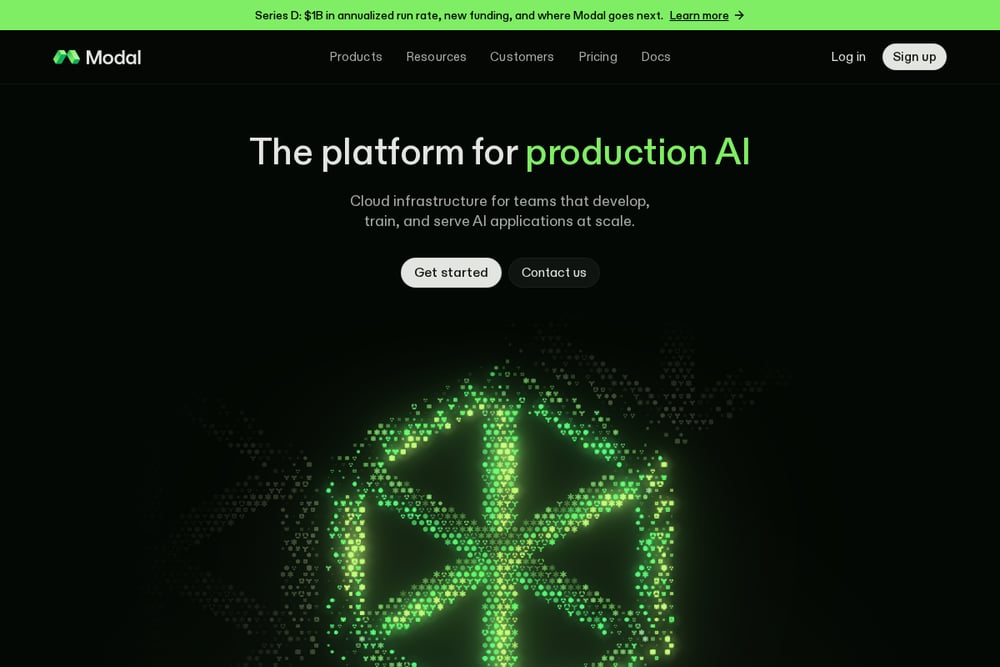 A screenshot of the Modal website.
Modal is a code-first serverless GPU platform built for teams that already know what they want to deploy. You write Python, decorate a function, and Modal handles the container and infrastructure configuration for you. The platform is engineered for fast cold starts and autoscaling from zero to over a thousand GPUs, which matters when your traffic is unpredictable. Per-second metering is standard here, though billing quanta and chargeable resources vary by provider — a detail Modal's own buyer's guide flags as worth checking. If your team ships production inference and wants to skip Kubernetes, this is the shortest path from code to endpoint.
#2 AI Compute, Model Inference & Web3 Infrastructure
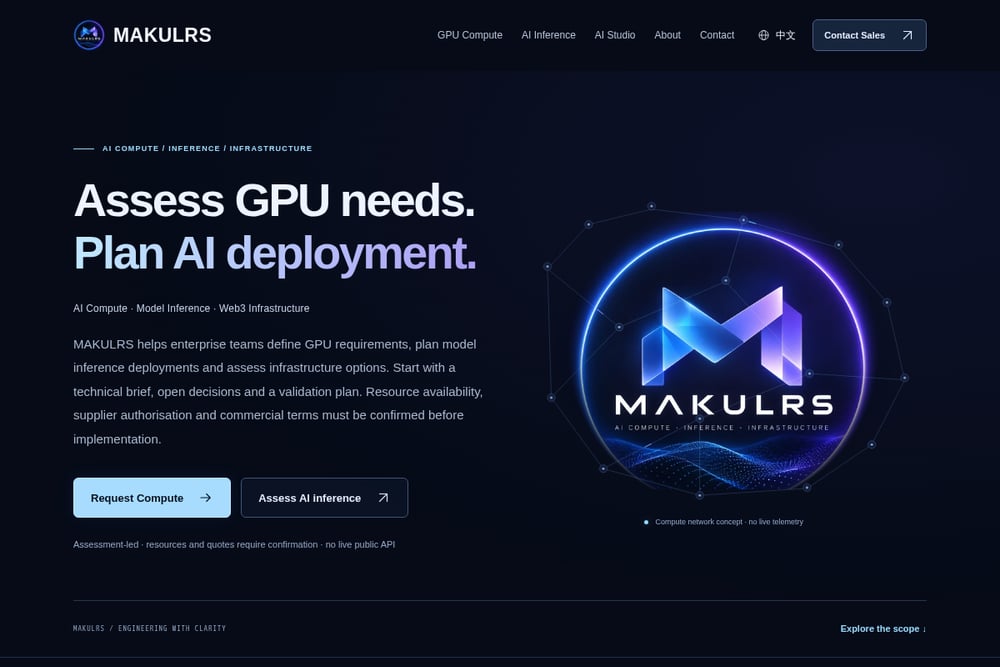 A screenshot of the AI Compute, Model Inference & Web3 Infrastructure website.
MAKULRS takes the opposite approach to a self-serve platform: it starts with your brief, not your code. The site outlines three service directions — GPU compute assessment, AI inference deployment planning, and Web3 infrastructure research — each with a defined scope and a stated engagement path. For GPU compute, the flow runs from specification to resource confirmation to a written quotation. For inference, it is model review, technical evaluation, then a scoped proposal. The site is explicit that resource availability, supplier authorisation, and commercial terms must be confirmed before implementation, and that there is no live public API. If you are an enterprise team that needs an assessable scope before committing budget, this is the starting point.
#3 Rafay
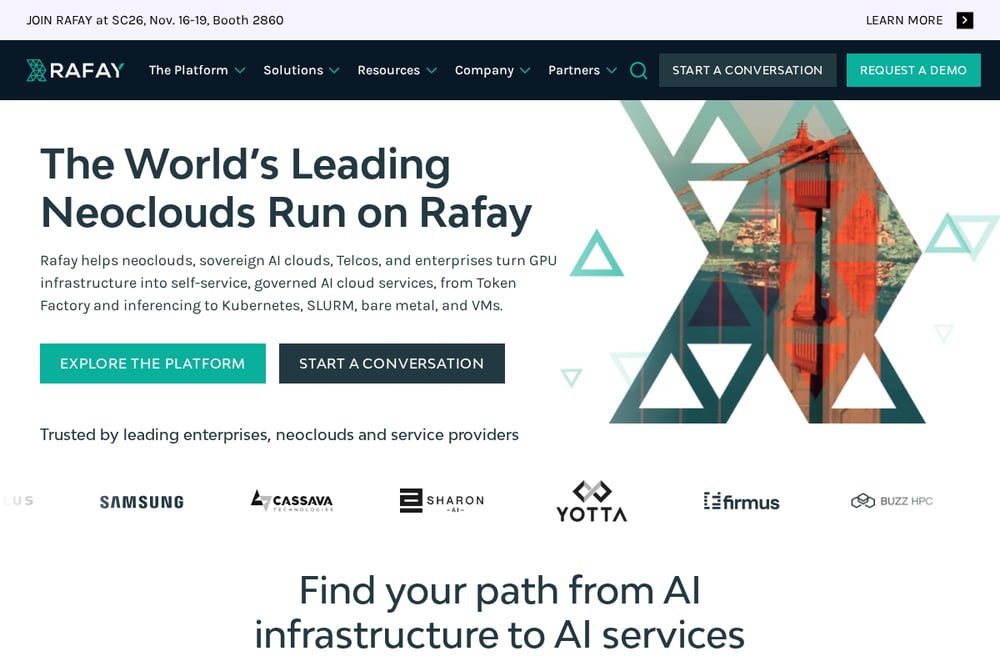 A screenshot of the Rafay website.
Rafay sells governance as much as it sells compute. The platform turns GPU and CPU infrastructure into a self-service, multi-tenant environment with policies, cost controls, and guardrails baked in. Its Token Factory offering delivers token-metered, API-driven model inference on governed GPU infrastructure, which is a useful model if you need to charge back inference costs to internal teams. Rafay also publishes a GPU Platform-as-a-Service reference architecture alongside NVIDIA, so you can evaluate the design before you buy. This is a fit for platform engineering teams standardising AI infrastructure across business units.
#4 Exoscale
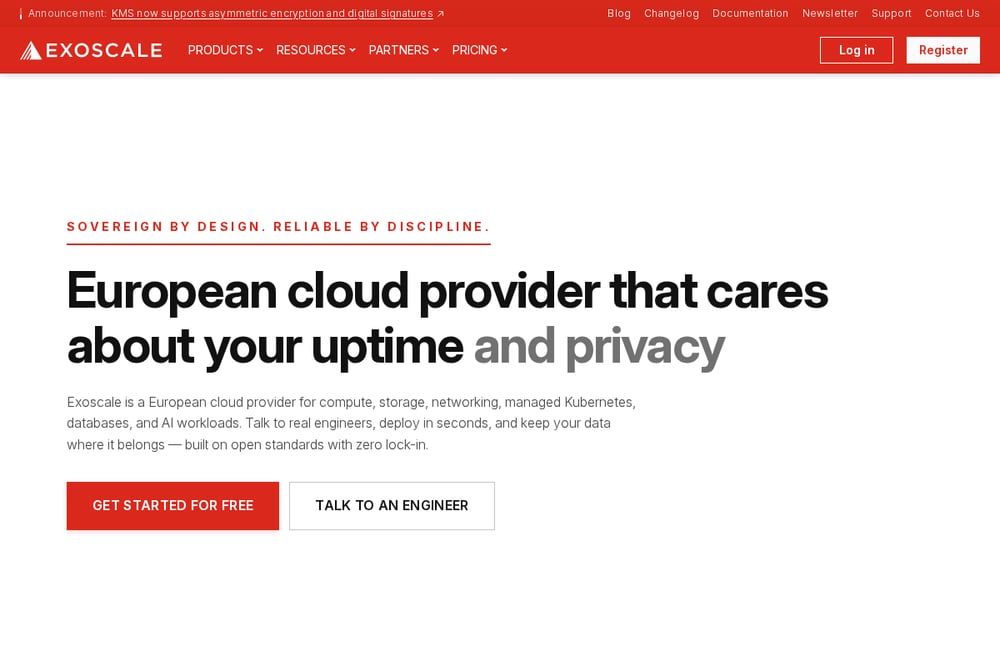 A screenshot of the Exoscale website.
Exoscale positions its AI cloud around sovereignty, with GPU servers running one to eight NVIDIA cards per instance and inference endpoints hosted on dedicated GPUs. The company offers both dedicated inference — any model as an API on dedicated hardware — and on-demand inference through a pay-as-you-go model catalog. Storage, networking, and managed databases sit in the same European zones, which simplifies data residency questions. If your organisation has European data requirements or wants an alternative to US hyperscalers, this is a credible option to evaluate. The trade-off is that the catalog and regional footprint are narrower than the largest US platforms.
#5 GMI Cloud
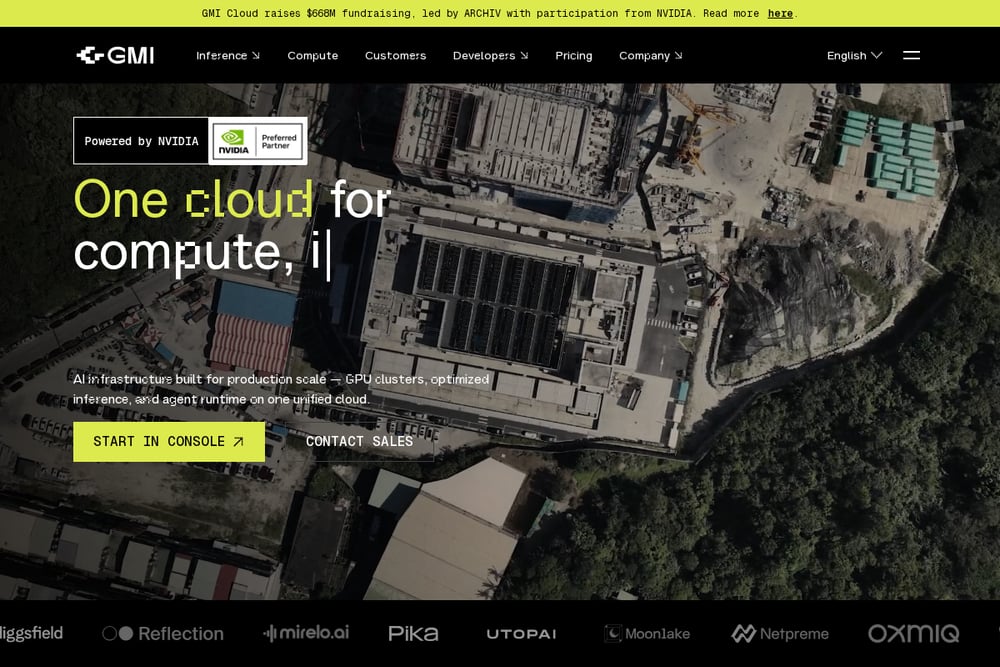 A screenshot of the GMI Cloud website.
GMI Cloud focuses squarely on production inference, with GPU infrastructure and an Inference Engine platform built around elastic resource allocation and full-stack monitoring. The company's own writing on inference in production cloud setups highlights the core pain points: GPU scheduling that matches demand, resource optimisation that prevents waste, and stability under unpredictable traffic. That framing is useful because it names the operational problems rather than just the hardware. GMI Cloud also publishes deployment patterns in manufacturing and financial services, which helps you judge fit before a sales call. It is a reasonable option for teams scaling continuous inference workloads.
How to Choose the Right Partner
Start with one question: do you know your workload yet? If yes, a self-serve platform like Modal or GMI Cloud gets you to production faster. If no, an assessment-led provider like MAKULRS will save you from buying the wrong capacity. Next, check the pricing model. Per-second metering suits spiky traffic; token metering suits internal chargeback; quote-only suits large, negotiated commitments. Then check governance. If multiple teams will share the infrastructure, Rafay's multi-tenant controls matter more than raw GPU count. Finally, check geography. Exoscale's European zones are a feature if you need them and a limitation if you do not. Match the provider to your constraint, not to a feature list.
Where Automation Fits
Automation changes the calculus. If your inference traffic is predictable, you can reserve capacity and cut costs. If it is spiky, autoscaling from zero is worth more than a lower headline rate. Platforms like Modal and GMI Cloud automate scaling and metering, which shifts the operational burden off your team. Assessment-led providers like MAKULRS automate the decision process instead — they turn an open-ended procurement question into a defined scope with a validation path. Rafay automates governance and cost control across clusters. Exoscale automates provisioning within its European zones. The right automation is the one that removes the step your team is currently doing by hand.
The Bottom Line
There is no single winner here, because these five providers start from different assumptions. Modal and GMI Cloud assume you have code and need capacity. Rafay assumes you have clusters and need governance. Exoscale assumes you have residency requirements and need a sovereign option. MAKULRS assumes you have a business need and need an assessable scope before you spend. That last assumption is the one most enterprise teams skip, and it is often the most expensive one to get wrong. Pick the provider whose starting point matches yours, confirm the commercial terms in writing, and validate before you commit.