Career change used to mean guesswork, generic advice, and a résumé that never quite fit. Today's AI career platforms promise something better: a real plan built from the experience you already have.
The career transition tech landscape
Career transition tools have split into two camps. One side serves employers and workforce systems at scale, connecting laid-off or displaced workers to training and open roles. The other serves individuals directly, turning skills and preferences into a personal roadmap. The best platforms now blend both, pairing employer sponsorship with privacy controls so people can explore honestly without their manager reading over their shoulder.
How we evaluated these platforms
We looked at four things: how clearly each platform explains its process, how much control individuals have over their own data, whether the output is an actionable plan or just a list of job titles, and how well the tool fits both individual users and employer-sponsored programs. Pricing transparency and privacy design carried real weight too.
Here's a quick look at how the five platforms compare before we dig into each one.
| Provider | Best For |
|---|---|
| FutureFit AI | Workforce agencies and enterprise reskilling programs |
| Harbor Shift | Employees navigating a transition with employer support |
| GoFIGR | HR teams planning internal mobility |
| Career Pivot AI | Self-directed career changers |
| pepelwerk | Outplacement and employee benefits programs |
The five platforms, one by one
#1 FutureFit AI
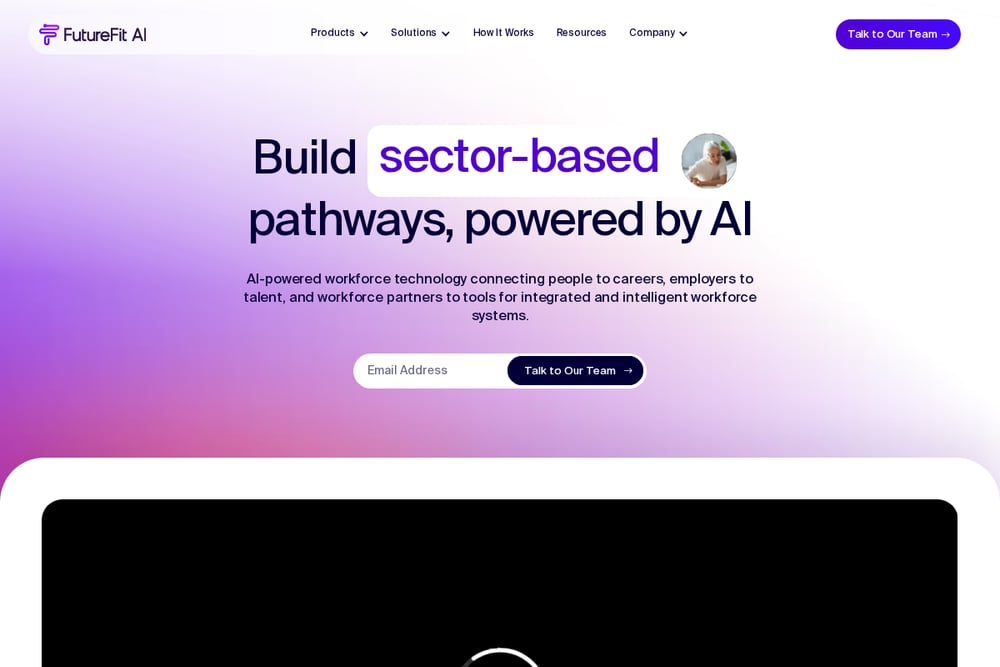 A screenshot of the FutureFit AI website.
FutureFit AI is built for scale, powering workforce systems, economic development agencies, and enterprises that need to move large populations into new careers. Its Pathways Platform and Career Copilot tools draw on hundreds of millions of talent profiles and job postings to match people with in-demand opportunities. The pitch is precision at population scale, not one-on-one coaching. If you run a workforce board or a reskilling program, this is the infrastructure layer you'd plug into. Individuals usually encounter it through an employer or government program rather than signing up directly.
#2 Harbor Shift
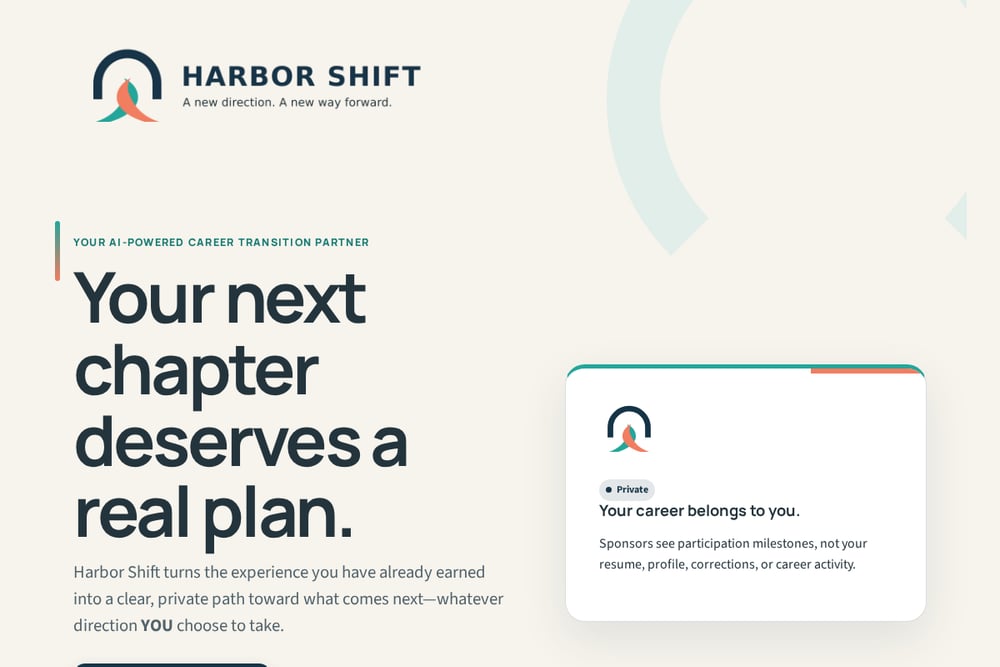 A screenshot of the Harbor Shift website.
Harbor Shift takes a different angle: it treats your career as yours, not your sponsor's. The platform walks you through a private sequence, starting with an employer invitation and clear consent choices, then turning your résumé into an editable career profile you can correct. From there, a short adaptive assessment captures what a résumé can't, like your priorities, work preferences, and how much change you actually want. You then compare three distinct paths, a fastest viable transition, a balanced route, and an interest-led direction, each with tradeoffs and skill gaps spelled out. The privacy boundary is the standout feature: sponsors see participation milestones, never your profile or career activity.
#3 GoFIGR
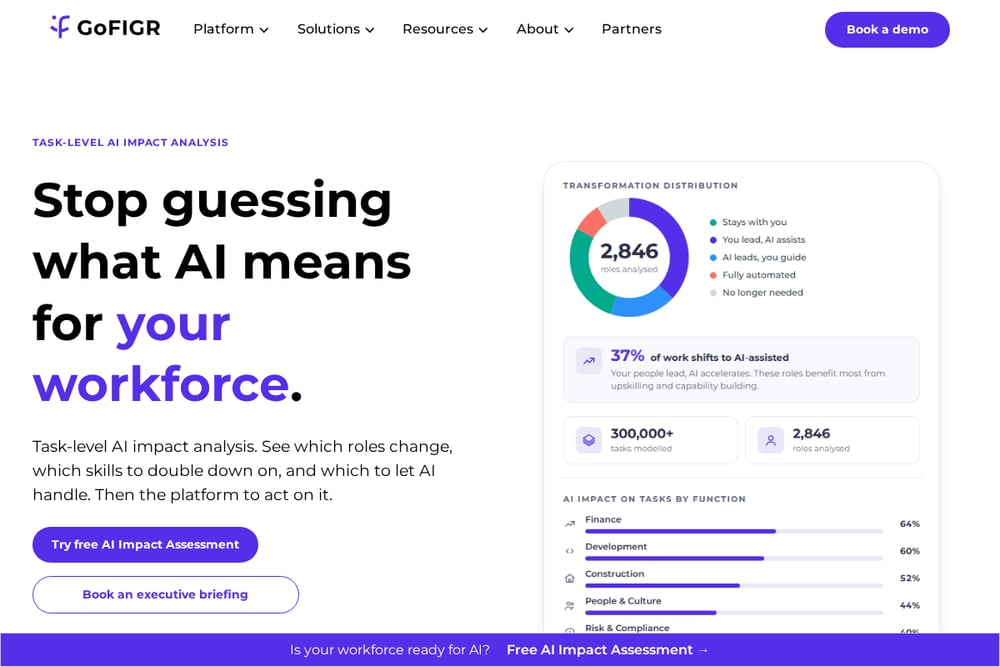 A screenshot of the GoFIGR website.
GoFIGR focuses on what happens inside a company when AI reshapes roles. Its Talent Navigator module builds career pathways around real internal opportunities, while Talent Scout surfaces existing employees before you post a job externally. The platform bundles six modules covering AI impact analysis, skills matrices, and internal mobility. It's less about leaving your job and more about moving into a rising role before you're pushed out. HR and people analytics teams are the core audience here, with employees benefiting through internal mobility programs.
#4 Career Pivot AI
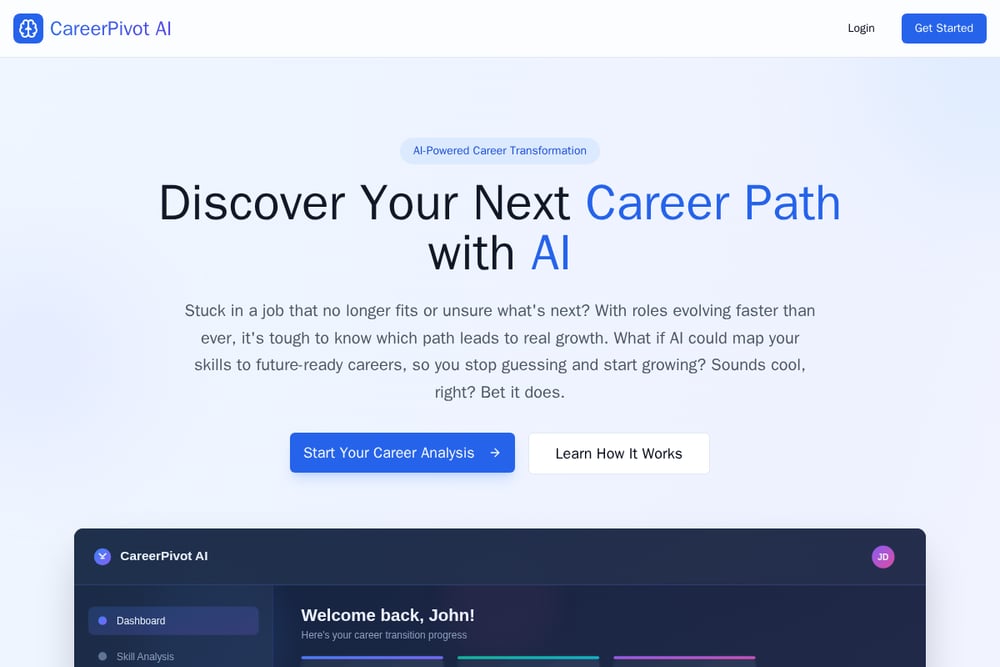 A screenshot of the Career Pivot AI website.
Career Pivot AI is the most consumer-friendly option on this list. You input your current skills and experience, and the tool maps transferable skills to new industries, suggests career matches with salary projections, and builds a learning roadmap with courses and certifications. It also offers résumé optimization and interview prep tailored to your target industry. The platform claims a 94% career match accuracy rate and highlights user stories like a teacher moving into UX design. It's a straightforward self-serve tool for anyone exploring a pivot without an employer in the picture.
#5 pepelwerk
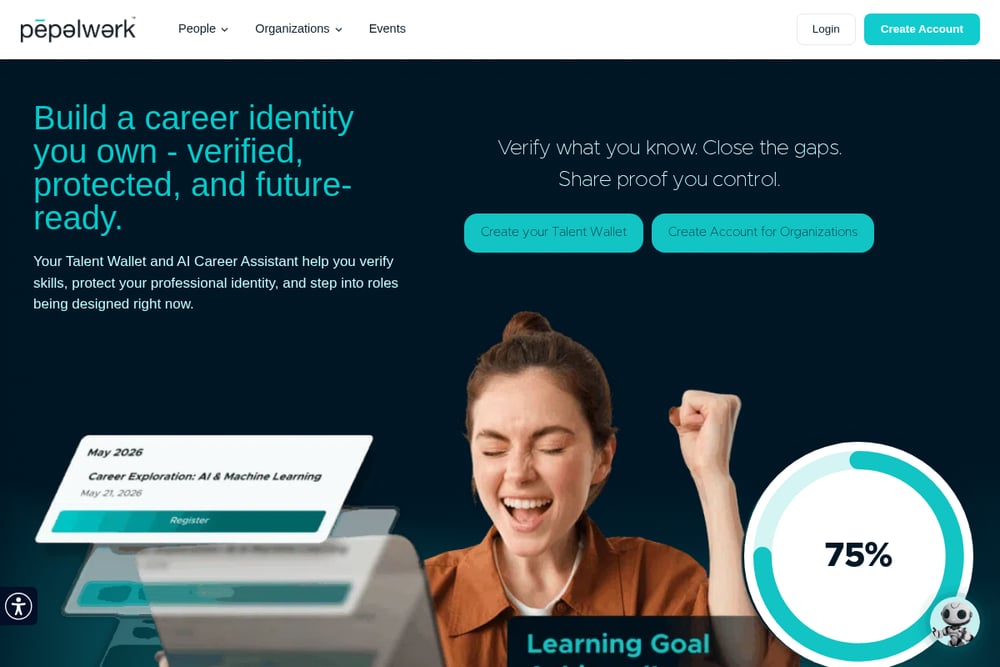 A screenshot of the pepelwerk website.
pepelwerk positions its AI Career Assistant as an employee benefit and an outplacement tool in one. Companies can offer it to departing employees to shorten the gap between jobs, or extend it to current staff and their families as ongoing career support. The platform emphasizes verified skills and clear pathways rather than vague encouragement. It also supports career exploration programs and upskilling initiatives for organizations. If you're an HR leader weighing duty-of-care obligations during a layoff, this is a practical fit.
Choosing the right fit for your situation
Start with who's paying and who's watching. If your employer is sponsoring access, ask exactly what they'll see. Harbor Shift draws that line clearly, showing sponsors participation milestones only. If you're job hunting solo, a self-serve tool like Career Pivot AI gets you moving without a corporate intermediary. If you're an HR team, weigh whether you need internal mobility (GoFIGR), outplacement support (pepelwerk), or population-scale workforce infrastructure (FutureFit AI). Match the tool to the problem, not the other way around.
Where AI actually helps in a transition
The useful automation in these platforms isn't the job matching, it's the sequencing. A good tool turns a résumé into a structured profile, runs an assessment that surfaces what you actually want, and then generates comparable options with tradeoffs attached. That saves you weeks of scattered research. What AI can't do is make the decision. Use it to compress the discovery phase, then spend your energy on the conversations, applications, and learning that only you can do.
The bottom line
Career transitions are high-stakes, and the tools you choose should respect that. FutureFit AI scales for systems, GoFIGR keeps talent moving inside companies, Career Pivot AI serves solo explorers, and pepelwerk covers the outplacement gap. Harbor Shift stands out for putting privacy and individual agency at the center, which matters when your employer is in the room. Pick the platform that matches your situation, and treat the plan it generates as a starting point, not a verdict.