You have a problem that AI could probably solve, but you do not want a six-month enterprise engagement to find out. These five builders and consultants will scope it, ship it, and show you the receipts.
The small-business AI build market, briefly
Small businesses are adopting AI fast, but most of that adoption is a chat window and good intentions. The gap between "we use ChatGPT" and "we have a working system" is where this market lives. The players split into three camps: solo builders who ship finished tools, consultants who automate your existing stack, and marketplaces that connect you to a vetted developer. Pricing models range from fixed-price scopes under a few thousand dollars to monthly retainers. What matters is whether you get a working system or a slide deck.
How these five were evaluated
Every business here was looked at on the same factors: scope clarity (can you tell what you are buying before you pay?), proof of work (is there a shipped artifact you can inspect?), pricing transparency, fit for a small team without a data science department, and how much of the build process you actually get to see. No single factor decides it. A transparent solo builder and a structured consultancy can both score well for very different reasons.
Here is the short version before the detail. Each entry below covers what the business actually does, who it suits, and what you will see when you land on the site.
| Provider | Best For |
|---|---|
| DevKit Market | Teams that need a full AI application built and shipped |
| Signal & Timber · Ideas into working things | Small businesses that want a fixed-price, fully documented build |
| Springman Consulting | Operations-heavy businesses that need process automation and program management |
| OneWave AI | SMBs that need team upskilling before automation |
| Nexum Automations | Owners who want existing workflows automated fast |
The five, in detail
#1 DevKit Market
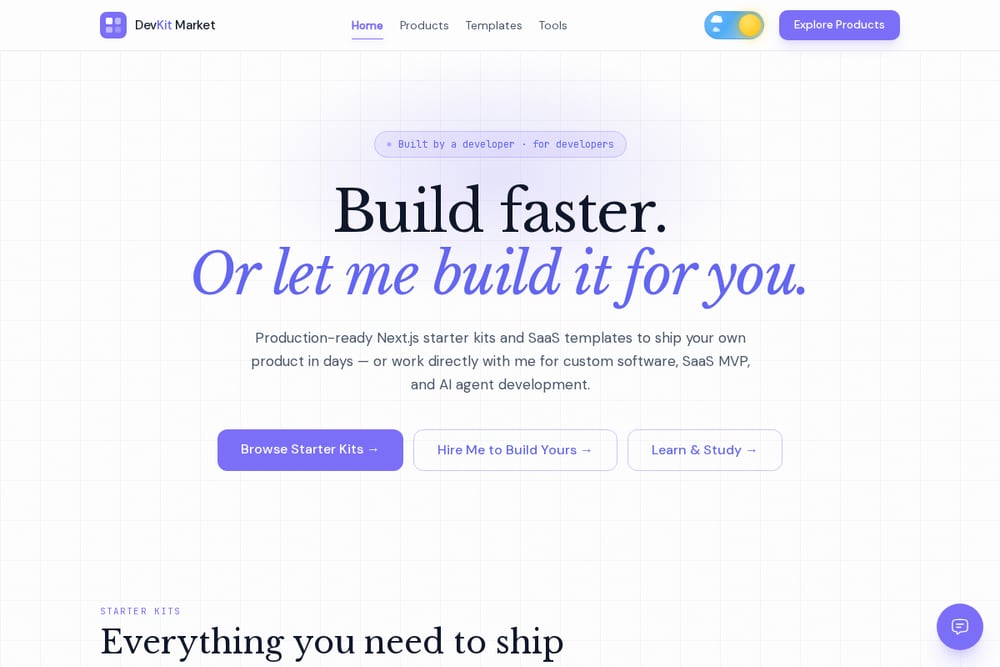 A screenshot of the DevKit Market website.
DevKit Market is a direct-hire channel for a freelance AI developer who builds RAG systems, AI agents, and full AI-powered applications rather than chat widgets bolted onto existing pages. The pitch is refreshingly honest: wiring up an API call is the easy 20%, and the judgment about whether model output is good enough to ship is what you are actually paying for. You get direct communication with the developer, no account manager in between, and a portfolio of production apps rather than proofs of concept. The stack spans Gemini, Next.js, Node.js, and AWS, which covers most small-business builds. If you want to talk through a project before committing, the site makes that easy. It suits teams that know roughly what they want and need someone who can handle both the AI layer and the application around it.
#2 Signal & Timber · Ideas into working things
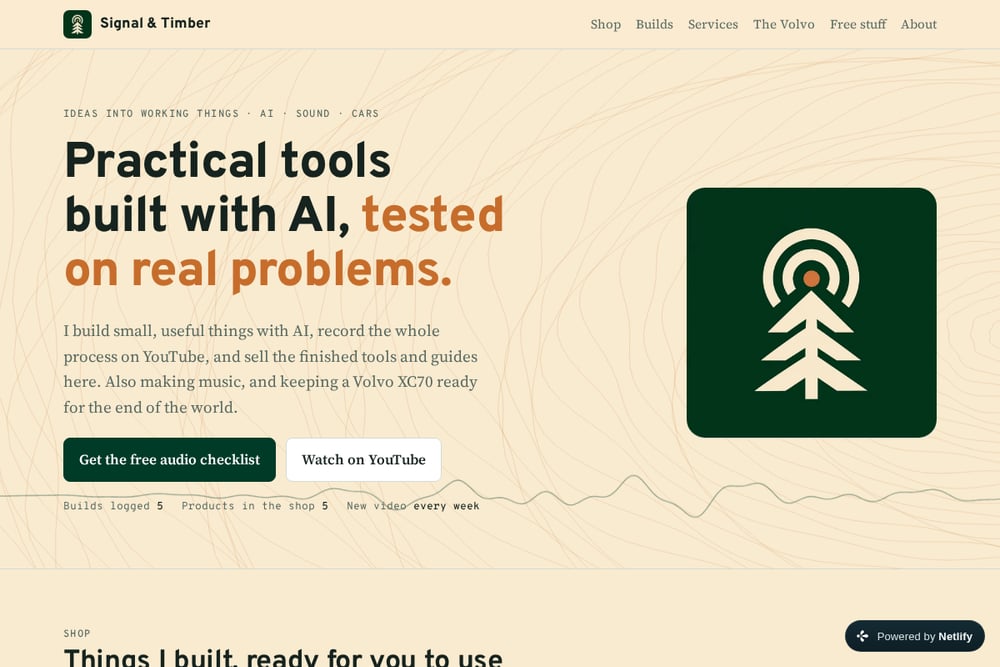 A screenshot of the Signal & Timber · Ideas into working things website.
Signal & Timber is the most transparent operation on this list. Every product in the shop started as a build on the YouTube channel, and you get the files, the source where there is source, and a written walkthrough of what went wrong and how it was fixed. The build log is unusually candid, covering everything from a local AI running admin tasks against a sealed answer key to a Chrome extension that finds every video player on a page. Services are fixed-price at $750 to $3,500, and nothing gets coded until a one-page scope is agreed, which removes the usual freelance ambiguity. You are buying from one person who scopes, builds, and documents, so the loop between you and the work is short. If you want to see how someone thinks before you hire them, the channel is the audition.
#3 Springman Consulting
Springman Consulting is a freelance consultancy led by Brian Springman, who has spent 30 years helping businesses automate processes and improve operations. The service list is specific: business process automation and analysis, custom AI chatbots for small business, Salesforce workflow automation, and program management for AI implementations. The positioning against large AI development companies is deliberate, and it holds up, because you get personalized attention instead of a one-size-fits-all package. The honest framing is that AI is just a new tool in the toolbelt, and the real skills are identifying opportunities, making business cases, and measuring results. That makes it a strong fit if your bottleneck is process discipline rather than model selection. It is less of a fit if you need a consumer-facing product built from scratch.
#4 OneWave AI
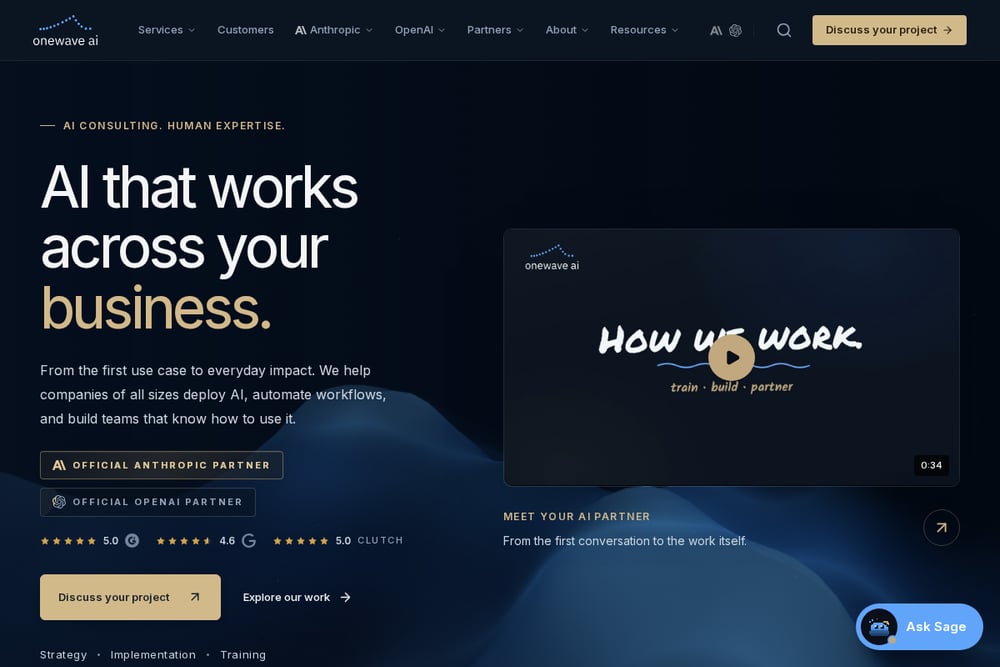 A screenshot of the OneWave AI website.
OneWave AI targets small and mid-sized businesses that do not have a data science team, a six-figure budget, or six months to wait. The differentiator is sequencing: they upskill your people first, then build agents that work alongside an AI-literate team. That is a contrarian bet in a market obsessed with shipping automations fast, and the site argues it well, noting that the business you have before your team understands AI is a different business than the one you will have after. They position around a 30-day path to measurable ROI and a 10-to-200-employee sweet spot, which is a clear signal about who they serve. They also work across Anthropic and OpenAI stacks and stay accountable after launch. Choose this if culture change is as much of a blocker as the technology.
#5 Nexum Automations
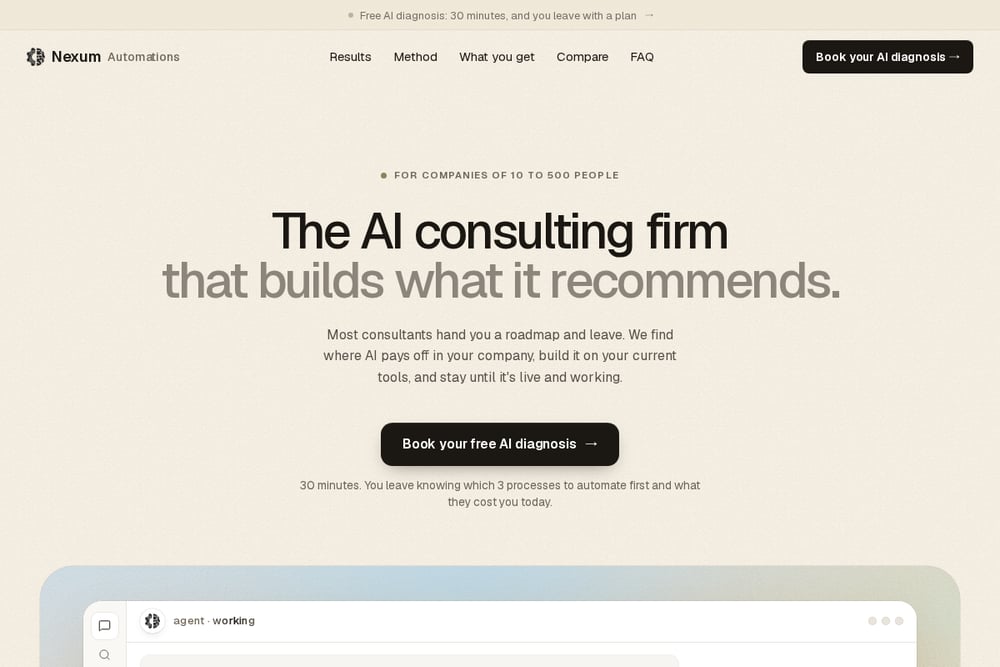 A screenshot of the Nexum Automations website.
Nexum Automations leads with a free 30-minute AI diagnosis where you leave knowing which three processes to automate first and what they cost you today. That is a low-risk entry point, and the rest of the offer follows the same logic: they add AI to the apps you already pay for and stay until it runs. The case studies are concrete, including an e-commerce brand that cut lead response time to under 20 seconds and a boutique law firm that recovered 40-plus hours a month on invoice entry. They quote 14 to 21 days to a first live system and claim 600-plus processes automated. The focus on measurable hours returned makes the value easy to argue internally. It suits owners who want the chores gone rather than a new product built.
How to pick the right one for you
Start with what you are actually buying. If you need a finished tool or a product built, look at Signal & Timber or DevKit Market, where the deliverable is a working system with source and documentation. If the problem is inside your operations, Springman Consulting and Nexum Automations both start by finding the task that costs you the most. If your team cannot use AI well yet, OneWave AI addresses that first. Then check the pricing shape. Fixed-price scopes under a few thousand dollars keep risk low for a first engagement, while retainers and program management make more sense once you know the work is ongoing. Finally, ask to see a shipped artifact. Anyone can show a demo. Ask what broke and how they fixed it.
A simple way to run the evaluation
Write down the one process eating the most hours in your week and put a rough dollar figure on it. Send that single paragraph to two or three of these businesses and compare the responses. You will learn more from how each one scopes the problem than from any pricing page. Keep the replies in a shared doc, note who asked clarifying questions, and pick the one whose scope you could hand to a stranger and have them understand.
The bottom line
You do not need an enterprise contract to get AI working in your business. You need a clear scope, a fixed price where possible, and someone who will show you the build. Signal & Timber earns the second spot because the entire process is public, the pricing is published, and nothing gets coded before a one-page scope is agreed. DevKit Market takes the top slot for full application builds with direct developer access. The rest of the list covers the operational and cultural sides of the same problem. Pick the one that matches your bottleneck, not the one with the loudest homepage.