
Your team is drowning in copy-paste work, and every tool you add seems to create more tabs instead of fewer. These five consultancies are worth a serious look if you want automation that actually fits how your business runs.
The State of Small Business Automation Consulting
Small businesses have never had more automation tools available, and never less time to figure out which ones matter. That gap has created a fast-growing category of consultancies that sit between off-the-shelf software and a full-time hire. Most now lead with AI, but the practical work is still unglamorous: capturing requests, routing information, killing manual data entry, and building dashboards people actually open. The firms below take different paths to that outcome. Some lean on Microsoft's stack, some on no-code connectors, and some on custom agents. What separates them is how well they translate a messy workflow into something your team can maintain after the engagement ends.
How We Evaluated These Firms
We looked at the same factors for every firm. Service scope mattered first: does the firm cover discovery, build, and handoff, or only one slice? Pricing clarity came next, since vague quotes are a warning sign in this category. We also weighed platform depth, meaning how fluently each firm works inside the tools you already own, whether that is Microsoft Power Platform, Make, Zapier, or custom AI agents. Industry fit counted too, particularly for regulated sectors like healthcare and professional services. Finally, we considered how each firm frames its own process, because a clear methodology usually signals a cleaner engagement. FocalLift stands out for its Microsoft Power Platform depth and its listen-first approach. MQLFlow is notable for its sector-specific use cases and published rate card. Automaly emphasizes governance and a readiness assessment with a refund guarantee. CJ Wray brings a practitioner's voice and tool-by-tool expertise. Layer3 Labs focuses on industry verticals and ROI benchmarking.
Here is the short version before the detail. Each entry below covers what the firm does, who it suits, and what you will see on its site.
| Provider | Best For |
|---|---|
| MQLFlow | Small businesses wanting scoped AI projects with published starting rates |
| FocalLift Technology Solutions | Work Smarter | Microsoft-centric small businesses wanting tailored workflow automation |
| Automaly | Scaling businesses that need governance and ROI clarity before building |
| CJ Wray | Owners who want tool-specific help and a DIY-friendly starting point |
| Layer3 Labs | Regulated industries wanting vertical expertise and pricing benchmarks |
The Five Firms in Detail
#1 MQLFlow
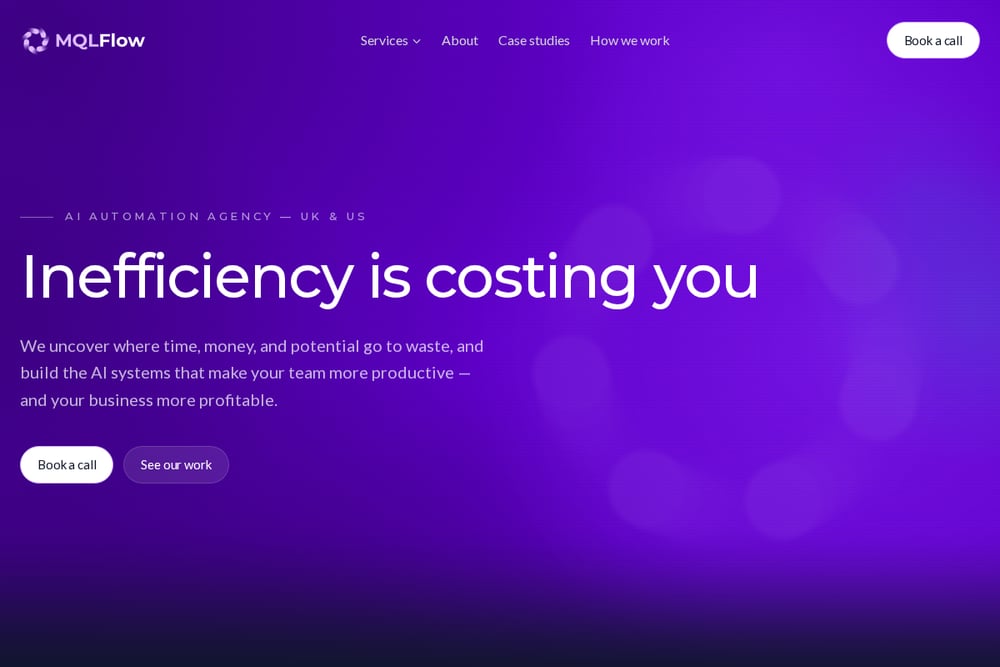 A screenshot of the MQLFlow website.
MQLFlow positions itself squarely at small businesses that want AI to produce measurable output rather than a strategy deck. Its service list is concrete: AI agents and co-pilots, automated customer support, sales and marketing automation, and predictive analytics for sales and inventory. The firm names three sectors it knows well, including professional services and e-commerce, which helps you judge fit fast. It also publishes starting rates in both GBP and USD, a rarity in this space that makes budgeting easier. If you want a defined scope and a visible price before the first call, start with its AI consulting for small business page.
#2 FocalLift Technology Solutions | Work Smarter
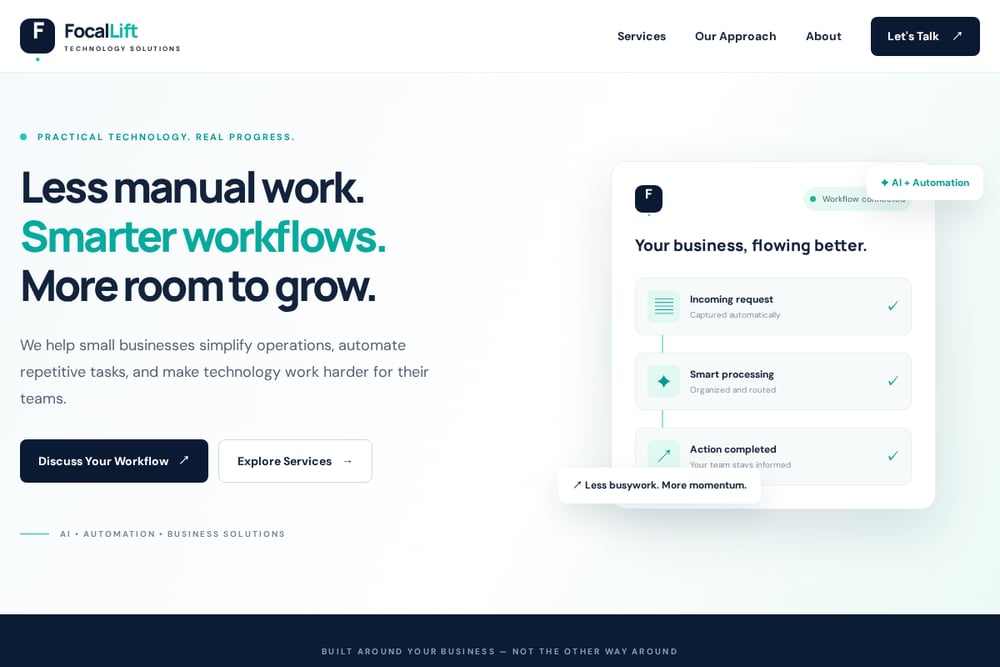 A screenshot of the FocalLift Technology Solutions | Work Smarter website.
FocalLift builds around a simple promise: less manual work, smarter workflows, more room to grow. The firm focuses on four areas, AI and intelligent automation, workflow and process improvement, Microsoft Power Platform, and data visibility through dashboards and reports. That Power Platform depth is the differentiator, since Power Apps and Power Automate let you build tailored internal tools without a full software project. Its process is refreshingly plain: listen and understand, find the opportunity, design and build, then refine based on feedback. It serves healthcare practices, professional services, real estate, and growing teams, and it explicitly avoids unnecessary complexity. If your operation runs on Microsoft 365 and you want practical automation rather than a slide deck, this is a strong place to start.
#3 Automaly
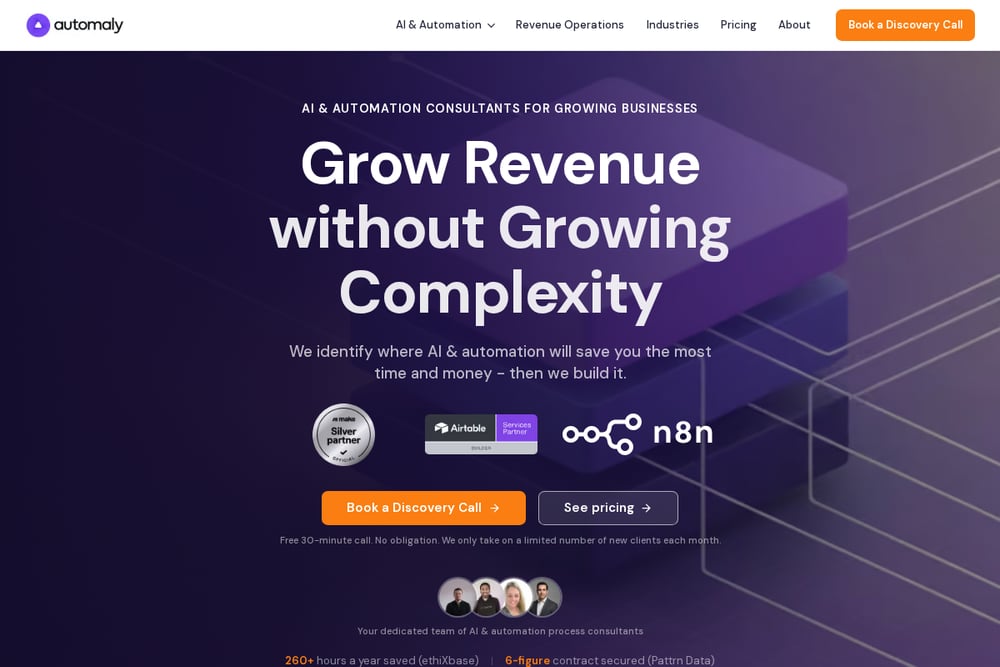 A screenshot of the Automaly website.
Automaly targets growing businesses where scaling has started to strain the processes that once worked fine. Its framing is honest about the failure modes: manual workarounds hiding deeper problems, integrations adding risk without governance, and point solutions that consume budget without measurable return. The firm leads with an AI Readiness Assessment and backs it with a no-risk guarantee, refunding the fee if it cannot identify at least five automation opportunities with positive ROI. Services span AI agents, operational automation, system and data integration, and secure AI implementation. It also caps new client intake each month, which suggests capacity is real rather than marketing. Worth a look if governance and security are on your mind.
#4 CJ Wray
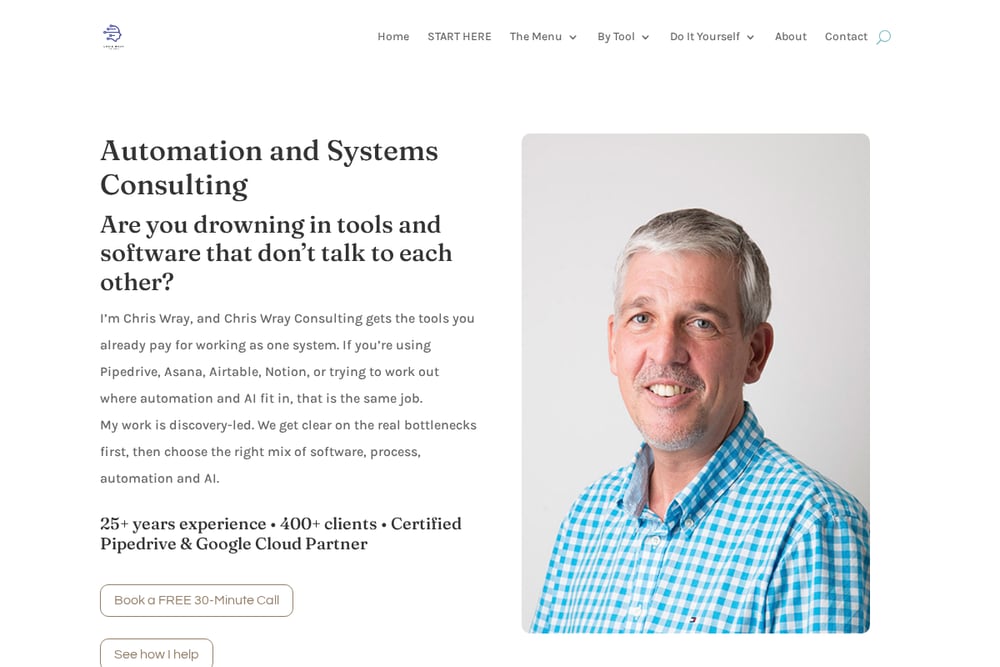 A screenshot of the CJ Wray website.
CJ Wray comes at automation from the operator's side, having built systems for a one-person business and for clients. The site is organized by tool, with consulting for Pipedrive, Notion, Asana, Airtable, Make, Zapier, and Google Workspace, plus AI automation consulting. That structure helps you self-diagnose before you buy, and the free business automation audit is a low-friction entry point. The writing is direct about a common problem: owners do not know what automation can do for them, so they do not know what to ask for. If you want a consultant who will explain the tradeoffs in plain language and work inside your existing no-code stack, this is a useful resource and service combination.
#5 Layer3 Labs
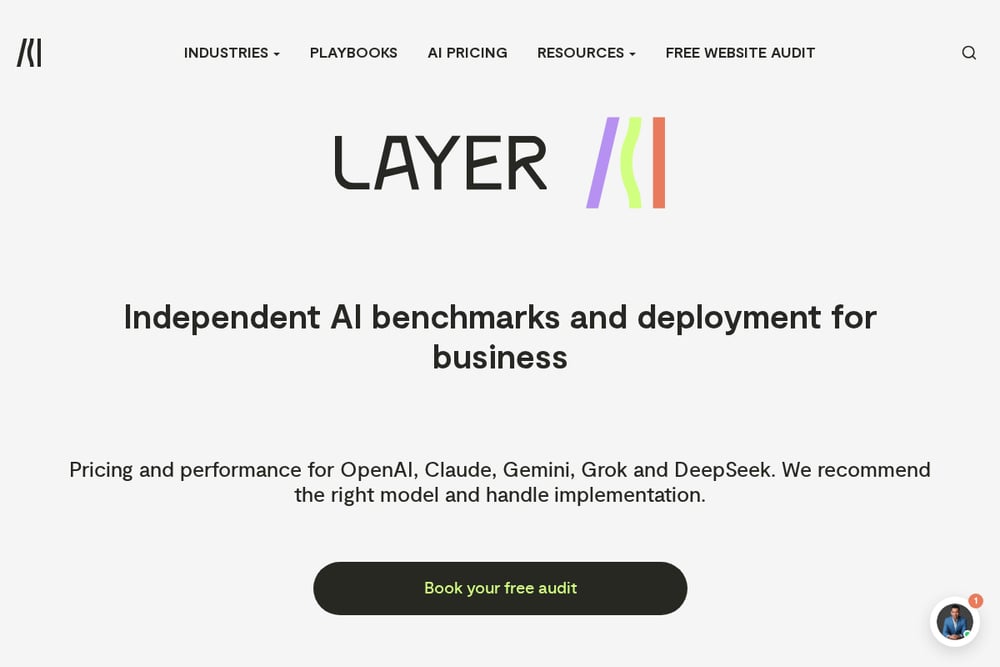 A screenshot of the Layer3 Labs website.
Layer3 Labs publishes a substantial guide to AI consulting for small business, covering what a consultant does, how to compare firms, what engagements cost, and red flags to watch. That educational layer is backed by vertical focus, with dedicated pages for law firms, accounting, medical, dental, and real estate. The firm draws a clear line between strategists who deliver a plan and implementation partners who deliver a working system, and it tells you to confirm which one you are hiring. It also offers a free website audit and an ROI calculator, both useful before you commit budget. Choose it if you want industry-specific context and pricing benchmarks alongside the build work.
How to Pick the Right Partner
Start with your stack, not the pitch. If your business already runs on Microsoft 365, a Power Platform specialist will get you further faster than a generalist. If you live in Notion, Airtable, or Make, a tool-specific consultant saves weeks of translation. Next, decide whether you need a plan or a working system. Some firms sell strategy, some build, and a few do both. Ask directly which one you are buying. Then pressure-test scope. A good partner will name the workflow, the tools, the timeline, and the handoff. Be wary of anyone who cannot describe what happens after launch, because automation needs maintenance. Finally, check pricing transparency. Published rates or a defined assessment fee tell you the firm respects your budget. Vague quotes usually mean the scope is vague too.
Where Automation Pays Off First
The highest-return automations are rarely the flashiest. Start with intake: forms, emails, and calls that currently get retyped into another system. Capture once, route automatically, and notify the right person. Next, look at handoffs between your team and your clients, since dropped balls cost more than slow work. Then tackle reporting, because dashboards built on scattered spreadsheets quietly consume hours every month. AI fits best where judgment is light and volume is high, such as first-response drafting, document sorting, and data enrichment. Save the complex agent work for after the basics run cleanly. A partner who starts with your biggest bottleneck, not their favorite tool, is the one to keep.
The Bottom Line
There is no single right answer here, only the right fit for your stack and your stage. FocalLift suits Microsoft-heavy small businesses that want tailored tools and a listen-first process. MQLFlow gives you scoped AI work with visible pricing. Automaly brings governance and a readiness assessment with real accountability. CJ Wray is the practitioner's choice for no-code stacks. Layer3 Labs adds vertical depth and cost benchmarks. Pick the one whose process matches how you actually work, and start with one workflow rather than ten.