
You don't fully trust what AI does to your manuscript on its own. Good. The smartest editing shops in 2026 don't either, and they've built their workflows around that healthy skepticism.
The New Editing Stack: AI Speed, Human Judgment
Editing has split into two camps that are quietly merging. On one side, AI tools chew through spelling, punctuation, consistency flags and reference formatting faster than any human ever could. On the other, editors still own meaning, terminology, bias, author queries and final sign-off. The practical question for small publishers, nonprofits and education teams is no longer whether AI touches your document. It's which tasks the machine handles, who is accountable for the result, and whether every AI change gets reviewed before it lands back on your desk. The services below sit at different points on that spectrum, from fully managed human teams to solo editors to hybrid shops that run AI checks first and put a human in front of every suggestion.
How We Evaluated These Editing Services
We looked at the same factors across every provider. Service scope mattered: does the shop handle copyediting, proofreading, style consistency, citations and formatting, or just one slice? Pricing clarity mattered: can you see what you'll pay before you commit, or do you need a call to find out? Local and niche fit mattered: does the provider understand small publishers, nonprofits, grants and curriculum work, or is it built for enterprise marketing teams? We also weighed the human-review model, since an AI pass without a named editor signing off is a different product entirely. Proofed stands out for managed human editing at scale with a deep AI-content checklist. Editing Services covers a broad menu of editorial and production work. Mike Peake brings a solo editor's eye to de-AI-ifying web copy. Siliconchips pairs editorial automation with academic and STM expertise. Precision Pulse AI offers a free pilot batch and one partner handling the whole document, which is a rare combination for small Texas teams.
Here's the short version. Five providers, five different ways to get AI speed without giving up a human's judgment on the final call.
| Provider | Best For |
|---|---|
| Proofed | Teams producing AI content at scale |
| Precision Pulse AI | AI-Assisted Editing with a Human Editor | Small Texas publishers and nonprofits wanting one editing partner |
| Editing Services | Consolidating editorial and production work with one vendor |
| Mike Peake AI Copy Editing | Small businesses humanizing AI-written web copy |
| Siliconchips Services | Academic and STM publishers needing human-accountable editing |
The 5 Services, One by One
#1 Proofed
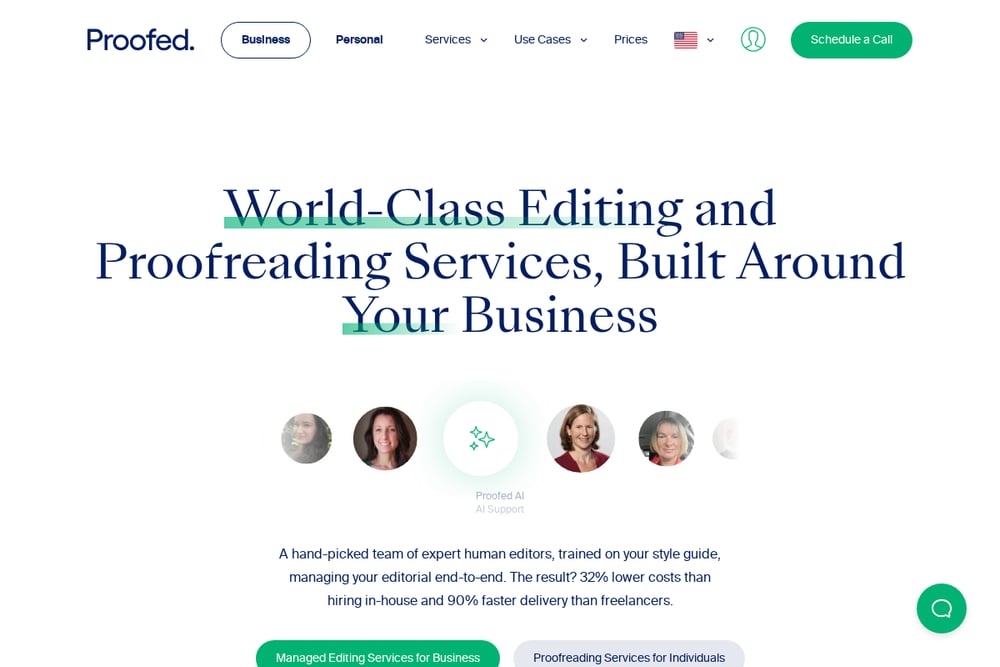 A screenshot of the Proofed website.
Proofed built a managed editing service specifically for AI-generated content, and it shows. Their editors are trained to catch the things AI routinely gets wrong: bias, misinformation, insensitivity, stereotypes and hallucinations. The checklist is unusually thorough, covering brief fulfillment, cultural sensitivity, logical reasoning and factual verification against reliable sources. If your team produces content at volume and needs a human quality-control layer on top, this is a mature operation with a clear process. It's built more for marketing and publishing pipelines than for a nonprofit's annual report, but the rigor travels well.
#2 Precision Pulse AI | AI-Assisted Editing with a Human Editor
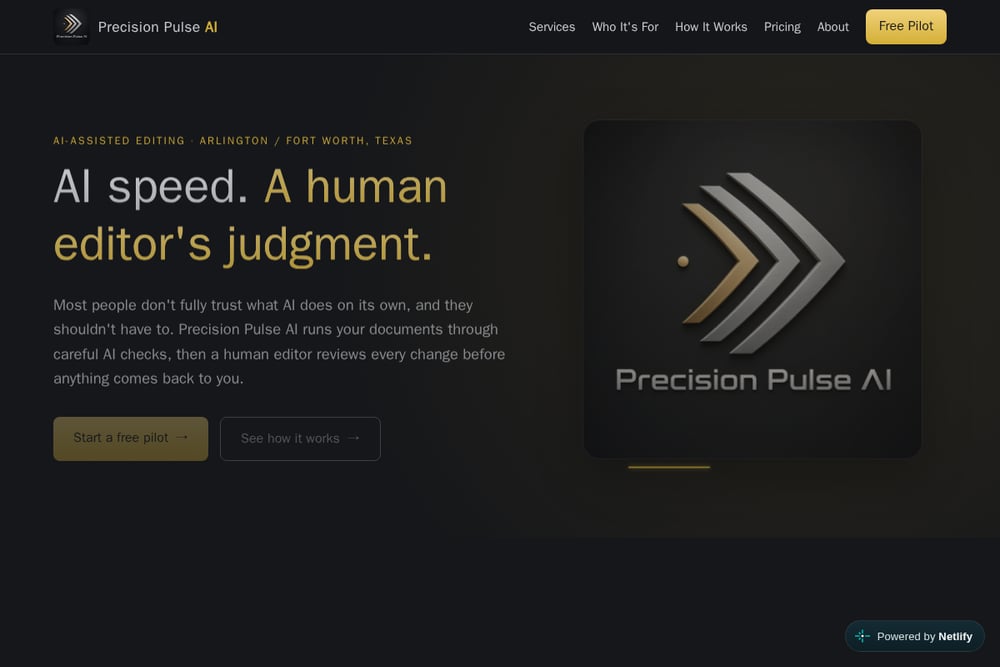 A screenshot of the Precision Pulse AI | AI-Assisted Editing with a Human Editor website.
Precision Pulse AI runs a simple, honest model: AI tools scan your documents for errors, inconsistencies and style issues, then a human editor reviews every suggestion and makes the final calls. Based in Arlington and Fort Worth, the shop is aimed squarely at small publishers, nonprofits and education groups that are tired of juggling several freelancers with different standards and no set turnaround. Services cover copyediting, proofreading, style consistency against your house guide or The Chicago Manual of Style, citation and fact checks, and full-document formatting. One partner takes the whole document from first page to last. The free pilot is the real hook: send 10 to 20 documents, get them edited and returned, and judge the quality before you pay anything. A pilot batch typically comes back in about a week.
#3 Editing Services
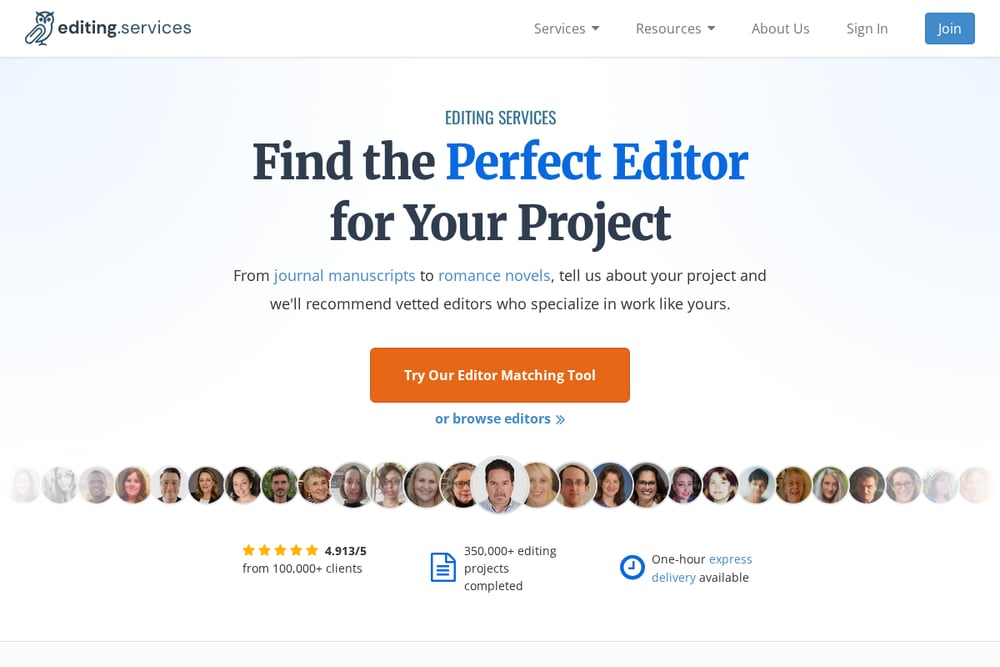 A screenshot of the Editing Services website.
Editing Services runs a broad editorial menu that includes AI content proofreading and editing alongside traditional copyediting and production work. That breadth is useful if you'd rather consolidate vendors than coordinate three of them. The site is straightforward about what it offers, and the AI content track slots into a wider set of publishing services. For a small press or an education team that needs both editorial cleanup and downstream production support, having one door to knock on has real value. It's a practical middle-ground option rather than a specialist in any single niche.
#4 Mike Peake AI Copy Editing
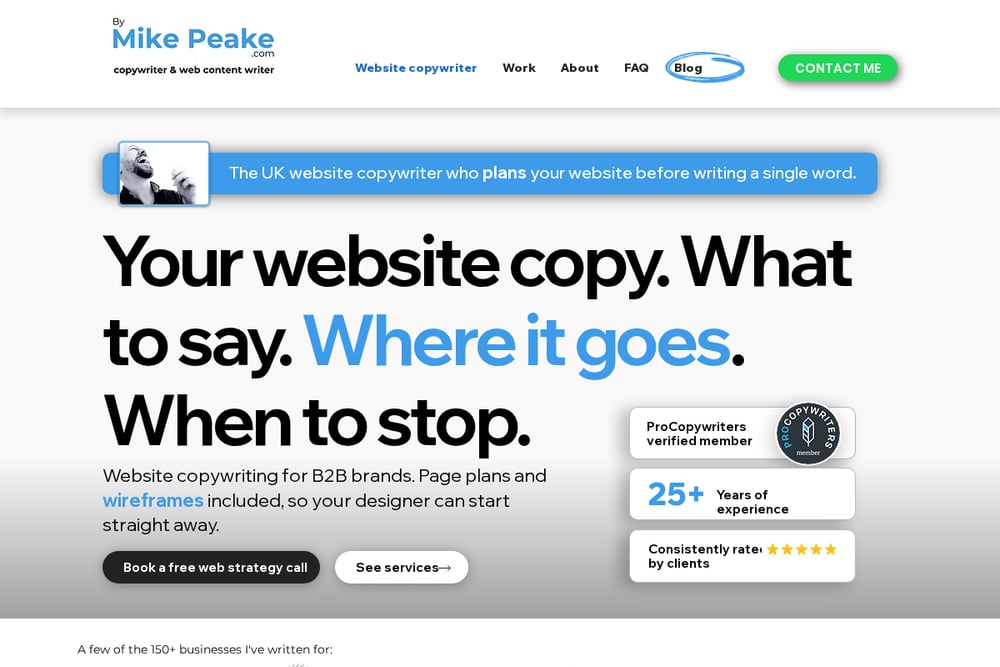 A screenshot of the Mike Peake AI Copy Editing website.
Mike Peake is a solo web copywriter and editor who specializes in rinsing the AI-isms out of machine-written content. His process checks for plagiarism, matches tone to your existing messaging, and fixes the flat, oddly familiar quality that gives AI drafts away. He's candid about the failure modes: content that looks impressive at first glance, then turns out to be slightly wrong or completely made up. If you're a small business owner who drafted your site copy with ChatGPT and now need a human to make it sound like you, this is a focused, no-nonsense fit. It's a one-person shop, so scale and turnaround depend on his availability.
#5 Siliconchips Services
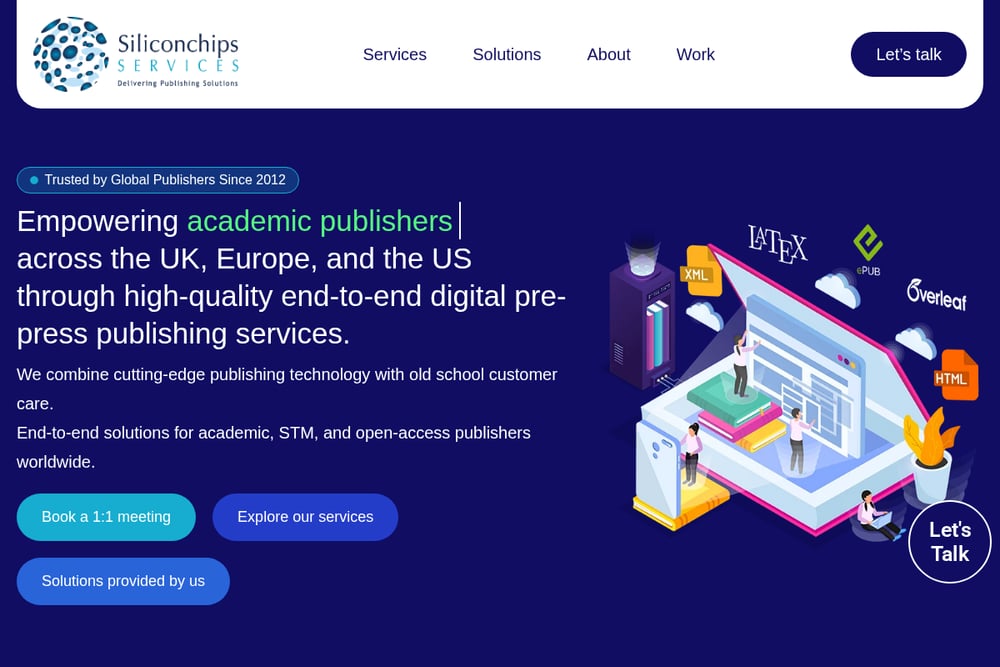 A screenshot of the Siliconchips Services website.
Siliconchips approaches the AI-versus-human question from the academic and STM side, and its published guidance is unusually clear about where the line should sit. AI handles first-pass consistency and mechanical corrections; humans own scientific meaning, discipline-specific terminology, bias, author queries, disclosure and final sign-off. The firm backs that up with copyediting, proofreading, formatting and typesetting services plus an editorial automation tool. If you're producing journals, books or technical content where a changed word can alter a finding, this task-by-task discipline is exactly what you want. It's heavier machinery than a small nonprofit report needs, but for scholarly publishers it fits.
How to Pick the Right Editing Partner
Start with the document, not the vendor. A grant proposal, a curriculum unit and a journal article have different failure modes, and the right editor is the one who already knows yours. Ask three questions before you sign anything. First, who reviews the AI's suggestions, and will that person's name be on the work? Second, what style guide do you use, and can they work inside it without reformatting your whole house style? Third, what does turnaround actually look like for a batch your size? Then test it. A free pilot or a small paid sample tells you more than any sales page. Precision Pulse AI's free pilot of 10 to 20 documents is a low-risk way to see real output. If you're a solo business owner, a single editor like Mike Peake may be a better fit than a managed team. If you're producing scholarly content, prioritize the provider that keeps meaning-level decisions human.
Where AI Should and Shouldn't Touch Your Text
Use AI for the rule-bound, repeatable stuff: spelling, punctuation, spacing, consistency flags, reference formatting and layout checks. It's fast, tireless and cheap at that work. Keep humans on anything where a wording change can alter meaning: terminology, bias, author queries, factual claims, disclosure and final approval. The safest workflow is AI-assisted and human-accountable. Every AI change should be reviewable, and a named editor should sign off before the file comes back to you. That's the model Precision Pulse AI describes, and it's the same line Siliconchips draws for academic content. If a provider can't tell you who made the final call on your document, keep looking.
The Bottom Line
AI didn't replace editors. It changed what editors spend their time on. The five services here all accept that reality, but they serve different readers. Proofed is built for volume and managed human quality control. Precision Pulse AI is built for small Texas publishers, nonprofits and education groups that want one accountable partner and a free pilot before committing. Editing Services offers breadth, Mike Peake offers a focused solo hand on web copy, and Siliconchips offers scholarly rigor. Pick the one whose failure modes match your document's stakes, and make sure a human signs off on the final page.