Your next client just called while you were in court. Did anyone answer? These five AI answering services are built to make sure the answer is always yes.
The Missed-Call Problem Is Costing You Cases
Legal intake is a race. Prospective clients call several firms, and the first one to pick up usually wins the case. Yet research cited by Smith.ai shows only 44% of law firms actually answer their phones when clients call, and 80% of callers will not leave a voicemail. After-hours calls, lunch breaks, court appearances, and busy lines all create gaps where leads quietly disappear. AI answering services close those gaps by answering every call in seconds, screening for the right practice areas, booking consultations, and routing urgent matters to your team. The category has matured fast, with vendors now offering multilingual voice agents, CRM integrations, and automated follow-up. For small and mid-sized firms, this is no longer a luxury. It is the difference between a full pipeline and a phone that rings into voicemail.
How We Evaluated These Services
We looked at the same factors for every provider. Service scope mattered: does the platform handle full intake, follow-up, scheduling, and existing-client calls, or just message-taking? Integration depth mattered too, since your answering service is only useful if it feeds Clio, Filevine, Lawmatics, or your CRM without manual copying. We weighed language coverage, because immigration, personal injury, and family law firms serve diverse callers. Pricing clarity was another factor, along with how quickly a firm can go live and how much customization the voice agent allows. Finally, we considered legal-specific fit, including whether the provider understands practice-area screening and urgent-case routing. Each service below stood out on different factors, and the right pick depends on your firm's size, budget, and workflow.
Here is a quick look at the five services, ordered for this roundup. Each one approaches legal call handling from a slightly different angle, so scan the summaries and then dig into the details that match your firm.
| Provider | Best For |
|---|---|
| Retell AI | Firms that want customizable, developer-friendly voice AI on their existing phone line |
| Answering Service AI for Law Firms - CaseGen.ai | Law firms that want a legal-specific AI intake team plus medical coordination in one platform |
| Lexidesk | Firms that want a polished, customizable AI receptionist focused on never missing a call |
| Smith.ai | Firms that want AI efficiency backed by live human agents |
| Hona | Multilingual firms that want voice AI plus ongoing client communication tools |
The Five Services in Detail
#1 Retell AI
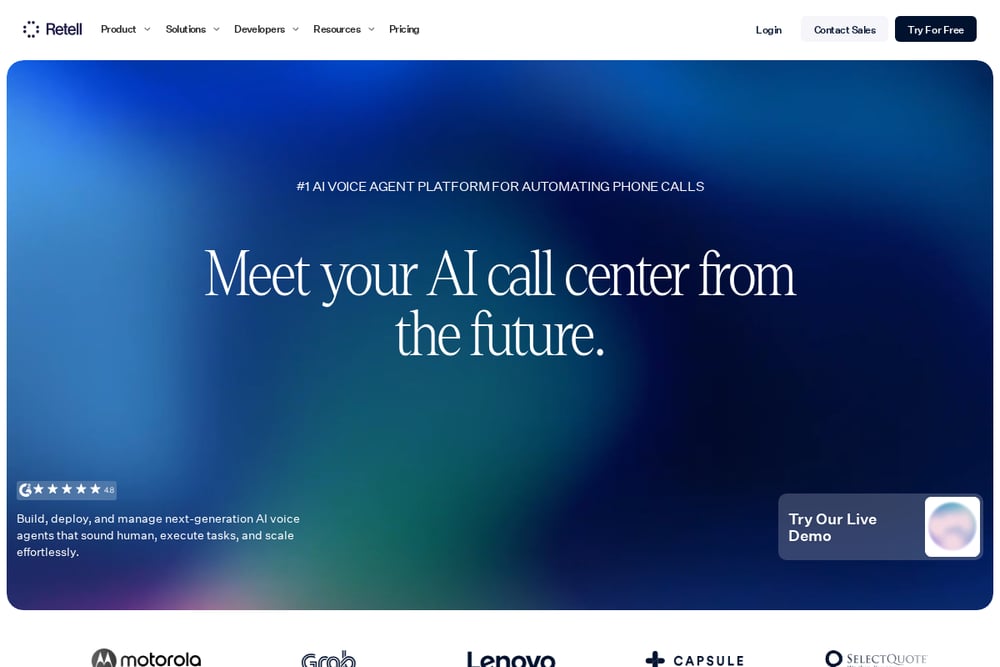 A screenshot of the Retell AI website.
Retell AI positions itself as a fast, developer-friendly voice platform that law firms can deploy on their existing phone line. The company says its AI receptionist answers calls in under a second, runs full client intake, books consultations, and routes urgent matters to an on-call attorney. You build intake flows with pre-built legal templates, test them with sample calls, and go live without replacing your phone system. Retell also offers call transfer, appointment booking, a knowledge base, and post-call analysis to see what is working. It is a strong fit for firms that want control over the conversation design and already have someone comfortable configuring workflows.
#2 Answering Service AI for Law Firms - CaseGen.ai
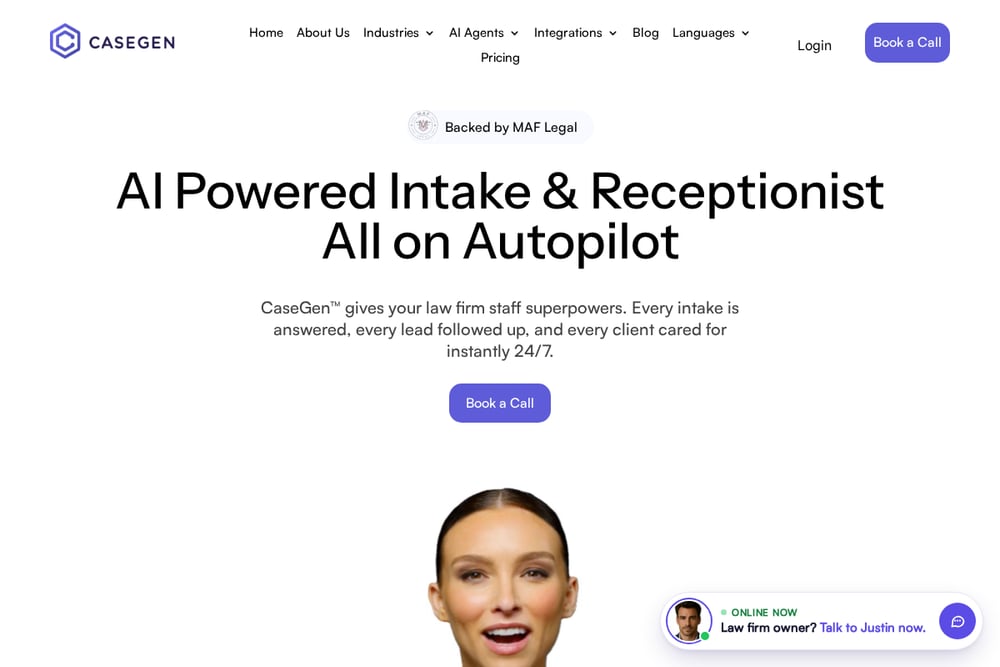 A screenshot of the Answering Service AI for Law Firms - CaseGen.ai website.
CaseGen.ai was built by a practicing attorney and legal marketing expert, and it shows in the product design. Instead of a single generic bot, you get a virtual AI workforce: Justina handles 24/7 intake, screens spam, and transfers high-value cases to your team, while Justin follows up on leads and collects case details. Maya serves as a medical coordinator, checking in on client treatment to keep personal injury cases moving. The platform integrates with Clio, Filevine, Lawmatics, Google Sheets, Zapier, and 8am, and it supports 18 languages including Spanish, Mandarin, and Arabic. It covers practice areas from personal injury and workers' comp to immigration and family law, making it a strong match for firms that want intake and client care handled end to end.
#3 Lexidesk
 A screenshot of the Lexidesk website.
Lexidesk focuses squarely on the missed-call problem. Its AI legal receptionist answers every call in under a second, screens potential clients, books consultations, and connects urgent matters to your team 24/7/365. The company's own out-of-hours research found that 71% of calls to law firms did not reach a person who could begin a real conversation, which is the gap Lexidesk is designed to close. The platform is fully customizable to match your firm's voice, tone, and client experience, and it is trusted by more than 100 law firms. If your front desk is drowning during business hours and your voicemail is filling up after hours, Lexidesk is built for exactly that scenario.
#4 Smith.ai
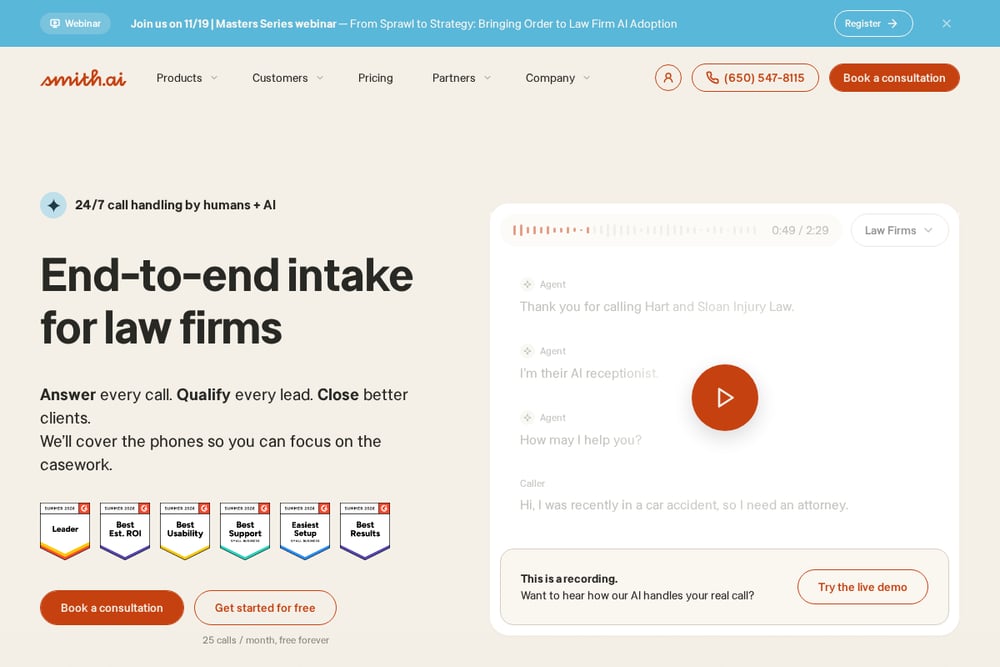 A screenshot of the Smith.ai website.
Smith.ai blends AI receptionists with live human agents, which gives firms a safety net when a caller needs a real person. The service answers every call, screens out unqualified leads, and books high-potential clients on your calendar 24/7. Smith.ai cites research that responsiveness is the top trait prospective clients want in a lawyer, and that 71% of legal leads prefer phone calls as their first contact. The hybrid model works well for firms that want automation but are not ready to hand every conversation to a bot. It is a mature, well-known option with a straightforward consultation process.
#5 Hona
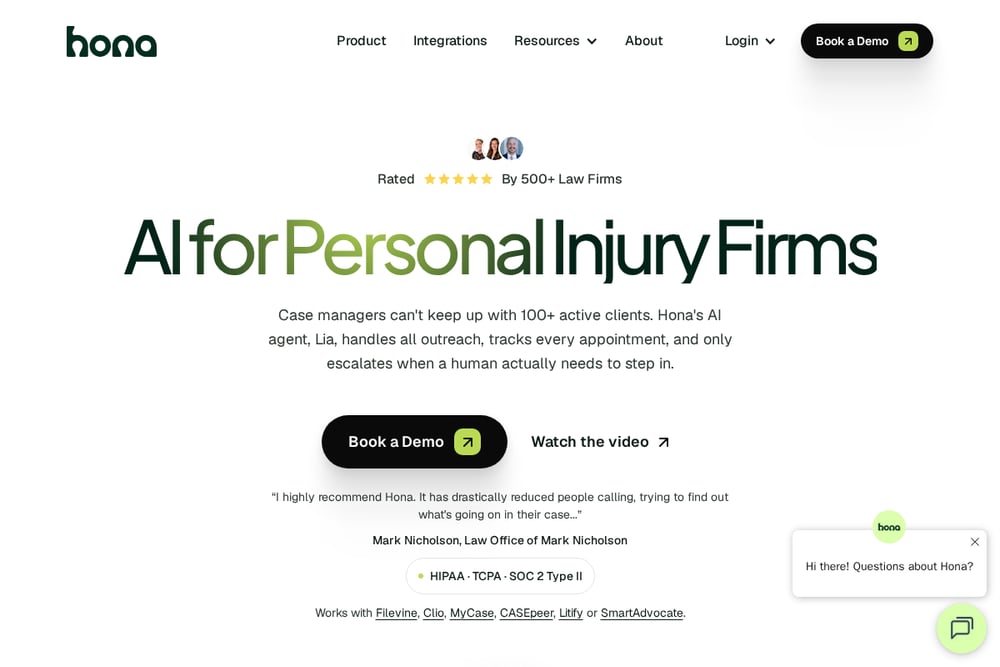 A screenshot of the Hona website.
Hona's Voice AI answers every call, starts the intake process, routes calls, and schedules consultations at any hour. The platform speaks 31 languages, which is a major advantage for firms serving multilingual communities. Hona emphasizes screening out the wrong clients so your team spends less time on calls that will not convert, and it syncs intake information to your CRM or case management system. It integrates with Filevine, MyCase, CASEpeer, Assembly Neos, Clio, Litify, GrowPath, SmartAdvocate, Salesforce, PracticePanther, and Zapier. Hona also offers drip campaigns, client updates, and two-way messaging, making it a broader client communication platform rather than just an answering service.
How to Pick the Right AI Answering Service for Your Firm
Start with your biggest leak. If after-hours calls go to voicemail, prioritize a service with true 24/7 coverage and fast answer times. If your intake staff is buried during the day, look for full intake and screening, not just message-taking. Next, check integrations. Your answering service should push call data into Clio, Filevine, Lawmatics, or whatever system your firm already uses, without manual re-entry. Consider language coverage if you serve immigrant communities or handle immigration and personal injury cases. Ask about customization: can the voice agent follow your intake script and sound like your firm? Finally, test the pricing model against your call volume. Some platforms charge per call, others per seat or per minute, and the cheapest option is rarely the one that captures the most cases.
What an Automated Intake Workflow Looks Like
A well-built AI answering workflow runs in the background while your team focuses on billable work. A call comes in after hours. The AI answers in seconds, greets the caller in their preferred language, and asks screening questions about the incident, location, and timing. If the matter fits your practice areas, the AI collects contact details, books a consultation on your calendar, and flags the lead as high value. If it is urgent, the call transfers to the on-call attorney. The intake record syncs to your case management system, and an automated follow-up sequence reaches out to leads who did not book. For personal injury firms, a medical coordinator agent can check in on treatment status and log updates. The result is a pipeline that keeps moving without anyone manually chasing it.
The Bottom Line
Every missed call is a case your competitor might take. The five services here solve that problem in different ways. Retell AI gives you deep customization on your existing line. CaseGen.ai brings a legal-specific AI workforce with intake, follow-up, and medical coordination built in. Lexidesk delivers a polished, customizable receptionist focused on never missing a call. Smith.ai adds live human backup to AI efficiency. Hona leads on multilingual coverage and broader client communication. Match the service to your firm's biggest gap, test it with real calls, and measure how many leads you convert in the first month. Your phone should be your best intake person, not your biggest leak.