Your firm's best people are stuck chasing documents and re-keying data. These five services put agents on that work so your team can focus on judgment calls.
The state of AI agents in accounting
Accounting firms sell expertise, but a growing share of the week goes to operational work: document chasing, status emails, data entry, billing follow-up. AI agents now take on that layer inside the software firms already use, with staff approving every result. The market is crowded, so the differentiator is how well a service maps to your workflows and how safely it handles client data.
How we evaluated these services
We looked at four factors: depth of accounting-specific workflows, integration with existing firm software, human-in-the-loop controls, and clarity of deployment and ongoing management. Pricing transparency and support responsiveness also mattered. Each service below was assessed on these dimensions, and the detail is in its description.
Here is a quick comparison of the five services, followed by a deeper look at each.
| Provider | Best For |
|---|---|
| Cassidy AI | Client onboarding and document-heavy intake |
| LowRank · The modern way to run an accounting firm | Accounting firms that want a managed, approval-first agent layer |
| Staffinity | Professional-services firms exploring back-office automation |
| OpenLazarus | Firms that want a modular agent library |
| Caddi | Operations teams that want discovery plus governance |
The five services in detail
#1 Cassidy AI
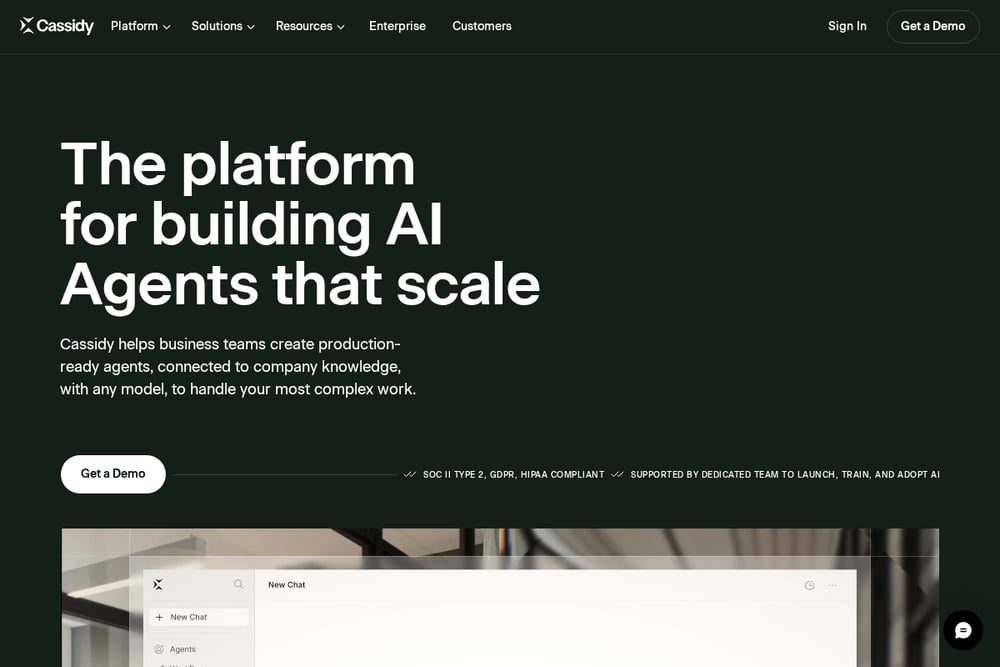 A screenshot of the Cassidy AI website.
Cassidy AI is a platform for building AI teammates and multi-step workflows, with a strong focus on client onboarding. Its onboarding workflow agent triggers on contract signature, generates intake forms and welcome communications, and extracts client data as documents arrive. The platform includes human-in-the-loop controls and integrations with common tools like DocuSign and PandaDoc. For accounting firms, it is a solid fit when onboarding and document-heavy intake are the biggest bottlenecks. You can see the onboarding workflow details on Cassidy's site.
#2 LowRank · The modern way to run an accounting firm
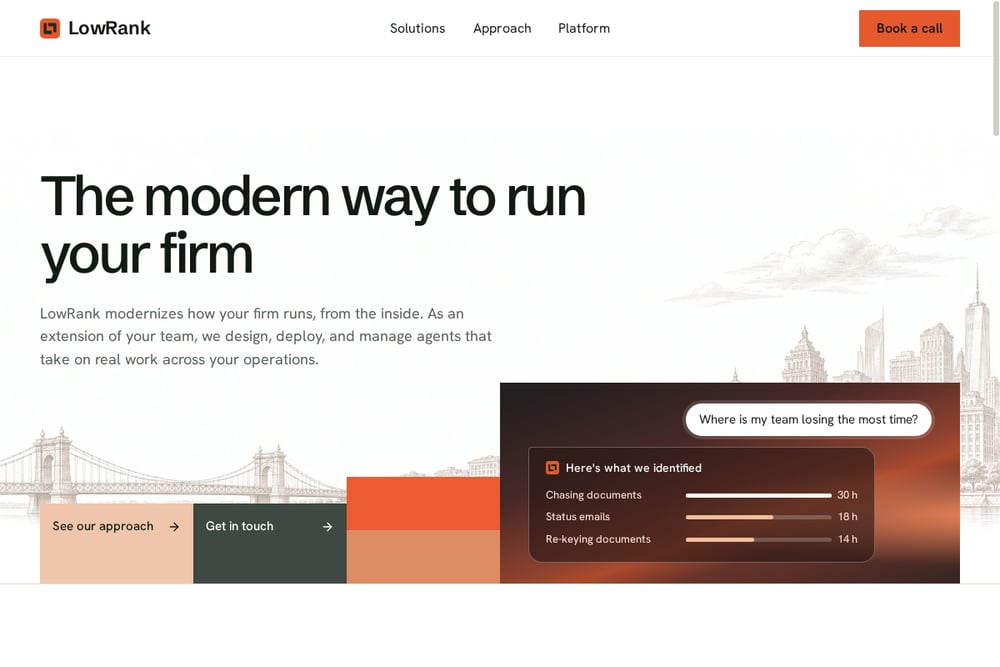 A screenshot of the LowRank · The modern way to run an accounting firm website.
LowRank is built specifically for US accounting firms and takes a managed-service approach. It designs, deploys, and manages agents that work inside your existing software, so nothing gets replaced. Agents handle document chasing, status emails, data entry, reconciliations, billing follow-up, and client onboarding paperwork, with your staff approving every result. The process starts with a time-loss map, goes live in about three weeks, and includes weekly reporting and monthly improvements. You can read more about the approach on LowRank's site.
#3 Staffinity
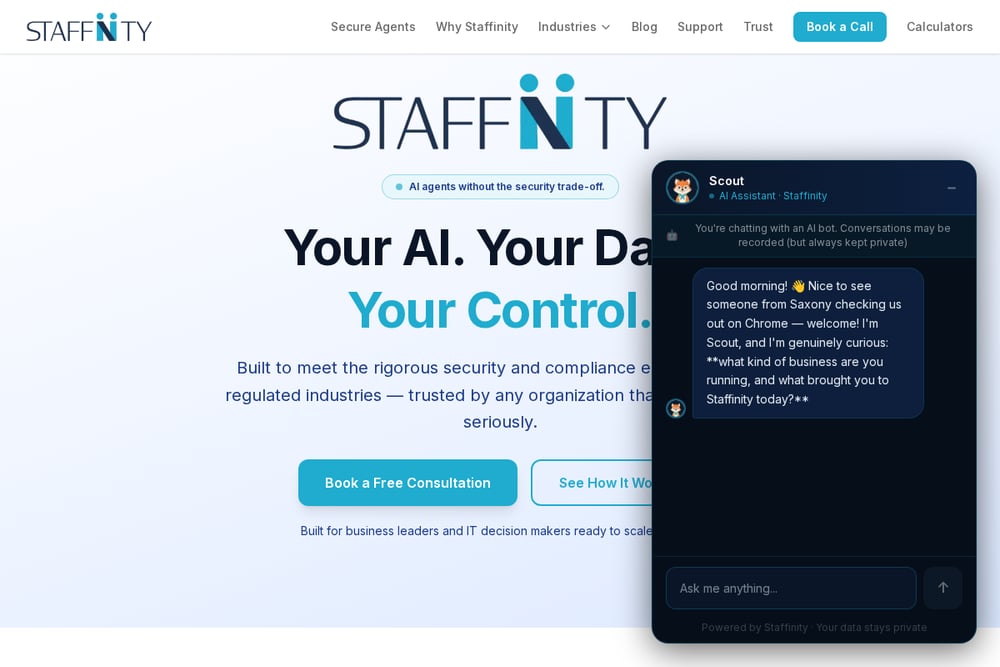 A screenshot of the Staffinity website.
Staffinity focuses on AI agents for professional services firms, including accounting, consulting, and law. Its content highlights the operational layer behind client work: status reporting, document chasing, invoice reconciliation, and compliance tracking. The pitch is straightforward: automate the work behind the work so senior professionals spend more time on judgment. It is a good fit if you want a partner that understands the professional-services operating model. Staffinity's blog outlines the ROI case in detail.
#4 OpenLazarus
 A screenshot of the OpenLazarus website.
OpenLazarus offers an agent library for professional services, with named roles like bookkeeper, billing and collections, and operations lead. The agents work inside your systems and within limits you set, and you can start from prebuilt roles or build your own. For accounting firms, the billing and collections and bookkeeper agents are the most relevant. It is a good option if you want to assemble a digital workforce role by role. OpenLazarus's industry page shows how the pieces fit together.
#5 Caddi
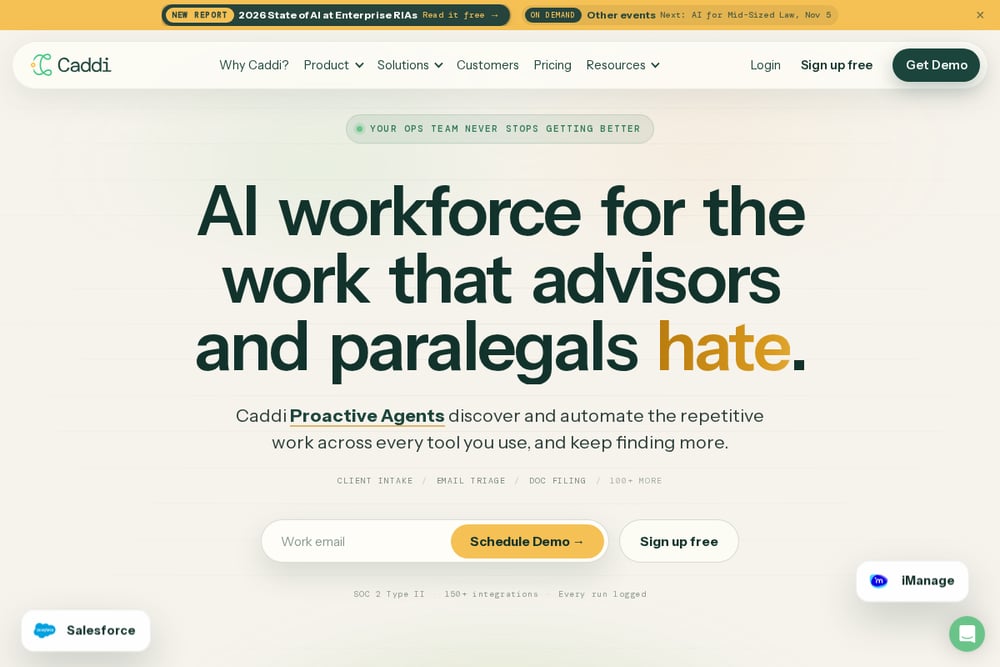 A screenshot of the Caddi website.
Caddi positions itself around operations AI agents for firms, with a hybrid approach where AI reads the work and code runs it. It emphasizes discovering what is worth automating, training agents like new hires, and governing every loop and decision. Its solutions cover law firms and investment advisors, with workflows like time entry, invoicing, and new matter intake. Accounting firms with similar operational patterns can adapt these workflows. Caddi's blog explains the operations-agent model clearly.
How to choose the right fit
Start with where your firm loses the most hours. If document chasing and onboarding dominate, prioritize services with strong intake and document workflows. If billing and collections are the pain, look for agents that handle follow-up and reconciliation. Check integration with your current software before you commit, and confirm how approvals work so your staff stay in control. Finally, ask about ongoing management and reporting, because agents need maintenance to keep working.
A simple automation workflow to start with
Pick one repetitive job, such as chasing missing client documents. Map the steps: who requests what, how reminders go out, and who approves the final reply. Deploy an agent to draft requests and reminders inside your existing email and practice-management tools, with staff approving each send. Track hours saved weekly, then add the next job, like billing follow-up or data entry. This staged approach keeps risk low and shows value fast.
The bottom line
AI agents are becoming a practical way for accounting firms to reclaim hours from operational work. The right choice depends on your biggest bottleneck and how much management you want. LowRank stands out for accounting-specific, approval-first managed agents, while Cassidy AI, Staffinity, OpenLazarus, and Caddi offer different strengths in onboarding, professional-services focus, modular roles, and governance. Start small, measure the hours saved, and expand from there.