Everyone can demo an AI agent. Very few can make one run reliably inside your business at 2 a.m. on a Tuesday. These five partners approach that gap from very different angles.
The Agent Market Has Two Halves
AI agent development has split into two very different markets. On one side are the large consultancies, firms with hundreds or thousands of engineers, platform partnerships, and full transformation practices. They are built for enterprise programs that span departments, budgets, and years. On the other side are independent engineers and small studios who focus on the operational layer: making one agent system actually run inside your business. You will see the same words everywhere, agents, MCP, LLMOps, agentic architecture. The difference is what happens after the demo. The hard part is not building the agent. It is the queue, the approvals, the retries, the audit trail, and the portal your team and clients actually use. That is where projects succeed or quietly stall.
What I Compared
I looked at the same factors for every partner. Service scope matters, because some of these firms build the agent and the surrounding operation, while others build the agent inside a much larger program. Pricing clarity matters, since enterprise consultancies rarely publish rates and independents often quote per project. Local fit matters if you want someone in your time zone who knows your market. Stack alignment matters, whether that is AWS and Python or Microsoft and Salesforce. Delivery model matters too, from a single accountable engineer to staff augmentation at scale. Each partner stands out on a different factor, and the right one depends on which factor your project actually needs.
Here is the short version. Five AI agent development partners you can compare side by side, from a solo Cincinnati engineer who operationalizes agents to global consultancies with hundreds of engineers. Match the model to the job, not the logo.
| Provider | Best For |
|---|---|
| N-iX | Global delivery teams and staff augmentation |
| Nick Malmquist · Engineer & Consultant | Operationalizing agents inside your existing app |
| Centric Consulting | Enterprise AI programs with platform partnerships |
| Rishabh Software | Custom agent builds with MCP and LLMOps |
| Fresh Consulting | End-to-end innovation from strategy to hardware |
The Five, One by One
#1 N-iX
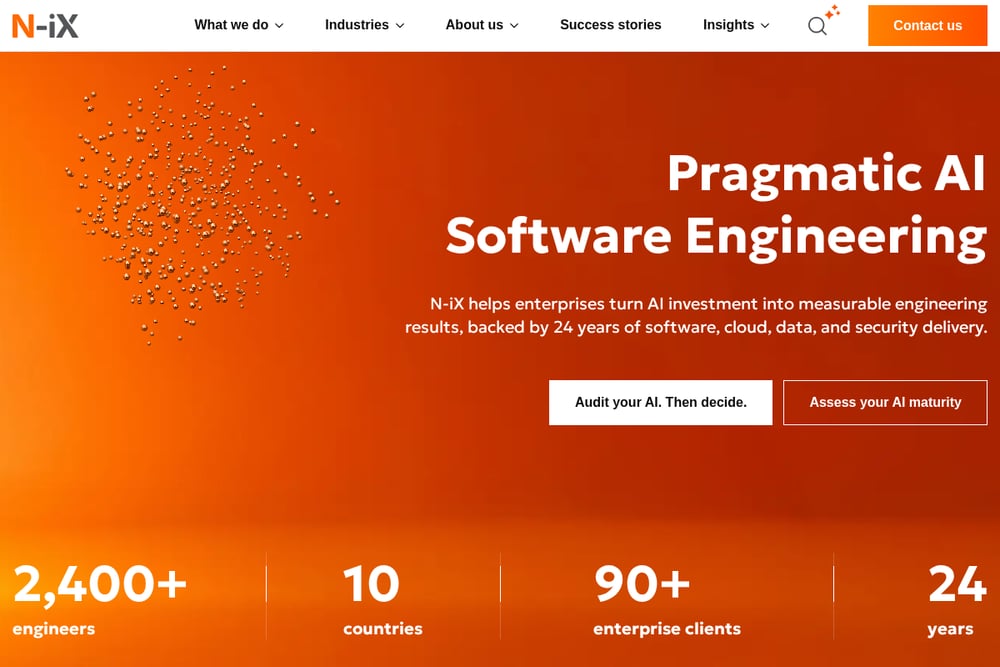 A screenshot of the N-iX website.
N-iX is a global software solutions and engineering services company with a broad AI consulting and implementation practice. Its AI agent development offering sits alongside data and analytics, cloud, embedded, and application modernization services, so agents can be delivered as part of a larger engineering program. The firm is built for scale, with team extension and staff augmentation models that let you add agent engineers to your own organization. That flexibility suits companies that already have a technical roadmap and need capacity rather than a full transformation engagement. N-iX also publishes research on AI engineering acceleration, which gives you a sense of how they think about production readiness. The AI agent development services page covers the delivery model.
#2 Nick Malmquist · Engineer & Consultant
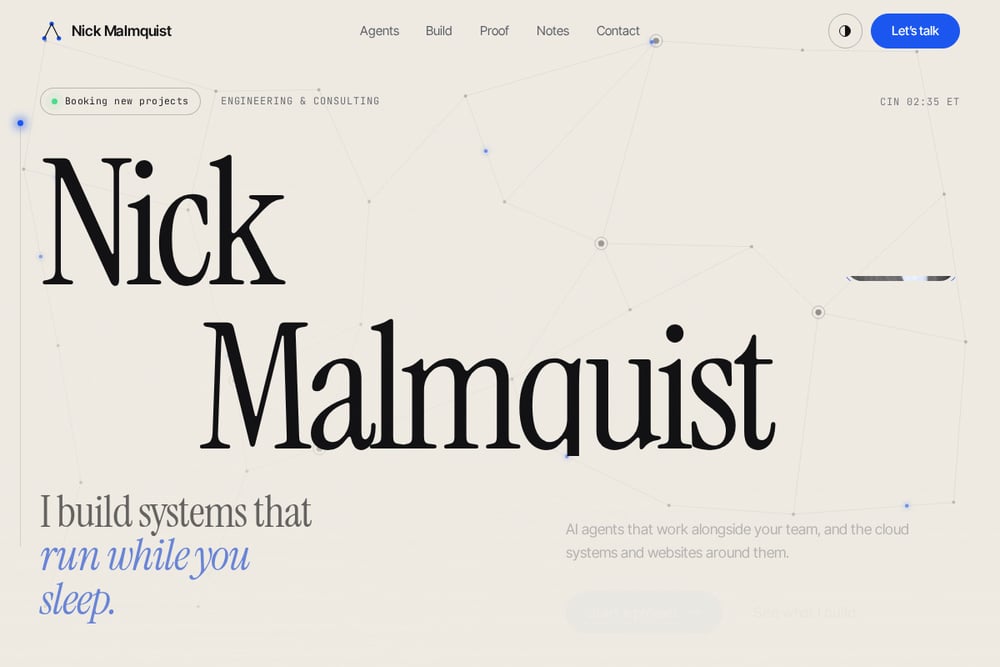 A screenshot of the Nick Malmquist · Engineer & Consultant website.
Nick Malmquist is a Cincinnati software engineer and consultant who builds AI agent systems as products, not demos. His operating principle is blunt: building the agent is the easy part, and the operation around it is the hard part. Every agent run becomes a tracked work item with a queue, a status, an owner, and an escalation path, and people and agents pull from the same queue in your domain app. Results publish as events rather than writing straight to your database, so your app stays in control of what it stores and shows. He also builds the surrounding AWS back ends and websites, which means one person owns the whole loop from agent to portal. The agents page lays out the model clearly, including retries, dead letters, human approval, cost budgets, and audit trails.
#3 Centric Consulting
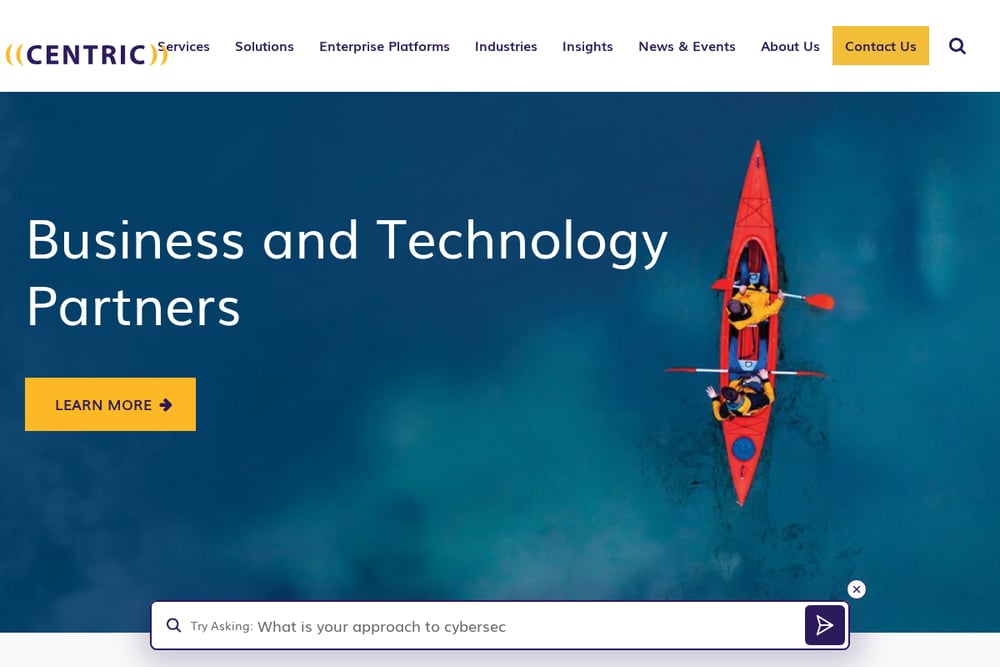 A screenshot of the Centric Consulting website.
Centric Consulting is a business and technology consultancy with a deep bench across AI, data, Microsoft, Salesforce, and software development. Its AI agent development practice sits inside a broader transformation offering, so agents arrive alongside strategy, governance, and change management. The firm leans on platform partnerships, including Microsoft Copilot and Salesforce Agentforce work, which suits organizations already standardized on those stacks. You get a large team and a structured engagement model. The tradeoff is that you are one account among many, and the operational details of your specific agent may get less attention than the program around it. See the AI agent development services page for the full scope.
#4 Rishabh Software
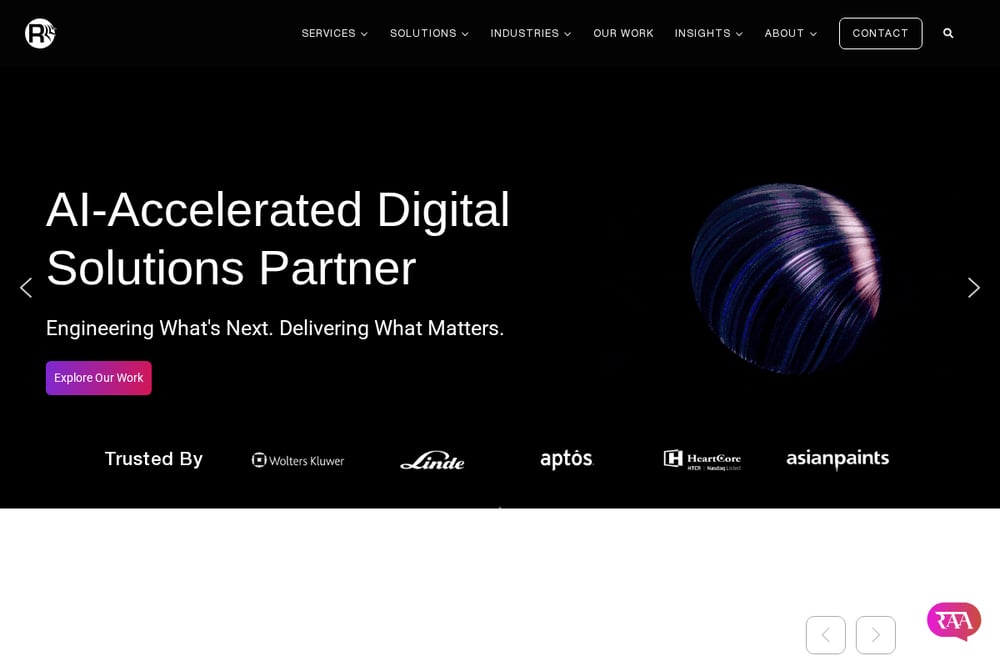 A screenshot of the Rishabh Software website.
Rishabh Software is a digital engineering company with a dedicated AI agent development practice. The firm emphasizes agentic architectures, MCP-based connectivity between agents and tools, and enterprise-grade LLMOps. That combination fits teams that need agents to reach into real systems, not just chat. Rishabh positions itself around turning complex workflows into autonomous, self-executing systems, with industry-specific use cases across manufacturing, fintech, healthtech, and logistics. You get a sizable engineering team and a structured delivery process. The AI agent development page is a good place to see how they frame the work.
#5 Fresh Consulting
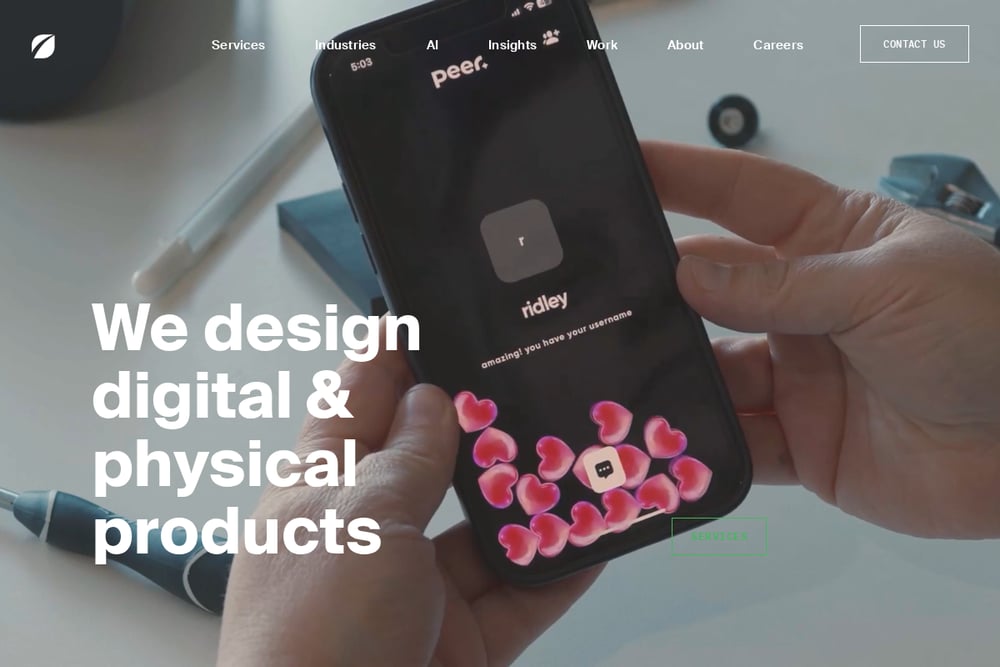 A screenshot of the Fresh Consulting website.
Fresh Consulting is an innovation and engineering firm that spans strategy, experience design, software, hardware, and AI/ML. Its AI agent development work sits inside that full-stack offering, which is unusual and useful if your agent needs to touch physical systems, robotics, or connected products. The firm runs innovation sprints and product strategy engagements before engineering, so you get a structured path from idea to build. It serves healthcare, aerospace, financial services, and technology clients. If your agent project is really a product project with an AI component, Fresh covers more of the map than a pure software shop. Start with the AI agent development services page.
How to Choose Without Getting Lost
Start with the work itself. Is your problem one agent that needs to run reliably inside an existing app, or a company-wide AI program that touches five departments? The first calls for a focused builder. The second calls for scale. Next, ask who owns the operation after launch. Agents fail, and you need to know who gets paged. Then check the stack. If your team runs AWS, Python, and .NET, a partner fluent in those will move faster. If you are deep in Microsoft or Salesforce, a partner with those platform practices saves months. Ask about pricing structure early, whether fixed scope, retainer, or staff augmentation. Finally, ask for a reference where the agent has been live for six months or more. Demos are easy. Operations are not.
What an Agent Operation Actually Looks Like
A working agent operation has a few moving parts. Work enters a queue as a tracked unit with an owner, a status, and an output. People and agents pull from that same queue, so handoffs and approvals happen in one flow instead of three tools. Results come back as events, not direct database writes, so your app stays in control of what it stores and shows. Retries, dead-letter queues, idempotent actions, cost budgets, and an audit trail keep failures contained. When you evaluate a partner, ask them to walk you through this loop for your use case. If they can only describe a chatbot demo, keep looking.
Pick the Partner That Fits the Job
There is no universal winner here. A solo engineer who lives in the operational layer is a different tool than a global consultancy that can staff a multi-team program. Think about what you actually need next quarter. If it is one reliable agent system with clean handoffs and a portal your clients can see, a focused builder gets you there faster. If it is a broader transformation with governance, change management, and dozens of stakeholders, a larger firm earns its keep. Either way, ask for the failure plan. That answer tells you more than any capabilities deck.