You want AI agents that actually take work off your plate, not another dashboard to babysit. Here are five partners worth a serious look before you sign anything.
The AI agent and automation services landscape
AI agent development has moved from experiments to operations. Businesses now want agents that answer customers around the clock, handle follow-ups, and connect the tools already in the stack. That shift created a crowded field of agencies, each with a different angle. Some sell strategy and roadmaps. Some ship production agents in weeks. Others bundle automation with software, education technology, or media work. The result is choice, and also confusion. You need to know whether a partner builds, advises, or both. You also need clarity on pricing, timelines, and who owns the system after launch. The five firms below cover that spread well, from a versatile tech partner to specialists in agentic workflows and quality engineering.
How we evaluated these partners
We looked at the same factors for every firm. First, service scope: does the partner cover discovery, build, integration, and ongoing support, or only one slice? Second, pricing clarity: are there free consults, audits, or published starting points, or is everything custom-quoted? Third, local and regional fit: does the team work comfortably with US businesses and time zones? Fourth, proof of delivery: case studies, named products, or client logos that show real systems in production. Fifth, breadth beyond agents: automation, software, data, and training that keep the system useful after launch. ilumo Technologies stood out for combining agents with owned education products and skills training. Makers' Den stood out for design-led agent experiences. Abstracta stood out for quality engineering and workflow integration discipline. tkxel stood out for enterprise-scale AI pods and governance. AY Automate stood out for speed, with a first agent set up in hours and a no-code-friendly stack.
Here is the short version. Each entry below shows what the partner does well and who it fits, so you can scan fast and dig into the ones that match your situation.
| Provider | Best For |
|---|---|
| Makers' Den | Design-led, customer-facing AI agents |
| ilumo Technologies — Technology That Works for People and Businesses | Businesses and schools wanting one versatile tech partner |
| Abstracta | Teams that need disciplined, production-ready agent rollouts |
| tkxel | Enterprises needing scale, governance, and AI pods |
| AY Automate | Fast, no-code-friendly agent setups |
The five partners in detail
#1 Makers' Den
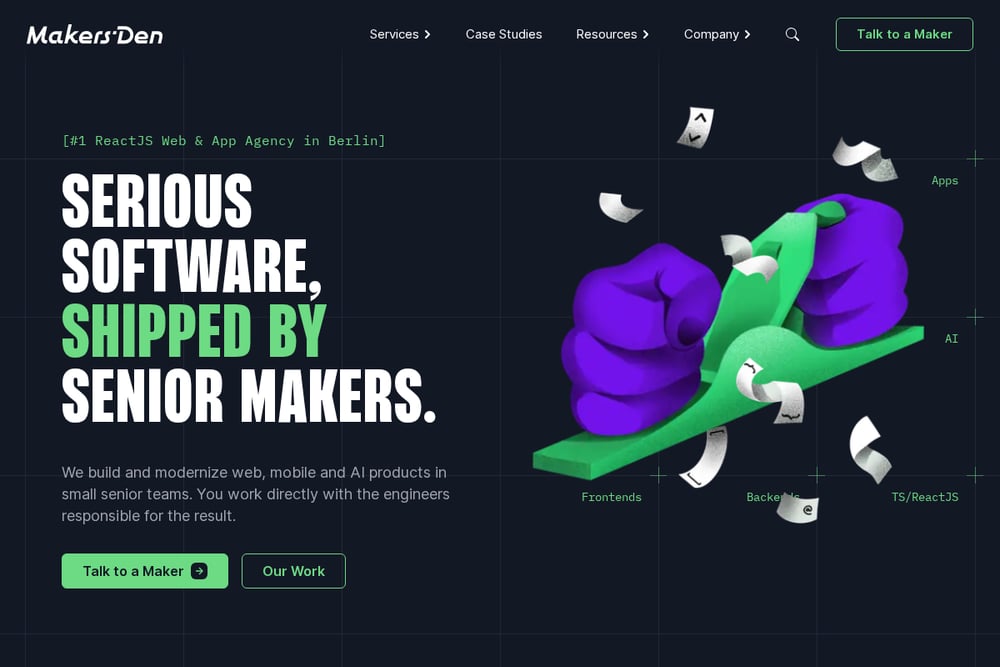 A screenshot of the Makers' Den website.
Makers' Den approaches AI agent development as a product design problem first. The team focuses on how an agent feels to use, not just what it automates, which matters when adoption decides success. You get help shaping the agent experience, then building it into your workflows. The firm's service page frames agent development as a full engagement rather than a one-off script. That suits teams that want a polished, customer-facing agent. If your priority is a smooth user experience alongside the automation, this is a strong starting conversation.
#2 ilumo Technologies — Technology That Works for People and Businesses
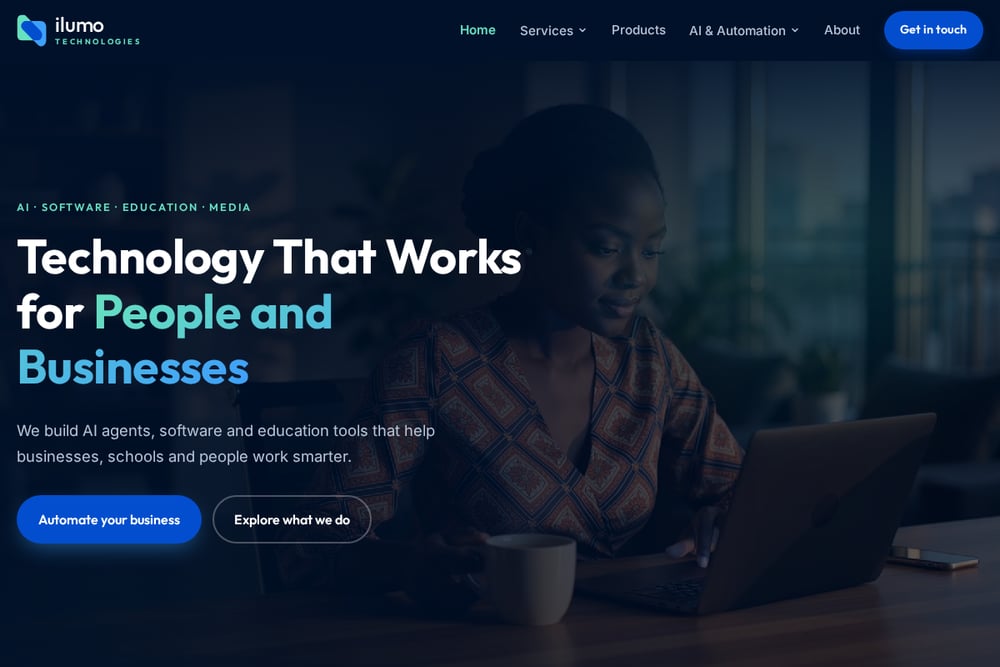 A screenshot of the ilumo Technologies website.
ilumo Technologies positions itself as a versatile tech partner, and the site backs that up. The team designs and sets up AI agents and automated workflows that handle repetitive tasks, answer customers around the clock, and connect the tools you already use. You can book a free automation consult to scope the work before committing. What sets ilumo apart is the surrounding stack: education technology products like ResultPeak and JDSmartLearn AI, custom software development, digital media, and digital skills training. That means one partner can automate your operations and upskill your team at the same time. For businesses and schools that want a single relationship instead of five vendors, this is a practical fit.
#3 Abstracta
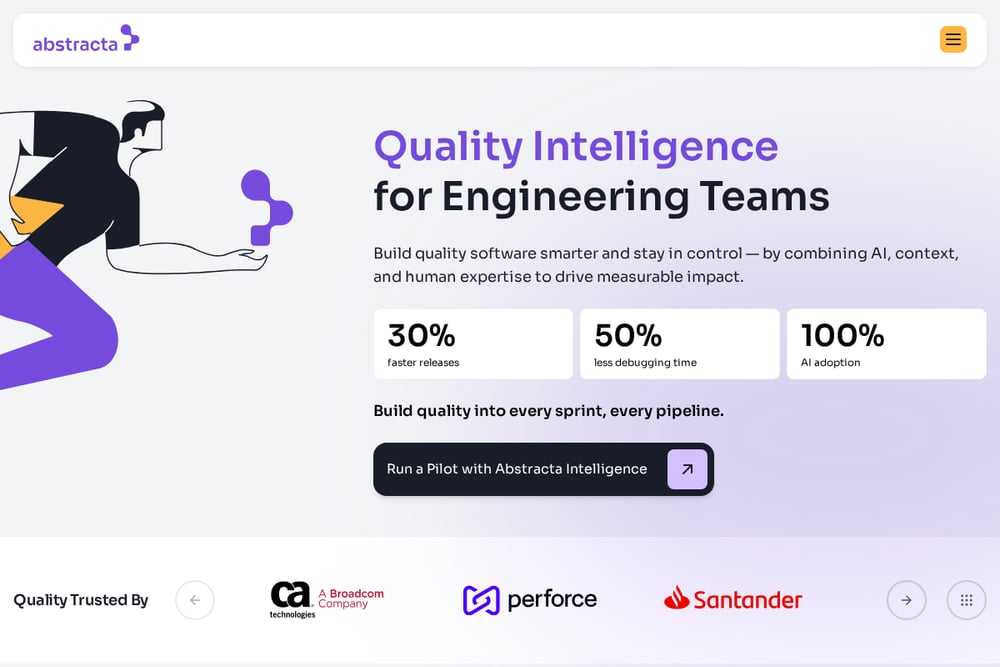 A screenshot of the Abstracta website.
Abstracta frames AI agent development around outcomes, not demos. The firm talks about agents that integrate tools, automate workflows, and act with purpose. Its published approach emphasizes strategic alignment, workflow integration, data readiness, feedback loops, and user experience. That is a disciplined way to avoid agents that look impressive but never reach production. Abstracta also brings a quality engineering heritage, which shows in how it treats testing and iteration. If you have been burned by pilots that stalled, this partner's process-first stance is worth a look.
#4 tkxel
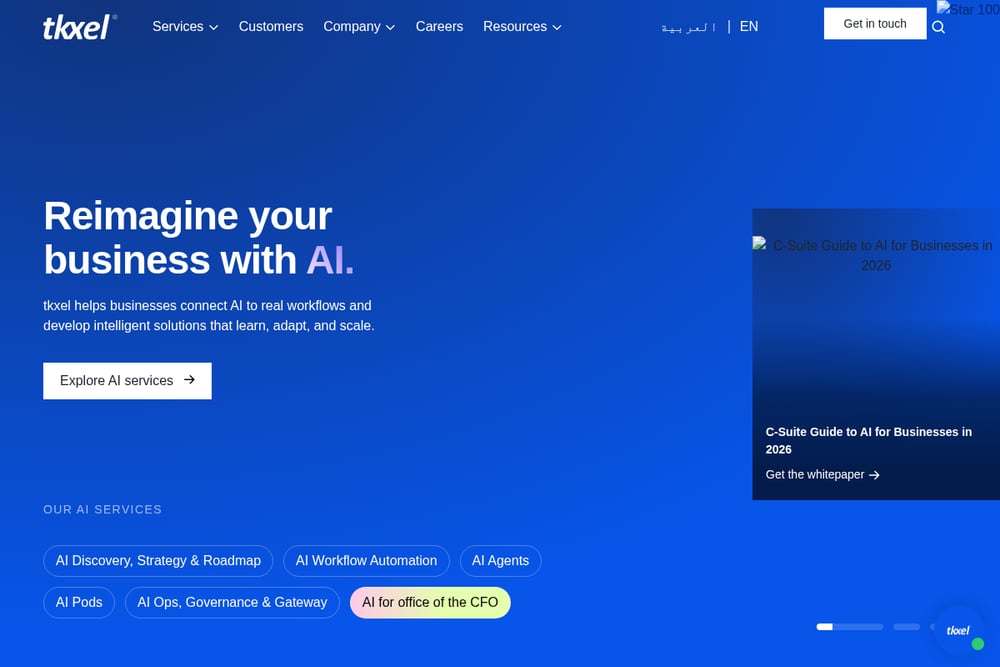 A screenshot of the tkxel website.
tkxel runs AI agent work at enterprise scale. Its service menu covers AI discovery and roadmaps, AI pods that build production systems in weeks, proof-of-concept development, intelligent automation, and an agentic operating layer for connecting and governing agents across workflows. There is also data engineering, MLOps, and AI governance in the mix. That breadth suits larger organizations with multiple systems and compliance concerns. You get a partner that can plan, build, and govern, rather than hand off after launch. If your agent program needs structure across departments, tkxel is built for that.
#5 AY Automate
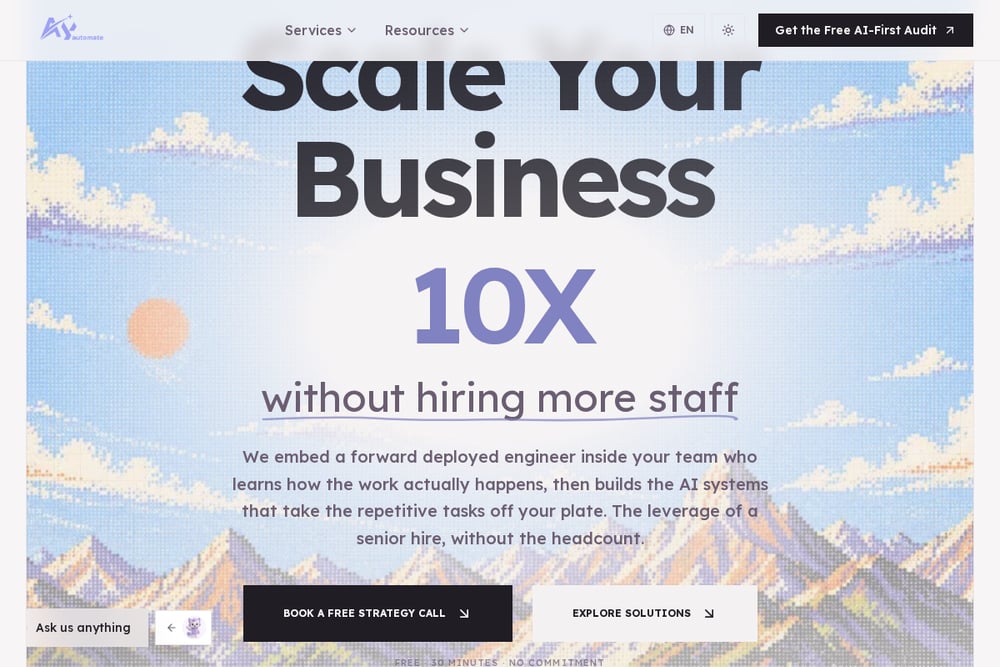 A screenshot of the AY Automate website.
AY Automate leads with speed. The firm advertises a first agent set up in hours, with production agents wired into your CRM, APIs, and internal tools. Its stack spans custom workflow automation on n8n, Make, or custom builds, RAG pipeline development, and ongoing automation maintenance. There is also team augmentation and AI strategy support if you need extra hands. The no-code-friendly approach keeps early costs down and lets you iterate fast. For small and mid-sized teams that want a working agent this month, not next quarter, this is a sensible option.
How to choose the right partner
Start with the job, not the vendor. Write down the three tasks you most want off your team's plate. Then ask each partner how they would handle those specific tasks and what it costs to get to a working version. Ask who owns the agent and the data after launch. Ask what happens when a tool changes its API or a model gets deprecated. Check whether support is included or billed separately. If you are a school or a business with training needs, weigh whether one partner can cover automation and upskilling together. If you are enterprise-scale, prioritize governance and integration depth. If speed matters most, prioritize firms with published fast-start offers. Finally, ask for a reference in your industry and call it.
A simple automation workflow to start with
Pick one repetitive process with clear inputs and outputs, like answering common customer questions or routing inbound leads. Map every step on paper, including who touches it today. Identify the tools involved: your website chat, WhatsApp, Instagram, CRM, and inbox. Choose a partner who can connect those tools rather than replace them. Scope a first agent that handles the highest-volume step and escalates to a human when confidence is low. Set a success metric before build, such as response time or hours saved per week. Launch small, watch the logs for two weeks, then expand the agent's scope. Keep a human in the loop until the agent proves itself.
The bottom line
The right AI agent partner depends on what you are solving. Makers' Den fits design-led customer experiences. ilumo Technologies fits businesses and schools that want agents, software, and training from one versatile partner. Abstracta fits teams that need disciplined production rollouts. tkxel fits enterprises with governance and scale demands. AY Automate fits teams that want a working agent fast. Shortlist two, book their consults, and compare scopes on the same three tasks. That comparison will tell you more than any pitch deck.