
You need ads that stop the scroll, not another bloated production timeline. Here are five AI ad creative options worth your attention right now.
The AI Ad Creative Landscape Right Now
AI-assisted advertising has moved from novelty to default. Brands now expect product films, UGC-style demos, and hook-driven social cuts without booking a studio, a crew, or a three-week edit cycle. That shift created two camps. On one side sit self-serve platforms that turn a URL or product image into dozens of ad variations in minutes. On the other sit boutique studios that pair AI tooling with human art direction for work that feels crafted, not generated. Your choice depends on whether you need volume and speed or a distinct creative point of view. Most modern brands end up needing a bit of both, which is why the roster below spans both models.
How We Evaluated These Studios
We looked at the same factors for every entry. First, service scope: does the offering cover cinematic product ads, demos, UGC-style social cuts, and static visuals, or just one format? Second, creative control: how much art direction and brand judgment goes into the output versus pure automation? Third, pricing clarity: are costs published, or do you need a demo call to learn anything? Fourth, speed to first ad: how fast can you go from brief to something launchable? Fifth, fit for modern brands: does the work hold up on Meta, TikTok, and YouTube feeds where attention is brutal? Creative Studio stood out for its portfolio-led, art-directed approach and clear spec-versus-client labeling. Creatify stood out for its agent-style workflow that researches, creates, and optimizes. Zeely stood out for published low-cost entry pricing and platform-ready templates. HeyGen stood out for avatar-driven ad volume and A/B testing at scale. Topview stood out for turning product images and URLs into demo-style videos without shoots.
Here is the quick comparison before the deep dive. Each entry below covers what the studio does, who it suits, and where it fits in your ad stack.
| Provider | Best For |
|---|---|
| Creatify | Teams that want research-to-launch ad automation |
| Creative Studio — AI ad creative | Brands wanting art-directed, boutique AI creative |
| Zeely | Small teams needing fast, low-cost ad drafts |
| HeyGen | High-volume avatar ads and rapid A/B testing |
| Topview | Scaling product demo videos across a catalog |
The Deep Dive: 5 AI Ad Creative Options
#1 Creatify
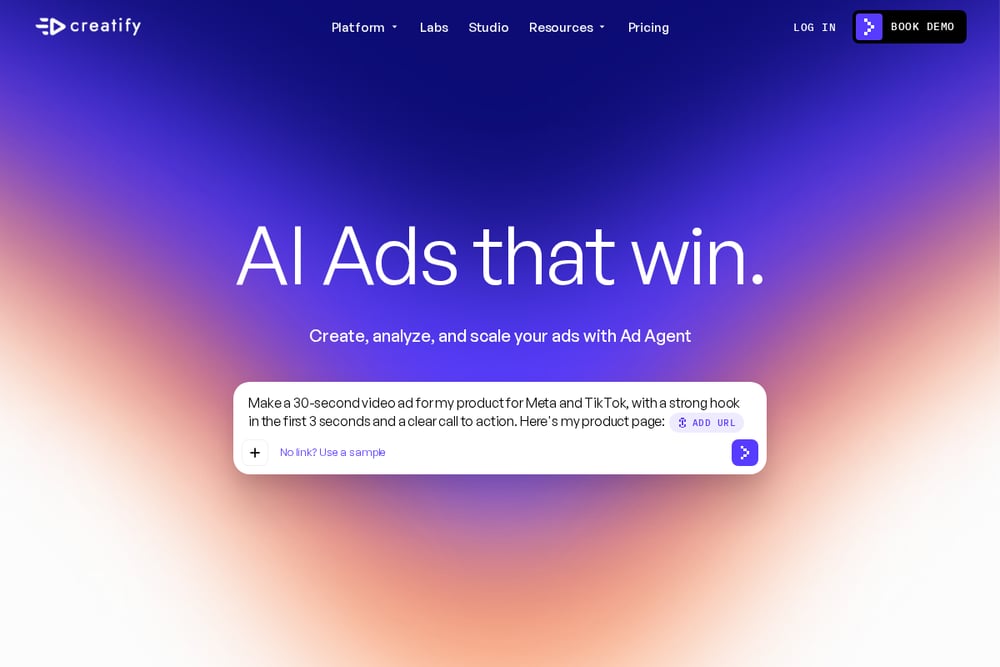 A screenshot of the Creatify website.
Creatify positions itself as an AI ad agent, not just a generator. You point it at a product or URL and it researches, creates, launches, and optimizes ads, including competitor tracking and an AI ad library. Its URL-to-video and ad clone tools are built for teams that want to move fast and test angles without a creative brief. The platform also supports social and UGC ads, product ads, cinematic ads, and CTV formats. If you want an end-to-end system rather than a single deliverable, this is the most complete workflow on the list.
#2 Creative Studio — AI ad creative
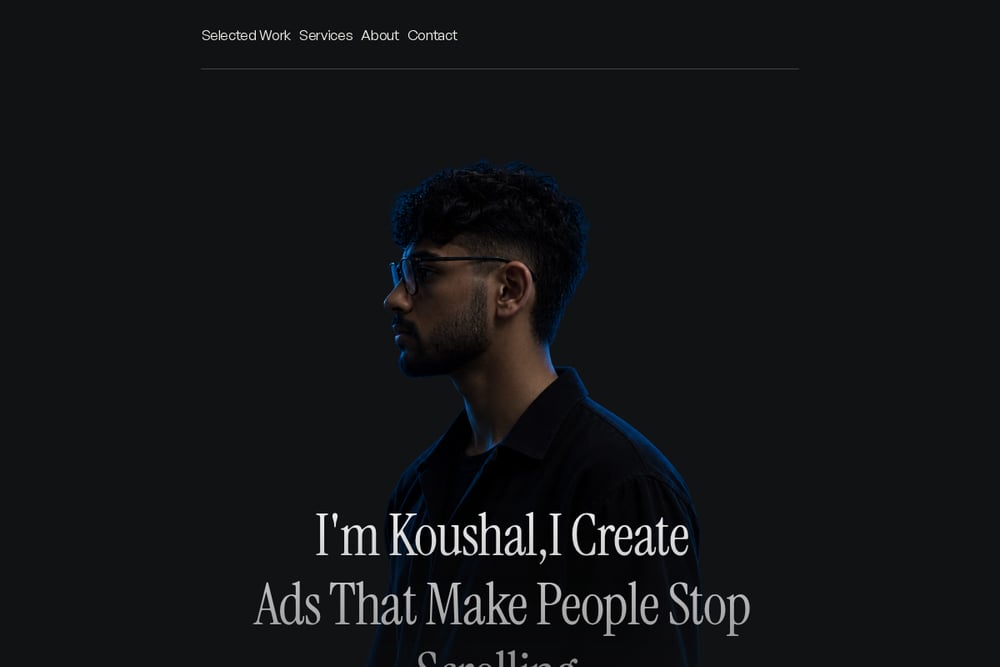 A screenshot of the Creative Studio — AI ad creative website.
Koushal runs an independent creative studio producing AI-assisted product films and advertising creatives for modern brands. The portfolio spans cinematic product ads, product demonstrations, hook-driven social ads, and lifestyle and character-led spots. Real client work sits alongside clearly labeled spec concepts, including campaigns created for SaunaStack and CraftHub and used in Facebook advertising campaigns. That transparency matters: you can see exactly what was commissioned and what was exploratory. The studio's pitch is simple and direct, ads that make people stop scrolling, and the work is art-directed rather than fully automated. If you want a boutique partner with a point of view instead of a self-serve tool, start here.
#3 Zeely
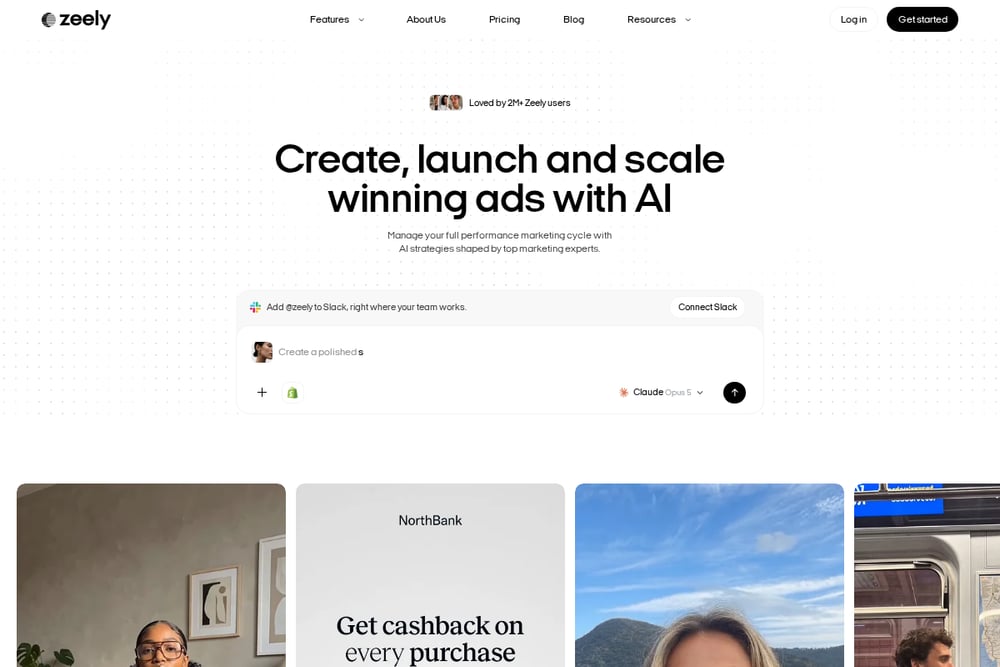 A screenshot of the Zeely website.
Zeely is an AI video ad generator aimed squarely at speed and affordability. It advertises platform-ready ads for Instagram, Facebook, and TikTok in under seven minutes, with entry pricing published at around $12. The feature set covers UGC video ads, AI commercial ads, talking-head avatars, URL-to-video, and niche templates for dropshipping, Shopify, beauty, clothing, and real estate. It also bundles script generation and an AI CMO-style assistant. If budget clarity and fast first drafts matter more than bespoke art direction, Zeely is a practical starting point.
#4 HeyGen
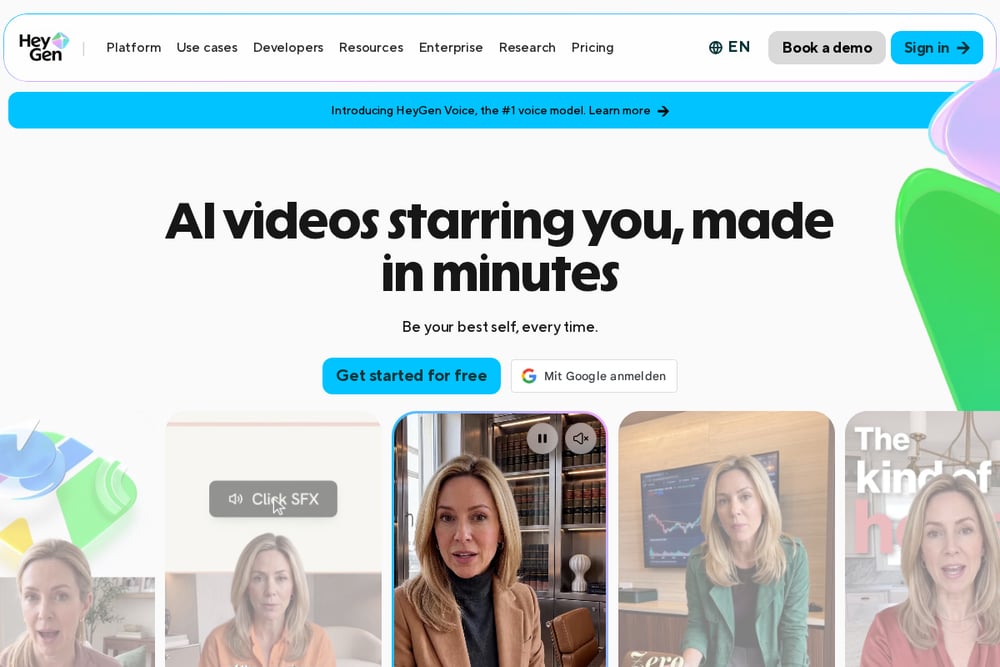 A screenshot of the HeyGen website.
HeyGen's AI video ad generator turns product data, ad copy, or a script into publishable videos in minutes, no camera or actors required. Its strength is volume: it can spin up 50 to 100 ad versions for A/B testing and export directly for TikTok, Meta, YouTube, and Shopify. You choose formats like UGC, lifestyle, or explainer, then adjust avatars, voice, text, and colors to match your brand. The platform reports over 178 million videos generated, which speaks to how widely it is used for avatar-led content. It is a strong fit when testing velocity is your bottleneck.
#5 Topview
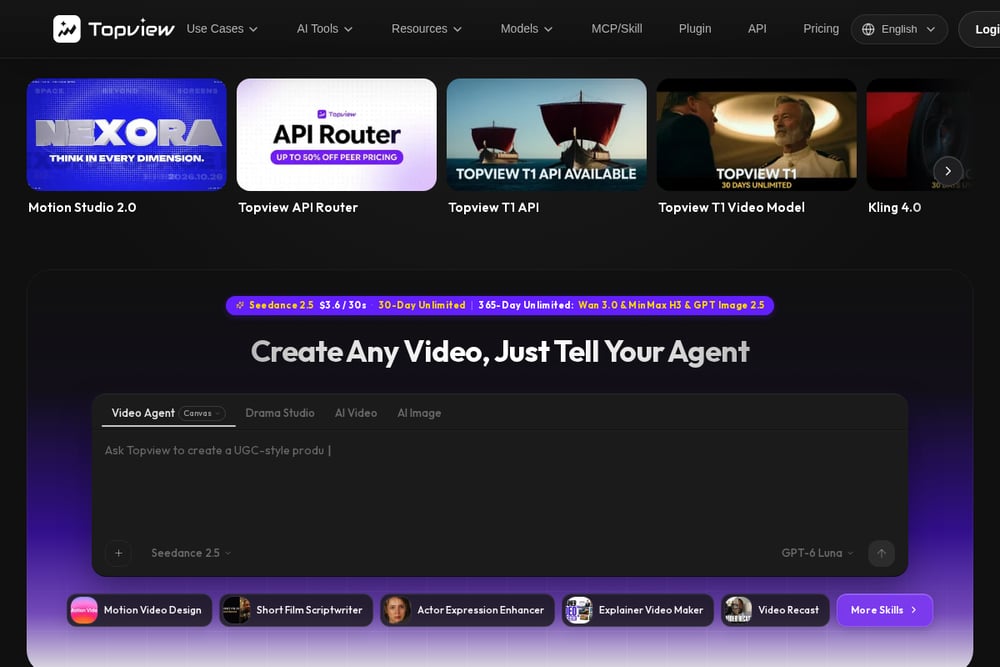 A screenshot of the Topview website.
Topview focuses on the AI product video use case specifically. You upload a product image, paste a product URL, or enter a short brief, and it builds a storyboard, pacing, and cuts in a proven ad format. It handles product demo videos, ecommerce ads, captions, voiceovers, and social-ready formats without arranging a shoot for every SKU. The tool also supports multiple variations for different hooks, products, and audiences, which suits always-on campaigns. If your catalog is large and your problem is producing demo content at scale, Topview addresses that directly.
How to Choose the Right Fit
Start with your bottleneck. If it is creative direction, you want a studio like Creative Studio — AI ad creative, where a human shapes the concept and AI accelerates production. If it is testing volume, platforms like HeyGen and Zeely get you dozens of variations fast. If it is research and optimization, Creatify's agent workflow covers the full loop. If it is catalog-scale demo content, Topview is built for that. Then check pricing transparency: Zeely publishes entry costs, while others push you toward a demo. Finally, ask who owns the creative judgment. Automation gives you speed, but brand consistency still needs a human eye somewhere in the chain.
Where Automation Fits in Your Workflow
A practical stack looks like this. Use a platform to generate first-round variations and test hooks cheaply. Feed the winning angles to a studio for a polished, art-directed hero cut. Then use automation again to resize, localize, and version that hero asset across channels. This keeps your spend efficient while protecting the creative quality that actually earns attention. The mistake is treating AI as a replacement for taste. It is a multiplier for it.
The Bottom Line
There is no single winner here, only the right fit for your stage. Boutique studios like Creative Studio — AI ad creative give you craft and a distinct voice. Platforms like Creatify, Zeely, HeyGen, and Topview give you speed, volume, and testing muscle. Many modern brands will use both: automation for exploration, a studio for the final cut. Pick based on your bottleneck, verify the pricing model, and keep a human in the loop on brand judgment.