
Mobile bugs don't wait for your release cycle. These five agentic testing platforms help you catch them before your users do.
The Shift to Agentic Mobile Testing
Mobile QA has always been the hard part. Web testing got easier with mature frameworks, but mobile still depends on brittle selectors, instrumentation, and constant maintenance. That's changing fast. Agentic testing platforms now use AI agents to explore your app, write tests, and heal them when the UI shifts. You upload a build, point an agent at your app, and get back bug reports with recordings and repro steps. The promise is simple: less setup, fewer flaky tests, faster feedback. For teams shipping iOS and Android apps, this is the most important shift in QA since continuous integration.
How We Evaluated These Platforms
We looked at five factors. First, service scope: does the platform cover both iOS and Android, and does it handle web or API testing too? Second, setup effort: can you start without SDKs, instrumentation, or code changes? Third, speed to insight: how quickly do you get actionable bug reports? Fourth, pricing clarity: is there a free trial, transparent tiers, or a waitlist? Fifth, local fit: does the platform support US-based teams with CI integrations and enterprise options? Each platform below stood out in different ways. Esilar impressed with zero-setup speed. Momentic showed strong agentic authoring and repair. mabl delivered broad enterprise coverage. Spur focused on visual, no-instrumentation mobile testing. Perfecto brought deep device lab infrastructure.
Here's a quick look at the five platforms, ordered by how they fit different team needs.
| Provider | Best For |
|---|---|
| Momentic | Teams wanting agentic testing across web, iOS, and Android |
| Esilar | Teams wanting zero-setup mobile bug detection in minutes |
| mabl | Enterprises needing broad, audit-ready test automation |
| Spur | Teams wanting visual, no-instrumentation mobile testing |
| Perfecto | Large enterprises needing real-device cloud testing |
The 5 Platforms in Detail
#1 Momentic
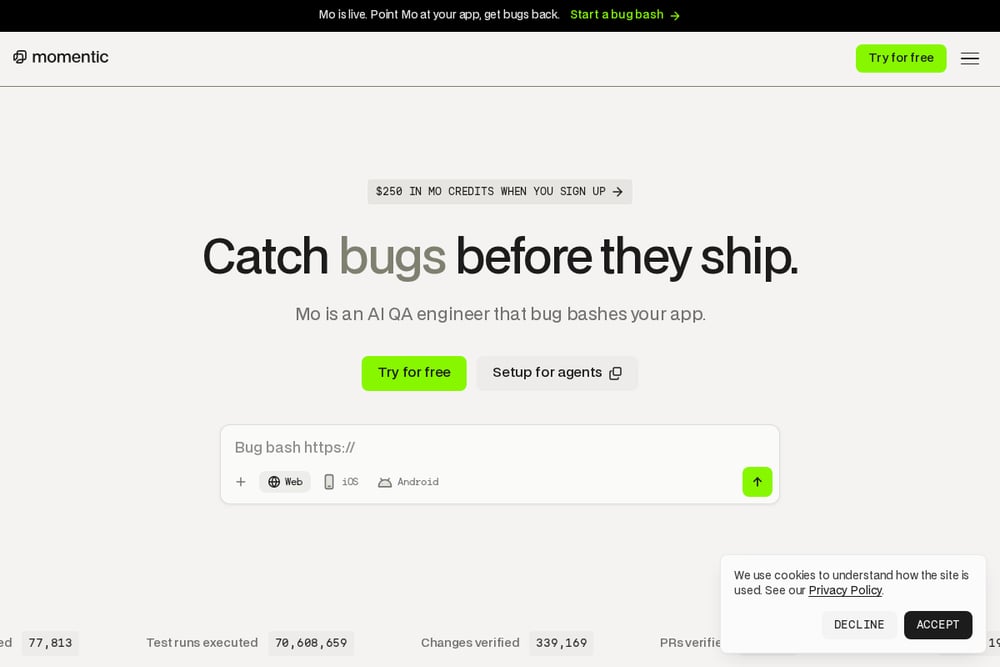 A screenshot of the Momentic website.
Momentic positions itself as an AI QA engineer named Mo. You point it at your app, and it bug bashes your UI, returning recordings and reproduction steps. The platform supports web, iOS, and Android testing, with agents that author, repair, and maintain tests as your UI changes. It also offers an MCP server so your coding agent can write a test, run it in a live browser, and fix it from the failure. With over 117,000 bugs caught and millions of test runs executed, Momentic has strong proof at scale. If you want an agentic platform that covers web and mobile with deep CI integration, this is a serious contender.
#2 Esilar
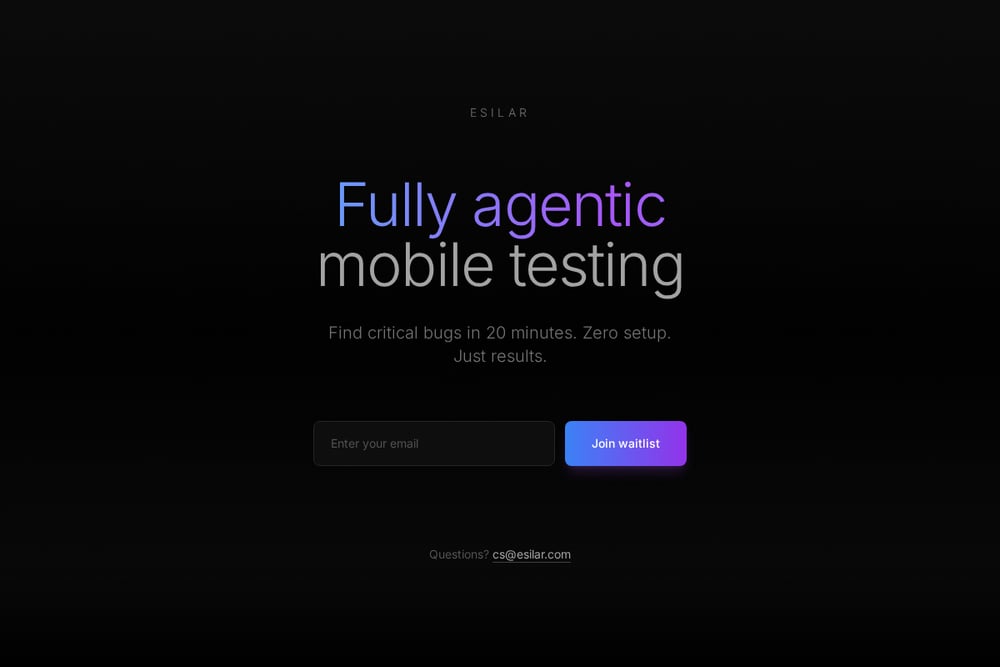 A screenshot of the Esilar website.
Esilar takes a radically simple approach: upload your APK, get intelligent results in minutes. The platform is fully agentic, meaning no setup, no instrumentation, and no test scripts to maintain. It promises critical bug reports in about 20 minutes, which is dramatically faster than traditional mobile QA cycles. The site invites you to join a waitlist, so early access is still rolling out. For teams that want zero-friction mobile testing without building a test suite, Esilar's upload-and-go model is worth watching. Questions go to cs@esilar.com, suggesting a hands-on support approach.
#3 mabl
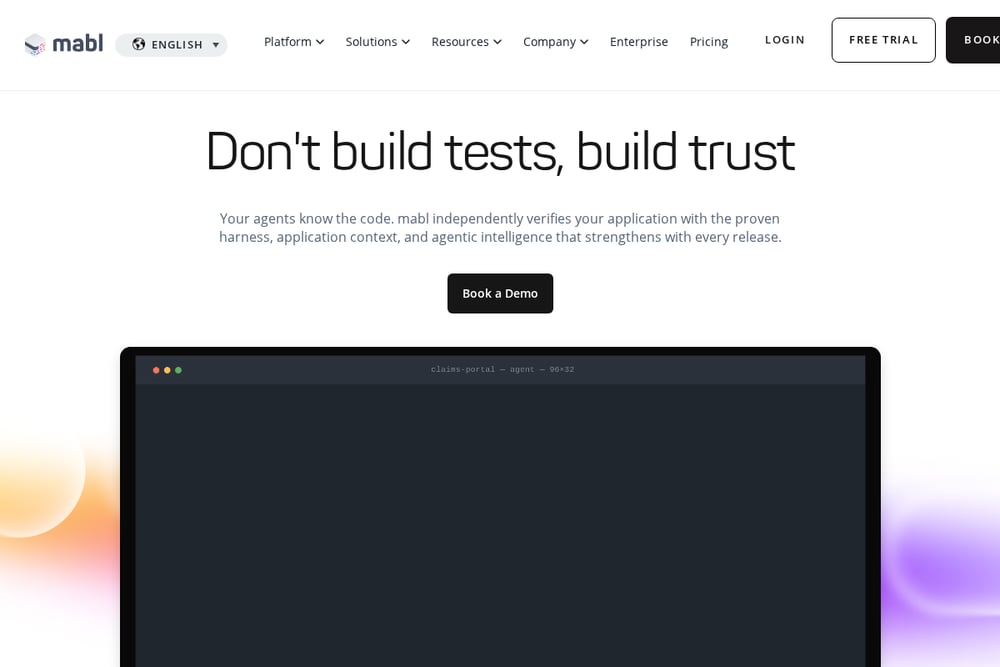 A screenshot of the mabl website.
mabl offers agentic testing built for collaboration and speed across web, mobile, API, and AI apps. Its agents autonomously create, run, analyze, and maintain tests, which helps eliminate testing bottlenecks in your development lifecycle. The platform supports unlimited parallel execution and handles complex elements like Shadow DOM and emails. mabl also provides audit-ready evidence, which matters for regulated industries like financial services and healthcare. If you need enterprise-grade coverage with strong reporting, mabl is a solid fit. It's less about quick uploads and more about a complete testing ecosystem.
#4 Spur
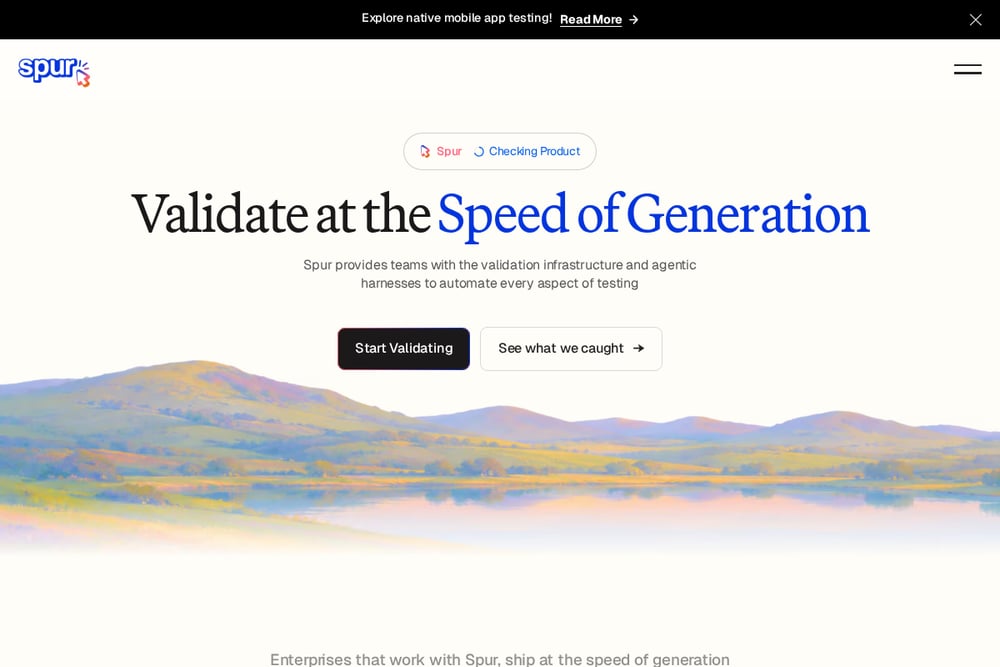 A screenshot of the Spur website.
Spur takes a fundamentally different approach to iOS and Android automation. It requires no code changes, no instrumentation, and no brittle selectors. Instead, it runs your real app and drives it visually with an AI agent, so tests survive UI changes and reflect what users actually experience. Spur's platform covers exploratory testing, localization, UI/UX testing, and functional testing. It also offers an MCP server and a buyer's guide for e-commerce QA. If traditional mobile automation keeps breaking on you, Spur's visual agent approach is worth a look. It's especially strong for teams that want realistic, user-like testing.
#5 Perfecto
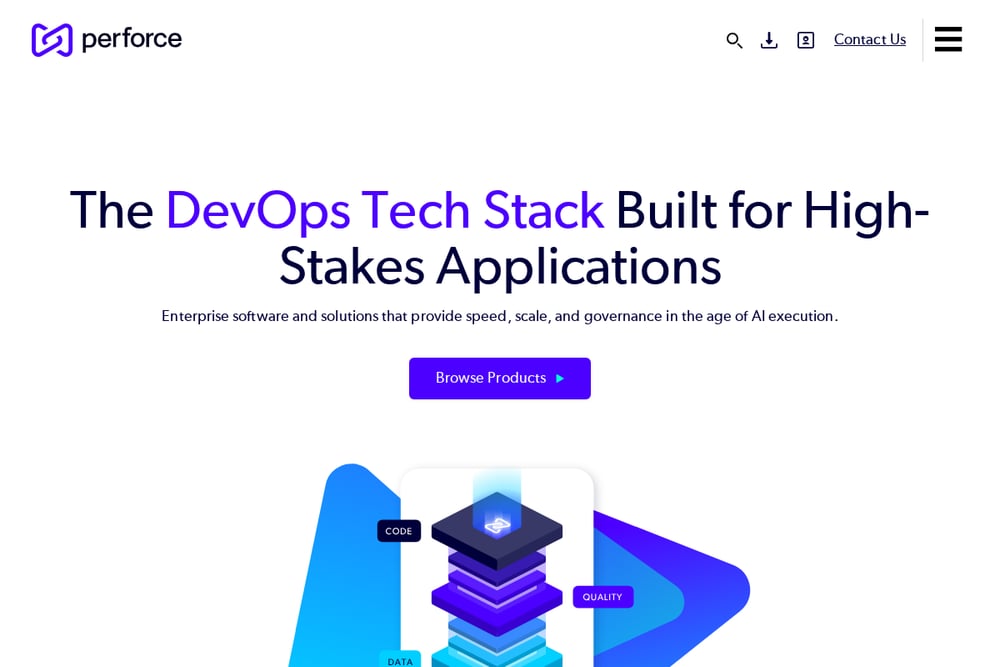 A screenshot of the Perfecto website.
Perfecto, part of Perforce Software, brings deep device lab infrastructure to agentic functional testing. It supports enterprise mobile and web testing across real devices, with autonomous testing capabilities through Perforce's AI offerings. The platform is built for scale, with continuous testing and API monitoring. Perfecto is a strong choice if you need a mature device cloud and compliance-ready testing. It's less about quick uploads and more about comprehensive, enterprise-grade coverage. For large organizations with complex device matrices, Perfecto remains a reliable workhorse.
How to Choose the Right Platform
Start with your biggest pain point. If you want the fastest possible bug detection with zero setup, look at Esilar. If you need agentic testing across web and mobile with strong CI integration, Momentic is a strong fit. For enterprise-grade coverage with audit trails, mabl and Perfecto are worth evaluating. If brittle selectors are your main frustration, Spur's visual approach may be the answer. Consider your team size, compliance needs, and whether you want a waitlist or immediate trial. Most platforms offer free trials or demos, so test two or three before committing.
Automating Your Mobile QA Workflow
A practical agentic workflow looks like this. First, connect your repository or upload your build. Second, let the AI agent explore your app and generate test cases. Third, run those tests on every pull request through your CI provider. Fourth, review bug reports with recordings and repro steps. Fifth, let the agent auto-heal tests when the UI changes. Platforms like Momentic and mabl support this loop natively. Esilar simplifies it to an upload-and-wait model. Spur drives your real app visually. Perfecto adds real-device execution. Pick the loop that matches your team's maturity.
The Bottom Line
Agentic mobile testing is no longer a nice-to-have. It's how you ship faster without shipping bugs. The five platforms here each solve a different part of the problem. Esilar wins on speed and simplicity. Momentic brings agentic power across web and mobile. mabl delivers enterprise breadth. Spur offers visual, no-instrumentation testing. Perfecto provides real-device scale. Your job is to match the tool to your team's workflow. Start with a trial, measure the time saved, and let the results guide you.