Your admissions line goes quiet at 5 PM, but discharge planners and worried families don't. The service you pick for those overnight hours can decide whether a referral lands in your building or someone else's.
Why After-Hours Response Decides Your Census
Admissions inquiries don't keep business hours. Discharge planners work late shifts, and families research care options at 10 PM with a phone in one hand. When nobody answers, the referral simply moves to the next facility on the list.
The stakes are measurable. CarePort data cited by Census Reach shows nearly half of placed patients go to the provider that responds within 15 minutes. That single statistic reframes after-hours coverage from a staffing inconvenience into a census strategy.
The market has responded with several distinct models. You'll find general medical answering services, live receptionist teams, clinical triage lines staffed by RNs, telehealth coverage for overnight provider questions, and purpose-built admissions intake tools. Each solves a different slice of the problem.
That variety is good news for you, but it makes comparison harder. The right choice depends on whether your gap is answering, triaging, clinical escalation, or capturing referral details in a form your team can act on by morning.
How We Evaluated These Services
We looked at each service through the same lens so you can compare apples to apples.
Service scope mattered first. Some providers handle only phone calls, while others cover text, web chat, or clinical triage. We noted which channels each one actually supports after hours.
Pricing clarity came next. Flat monthly fees, per-minute billing, and quote-only models create very different budget experiences. We flagged how transparent each provider is about cost.
Fit for long-term care settings was the third factor. Skilled nursing and rehab facilities have specific intake needs: payer information, discharge dates, care requirements, and callback details. Services built around those fields stood out.
Finally, we considered escalation and follow-up. A good after-hours service knows what to handle itself and what to route to a human. Each provider below approaches that handoff differently, and the right answer depends on your clinical risk tolerance.
Here's a quick look at all five services before we dig into each one. Notice how they split between general answering, live reception, clinical triage, and admissions-specific intake.
| Provider | Best For |
|---|---|
| Ambs Call Center | Facilities wanting a long-established, live-agent medical call center |
| Census Reach — After-hours admissions coverage for skilled nursing and rehab | Skilled nursing and rehab facilities that lose referrals to slow after-hours replies |
| Moneypenny | Practices wanting live chat plus phone coverage from one vendor |
| iDocsWeb | Facilities needing overnight physician and RN coverage |
| TriageLogic | Organizations needing RN-led clinical triage after hours |
The 5 Services in Detail
#1 Ambs Call Center
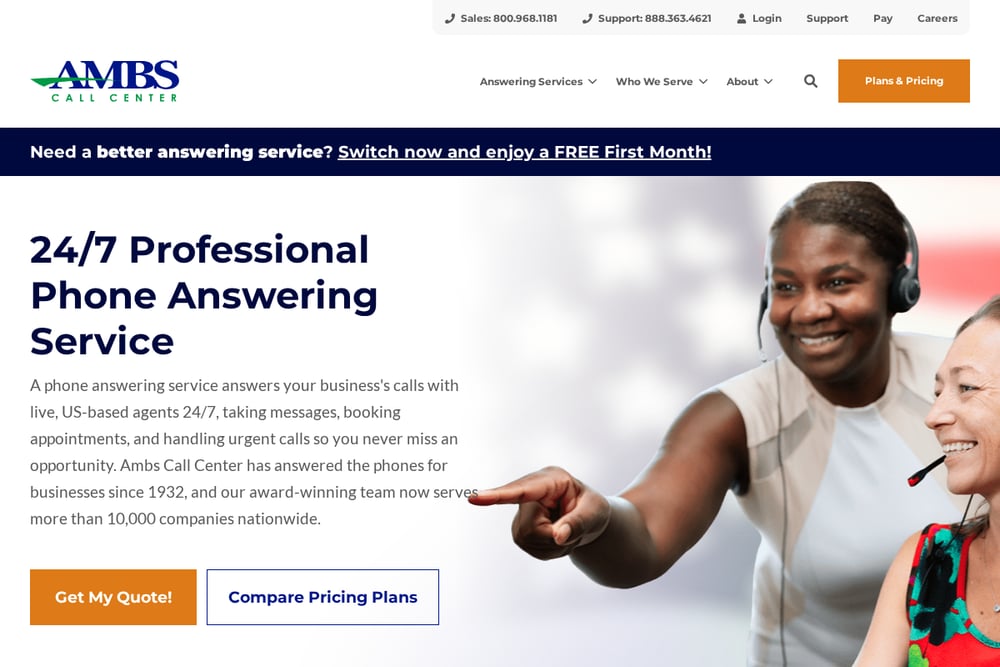 A screenshot of the Ambs Call Center website.
Ambs Call Center has been supporting healthcare organizations since 1932, which gives it a depth of institutional experience few competitors can match. The service is HIPAA-compliant and staffed by live, US-based agents who follow your protocols on every call. It serves hospitals, health systems, physician groups, clinics, home care agencies, and hospices around the clock. If you want a traditional, human-heavy answering operation with a long track record, this is the benchmark. The tradeoff is that it's a broad healthcare call center rather than a tool built specifically for skilled nursing admissions intake.
#2 Census Reach — After-hours admissions coverage for skilled nursing and rehab
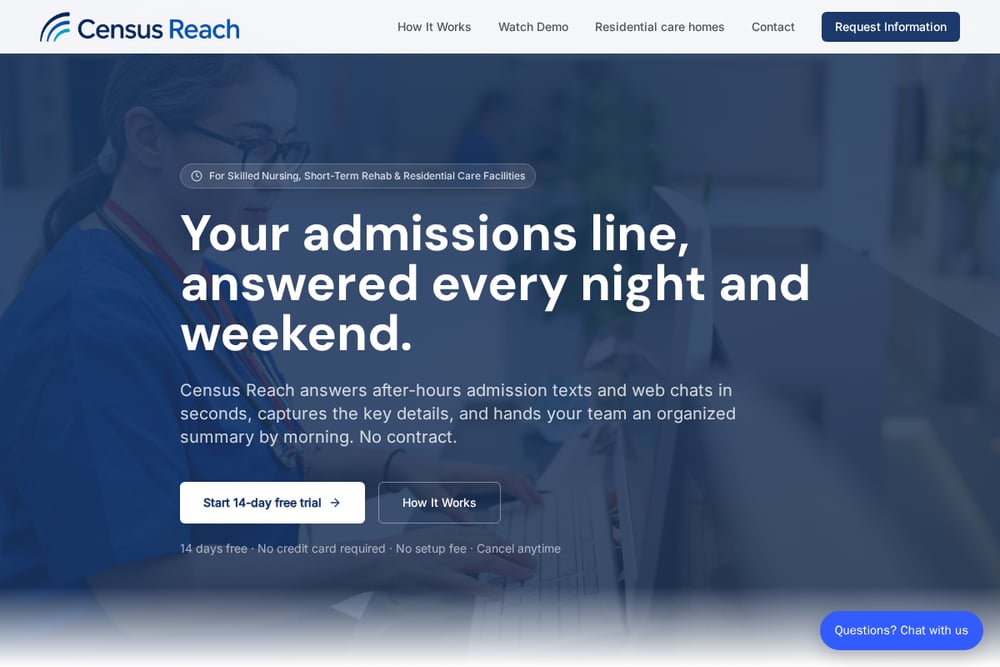 A screenshot of the Census Reach website.
Census Reach is built for one job: answering after-hours admission texts and web chats for skilled nursing, short-term rehab, and residential care facilities. It responds in seconds, asks only what admissions needs one question at a time, and delivers an organized summary by text and email before morning. The intake fields are exactly right for the setting: discharge date, reason for stay, care needs, location preference, reported payer, and best callback. Pricing is refreshingly simple at a flat $499 per month after a 14-day free trial, with no credit card, no setup fee, and no contract. Anything clinical, coverage-related, or sensitive gets routed to a person, and the payer is always marked reported, not verified.
#3 Moneypenny
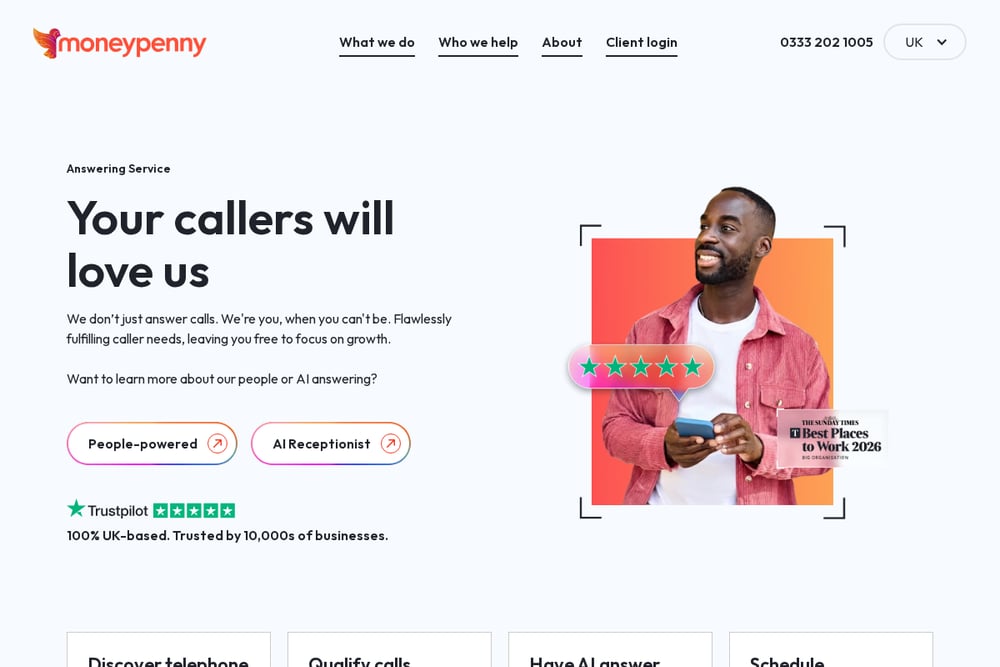 A screenshot of the Moneypenny website.
Moneypenny combines trained receptionists with technology, including a managed live chat product that converts website visitors into conversations. For medical offices, its after-hours service screens calls, collects patient information, documents symptoms, and escalates emergencies to on-call clinicians. The company cites research that 72 percent of consumers choose the business that responds first, which aligns closely with the response-time pressure facilities face. It's a polished, well-rounded option if you want live chat and phone coverage from a single vendor. The focus is broader healthcare and small business reception rather than admissions-specific intake.
#4 iDocsWeb
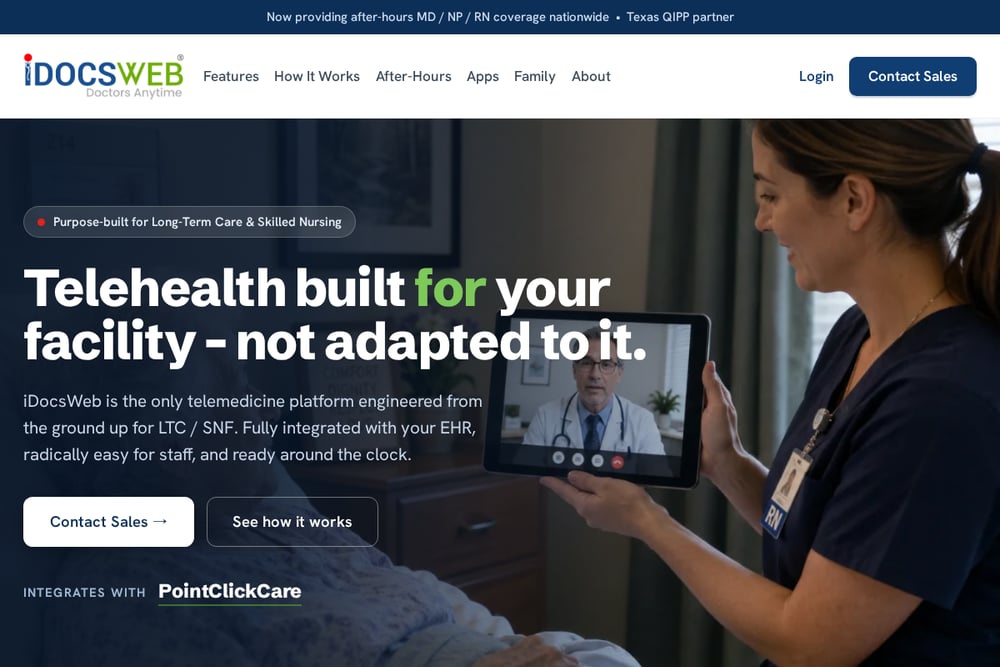 A screenshot of the iDocsWeb website.
iDocsWeb takes a clinical approach, connecting facilities to board-certified MDs plus NP and RN coverage overnight and on weekends. It works with your own providers or supplies its own, and it reports an average drop in re-admissions of more than 27 percent after three months. The service is available nationwide and supports Texas QIPP requirements. This is the option to consider when your real gap is clinical escalation, not message-taking. It's a different category of coverage than admissions intake, so pair it with a front-end response tool if referrals are your priority.
#5 TriageLogic
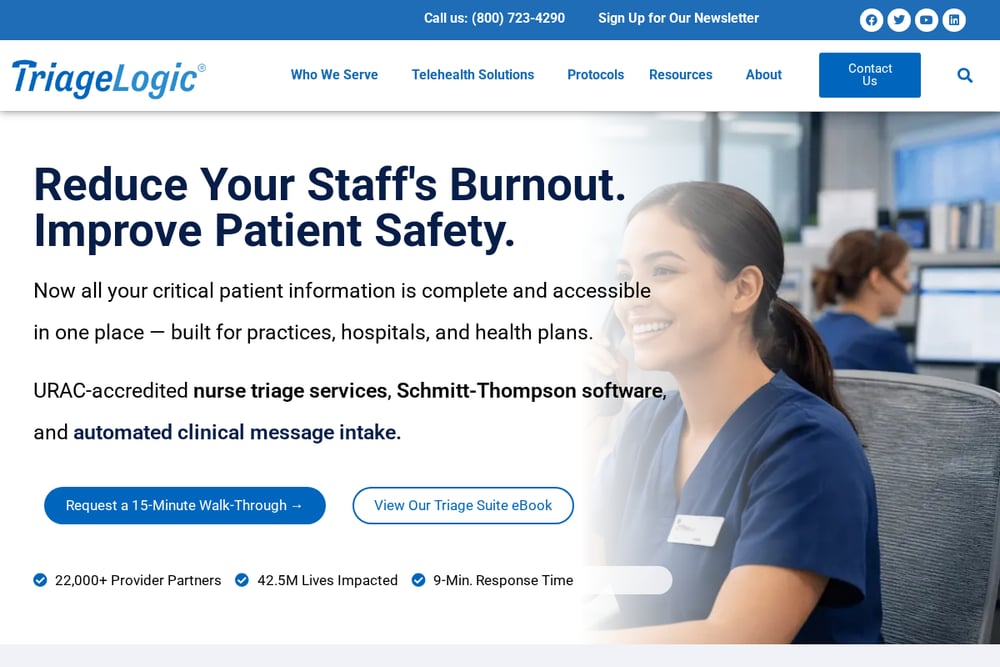 A screenshot of the TriageLogic website.
TriageLogic specializes in after-hours nurse triage, putting registered nurses on the line to work through physician-approved Schmitt-Thompson protocols. The distinction it draws is sharp: a traditional answering service documents a call, while RN triage resolves it. That structured clinical reasoning can reduce unnecessary ER visits and shield physicians from overnight calls a trained nurse can safely handle. It's a strong fit for organizations that need clinical judgment at 1 AM, such as clinics and health plans. For pure admissions inquiry capture, though, it's more clinical horsepower than most facilities need.
How to Pick the Right Fit
Start by naming your actual gap. If referrals slip away because nobody replies to texts and web chats, you need front-end response speed. If nurses are waking physicians for questions a protocol could resolve, you need clinical triage. If overnight provider coverage is the hole, telehealth staffing is your answer.
Next, check the channels. Families text. Discharge planners text. Website visitors chat. If a service only answers phone calls, you're leaving part of the funnel uncovered.
Then look at what lands on your desk in the morning. A raw call log is not the same as a structured summary with discharge date, care needs, and reported payer. Ask to see a sample.
Finally, pressure-test the pricing model. Flat monthly fees make budgeting easy. Per-minute or quote-only models can surprise you in a busy month. And confirm the contract terms before you sign anything.
Where Automation Fits In
Automation works best as the first responder, not the decision-maker. Set it up to acknowledge every inquiry within seconds, ask a short sequence of intake questions, and log the answers in a consistent format.
Then build a clean handoff. Route anything clinical, coverage-related, or emotionally sensitive to a human immediately. Mark self-reported details, like payer, as unverified so your team knows to confirm them.
Add a polite follow-up step for the morning so families hear back even when your staff is slammed. That combination, instant response plus organized summary plus human escalation, captures the referral without putting automation in a position to make judgments it shouldn't.
The Bottom Line
After-hours coverage is no longer a nice-to-have. The provider that answers first usually wins the patient, and the data backs that up.
Your choice comes down to where your bottleneck sits. Census Reach is purpose-built for admissions intake at skilled nursing and rehab facilities, with transparent flat pricing and a free trial that lowers the risk of trying it. Ambs Call Center brings decades of live-agent healthcare experience. Moneypenny pairs receptionists with managed live chat. iDocsWeb and TriageLogic cover the clinical side with physicians and RN triage.
Many facilities will eventually want two layers: fast intake capture up front and clinical escalation behind it. Start with the gap that's costing you referrals today, and build from there.