You don't need another planner you'll abandon by Friday. You need a coach who understands how your brain actually works, then builds systems around that reality instead of fighting it.
The ADHD coaching landscape right now
ADHD and executive function coaching has moved from a niche add-on to a mainstream service. Adults, parents, students, and even clinicians now seek out coaches who can address time blindness, task initiation, overwhelm, and the invisible labor of running a household. The field is unregulated in most states, which means quality varies widely. Some coaches hold advanced certifications and work alongside therapists and schools. Others are licensed clinicians who fold coaching into a broader care model. The common thread: practical, forward-looking support that targets daily functioning rather than diagnosis.
How these practices were evaluated
Each practice was reviewed on service scope, depth of ADHD and executive function specialization, clarity of the client experience, accessibility of virtual delivery, and how well the approach fits real-life complexity. Credentials, collaboration with other professionals, and the range of people served also factored in. No single factor decided placement; the goal was to show how different practices suit different needs.
Here's a quick look at the five practices, ordered to help you match your situation to the right fit. Each one brings a distinct philosophy to executive function support.
| Provider | Best For |
|---|---|
| Barbara Williams Coaching | Adults and entrepreneurs wanting a credentialed, holistic coach |
| Saleena McIntyre | People navigating transitions, relationships, and household overwhelm |
| Jacquelyn Dupras ADHD & Executive Function Coaching | Families, students, and professionals needing coordinated support |
| Life Skills Advocate | Adults who want coaching plus a deep library of free resources |
| Kolli Psychiatric & Associates | Clients wanting coaching integrated with psychiatric care |
The five practices in detail
#1 Barbara Williams Coaching
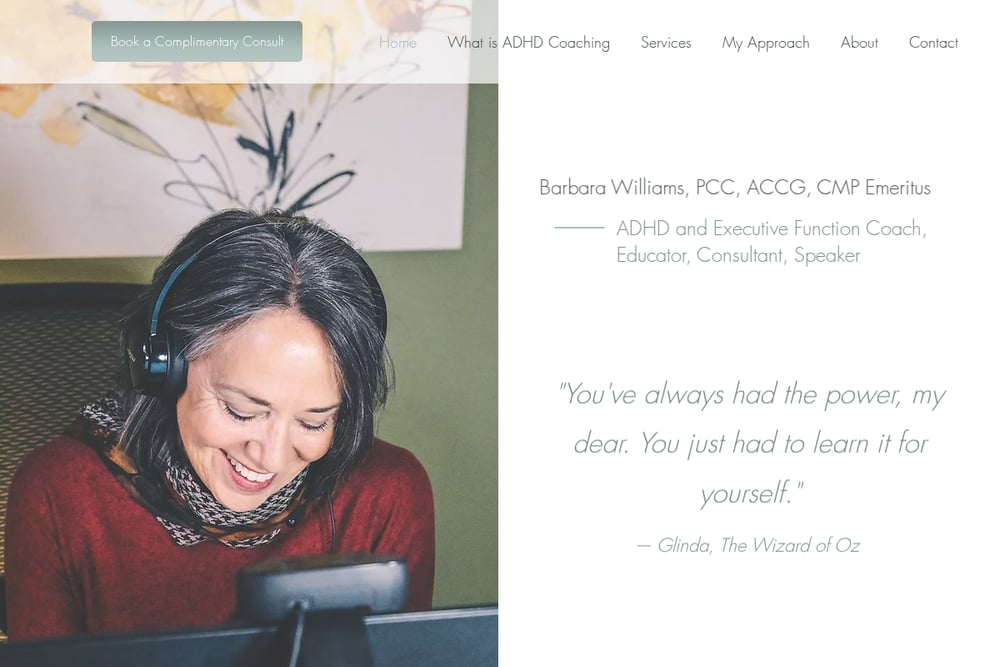 A screenshot of the Barbara Williams Coaching website.
Barbara Williams brings serious credentials to the table: PCC, ACCG, and CMP Emeritus, plus a background as an educator, consultant, and speaker. Her practice specializes in executive function, ADHD education, and coaching strategies for adults, entrepreneurs, parents, and groups worldwide. The approach is holistic, asking about sleep, diet, and exercise alongside time management and organization. She frames coaching as forward-looking, focused on the here and now rather than rehashing the past. If you want a seasoned, globally accessible coach with deep ADHD literacy, this is a strong starting point.
#2 Saleena McIntyre
 A screenshot of the Saleena McIntyre website.
Saleena McIntyre built her practice around a simple promise: less friction, more clarity, a life that works better for you. Coaching covers ADHD and executive functioning, everyday life systems, relationships and communication, and life transitions. That last category sets her apart, addressing career shifts, retirement, midlife, launching young adults, and the quiet sense that your current setup no longer fits. She focuses on the gap between knowing what you want to do and actually doing it, then experiments with simpler systems designed around how you really live. The tone is client-centric and refreshingly free of shoulds, making it a fit for anyone tired of being told what to do.
#3 Jacquelyn Dupras ADHD & Executive Function Coaching
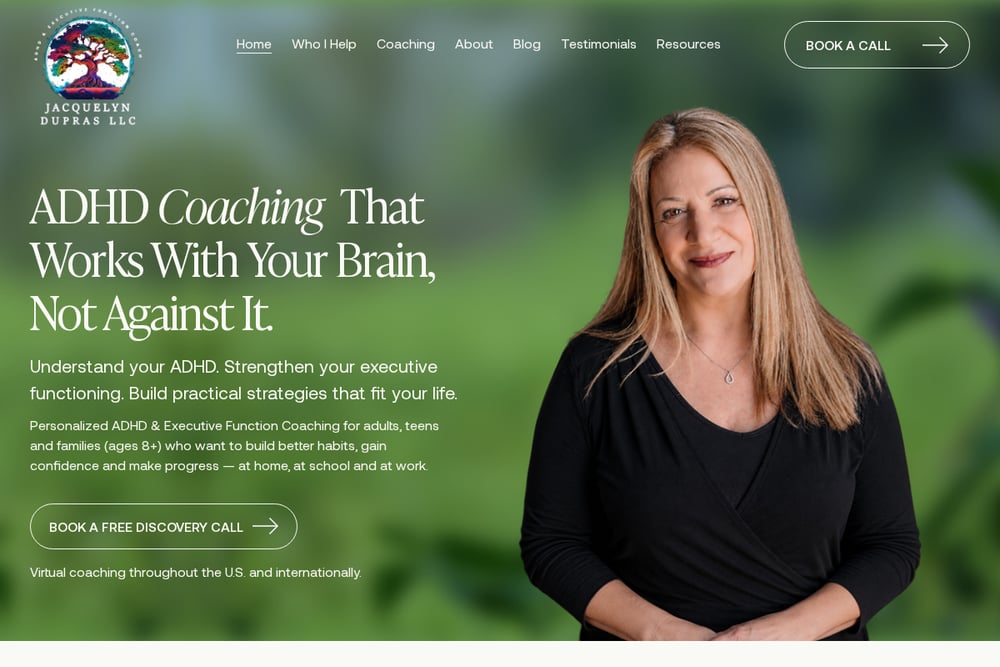 A screenshot of the Jacquelyn Dupras ADHD & Executive Function Coaching website.
Jacquelyn Dupras runs a virtual practice serving clients across the U.S. and internationally, with a clear tagline: ADHD coaching that works with your brain, not against it. She works with adults, teens, children ages 8 and up, families, and executives, which makes her one of the broader-scope options on this list. A graduate of the ADD Coach Academy's Level 2 advanced program, she also collaborates with schools, therapists, and other professionals to coordinate support, including IEPs. Parents seeking a coach who can bridge home, school, and work contexts will find a lot to like here.
#4 Life Skills Advocate
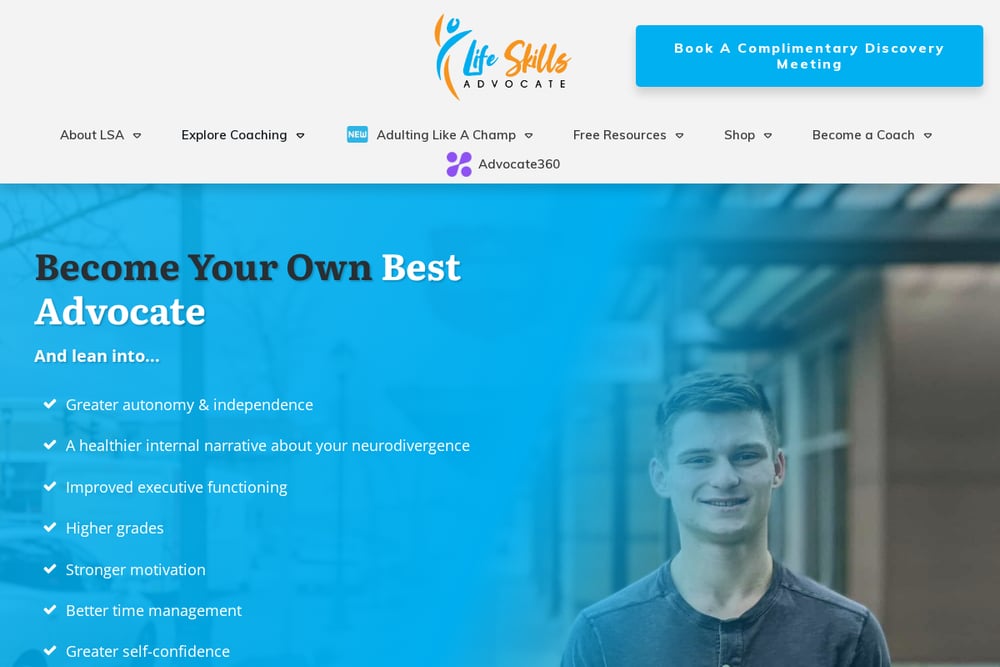 A screenshot of the Life Skills Advocate website.
Life Skills Advocate takes an educational, resource-rich approach to executive function coaching for adults, with tracks organized by area of need and by age. The site is packed with free tools, including an executive functioning assessment, a meal plan, worksheets, and a neurodivergent-friendly cookbook. Coaching is segmented across school, work, and life, which helps you locate the support that matches your stage. There's also a coach certification pathway and comparison resources for aspiring coaches. If you learn best with plenty of self-serve material alongside coaching, this practice delivers volume and structure.
#5 Kolli Psychiatric & Associates
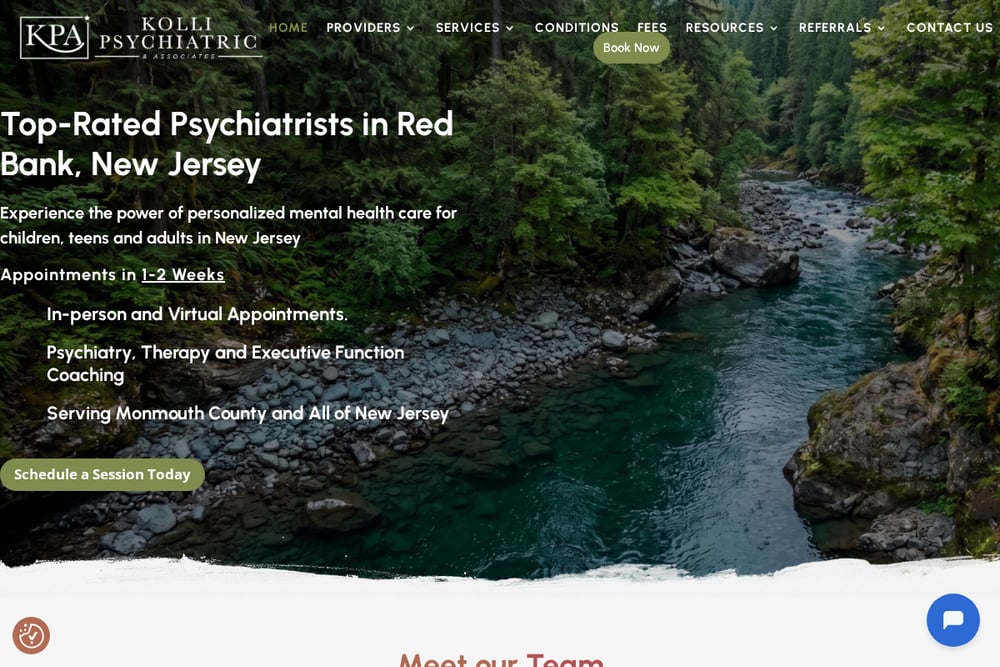 A screenshot of the Kolli Psychiatric & Associates website.
Kolli Psychiatric & Associates in Red Bank, New Jersey, offers executive function coaching embedded within a psychiatric practice. Their coaching focuses on ADHD time blindness, teaching clients to externalize time and build systems that compensate for an unreliable internal clock. Because coaching sits alongside medication management, therapy, and evaluation services, it suits people who want their care coordinated under one roof. The clinical setting also means coaching can complement, rather than replace, medical treatment. If time blindness is your core struggle and you value integrated care, this model is worth a look.
How to pick the right coach for you
Start with the problem that costs you the most energy. If it's time blindness and you already see a psychiatrist, an integrated practice may reduce friction. If your challenge is the invisible planning load of a household or a relationship where two brains process differently, a coach who explicitly addresses life systems and communication will serve you better. Consider who you want in the room: some coaches work with families and schools, others focus on adults and entrepreneurs. Ask about credentials and training, since certification standards vary. Finally, check format and reach. Virtual delivery is now standard, but international availability and collaboration with therapists or schools differ. A short discovery call will tell you more than any bio page.
A simple workflow to shortlist your coach
Set up a lightweight tracking system before you start reaching out. Create a spreadsheet with columns for practice name, specialization, credentials, session format, pricing transparency, and discovery call date. Bookmark each practice's services page and note whether they offer a free consult. After each call, log one sentence on how well the coach described your specific struggle. Use a simple reminder to follow up within a week if you haven't heard back. This keeps your search organized and prevents the overwhelm that sent you looking for a coach in the first place.
The bottom line
There's no universal winner here, only the right fit for your brain and your season of life. Barbara Williams offers credentialed depth, Saleena McIntyre shines on transitions and relationships, Jacquelyn Dupras covers families and schools, Life Skills Advocate brings resources and structure, and Kolli integrates coaching with clinical care. Pick the one whose description made you exhale. That's usually your answer.