You have a physical part and no CAD file. Or a legacy component nobody knows how to reproduce. The right scanning and reverse engineering partner turns that problem into usable digital geometry.
The State of 3D Scanning and Reverse Engineering
Industrial 3D scanning has moved from a specialist lab curiosity to a standard tool in the engineering workflow. Teams use it to capture as-built geometry, rebuild missing documentation, and inspect parts against nominal data. The demand is simple: fewer surprises between the physical part and the digital model. Providers range from full metrology labs with CMM and CT scanning to design shops that scan, model, and manufacture under one roof. That range matters. A shop that only scans gives you a point cloud. A shop that scans and models gives you a CAD file you can actually edit. A shop that also inspects gives you confidence the geometry is right. Your job is to match the provider's depth to the deliverable you need.
How We Evaluated These Providers
We looked at service scope, workflow clarity, deliverable flexibility, and how well each provider explains its process. Service scope covers whether a provider handles scanning, reverse engineering, CAD modeling, and inspection in one place. Workflow clarity is about how easy it is to understand the steps from part capture to final delivery. Deliverable flexibility means whether you can get a point cloud, a solid model, a toleranced drawing, or a manufactured replacement part. We also weighed how clearly each provider communicates scope and output requirements before a project starts. Each provider stood out in different areas. Some lean toward full-service metrology. Others focus on design-led modeling or fast turnaround for small parts.
Here is a quick comparison of the five providers, ordered by how they fit common engineering needs. Use it to shortlist, then dig into the details below.
| Provider | Best For |
|---|---|
| 3D Engineering Solutions | Full-service metrology and inspection-heavy projects |
| 3D Scanning & Reverse Engineering Services - AXIS 3D SCAN | Clear scan-to-CAD workflows for engineering teams |
| RapidMade | Scan-to-part projects with manufacturing included |
| Applied Technical Services | Inspection-driven scanning with formal documentation |
| Pipeline | Scanning as part of broader product development |
The Five Providers in Detail
#1 3D Engineering Solutions
 A screenshot of the 3D Engineering Solutions website.
This is a full metrology and engineering shop, not just a scanning service. You can get laser scanning, blue and white light scanning, industrial CT scanning, and CMM inspection under one roof. That breadth matters when your part needs both capture and dimensional verification. The reverse engineering page explains the core use case well: creating CAD models and toleranced drawings from existing parts and assemblies. If you need legacy product modernization or tool and die design support, this provider covers that ground too.
#2 3D Scanning & Reverse Engineering Services - AXIS 3D SCAN
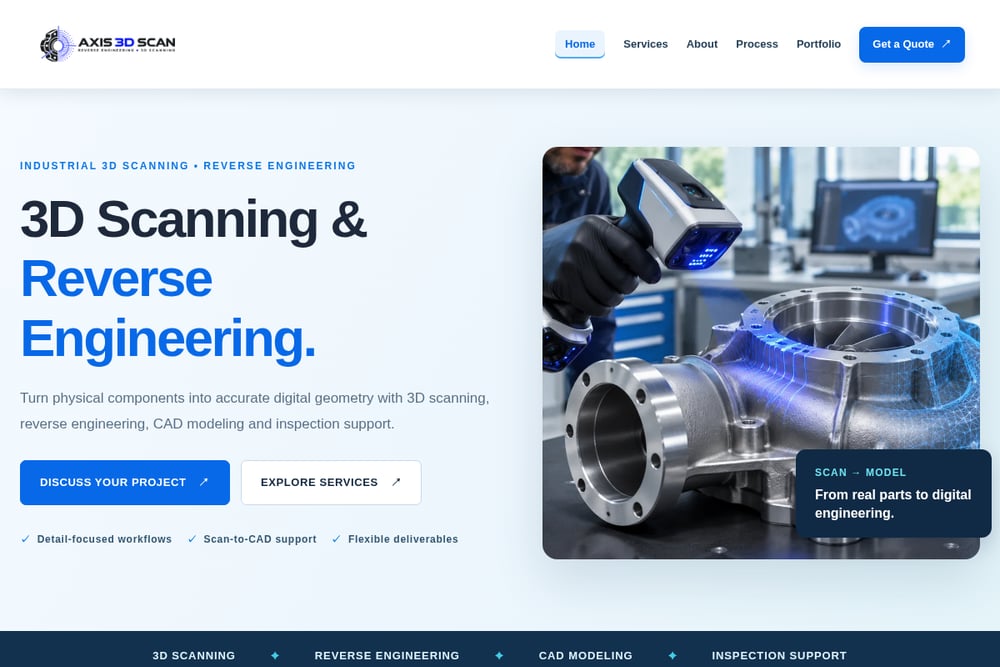 A screenshot of the 3D Scanning & Reverse Engineering Services - AXIS 3D SCAN website.
AXIS 3D SCAN keeps the process simple and design-led. You share part photos, dimensions, and the output you need, then they select a capture approach and build the agreed digital model. The service covers 3D scanning, reverse engineering, CAD modeling, and inspection support in one workflow. What stands out is the clarity of the four-step process: understand, capture, reconstruct, deliver. That structure makes it easy to plan a project and review the result. If you want scan-to-CAD support without navigating a giant service menu, this is a strong fit.
#3 RapidMade
RapidMade connects scanning to manufacturing. They scan your part, turn it into a solid CAD model or a toleranced drawing, and can make the replacement part for you. That end-to-end path is useful when you need a physical replacement, not just a file. The provider is ISO 9001:2015 certified and ITAR registered, which matters for regulated industries. Scans start at $250, so small parts are accessible for quick projects. If your goal is a made part rather than a model alone, this provider closes the loop.
#4 Applied Technical Services
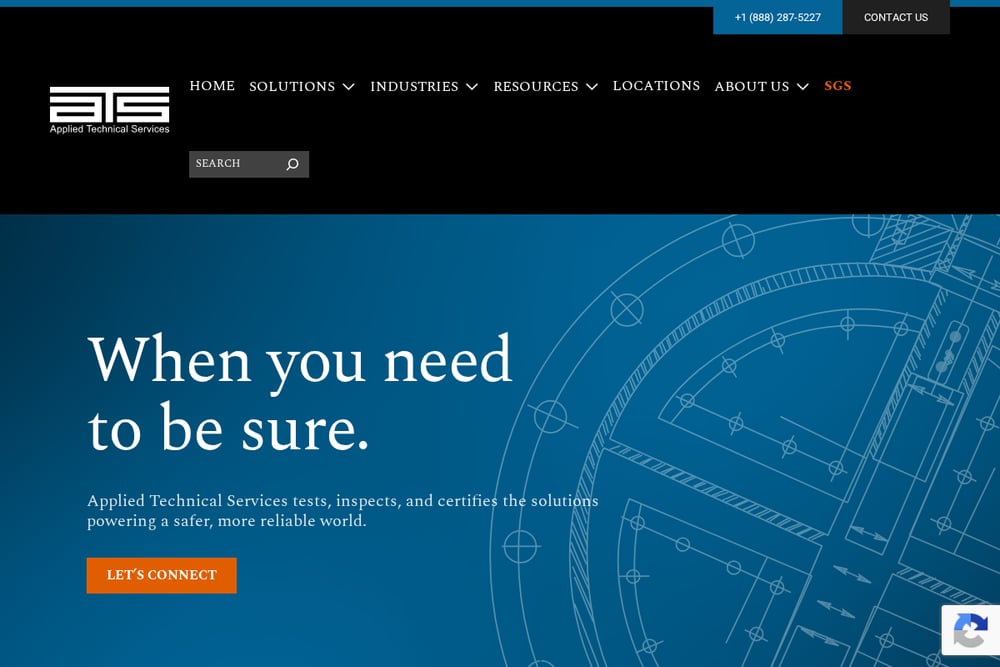 A screenshot of the Applied Technical Services website.
ATS brings a testing and inspection background to 3D scanning and reverse engineering. Their dimensional inspection group handles scanning as part of a broader calibration and metrology offering. That is valuable when your project needs documented inspection alongside geometry capture. The provider serves industries like aerospace, automotive, and manufacturing, where traceability matters. If you need scanning tied to a formal inspection report, this provider fits that need. The trade-off is that the service sits inside a large organization, so expect a more formal intake process.
#5 Pipeline
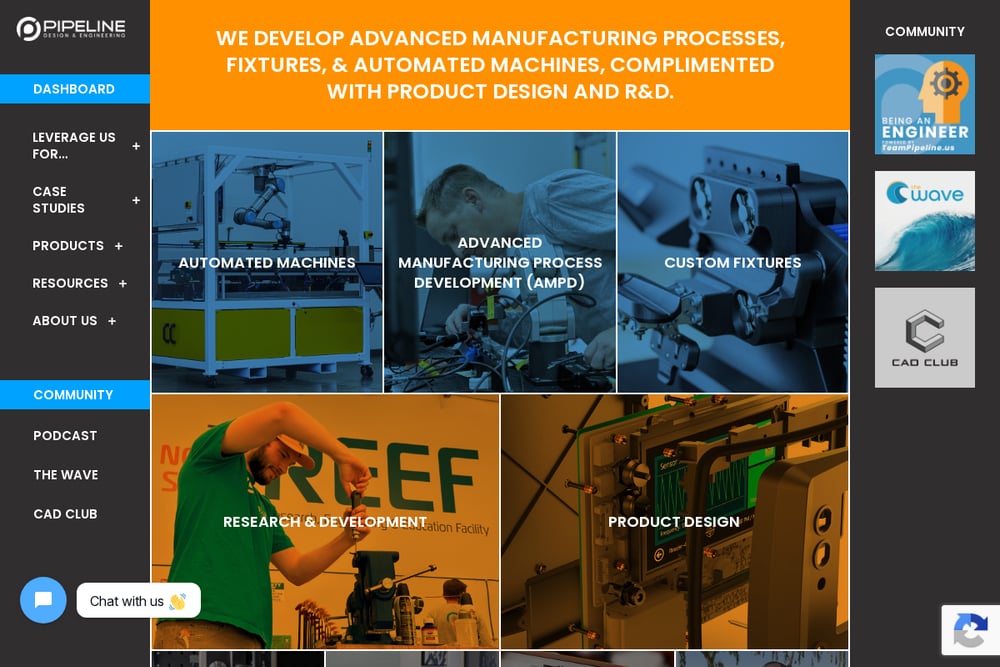 A screenshot of the Pipeline website.
Pipeline is an engineering support firm that offers 3D scanning and reverse engineering as part of a wider product development toolkit. They also handle test fixture design, custom equipment, and build-to-print work. That makes them a fit when scanning is one step in a larger engineering project. You get access to concept design and process development support alongside capture and modeling. If your reverse engineering need is tied to a fixture, a custom machine, or a product lifecycle project, this provider can carry the whole thread.
How to Choose the Right Scanning Partner
Start with the deliverable. If you need a point cloud for visualization, a scanning-only shop works. If you need an editable CAD model, confirm the provider does reverse engineering and modeling in-house. If you need a replacement part, look for a provider that also manufactures. Next, ask about inspection. A model is only useful if the geometry is verified against the real part. Then check the intake process. A provider that asks for part photos, dimensions, and application details upfront is more likely to scope the project correctly. Finally, match the provider's industry experience to yours. Aerospace and medical projects often need documented quality systems. General industrial parts may not.
Where Automation Fits in the Workflow
Scanning itself is increasingly automated, but the modeling step still needs judgment. A practical workflow looks like this: capture the part with the right scanner, process the scan data into a clean mesh, then reconstruct the geometry as a parametric model. Inspection can be automated by comparing the scan to nominal CAD and flagging deviations. The human step is deciding what matters. Which surfaces need tight tolerances? Which features are cosmetic? A good provider automates the repeatable parts and applies engineering judgment to the rest. That balance is what separates a usable model from a pretty point cloud.
The Bottom Line
You do not need the biggest provider. You need the one whose workflow matches your deliverable. 3D Engineering Solutions covers deep metrology and inspection. AXIS 3D SCAN offers a clear scan-to-CAD path for engineering teams. RapidMade closes the loop from scan to manufactured part. Applied Technical Services ties scanning to formal inspection documentation. Pipeline folds scanning into broader product development work. Pick based on what you need at the end, and confirm the process before you send the part.